Nostradamus

 79
79

Nostradamus
The central assertion that Nostradamus's quatrains contain a decipherable 'secret order' driving specific future predictions is ambitious, and this volume pursues it with evident dedication. Its strength lies in attempting to map the verses to known historical outcomes, a task requiring considerable research. However, the work occasionally falters by presenting interpretations as established fact, particularly when linking specific quatrains to events like the rise of Napoleon Bonaparte. The methodology for decoding, while explained, sometimes feels more like an assertion of a system than a demonstrable proof. For instance, the discussion of the quatrain referencing "the great king of terror" (often linked to Napoleon) lacks the rigorous linguistic or historical deconstruction one might expect from a definitive work, leaning instead on a broad alignment. It offers a compelling, if sometimes overconfident, perspective for those already inclined to believe in Nostradamus's prescience.
📝 Description
79
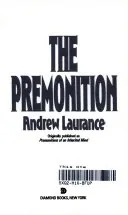
This 2000 book argues for a hidden cipher in Nostradamus's quatrains.
This compilation examines the prophecies of Michel de Nostredame, known as Nostradamus. The author attempts to show a direct link between his cryptic verses and historical events. The book proposes that Nostradamus embedded a hidden code in his writings, allowing him to foresee future events with surprising accuracy. This work is for readers interested in predictive prophecy, historical analysis, and coded messages. It will appeal to those who want to understand the structure of Nostradamus's poetry and ways to interpret it. Those interested in secret societies, historical cryptography, and the connection between faith and foresight will find it particularly engaging.
The book was published in 2000, a time when global interest in end-times prophecies and conspiracy theories grew, partly due to the approaching millennium. It addresses the ongoing scholarly discussion about the authenticity and understandability of Nostradamus's *Prophecies*, which first appeared in 1555. The book takes a stance against skeptical views by asserting that Nostradamus's predictions are literally accurate.
The main idea explored is a 'secret order' within Nostradamus's quatrains, suggesting a planned, coded system. This involves figuring out the prophet's methods, which supposedly enabled predictions far beyond the knowledge of his 16th-century era. The book claims these writings are not vague metaphors but precise, though obscure, forecasts of future happenings.
This book engages with the tradition of prophetic interpretation, specifically focusing on the coded language and supposed foresight attributed to Nostradamus. It aligns with esoteric interests in hidden meanings within texts and the possibility of foreknowledge. The work situates itself within a lineage of individuals who sought to decipher prophetic works, viewing them not as random writings but as deliberate messages with verifiable predictive content. It contrasts with purely historical or literary analyses by emphasizing the literal predictive power believed to be encoded within the verses.
💡 Why Read This Book?
• Understand the claimed 'secret order' of Nostradamus's quatrains, moving beyond superficial interpretations to explore the book's proposed decoding methods. • Examine specific historical events, such as those related to the French Revolution or the ascendance of Napoleon, as presented through the lens of Nostradamus's coded verses. • Gain insight into the author's methodology for interpreting prophetic texts, providing tools for analyzing predictive literature and its relationship to historical occurrences.
⭐ Reader Reviews
Honest opinions from readers who have explored this book.
❓ Frequently Asked Questions
What historical period does this book primarily use to validate Nostradamus's predictions?
The book frequently references events from the late 18th and early 19th centuries, particularly the French Revolution and the rise of Napoleon Bonaparte, to demonstrate the alleged accuracy of Nostradamus's quatrains.
What is the 'secret order' mentioned in relation to Nostradamus's quatrains?
The 'secret order' refers to the author's interpretation of a hidden, systematic structure within Nostradamus's verses, suggesting a deliberate code or cipher that reveals predictable future events.
Does the book offer a method for interpreting Nostradamus's prophecies?
Yes, it proposes a framework for decoding the prophet's methods, aiming to equip readers with tools to analyze and interpret the quatrains as precise foretellings.
When was Nostradamus's work first published?
Nostradamus's most famous collection of prophecies, *Les Prophéties*, was first published in 1555.
Is this book based on primary source analysis of Nostradamus's writings?
The book claims to analyze Nostradamus's writings, focusing on their relationship to known historical facts and proposing a method for decoding their predictive content.
What is the primary argument presented about Nostradamus's predictions?
The primary argument is that Nostradamus's writings are far more exact and telling than previously imagined, containing a hidden order that accurately predicts future events.
🔮 Key Themes & Symbolism
Deciphering Quatrain Codes
This theme focuses on the author's central thesis: that Nostradamus employed a deliberate, hidden system within his four-line verses (quatrains). The work explores the alleged cryptographic elements and symbolic language used by the prophet. It argues that these codes unlock specific predictions, revealing a level of foresight that transcends mere coincidence or general observation. The exploration aims to provide readers with an understanding of how to approach these texts not as poetry, but as encoded messages from the future.
Nostradamus and Historical Fact
A core objective of this book is to establish a concrete link between Nostradamus's prophecies and verifiable historical events. It meticulously attempts to match quatrains to occurrences ranging from the late 18th century onwards. The emphasis is on demonstrating the 'exact' and 'telling' nature of his predictions, suggesting that they were not vague pronouncements but rather precise forewarnings of specific historical developments, such as political upheavals and the rise of significant figures.
The Prophet's Predictive Method
This theme examines the 'how' of Nostradamus's predictions. The book proposes that the prophet possessed a unique method or understanding that enabled him to foresee future events with remarkable clarity. It examines the possibility that this method involved specific astrological calculations, symbolic interpretations, or even access to knowledge beyond his era. The goal is to illuminate the perceived mechanism behind his prophecies, making them accessible for interpretation.
Interpreting Future Foretellings
Beyond analyzing Nostradamus himself, the work offers practical guidance for contemporary readers interested in interpreting predictive literature. It posits that understanding Nostradamus's coded system provides a valuable template for approaching other prophetic texts. The book aims to equip individuals with a critical framework for assessing and understanding prophecies, fostering a deeper engagement with the concept of foresight and its historical manifestations.
💬 Memorable Quotes
Direct passages from the work, attributed to the author.
“The secret order of the quatrains is revealed.”
— This statement captures the book's primary objective: to uncover a hidden, systematic structure within Nostradamus's verses that is not immediately apparent, suggesting a deliberate method of encoding.
“The prophet used codes to describe a future he had no known way to predict.”
— This highlights the author's belief that Nostradamus possessed an advanced, almost anachronistic, ability to foresee events, which he masked through cryptic language and symbolic codes.
“The writings of Nostradamus were far more exact and telling than we have, up till now, imagined.”
— This asserts that previous interpretations have underestimated the precision and significance of Nostradamus's prophecies, positioning the book as a corrective to prior scholarship.
“This work will prove useful to anybody wishing to interpret the works pertaining to the future.”
— This suggests the book offers practical tools and a methodological framework for readers interested in understanding or analyzing other prophetic texts, not just those of Nostradamus.
“The quatrains contain specific historical predictions.”
— This is a concise summary of the book's argument, emphasizing that the verses are not allegorical but contain direct, verifiable foretellings of past and future events.
🌙 Esoteric Significance
Tradition
This work aligns with the Western Esoteric tradition, particularly within the branches concerned with divination, prophecy, and occult cryptography. While Nostradamus himself drew on astrological and Kabbalistic elements, this book focuses on the practical application of his predictive system. It departs from purely academic historical analysis by asserting the literal predictive accuracy of the prophecies, positioning them as a form of divinatory knowledge rather than historical commentary or astrological musing.
Symbolism
The quatrain itself is a key symbolic form, representing a compact, self-contained unit of meaning. Within Nostradamus's work, symbols like "the great king of terror" (often interpreted as Napoleon or a significant destructive force) and specific dates or geographical references function as anchors for prophetic interpretation. The book explores how these symbols, when decoded, point to specific historical figures, conflicts, and transformations, acting as coded keys to future events.
Modern Relevance
Contemporary interest in predictive systems, conspiracy theories, and historical hidden knowledge continues to fuel engagement with Nostradamus. This book's approach, focusing on decoding and verifiable historical correlation, finds resonance with modern digital cryptography enthusiasts and those seeking patterns in global events. Thinkers exploring synchronicity and the nature of time, as well as communities interested in preparedness and understanding cyclical historical patterns, may draw upon its interpretive framework.
👥 Who Should Read This Book
• Aspiring interpreters of prophetic texts seeking a structured approach to understanding coded verses and their historical correlations. • Students of Western Esotericism interested in the practical application and historical validation of divinatory systems beyond astrology. • History buffs and researchers intrigued by the enduring legacy of Nostradamus and the ongoing debate surrounding the accuracy of his prophecies.
📜 Historical Context
Published on September 12, 2000, this book arrived at a moment when the turn of the millennium had amplified public fascination with prophecy and eschatology. It entered a discourse already rich with interpretations of Nostradamus, a figure whose *Prophecies* first appeared in 1555. The work situates itself within a tradition that views Nostradamus as a genuine seer, contrasting with more skeptical academic approaches that emphasize poetic ambiguity or historical interpretation post-event. It implicitly engages with figures like Erika Cheetham, whose own interpretations of Nostradamus gained traction in the late 20th century. The book's approach, emphasizing a discoverable 'code,' reflects a desire to find order and predictability in a world increasingly perceived as chaotic, aligning with a broader cultural undercurrent seeking answers in ancient wisdom and hidden knowledge.
📔 Journal Prompts
The 'secret order' of Nostradamus's quatrains: what evidence supports its existence?
Analyze a specific quatrain and attempt to identify its 'codes' for predicting future events.
How does the book's interpretation of Napoleon's rise differ from standard historical accounts?
Reflect on the author's assertion that Nostradamus's writings are 'more exact and telling than imagined.'
What practical lessons can be drawn from the book's method for interpreting predictive literature?
🗂️ Glossary
Quatrain
A four-line stanza, the primary poetic form used by Nostradamus in his prophecies. Each quatrain is typically treated as a self-contained predictive unit within the text.
Secret Order
The underlying, systematic structure or code that the book's author claims exists within Nostradamus's quatrains, enabling precise prediction of future events.
Prophet
Refers to Michel de Nostredame, the 16th-century French astrologer and physician whose collection of prophecies (*Les Prophéties*) forms the subject of this book.
Codes
The symbolic language, cryptographic elements, or hidden meanings that Nostradamus allegedly employed in his writings to conceal and convey predictions about the future.
Esoteric
Relating to or accessible only by a relatively small number of people with a specialized knowledge or interest; the book positions Nostradamus's work within this domain.
Divination
The practice of seeking knowledge of the future or the unknown by supernatural means; the book examines Nostradamus's prophecies as a form of divination.
Historical Fact
Events or occurrences that are documented and accepted as having happened; the book attempts to correlate Nostradamus's predictions with these established facts.
This book appears in 1 collection
🔮 Readers Also Liked
Browse all →







From the “Nostradamus” Collection
View all →




More Free Esoteric History & Biography Books
View all →