From Pompeii
 74
74

From Pompeii
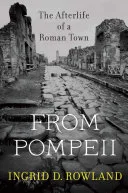
Ingrid D. Rowland’s *From Pompeii* offers a less-trodden path through the famous ruins, eschewing grand pronouncements for intimate observation. Rowland’s strength lies in her ability to connect the specific artifacts and structures of Pompeii to broader human concerns, a skill evident when she discusses the surprisingly intimate details of domestic life preserved in ash. She avoids the common pitfall of treating the site as a mere relic, instead imbuing it with a vibrant, if tragic, immediacy. However, the book occasionally feels less like a cohesive argument and more like a collection of impressions, which might leave readers seeking a more structured historical account wanting. The section contemplating the echoes of ancient lives in modern sensibilities, particularly around the concept of the preserved body as a form of memory, is particularly compelling.
Ultimately, *From Pompeii* is a thoughtful, if sometimes meandering, meditation on history, memory, and the enduring power of place.
📝 Description
74
Ingrid D. Rowland's 2015 book views Pompeii not just as ruins, but as a preserved moment.
Ingrid D. Rowland's "From Pompeii" looks at the ancient Roman city as more than just an archaeological site. Published in 2015, the book considers Pompeii as a frozen instant, a place that still holds a strong fascination. Rowland combines archaeological findings with her own thoughts, drawing connections between the people who died in the 79 CE eruption of Mount Vesuvius and universal human experiences.
The work is for anyone interested in Roman history, archaeology, or the cultural impact of ancient locations. It suits readers who enjoy a mix of academic research and personal writing, and who find that past events and preserved items can help us understand life and loss today. Students and enthusiasts of classical studies will find its distinct viewpoint useful.
Pompeii, buried by volcanic ash in 79 CE, provides an unmatched look into Roman daily life. Its ongoing excavation since the 18th century has continually drawn public and scholarly attention. Rowland's own connection to the site follows a long tradition of artists and thinkers, from Renoir to Freud, who found inspiration in its remains.
While not strictly an esoteric text, "From Pompeii" engages with themes that resonate with esoteric thought. It examines how destruction can lead to preservation, allowing a civilization's final moments to be immortalized and studied across centuries. The book touches on the subjective experience of confronting the past, suggesting that ruins act as a conduit for memory and reflection. This mirrors esoteric traditions that often use physical remnants or symbolic landscapes to access deeper understandings of existence and the human condition, finding spiritual or philosophical meaning in historical traces.
💡 Why Read This Book?
• Gain a nuanced understanding of Pompeii beyond typical historical accounts by exploring Rowland's personal reflections alongside archaeological findings, specifically referencing the preserved bodies as tangible echoes of past lives. • Appreciate the enduring cultural impact of Pompeii by examining how figures like Freud and Renoir were influenced by the site, as detailed in the text's discussion of historical fascination. • Develop a deeper connection to the past through Rowland's unique perspective, which bridges the gap between the archaeological evidence of daily Roman life and contemporary human experience.
⭐ Reader Reviews
Honest opinions from readers who have explored this book.
❓ Frequently Asked Questions
When was Pompeii destroyed?
Pompeii was destroyed by the eruption of Mount Vesuvius in 79 CE, an event that preserved the city under layers of volcanic ash and pumice for centuries.
Who was Ingrid D. Rowland?
Ingrid D. Rowland is a scholar and author specializing in classical antiquity and Renaissance Italy. She has taught at various universities and is known for her engaging and accessible writing on historical subjects.
What makes 'From Pompeii' different from other books on the subject?
Unlike purely academic or tourist-focused accounts, 'From Pompeii' interweaves archaeological detail with the author's personal impressions and philosophical reflections on memory, loss, and the enduring human condition.
What famous figures were inspired by Pompeii?
The book mentions that figures such as Renoir, Freud, Mozart, Dickens, Twain, and Ingrid Bergman were among those captivated by Pompeii, demonstrating its broad cultural resonance.
What is the significance of the preserved bodies in Pompeii?
The plaster casts of victims, made by filling the voids left by decomposed bodies, serve as stark, poignant reminders of the human tragedy and offer a direct connection to the final moments of Pompeii's inhabitants.
Does the book discuss the eruption of Mount Vesuvius?
Yes, the eruption in 79 CE is the central event around which the book is structured, detailing its catastrophic impact and the subsequent preservation of the city.
🔮 Key Themes & Symbolism
Preservation Through Catastrophe
The core concept revolves around how the violent eruption of Mount Vesuvius in 79 CE, while devastating, acted as an agent of preservation. This event entombed Pompeii, freezing a moment of Roman daily life for millennia. The book explores this paradox: destruction leading to an outstanding historical record. It examines how the volcanic ash and pumice, rather than erasing the city, created a unique archaeological context that allows for an intimate study of urban existence, from grand villas to humble workshops, making the catastrophe itself the very mechanism of its enduring legacy.
Memory and the Imprint of Life
Rowland explores the idea of memory as an imprint, both on the physical landscape and within the human psyche. Pompeii's preserved bodies, captured in their final moments, serve as potent symbols of this. The book considers how these remnants challenge our perception of time and mortality, acting as direct, tangible links to individuals who lived and died centuries ago. This theme questions how we remember, how places retain the traces of past lives, and how the physical evidence of suffering can inform our understanding of shared humanity across epochs.
The Subjective Experience of Antiquity
Beyond factual reporting, the book emphasizes the personal encounter with the ruins of Pompeii. Rowland shares her own impressions and reflections, highlighting how the site evokes emotional and intellectual responses. It discusses how various historical figures, from artists like Renoir to thinkers like Freud, interpreted and were moved by Pompeii, illustrating the subjective nature of engaging with the past. This theme explores the dialogue between the observer and the observed, recognizing that our understanding of ancient sites is always filtered through contemporary perspectives and personal sensibilities.
Daily Life Frozen in Time
The work meticulously reconstructs the routines and fabric of ordinary Roman life as revealed by Pompeii's remarkably intact structures and artifacts. It moves beyond monumental architecture to focus on the intimate details: domestic spaces, shops, public baths, and even graffiti. By examining these elements, the book brings to life the everyday concerns, social interactions, and cultural practices of the city's inhabitants. This focus on the mundane, preserved by extraordinary circumstances, provides a powerful counterpoint to grand historical narratives, offering a grounded perspective on Roman civilization.
💬 Memorable Quotes
Direct passages from the work, attributed to the author.
“The calamity that proved lethal for Pompeii inhabitants preserved the city for centuries.”
— This statement captures the central paradox of Pompeii: a catastrophic event, the eruption of Mount Vesuvius, paradoxically ensured the city's remarkable preservation, offering an outstanding window into Roman life.
“Interwoven is the thread of Ingrid Rowland's own impressions of Pompeii.”
— This highlights the book's unique structure, blending historical and archaeological analysis with the author's personal reflections and subjective experience of visiting and contemplating the ancient site.
“Pompeii has captured the imagination of generations, including Renoir, Freud, Hirohito, Mozart, Dickens, Twain, Rossellini, and Ingrid Bergman.”
— This emphasizes the enduring and widespread fascination Pompeii has held across diverse fields and eras, demonstrating its profound and lasting impact on art, culture, and intellectual thought.
“The archaeological evidence provides a tangible connection to the past.”
— This interpretation emphasizes how the physical remains of Pompeii, from buildings to personal belongings, offer concrete evidence that allows readers and visitors to connect directly with the people and events of antiquity.
💡 Key Ideas
Editorial paraphrase of the work's core concepts — not direct quotes.
The work explores the preserved snapshot of Roman daily life.
This paraphrase points to the book's focus on the ordinary aspects of Roman existence – homes, shops, social interactions – that were immortalized by the volcanic eruption, offering a detailed glimpse into the past.
🌙 Esoteric Significance
Tradition
While not explicitly aligned with a single esoteric lineage, *From Pompeii* speaks to Gnostic and Hermetic themes concerning the veil between worlds, the preservation of knowledge through destruction, and the lingering presence of the past. The city's entombment can be seen as a form of sacred sealing, protecting its secrets until a future revelation. Rowland's exploration of how the site impacts consciousness echoes esoteric practices focused on accessing deeper truths through contemplation of symbolic landscapes and the remnants of ancient civilizations.
Symbolism
The primary symbol is Pompeii itself: a city caught between life and death, preserved by the very force that destroyed it. The volcanic ash acts as a shroud, symbolizing both oblivion and protection, a potent metaphor for hidden knowledge or suppressed aspects of the psyche. The preserved bodies, captured in moments of daily life or desperate flight, symbolize the inescapable nature of fate and the enduring imprint of individual existence, serving as stark reminders of mortality and the continuity of the human spirit.
Modern Relevance
Contemporary thinkers exploring memory studies, trauma, and the phenomenology of place find resonance in Rowland's approach. Her work aligns with modern archaeological interpretations that emphasize the lived experience of ancient peoples, moving beyond elite narratives. Furthermore, in an era increasingly concerned with the impact of past events on the present and the ethics of confronting historical trauma, *From Pompeii* offers a model for contemplative engagement with sites of profound historical significance and human suffering.
👥 Who Should Read This Book
• Students of Roman history and archaeology seeking a deeper, more personal connection to the material beyond standard textbooks, particularly those interested in daily life. • Readers of literary non-fiction and personal essays who appreciate a blend of scholarly insight and reflective prose, drawn to how historical sites evoke contemporary thought. • Individuals interested in the philosophy of history, memory, and the enduring impact of ancient sites on the modern imagination, who enjoy contemplative explorations of place.
📜 Historical Context
Published in 2014, Ingrid D. Rowland's *From Pompeii* engages with a long tradition of scholarship and fascination surrounding the ancient Roman city, destroyed by the eruption of Mount Vesuvius in 79 CE. The systematic excavation of Pompeii began in the mid-18th century, sparking Neoclassical interests and influencing art and architecture across Europe. By the 20th century, figures like Sigmund Freud were analyzing the psychological impact of the site, viewing it as a case study in memory and repression. Rowland's work enters this ongoing dialogue, contributing a contemporary perspective that interlaces personal experience with historical inquiry. While not a direct engagement with a competing school of thought, the book implicitly contrasts with purely archaeological or purely literary treatments by its synthesis of personal reflection and scholarly observation. Its reception is part of a continuous academic and public engagement with one of history's most compelling preserved sites.
📔 Journal Prompts
The preservation of Pompeii through its destruction.
Reflecting on the impressions left by ancient sites.
The dialogue between archaeological evidence and personal experience.
The tangible traces of daily Roman life.
The concept of memory imprinted on a landscape.
🗂️ Glossary
Mount Vesuvius
A volcano in the Bay of Naples, Italy, famous for its eruption in 79 CE that destroyed the Roman cities of Pompeii and Herculaneum.
Plaster Casts
Hollow voids in the hardened ash left by decomposed bodies in Pompeii were filled with plaster by archaeologists, creating casts that reveal the final postures of victims.
79 CE
The year of the catastrophic eruption of Mount Vesuvius that buried Pompeii and Herculaneum, preserving them for future discovery.
Roman Daily Life
The everyday routines, social customs, domestic arrangements, and economic activities of people living in the Roman Empire, as evidenced by archaeological findings in Pompeii.
Archaeological Preservation
The process by which ancient sites and artifacts are protected from decay and destruction over time, often through burial or other natural phenomena, as seen with Pompeii.
Personal Impressions
The subjective feelings, thoughts, and interpretations an individual has when encountering a place or historical site, as distinct from objective historical data.
Vesuvius Eruption
The specific volcanic event in 79 CE that resulted in the burial of Pompeii and surrounding areas under a thick layer of ash and pumice.