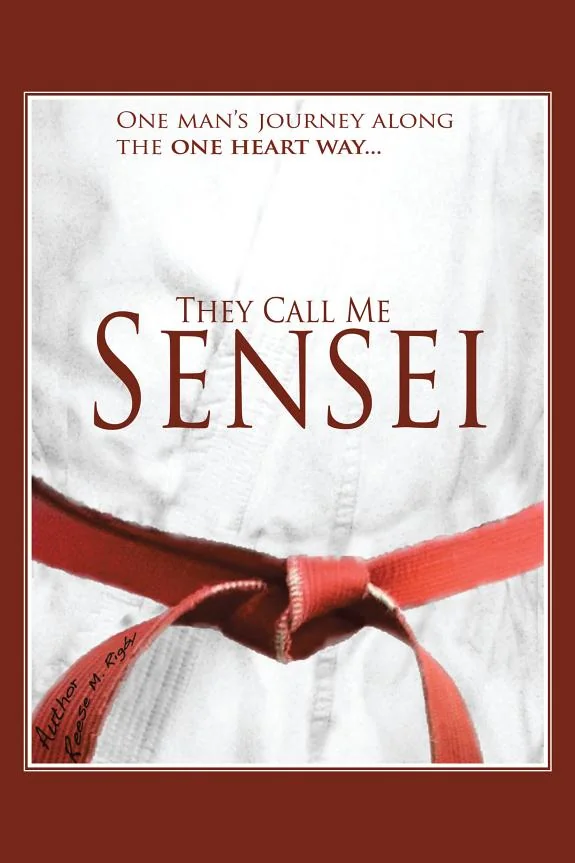
They Call Me Sensei
 71
71

They Call Me Sensei
Reese Rigby’s chronicle, They Call Me Sensei, offers an unvarnished look at a life dedicated to Isshin-ryu karate-do. The narrative’s strength lies in its directness; Rigby doesn’t shy away from detailing the slow, persistent effort involved in building a martial arts community from the ground up, starting with just fourteen students in 1973. His progression to ninth-degree black belt is presented not as a series of dramatic leaps, but as the cumulative result of sustained practice and teaching. A point of contention, however, is the book's somewhat generalized approach to the deeper philosophical aspects of karate. While the journey is clearly articulated, the exploration of martial arts philosophy sometimes feels secondary to the chronological recounting of his school’s growth. The passage describing the establishment of his first dojo in 1973 offers a palpable sense of beginnings and earnest endeavor. Ultimately, They Call Me Sensei serves as a sincere and grounded account of one man's enduring commitment to a martial art.
📝 Description
71
Reese Rigby's memoir chronicles his martial arts journey from a 1973 dojo to grandmaster.
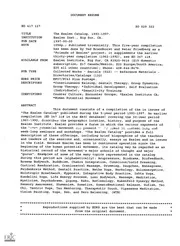
In "They Call Me Sensei," Reese Rigby recounts his lifelong dedication to Isshin-ryu karate-do. The book begins with the establishment of his first dojo in 1973, which started with fourteen students. Rigby charts the school's expansion over nearly four decades, growing to include hundreds of students and incorporating disciplines like cardio kickboxing and Tai Chi.
The narrative follows Rigby's personal progression from a beginner's perspective to achieving the rank of ninth-degree black belt grandmaster. The memoir details the evolution of his martial arts school and his own mastery of the discipline. It speaks to those interested in the disciplined path of martial arts, offering inspiration drawn from a personal journey of dedication, skill acquisition, and community building within the Isshin-ryu framework.
While rooted in the specific martial art of Isshin-ryu karate-do, "They Call Me Sensei" touches upon broader esoteric themes of self-mastery and the disciplined pursuit of knowledge. The journey from beginner to grandmaster reflects a common archetype in esoteric traditions, where dedication and incremental progress lead to deep understanding. The book suggests that the rigorous practice and philosophical underpinnings of martial arts can serve as a path toward personal transformation, echoing the internal development central to many esoteric disciplines.
💡 Why Read This Book?
• Gain practical insights into the long-term dedication required for martial arts mastery, as exemplified by Rigby's journey from 1973 to his ninth-degree black belt status. • Understand the community-building aspects of martial arts, seeing how Sensei Rigby nurtured his school from fourteen students to hundreds by 2012. • Appreciate the personal narrative of growth and perseverance in mastering Isshin-ryu karate-do, a path detailed through Rigby's own experiences as a white belt progressing to grandmaster.
⭐ Reader Reviews
Honest opinions from readers who have explored this book.
❓ Frequently Asked Questions
What martial art style does Reese Rigby focus on in 'They Call Me Sensei'?
Reese Rigby's memoir primarily focuses on Isshin-ryu karate-do. The book chronicles his journey within this specific martial art from his beginnings as a white belt to achieving the rank of ninth-degree black belt grandmaster.
When did Reese Rigby begin his martial arts journey as described in the book?
Sensei Rigby began his journey with his school of fourteen students in 1973. The book covers his progression and the growth of his dojo over the subsequent decades, up to 2012.
What is the significance of the year 2012 mentioned in the book's description?
The year 2012 marks the point by which Sensei Rigby's martial arts school had expanded significantly, encompassing approximately three hundred karate students and an additional one hundred students in cardio kickboxing and Tai Chi.
Who is the intended audience for 'They Call Me Sensei'?
The book is intended for Sensei Rigby's students, his family, and individuals interested in the personal journey and dedication involved in mastering a martial art like Isshin-ryu.
What does 'Sensei' mean in the context of this book?
'Sensei' is a Japanese term meaning 'teacher' or 'master.' In this book, it refers to Reese Rigby himself, highlighting his role as an instructor and expert in Isshin-ryu karate-do.
Besides karate, what other disciplines are mentioned in the book?
In addition to Isshin-ryu karate-do, the book mentions the growth of students in cardio kickboxing and Tai Chi within Sensei Rigby's school by 2012, indicating a broader approach to martial arts and fitness instruction.
🔮 Key Themes & Symbolism
Dedication to Isshin-ryu
The core of 'They Call Me Sensei' revolves around Reese Rigby's unwavering commitment to Isshin-ryu karate-do. The narrative traces his evolution from a novice white belt to a ninth-degree black belt grandmaster, emphasizing the consistent practice and perseverance required. This theme highlights the personal transformation and mastery achieved through sustained effort in a specific martial art discipline, showcasing the long-term dedication that defines Rigby's life path.
Growth of a Martial Arts Community
Beyond personal achievement, the book details the expansion of Sensei Rigby's dojo. Starting with just fourteen students in 1973, the school grew to encompass hundreds by 2012, including additional disciplines like cardio kickboxing and Tai Chi. This theme underscores the community-building aspect of martial arts, illustrating how a dedicated instructor can foster a vibrant and expanding group of practitioners over decades.
The Journey of a Mentor
As a 'Sensei,' Reese Rigby embodies the role of a teacher and guide. The memoir reflects on his experiences in nurturing students, sharing knowledge, and leading a martial arts organization. This theme explores the responsibilities and rewards of mentorship, demonstrating how a master's influence extends beyond physical techniques to shape individuals and build lasting relationships within the martial arts tradition.
Personal Evolution Through Practice
The book implicitly argues that deep engagement with a practice like Isshin-ryu karate-do leads to profound personal growth. Rigby's journey from beginner to grandmaster is a narrative of continuous learning, discipline, and self-discovery. This theme emphasizes how the structured demands of martial arts training can shape character, resilience, and a deeper understanding of oneself over a lifetime.
💬 Memorable Quotes
Direct passages from the work, attributed to the author.
“From fourteen students in 1973 to hundreds by 2012.”
— This concise statement captures the remarkable growth and longevity of Sensei Rigby's martial arts school, illustrating a sustained dedication to teaching and community.
“The path from white belt to ninth-degree black belt.”
— This phrase signifies the entirety of Rigby's martial arts journey, representing decades of disciplined practice, learning, and dedication required to achieve the highest levels of mastery in Isshin-ryu.
“Sharing his story with students, family, and others.”
— This highlights the author's intent to connect with a broad audience, sharing the personal narrative of his martial arts life and the lessons learned along the way.
“The evolution of his dojo in Isshin-ryu karate-do.”
— This focuses on the development and expansion of the martial arts school itself, suggesting a narrative that covers not just personal progression but also organizational growth and adaptation.
“A martial arts journey spanning decades.”
— This interpretation emphasizes the extensive timeframe covered by the book, underlining the commitment and long-term perspective required to reach the level of grandmaster.
🌙 Esoteric Significance
Tradition
While not explicitly framed within a specific Western esoteric lineage like Hermeticism or Theosophy, 'They Call Me Sensei' aligns with traditions emphasizing disciplined self-cultivation and the pursuit of mastery through rigorous practice. Its focus on the internal journey alongside external technique echoes concepts found in Taoist practices and Zen Buddhism, which often inform martial arts philosophy. The progression from beginner to master can be seen as an allegorical path toward higher consciousness, a common theme in many esoteric systems.
Symbolism
The most potent symbol in the book is the progression through belt ranks, particularly the journey from a 'white belt' (representing innocence and a blank slate) to a 'ninth-degree black belt' (signifying profound mastery and experience). The 'dojo' itself functions as a sacred space for transformation and learning. The number fourteen, representing the initial student body, could symbolize foundational beginnings, while the growth to hundreds signifies the expansion of knowledge and community, a common motif in spiritual and esoteric teachings about propagation.
Modern Relevance
In contemporary wellness and self-improvement spheres, the principles espoused in 'They Call Me Sensei' — discipline, perseverance, and the pursuit of mastery — remain highly relevant. Thinkers and practitioners in fields ranging from positive psychology to mindfulness-based stress reduction often draw upon similar concepts of dedicated practice leading to personal growth. Schools and individuals seeking authentic, long-term martial arts instruction find resonance with Rigby's grounded approach, offering an alternative to more superficial or commercially driven fitness trends.
👥 Who Should Read This Book
• Aspiring martial artists seeking inspiration from a long-term practitioner's journey, particularly those interested in Isshin-ryu karate-do, will find Rigby's detailed account of progress from 1973 to 2012 highly motivating. • Individuals interested in the philosophy and dedication behind martial arts, beyond just the physical techniques, will appreciate the memoir's focus on mentorship and community building. • Readers curious about the evolution of martial arts schools and instruction over several decades, from the 1970s through the early 2010s, will gain historical perspective from Rigby's personal experiences.
📜 Historical Context
Published in 2012, Reese Rigby's 'They Call Me Sensei' emerged in an era where martial arts, while globally recognized, faced diverse interpretations and commercialization. The period from 1973, when Rigby began his school, to 2012 saw significant shifts in how martial arts were perceived and practiced in the West. While traditional styles like Isshin-ryu maintained dedicated practitioners, the landscape also included the rise of mixed martial arts (MMA) and fitness-focused combat sports. Rigby's memoir offers a counterpoint to these trends, focusing on the disciplined, long-term cultivation of a single art form. Contemporary martial artists like George Dillman, known for his pressure point techniques, represented different theoretical approaches within the broader martial arts discourse of the late 20th and early 21st centuries. Rigby’s narrative implicitly engages with this evolving environment by grounding his story in the consistent development of his dojo and his personal rank.
📔 Journal Prompts
Sensei Rigby's journey from white belt to ninth-degree black belt.
The growth of the dojo from fourteen students in 1973.
The role of mentorship in martial arts development.
The balance between personal practice and teaching others.
The impact of dedication over decades on skill mastery.
🗂️ Glossary
Isshin-ryu
A style of Okinawan karate founded by Tatsuo Shimabuku in 1956. It is characterized by its straight, vertical punches, relaxed stances, and emphasis on natural body movement, distinct from other karate styles.
Karate-do
Literally 'the way of the empty hand,' it refers to a Japanese martial art practiced for self-defense, personal development, and sport. It emphasizes striking techniques like punches, kicks, knee strikes, and elbow strikes.
Sensei
A Japanese term meaning 'teacher' or 'master.' It is used to show respect for instructors in martial arts, traditional arts, and academic fields.
White Belt
The beginner's rank in most martial arts, signifying the initial stage of learning. It represents a student's eagerness to learn and their lack of prior experience in the discipline.
Black Belt
A rank indicating an advanced level of proficiency in martial arts. In Isshin-ryu, achieving a ninth-degree black belt signifies the highest level of mastery and dedication.
Dojo
A Japanese term for a place where martial arts are taught. It is considered a space for training, discipline, and spiritual growth.
Grandmaster
An honorific title awarded to individuals who have reached the highest levels of skill and knowledge in a particular martial art, often signifying decades of practice and teaching.
This book appears in 1 collection
🔮 Readers Also Liked
Browse all →








From the “Tai Chi” Collection
View all →








More Free Esoteric History & Biography Books
View all →