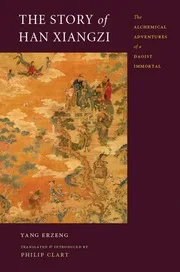
The Story of Han Xiangzi - The Alchemical Adventures of a Daoist Immortal
 75
75

The Story of Han Xiangzi - The Alchemical Adventures of a Daoist Immortal



Cassian Rothmann (Senior Critic, Ancient Wisdom) — 'The Story of Han Xiangzi' is a luminous portal into the alchemical heart of Chinese esotericism. The unknown author masterfully crafts a narrative that is both an adventure and a profound spiritual treatise. Han Xiangzi’s journey is a masterclass in the pursuit of immortality, not merely as an end, but as a catalyst for spiritual awakening and the dissemination of sacred knowledge. The novel's strength lies in its vivid depiction of inter-faith dialogues and its seamless integration of poetry and song, which elevate the narrative beyond mere storytelling to a form of devotional art. This work is indispensable for scholars of Daoism and hermeticism, and a deeply rewarding experience for dedicated spiritual practitioners seeking to understand the transformative power of ancient wisdom.
📝 Description
75
Published in the 17th century, 'The Story of Han Xiangzi' details an immortal's quest for spiritual transformation.
This novel recounts the 17th-century Daoist immortal Han Xiangzi's journey through various spiritual planes. His objective is to guide his Confucian uncle, Han Yu, toward understanding Daoist principles. The narrative unfolds through vivid descriptions of celestial, earthly, and underworld settings, illustrating Han Xiangzi's alchemical ascent. The text includes original poems and songs that punctuate the story, adding depth to the spiritual and philosophical discussions.
Written in a vernacular style, the book reveals the complex interactions between Confucianism, Daoism, and Buddhism within Chinese spiritual thought. It presents a unique look at the pursuit of immortality and the transformation of the self. The story serves as a window into the esoteric beliefs and practices prevalent in China during that era.
This work belongs to the tradition of Daoist hagiography, specifically focusing on the life and exploits of an immortal. It draws on concepts of internal alchemy (neidan) and the pursuit of longevity or transcendence, common themes in religious Daoism. The narrative structure, detailing an individual's spiritual journey and eventual apotheosis, is a recurring motif in esoteric literature across various cultures. Its exploration of the interplay between different philosophical schools also reflects the syncretic nature of Chinese religious thought.
💡 Why Read This Book?
Embark on an extraordinary journey of spiritual discovery and alchemical transformation. This novel offers a rare and captivating exploration of Daoist immortality, philosophical debates, and the interplay of East Asian spiritual traditions. Ideal for seekers of esoteric wisdom, scholars of Asian history and religion, and practitioners yearning for a deeper understanding of mystical paths.
⭐ Reader Reviews
Honest opinions from readers who have explored this book.
❓ Frequently Asked Questions
Who is Han Xiangzi?
Han Xiangzi is a prominent figure in Chinese mythology, celebrated as one of the Eight Immortals in Daoism. He is renowned for his mastery of alchemy and his profound spiritual insights, often depicted as a musician and a wanderer.
What is the significance of alchemy in this story?
Alchemy in this context transcends mere material transmutation; it symbolizes the spiritual purification and transformation of the self, leading to immortality and profound enlightenment. It represents a path of inner refinement.
What is the historical context of this novel?
Written in the 17th century during the late Ming or early Qing dynasty, the novel reflects a period of rich cultural and spiritual exchange in China, influenced by established Confucianism, evolving Daoism, and introduced Buddhism.
What kind of language is used in the novel?
The novel is written in lively, accessible vernacular Chinese prose, making complex philosophical ideas understandable. It is further enriched by interspersed poems and songs, adding lyrical beauty and emotional depth.
Is Han Yu a real historical figure?
Yes, Han Yu was a real and influential historical figure in Chinese history, a prominent Confucian scholar and official of the Tang Dynasty. His portrayal in the novel as Han Xiangzi's uncle provides a fascinating contrast between Confucian materialism and Daoist spirituality.
🔮 Key Themes & Symbolism
The Pursuit of Immortality and Spiritual Ascension
The narrative centers on Han Xiangzi's relentless quest for immortality, a paramount goal in Daoist philosophy. This pursuit is not merely physical endurance but a profound alchemical process of spiritual refinement, purification of the mind and body, and transcendence of worldly attachments. The story illustrates the various stages and challenges involved in achieving this elevated state, revealing it as a journey of profound self-discovery and cosmic integration. It explores the esoteric practices and inner transformations necessary to break free from the cycle of birth and death, offering a glimpse into the ultimate realization of the Dao.
The Clash and Synthesis of Philosophical Traditions
A central theme is the intellectual and spiritual contention between Confucianism, Daoism, and Buddhism. Han Xiangzi's mission to convert his uncle, Han Yu, highlights the stark differences in worldview: Confucianism's emphasis on social order and worldly duty versus Daoism's focus on natural harmony, spontaneity, and spiritual liberation. The novel depicts vibrant debates and dialogues, showcasing the strengths and limitations of each philosophical system. Ultimately, it suggests the possibility of a synthesis or a higher understanding that can encompass the wisdom of all three, reflecting the complex spiritual range of imperial China.
The Alchemical Journey of Self-Transformation
Beyond the pursuit of external immortality, the novel delves deeply into the internal alchemical process of self-transformation. Han Xiangzi's adventures serve as allegories for the soul's journey through various trials and initiations. This inner alchemy involves shedding ego, cultivating virtue, understanding the cosmic forces (Yin and Yang), and harmonizing with the universal flow of the Dao. The novel suggests that true immortality is achieved not through external elixirs but through radical internal change, where the individual becomes one with the fundamental principles of existence, embodying wisdom, compassion, and boundless spiritual energy.
💬 Memorable Quotes
Direct passages from the work, attributed to the author.
“The heavens weep dew, the earth exhales mist; the Dao flows, the spirit resists not.”
— This poetic line captures the Daoist ideal of effortless action and harmony with nature. It suggests that true spiritual progress comes from yielding to the natural order, much like celestial phenomena, rather than forceful resistance.
“The Confucian scrolls speak of duty, but the Dao whispers of freedom.”
— This highlights the fundamental divergence between Confucian pragmatism and Daoist liberation. While Confucianism emphasizes societal roles, Daoism champions the release from all constraints to embrace one's true, unadulterated nature.
“In the underworld's silence, a single bell chime can shake the foundations of illusion.”
— This suggests that even in the darkest, most illusion-laden realms, a moment of profound truth or spiritual awakening (represented by the bell chime) can shatter falsehoods and reveal underlying reality.
“The Immortal's path is not walked, but breathed; not seized, but surrendered.”
— This emphasizes the non-dualistic and effortless nature of spiritual attainment in Daoism. It is a state of being achieved through surrender and alignment with the Dao, rather than through strenuous effort or acquisition.
💡 Key Ideas
Editorial paraphrase of the work's core concepts — not direct quotes.
To seek the Elixir is to find the Self; to refine the body is to awaken the Soul.
This quote speaks to the core of alchemical philosophy, asserting that the external quest for an elixir of immortality is an inner journey of self-discovery and spiritual awakening. True transformation is internal.
🌙 Esoteric Significance
Tradition
This work is deeply rooted in the Daoist tradition, specifically focusing on the esoteric path of achieving immortality through alchemical practices, both internal and external. It explores concepts of spiritual cultivation, the pursuit of the Dao (the Way), and the transcendence of the material world. The narrative also engages with the broader spectrum of Chinese spiritual thought, including elements of folk religion and Buddhist philosophy, showcasing a syncretic approach common in popular religious literature.
Symbolism
The novel is rich with symbolism, where elements like the journey through different realms (earth, heaven, underworld) represent stages of spiritual consciousness. Alchemy itself symbolizes the purification and transformation of the self, turning the 'lead' of ordinary existence into the 'gold' of spiritual enlightenment. Han Xiangzi's flute and his ability to control elements are symbolic of his mastery over the forces of nature and his refined spiritual energy. The contrast between Han Yu's Confucian robes and Han Xiangzi's immortal attire symbolizes the disparity between worldly ambition and spiritual liberation.
Modern Relevance
In an era often characterized by materialism and existential questioning, 'The Story of Han Xiangzi' offers timeless wisdom on the pursuit of meaning, spiritual fulfillment, and inner peace. Its exploration of self-transformation, the harmony between humanity and nature, and the dialogue between different belief systems resonates deeply with contemporary seekers. The novel provides a powerful antidote to the superficiality of modern life, encouraging a deeper connection to oneself and the universe, and offering a compelling vision of transcending limitations through wisdom and spiritual discipline.
👥 Who Should Read This Book
This captivating novel is a treasure for a diverse readership. **Beginners** to Eastern mysticism will find an accessible yet profound entry point into Daoist philosophy and the concept of spiritual immortality. **Scholars** of Asian history, religious studies, and comparative literature will appreciate its rich historical context, nuanced philosophical debates, and literary artistry. **Seekers** of esoteric knowledge will be drawn to its exploration of hidden spiritual paths, alchemical symbolism, and the quest for transcendence. **Practitioners** of meditation, energy work, or any spiritual discipline will find inspiration and insight into the principles of inner transformation and the pursuit of higher consciousness.
📜 Historical Context
Emerging in the 17th century, a period marked by intellectual ferment and shifting dynastic power in China, 'The Story of Han Xiangzi' reflects the enduring appeal of Daoist ideals amidst a complex societal and religious landscape. This era saw the continued flourishing of popular literature that often blended historical figures with mythological narratives, allowing for the exploration of profound spiritual themes through engaging storytelling. The novel’s vivid portrayal of debates between Confucianism, Daoism, and Buddhism speaks to the ongoing dialogue and occasional tension between these major philosophical and religious currents that shaped Chinese civilization. The vernacular prose and inclusion of poetry suggest an effort to reach a broader audience, disseminating esoteric knowledge and spiritual aspirations beyond scholarly circles, and contributing to the body of Chinese literary and religious tradition.
📔 Journal Prompts
Reflect on a time you felt a profound connection to nature. How did it mirror the Daoist concept of harmony?
Consider the 'alchemy' of your own life. What 'base metals' within you are you seeking to transform into 'gold'?
If you were to debate Han Xiangzi and Han Yu, what arguments would you present for your own philosophical or spiritual path?
What does 'immortality' mean to you, beyond the physical sense? How can one strive for a form of spiritual or legacy-based immortality?
Explore the symbolism of a journey through different realms in your own personal growth or spiritual development.
🗂️ Glossary
Dao (Tao)
The fundamental principle of the universe in Daoism. It refers to the natural order, the underlying essence, and the 'Way' that governs all existence, often described as ineffable and eternal.
Immortal (Xian)
In Daoism, a being who has achieved immortality through spiritual cultivation, alchemical practices, and transcendence of the mortal realm. They possess extraordinary powers and longevity.
Alchemy (Lian Dan)
In Daoism, a spiritual discipline focused on transforming the self (internal alchemy) or creating elixirs (external alchemy) to achieve longevity and spiritual enlightenment. It symbolizes purification and metamorphosis.
Confucianism
A philosophy and ethical system emphasizing morality, social harmony, good governance, and respect for tradition and hierarchy, founded by Confucius.
Underworld (Diyu)
In Chinese cosmology, the field of the dead or the netherworld, often depicted as a place of judgment and purgation, analogous to hells in other traditions, from which souls may eventually be reborn.
This book appears in 4 collections
🔮 Readers Also Liked
Browse all →






From the “Hermeticism” Collection
View all →








More Free Alchemy & Hermeticism Books
View all →