Who was Nostradamus?
Michel de Nostredame, known as Nostradamus, was a French astrologer and physician who published collections of prophecies in his work "Les Prophéties." Written in a mix of French, Latin, and Occitan, these prophecies are presented in quatrains (four-line verses) and are famously cryptic. He gained renown during his lifetime and has remained a subject of fascination for centuries due to perceived accurate predictions of historical events.
Best Books for Complete Beginners
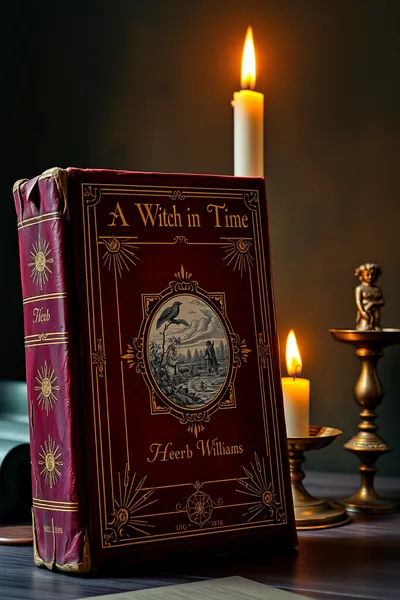
For those new to Nostradamus, begin with works that offer broad context and accessible introductions. Charles Mackay's "Memoirs of Extraordinary Popular Delusions - Volume 2" provides historical context for prophetic phenomena, placing Nostradamus within a tradition of popular belief. "The House of Arden" by E. Nesbit, while fiction, can offer a narrative entry point to the mystique surrounding prophecies for younger or less academic readers. "A Witch in Time" by Herb Williams offers a more contemporary, albeit fictionalized, exploration of time-travel and prophecy themes that resonate with Nostradamus' legacy.
Intermediate Reading
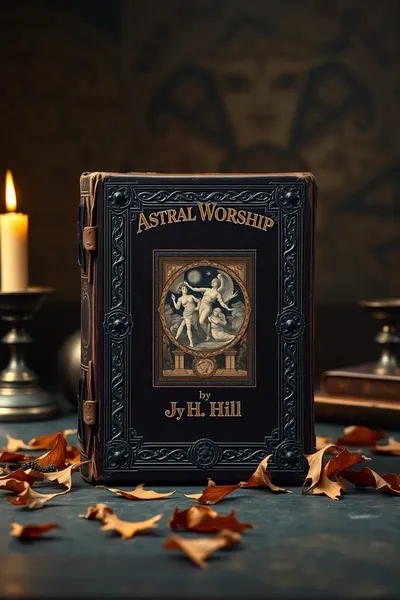
Moving beyond introductions, engage with texts that delve deeper into the nature of prophecy and its historical underpinnings. "The Superstitions of Witchcraft" by Howard Williams and "The Witch-cult in Western Europe" by Margaret Alice Murray explore related belief systems that influenced the era. "Astral Worship" by J. H. Hill touches upon celestial influences, a key element in astrological interpretation. "Paganism Surviving in Christianity" by Abram Herbert Lewis examines the persistence of older beliefs, relevant to understanding the syncretic nature of some prophetic traditions.
Classical / Advanced Texts
For serious students, direct engagement with primary source material and comprehensive historical scholarship is essential. Lynn Thorndike's "A History of Magic and Experimental Science" (Volumes 1 & 2) offers a monumental scholarly examination of the scientific and occult traditions of the Middle Ages and Renaissance. "Religions of Ancient China" by Herbert Allen Giles and "The Sufistic Quatrains of Omar Khayyam" provide comparative insights into different esoteric traditions. "Hebraic Literature; Translations from the Talmud, Midrashim and Kabbala" offers a window into mystical Jewish thought, a tradition that influenced many esoteric currents.
Reading Order — Step by Step
Begin your study with an overview of popular beliefs and historical context. Weeks 1-2: Read Charles Mackay's "Memoirs of Extraordinary Popular Delusions - Volume 2" to understand the field of popular belief in prophecy. Month 2: Explore related esoteric traditions with Howard Williams' "The Superstitions of Witchcraft" and J. H. Hill's "Astral Worship." Month 3: Look at foundational historical scholarship with Lynn Thorndike's "A History of Magic and Experimental Science, Volume 1." Continue with Volume 2, then explore comparative religious texts like "Religions of Ancient China" and "Hebraic Literature."
Frequently Asked Questions
Which Nostradamus book should I read first?
Start with Charles Mackay's "Memoirs of Extraordinary Popular Delusions - Volume 2." It provides crucial historical context for understanding how people interpreted prophecies in the past, setting the stage for Nostradamus.
Are Nostradamus' prophecies real?
Nostradamus' prophecies are a subject of ongoing debate. Many believe his quatrains are so vague they can be retroactively applied to events, while others see genuine predictive power. Studying historical context is key to forming your own conclusion.
What language did Nostradamus write in?
Nostradamus wrote "Les Prophéties" primarily in a mix of French, Latin, and Occitan. This linguistic complexity, along with his cryptic style, contributes to the difficulty in interpreting his verses.
What is a quatrain?
A quatrain is a four-line stanza of poetry. Nostradamus organized his prophecies into quatrains, making his predictions concise yet open to multiple interpretations.
How did Nostradamus' contemporaries view him?
Nostradamus was a respected physician and astrologer during his lifetime. He corresponded with influential figures and was known for his almanacs and his book of prophecies, which garnered him considerable fame.
What is the historical significance of studying Nostradamus?
Studying Nostradamus offers insight into historical beliefs about fate, prophecy, and the occult. It also reveals how texts can be interpreted and reinterpreted across centuries, reflecting the concerns of different eras.
Where can I find primary texts related to Nostradamus?
While direct primary texts by Nostradamus are rare, works like "Pistis Sophia" and "Hebraic Literature" offer windows into the esoteric and religious traditions that informed his worldview and the interpretations of his prophecies.