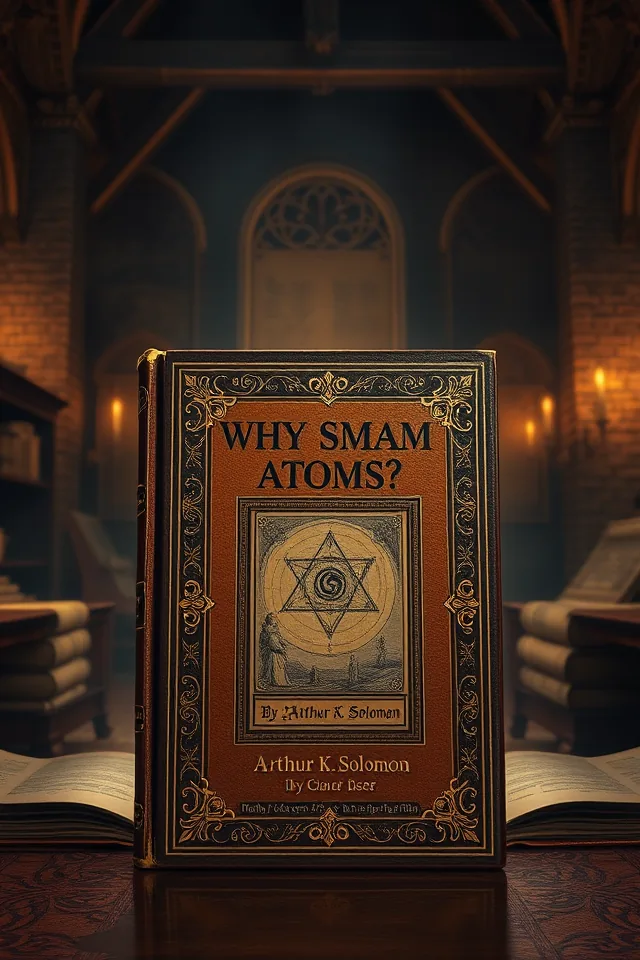
Why smash atoms?
 61
61

Why smash atoms?

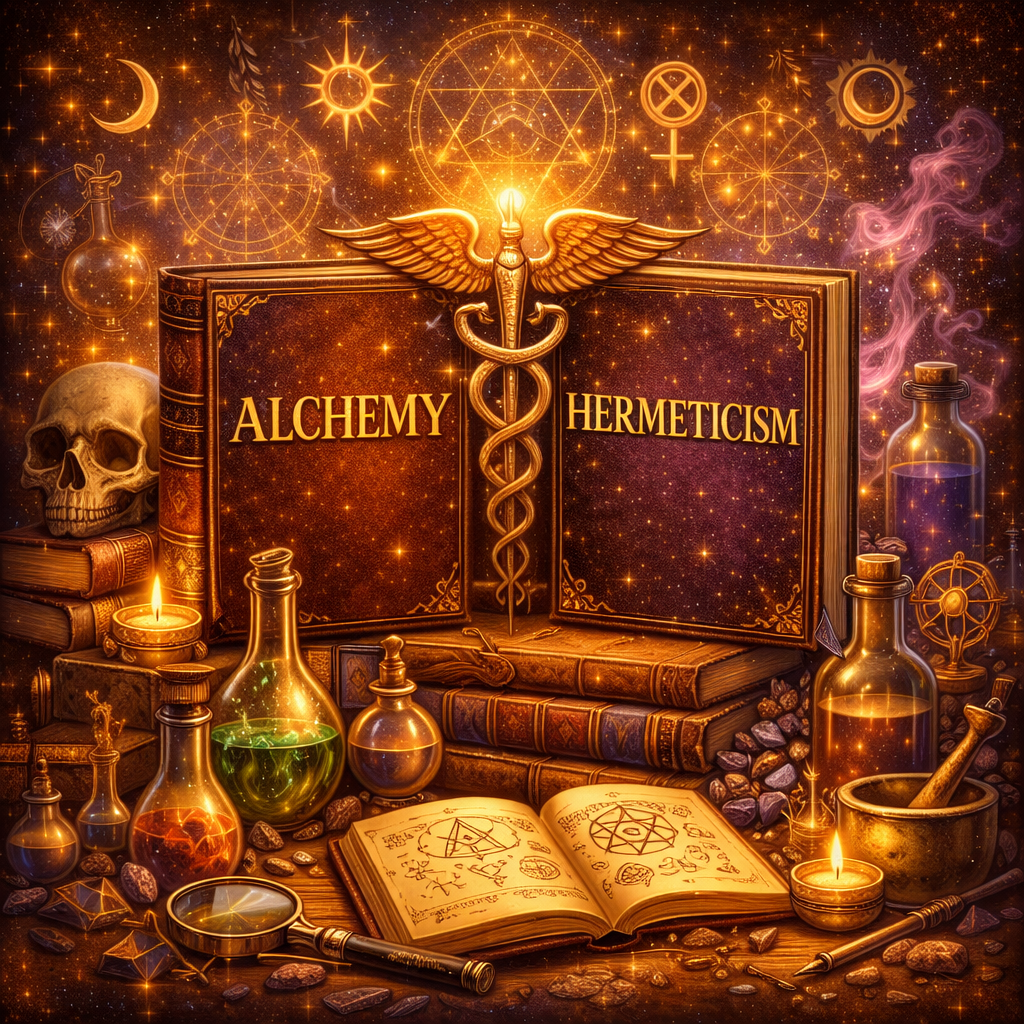

Review by Lorelei Sage (Contemplative Literature Editor) — Arthur K. Solomon's 'Why Smash Atoms?' is a tour de force that bridges the gap between scientific discovery and esoteric wisdom. Solomon's insights into the hermetic traditions of alchemy are both illuminating and thought-provoking. The book's strength lies in its ability to make complex scientific concepts accessible through the lens of mystical symbolism. Ideal for readers who seek to understand the deeper, hidden meanings behind scientific advancements, this work is a must-read for anyone interested in the intersection of science and spirituality.
📝 Description
61
Arthur K. Solomon's 1977 book questions the mystical roots of nuclear physics.
Arthur K. Solomon's 'Why Smash Atoms?' examines the connections between alchemy, hermeticism, and the science of nuclear physics. Published in 1977, the book suggests that modern atomic research has roots in older, mystical traditions. Solomon looks at the symbolic meanings behind splitting the atom and the concepts of transmutation that were central to alchemy.
The author connects occult symbolism to nuclear energy and equipment like cyclotrons. He aims to show how these esoteric ideas might have influenced scientific thought. The book encourages contemplation on the philosophical implications of atomic science, particularly how the manipulation of atoms affects human consciousness and the wider universe. It is written for those interested in the less obvious connections between science and mysticism.
This work sits within the tradition of Western esotericism that seeks parallels between ancient symbolic systems and modern scientific discoveries. It follows in a lineage of thought that views scientific progress not as a break from the past, but as a continuation or reinterpretation of older, hidden knowledge. Authors in this vein often look to figures like Hermes Trismegistus or the alchemical philosophers to understand the deeper, symbolic currents underlying material reality and human understanding.
💡 Why Read This Book?
Why read 'Why Smash Atoms?'? This book offers a unique perspective on nuclear physics, revealing the alchemical and hermetic principles that underpin modern science. Ideal for seekers of hidden knowledge, scholars of esoteric traditions, and practitioners of alchemy, this work provides a profound understanding of atomic transmutation and its symbolic significance.
⭐ Reader Reviews
Honest opinions from readers who have explored this book.
❓ Frequently Asked Questions
What is the main theme of 'Why Smash Atoms?'?
The main theme is the exploration of the alchemical and hermetic principles behind nuclear physics, focusing on atomic transmutation and its symbolic significance.
Who is the intended audience for this book?
The intended audience includes seekers of hidden knowledge, scholars of esoteric traditions, and practitioners of alchemy.
Does this book require prior knowledge of nuclear physics?
While some familiarity with nuclear physics can enhance understanding, the book is written in an accessible manner that focuses on the mystical and philosophical aspects.
What are some key symbols discussed in the book?
Key symbols include the atom, cyclotrons, and the process of atomic transmutation, all explored through the lens of alchemical and hermetic traditions.
How does this book contribute to modern esoteric practices?
'Why Smash Atoms?' provides a deeper understanding of the esoteric principles behind modern scientific discoveries, enriching the practices of alchemists and other esoteric practitioners.
🔮 Key Themes & Symbolism
Alchemical Principles
Solomon studies the alchemical traditions that underpin nuclear physics, revealing the symbolic and philosophical significance of atomic transmutation. This theme explores the hidden knowledge that connects ancient alchemy with modern science.
Hermetic Symbolism
The book is rich in hermetic symbolism, using the language of the hermetic tradition to interpret scientific concepts. This theme highlights the mystical underpinnings of nuclear energy and the cyclotrons used in atomic research.
Philosophical Implications
Solomon examines the wide implications of atomic transmutation on the human spirit and the cosmos. This theme invites readers to ponder the deeper, hidden meanings behind scientific advancements and their impact on our understanding of the universe.
💬 Memorable Quotes
Direct passages from the work, attributed to the author.
“Transmutation is not just a scientific process but a spiritual journey.”
— Solomon emphasizes the spiritual dimensions of atomic transmutation, inviting readers to explore the deeper, esoteric meanings behind scientific discoveries.
“Nuclear energy is the fire of the alchemist, burning away impurities to reveal pure essence.”
— Solomon uses the symbolism of fire to explore the transformative power of nuclear energy, suggesting that it has the potential to purify and reveal the essence of matter.
💡 Key Ideas
Editorial paraphrase of the work's core concepts — not direct quotes.
The atom is the microcosm of the universe, a symbol of the divine within.
This quote underscores the mystical significance of atomic research, suggesting that the atom holds the key to understanding the divine.
The cyclotron is a modern alchemical tool, transforming matter fundamentally, .
This quote highlights the alchemical principles behind modern scientific technology, revealing the hidden knowledge that connects ancient alchemy with contemporary science.
The atom is a gateway to the mysteries of the cosmos.
This quote invites readers to ponder the deeper, esoteric meanings behind atomic research, suggesting that the atom holds the key to understanding the mysteries of the universe.
🌙 Esoteric Significance
Tradition
This book belongs to the Hermetic tradition, which emphasizes the mystical and esoteric dimensions of scientific discovery. Solomon's work draws on the principles of alchemy and hermetic symbolism to explore the deeper meanings behind nuclear physics.
Symbolism
Key symbols include the atom, cyclotrons, and the process of atomic transmutation. These symbols are interpreted through the lens of alchemical and hermetic traditions, revealing the hidden knowledge that connects ancient wisdom with modern science.
Modern Relevance
This book is relevant today for modern practitioners of alchemy and other esoteric traditions. It provides a deeper understanding of the esoteric principles behind scientific discoveries, enriching the practices of seekers of hidden knowledge.
👥 Who Should Read This Book
Beginners interested in the esoteric dimensions of science will find 'Why Smash Atoms?' an accessible introduction to the mystical underpinnings of nuclear physics. Scholars of esoteric traditions will appreciate the depth of Solomon's insights into alchemical and hermetic principles. Spiritual seekers will be inspired by the philosophical implications of atomic transmutation, while practitioners of alchemy will find valuable insights into the symbolic significance of modern scientific technology.
📜 Historical Context
Published in an era of rapid scientific discovery, 'Why Smash Atoms?' reflects the growing interest in the esoteric dimensions of nuclear physics. Solomon's work was influential in bridging the gap between scientific advancements and mystical traditions, providing a deeper understanding of the symbolic and philosophical significance of atomic transmutation. This book remains relevant today, offering insights into the hidden knowledge that underpins modern science.
📔 Journal Prompts
How does the symbolism of the atom relate to your understanding of the divine?
In what ways can atomic transmutation be seen as a spiritual journey?
How does the cyclotron serve as a modern alchemical tool?
What are the philosophical implications of nuclear energy on your spiritual practice?
How can the mysteries of the cosmos be explored through atomic research?
🗂️ Glossary
Alchemy
The ancient practice of transforming matter, often symbolically representing spiritual transformation.
Hermeticism
A philosophical and spiritual tradition based on the writings of Hermes Trismegistus, emphasizing the mystical and esoteric dimensions of knowledge.
Atomic Transmutation
The process of changing one element into another through nuclear reactions.
Cyclotron
A type of particle accelerator used in atomic research to accelerate charged particles to high energies.
Microcosm
A small system having the characteristics of a larger one, often used symbolically to represent the individual's relationship to the universe.
This book appears in 3 collections
🔮 Readers Also Liked
Browse all →









From the “Hermeticism” Collection
View all →









More Free Alchemy & Hermeticism Books
View all →