What is Transmutation?
Transmutation, in its broadest esoteric sense, refers to the process of transformation, often from a lower to a higher state of being or understanding. This concept is deeply rooted in alchemy, where it described the supposed conversion of base metals into gold, but also signified a profound spiritual purification and enlightenment for the practitioner. It extends beyond material change to encompass psychological, spiritual, and even cosmic shifts.
Best Books for Complete Beginners
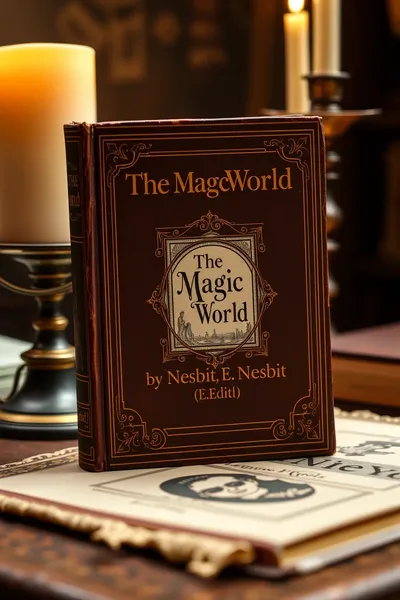
For those new to transmutation, starting with accessible explorations of alchemical and mystical themes is beneficial. Herbert Silberer's 'Hidden Symbolism of Alchemy and the Occult Arts' offers a foundational look at symbolic meanings. Manly P. Hall's 'The Initiates of the Flame' provides an overview of spiritual development. Frank Hamel's 'Human Animals' touches on biological and psychic transformations. Edith Nesbit's 'The Magic World' offers a fictional yet insightful glimpse into magical processes and change.
Intermediate Reading
Moving beyond basics, intermediate readers can explore more specific historical and philosophical texts. Evelyn Underhill's 'The essentials of mysticism, and other essays' examines the nature of mystical experience. John Oakesmith's 'The religion of Plutarch' provides context on ancient philosophical thought regarding transformation. George William Russell's 'AE in the Irish Theosophist' explores spiritual insights. Roger Bacon's 'The Mirror of Alchimy' presents a historical alchemical perspective.
Classical / Advanced Texts
Advanced study requires engaging with primary alchemical and philosophical sources. Jacob Boehme's 'Dialogues on the Supersensual Life' and 'Threefold Life of Man' offer complex theological and mystical concepts. Michal Sedziwój's 'A New Light of Alchymie' is a significant alchemical treatise. Arthur Edward Waite's 'Lives of alchemystical philosophers' is a scholarly compilation of historical figures and their pursuits.
Reading Order — Step by Step
Begin with introductory texts like Silberer's 'Hidden Symbolism of Alchemy' and Hall's 'The Initiates of the Flame' for the first month. In month two, explore Underhill's 'The essentials of mysticism' and Oakesmith's 'The religion of Plutarch' to broaden context. For months three and beyond, engage with primary sources such as Boehme's 'Threefold Life of Man' and Sedziwój's 'A New Light of Alchymie', referencing Waite's 'Lives of alchemystical philosophers' for historical grounding.
Frequently Asked Questions
Which transmutation book should I read first?
Start with Herbert Silberer's 'Hidden Symbolism of Alchemy and the Occult Arts' for a foundational understanding of alchemical symbolism and its connection to transformation.
Is transmutation only about turning lead into gold?
While literal gold-making was a focus of historical alchemy, transmutation in esoteric traditions primarily refers to the inner transformation of the individual into a higher spiritual state.
What is the difference between alchemy and mysticism?
Alchemy often involves symbolic processes and material manipulation to achieve transformation, while mysticism focuses on direct experience and union with the divine or ultimate reality.
Are there modern books on transmutation?
While many texts here are historical, authors like Manly P. Hall and Evelyn Underhill bridge historical concepts with more contemporary esoteric and mystical thought.
Where does Jacob Boehme fit into transmutation studies?
Boehme is a central figure in Western esotericism, whose complex theological and alchemical writings, such as 'Threefold Life of Man,' explore profound spiritual transmutation.
Can fiction help understand transmutation?
Yes, works like Edith Nesbit's 'The Magic World' can offer imaginative insights into the principles of change and magical processes, making abstract concepts more relatable.