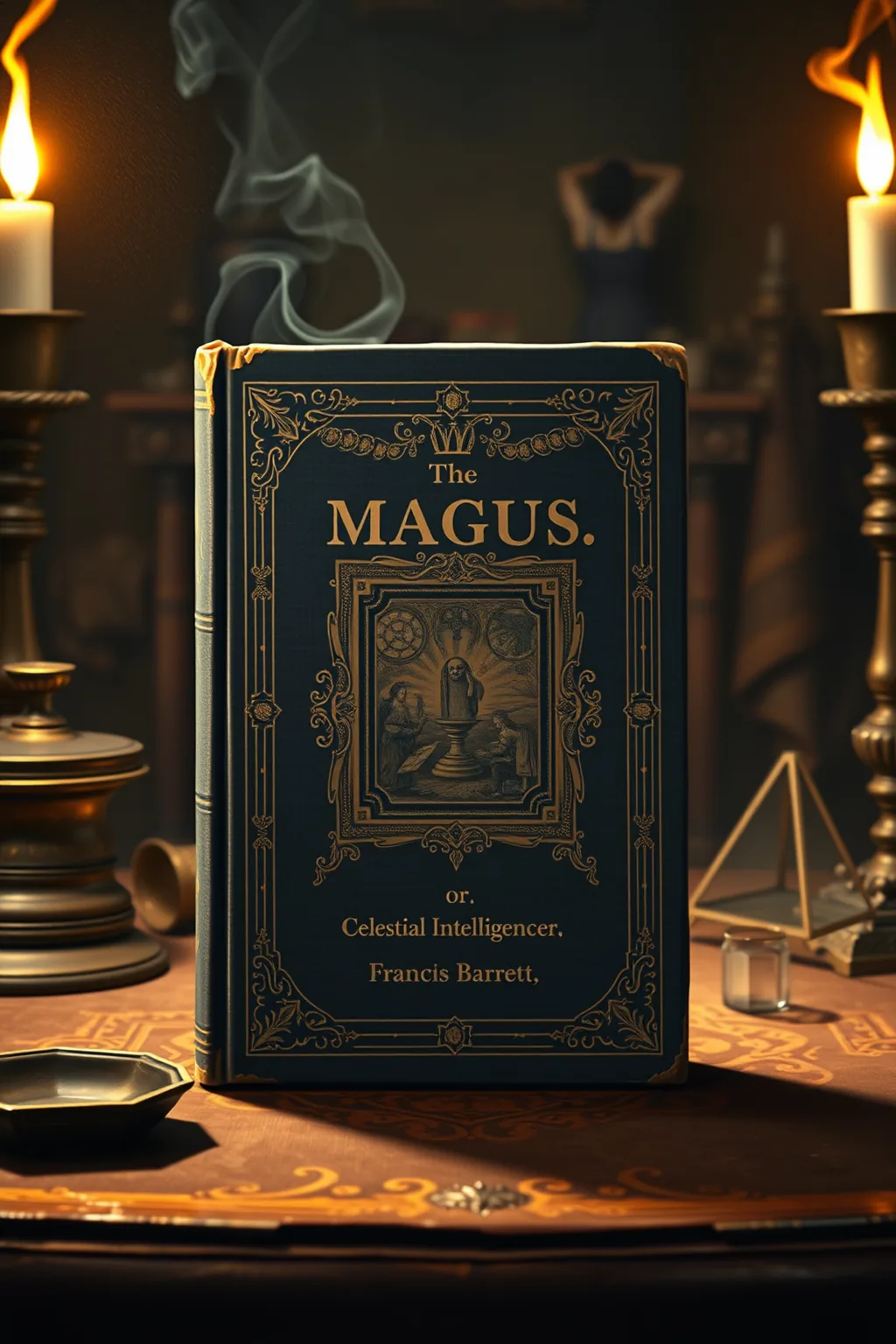
The magus, or, Celestial intelligencer
 95
95

The magus, or, Celestial intelligencer


Review by Celeste Moreau (Divination & Symbolism Reviewer) — 'The Magus, or Celestial Intelligencer' is a masterpiece of occult literature, offering unparalleled insights into the arcane practices of alchemy and magic. Francis Barrett's work is a comprehensive guide for those who wish to explore the hidden dimensions of nature and the self. The book's strength lies in its ability to present complex esoteric concepts in a clear and accessible manner, making it an invaluable resource for both novice and seasoned practitioners of the mystical arts. This is a must-read for anyone interested in the intersection of science and spirituality.
📝 Description
95
Francis Barrett published 'The Magus' in 1801, detailing esoteric arts.
Francis Barrett's 'The Magus, or Celestial Intelligencer', first published in 1801, is a compendium of occult philosophy and practice. Barrett, a professor of chemistry, approached the subject with a systematic mind, attempting to bridge alchemical theory with observable phenomena. The book covers a wide range of topics, including angelology, magic, and the interpretation of symbols within hermetic traditions. He presents rituals and methods for spiritual attainment, drawing on sources from Kabbalah, ancient Greek magic, and Renaissance occultism.
Barrett aimed to organize and codify esoteric knowledge that was previously scattered and obscure. His work reflects the intellectual climate of the early 19th century, a period marked by a renewed interest in mysticism alongside scientific advancement. 'The Magus' was intended to serve as a practical guide for those interested in the deeper workings of the universe and the human soul, making complex ideas accessible to a dedicated readership.
Published in 1801, 'The Magus' emerged during a period of intense revival for Western esotericism. It stands as a key text from the early modern era of occultism, influenced by earlier figures like Agrippa and Dee, and predating later movements like Spiritualism and Theosophy. Barrett synthesized diverse traditions, including Kabbalistic lore, Neoplatonic philosophy, and practical magic, presenting them in a structured format. The book reflects a scholarly yet practical approach to understanding spiritual forces and their interaction with the material world.
💡 Why Read This Book?
Why read this book — 'The Magus, or Celestial Intelligencer' is essential reading for seekers of hidden knowledge, scholars of the occult, and practitioners of alchemy. It provides a comprehensive overview of the hermetic arts, offering deep insights into the symbolism and rituals that have fascinated mystics for centuries. This book is a gateway to understanding the profound philosophical significance of alchemy and its relevance in the modern world.
⭐ Reader Reviews
Honest opinions from readers who have explored this book.
❓ Frequently Asked Questions
What is the main focus of 'The Magus, or Celestial Intelligencer'?
The main focus is on alchemy and the occult, providing a detailed exploration of hermetic symbols and rituals.
Who is the intended audience for this book?
The intended audience includes seekers of esoteric knowledge, scholars of the occult, and practitioners of alchemy.
Is this book suitable for beginners?
While it is accessible to beginners, it is particularly valuable for those with some prior knowledge of alchemy and the occult.
What makes this book unique?
Its uniqueness lies in the author's ability to blend scientific inquiry with spiritual alchemy, making it a bridge between the physical and metaphysical worlds.
Are there any modern applications of the concepts discussed in this book?
Yes, many modern practitioners of alchemy and the occult use the principles and symbols discussed in this book in their practices.
🔮 Key Themes & Symbolism
Alchemy
Alchemy is the central theme, exploring the transformation of matter and the self through hermetic practices. The book explores the symbolism of alchemical processes, revealing the deep philosophical and spiritual significance behind these ancient rituals.
Occultism
Occultism is another key theme, encompassing a wide range of mystical and esoteric practices. Barrett provides insights into the hidden dimensions of nature and the self, making this book a comprehensive guide for those interested in the occult.
Symbolism
Symbolism is crucial in 'The Magus,' with Barrett using symbols to convey complex esoteric concepts. The book is rich in hermetic symbols, each with its own deep meaning, providing a gateway to understanding the mystical arts.
💬 Memorable Quotes
Direct passages from the work, attributed to the author.
“The alchemist's work is a journey of the soul.”
— This highlights the spiritual dimension of alchemy, where the transformation of matter is a metaphor for inner transformation.
“Symbols are the language of the divine.”
— This emphasizes the importance of symbolism in the occult, where symbols are used to convey divine truths.
“The Magus bridges the gap between science and spirituality.”
— This reflects Barrett's unique approach, blending scientific inquiry with spiritual alchemy.
“The secrets of the universe are hidden in plain sight.”
— This expresses the book's theme of hidden knowledge, suggesting that the mysteries of the universe are accessible to those who seek them.
💡 Key Ideas
Editorial paraphrase of the work's core concepts — not direct quotes.
The Magus reveals the hidden secrets of nature.
This quote underscores the book's exploration of the occult and alchemy, revealing the deep mysteries of the natural world.
🌙 Esoteric Significance
Tradition
This book belongs to the Hermetic tradition, which emphasizes the unity of all things and the transformation of the self through spiritual and alchemical practices. It draws on ancient hermetic texts and symbols to provide a comprehensive guide to the mystical arts.
Symbolism
Key symbols in this book include the philosopher's stone, the ouroboros, and the hermetic seal. Each symbol carries deep esoteric meanings, representing the transformation of matter, the cyclical nature of life, and the sealing of divine wisdom, respectively.
Modern Relevance
Today, 'The Magus' remains relevant for modern practitioners of alchemy and the occult. Its principles and symbols are still used in contemporary esoteric practices, making it a timeless resource for seekers of hidden knowledge.
👥 Who Should Read This Book
This book is ideal for beginners seeking an introduction to alchemy and the occult, as well as scholars who wish to deepen their understanding of hermetic practices. Spiritual seekers will find it a valuable guide to the mystical arts, while practitioners will appreciate its comprehensive exploration of esoteric symbols and rituals. It is particularly suitable for those interested in the intersection of science and spirituality.
📜 Historical Context
Published in the early 19th century, 'The Magus, or Celestial Intelligencer' was written during a time of great intellectual and spiritual ferment. The era saw a renewed interest in the occult and alchemy, as well as a growing fascination with the mysteries of nature. Barrett's work was influential in bridging the gap between scientific inquiry and spiritual alchemy, making it a seminal text in the field of esoteric studies. Its influence can still be seen in modern occult practices and alchemical studies.
📔 Journal Prompts
Reflect on the significance of alchemical symbols in your own spiritual journey.
How does the transformation of matter in alchemy relate to personal transformation?
What role does symbolism play in your understanding of the occult?
Consider the ways in which science and spirituality intersect in your life.
How can the principles of alchemy be applied to modern-day challenges?
🗂️ Glossary
Alchemy
The ancient practice of transforming base metals into gold, often seen as a metaphor for spiritual transformation.
Hermeticism
A philosophical and spiritual tradition based on the teachings of Hermes Trismegistus, emphasizing the unity of all things.
Ouroboros
A symbol of a serpent swallowing its own tail, representing the cyclical nature of life and the eternal return.
Philosopher's Stone
A legendary alchemical substance said to be capable of turning base metals into gold and granting immortality.
Hermetic Seal
A symbol representing the sealing of divine wisdom and the protection of esoteric knowledge.
This book appears in 3 collections
🔮 Readers Also Liked
Browse all →




![Herrman's [sic] black art](/img/thumb/herrman-s-sic-black-art-alexander-herrmann.webp)



More by Barrett, Francis F.R.C., Prof. of Chemistry
All books →
From the “Hermeticism” Collection
View all →








More Free Alchemy & Hermeticism Books
View all →