What is the Afterlife?
The afterlife refers to a belief in existence after physical death. Concepts vary widely across cultures and religions, encompassing notions of heaven, hell, reincarnation, spirit realms, or a dissolution of consciousness. Investigations into the afterlife often involve philosophical arguments, religious doctrines, personal testimonies, and psychical research seeking empirical evidence for survival.
Best Books for Complete Beginners
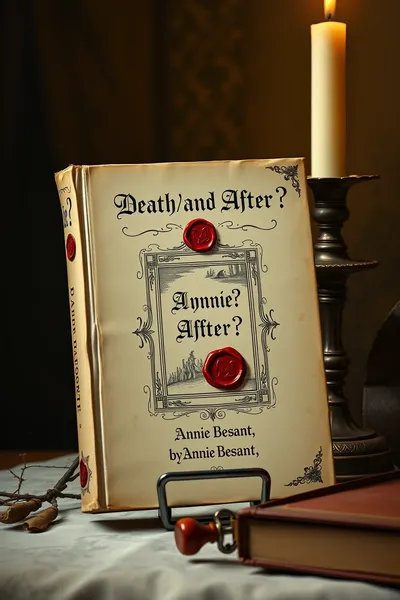
For those new to the subject, starting with accessible overviews is recommended. Arthur Conan Doyle's 'The New Revelation' (1918) provides a personal account of his investigations into spiritualism. Annie Besant's 'Death—and After?' offers a concise exploration of spiritualist perspectives. 'The Road to En-Dor' by E. H. Jones (1920) details an extraordinary escape that touches on the persistence of consciousness. These texts introduce core ideas without overwhelming complexity.
Intermediate Reading
Moving beyond introductory material, explore more detailed investigations and broader philosophical contexts. Sir Oliver Lodge's 'Raymond; or, Life and Death' (1916) presents extensive evidence for survival. Camille Flammarion's 'Mysterious Psychic Forces' (1907) documents a wide range of psychical research. Andrew Lang's 'The Making of Religion' (1898) examines cross-cultural beliefs surrounding the soul and afterlife. These works offer deeper analysis and a wider array of reported phenomena.
Classical / Advanced Texts
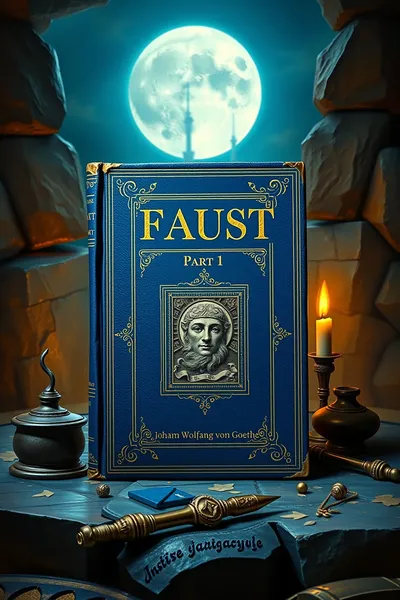
For serious students, primary sources and scholarly analyses provide foundational perspectives. Franz Cumont's 'After Life in Roman Paganism' (1922) offers a rigorous historical examination of ancient beliefs. Johann Wolfgang von Goethe's 'Faust — Part 1' examines profound philosophical and spiritual questions concerning the soul's fate. William Blake's 'The Marriage of Heaven and Hell' presents a unique, visionary perspective on spiritual states and existence.
Reading Order — Step by Step
Begin with foundational spiritualist accounts. Weeks 1-2: Read Arthur Conan Doyle's 'The New Revelation' and Annie Besant's 'Death—and After?'. Month 2: Explore documented experiences in E. H. Jones' 'The Road to En-Dor' and Sir Oliver Lodge's 'Raymond; or, Life and Death'. Month 3: Engage with broader research in Camille Flammarion's 'Mysterious Psychic Forces' and historical context from Franz Cumont's 'After Life in Roman Paganism'. Continue with advanced philosophical works as interest dictates.
Frequently Asked Questions
Which afterlife book should I read first?
For a beginner, 'The New Revelation' by Arthur Conan Doyle is a good starting point. It offers a personal narrative of his journey into spiritualism and belief in an afterlife.
Are there scientific investigations into the afterlife?
While 'scientific' is debated, numerous books document psychical research. Camille Flammarion's 'Mysterious Psychic Forces' and Sir Oliver Lodge's 'Raymond' detail investigations into phenomena claimed as evidence for survival.
What's the difference between Spiritualism and Theosophy?
Spiritualism focuses on communication with spirits of the deceased, often through mediums. Theosophy is a broader system exploring esoteric philosophy, spiritual evolution, and hidden universal truths, including concepts of reincarnation.
How did ancient cultures view the afterlife?
Ancient views varied greatly. Franz Cumont's 'After Life in Roman Paganism' details Greco-Roman beliefs, often involving underworlds and judgment, while other cultures explored concepts of ancestor veneration or cyclical rebirth.
Is there any skeptical literature on the afterlife?
Yes, critical examinations exist. Joseph McCabe's 'Is Spiritualism Based on Fraud?' drastically examines evidence presented by figures like Sir A.C. Doyle, questioning the validity of spiritualist claims.
Where can I find primary source material on early spiritualism?
Primary accounts from the 19th century, like those documented by the Seybert Commission or explored in works such as 'The Death-Blow to Spiritualism' by Reuben Briggs Davenport, offer direct insights into early phenomena and controversies.