The Mysteries of Egypt
 78
78

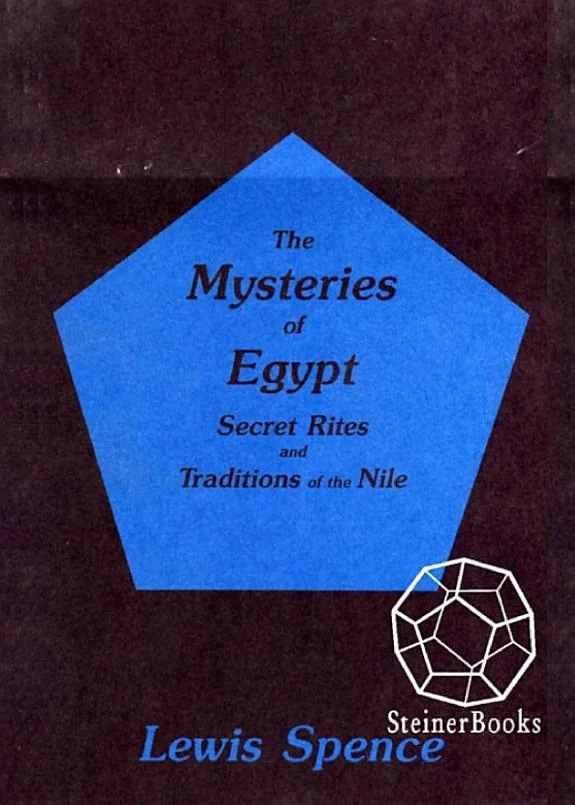
The Mysteries of Egypt
Lewis Spence's "The Mysteries of Egypt" attempts to resurrect the spiritual essence of a civilization often reduced to its monumental architecture. Spence positions himself as a conduit for ancient Egyptian esoteric thought, arguing its survival through veiled traditions. He succeeds admirably in conveying a sense of wonder regarding the initiation rituals and the profound cosmic views embedded in Egyptian cosmology. The work shines when detailing the nuances of the Egyptian soul concepts, like the Ka and Ba, presenting them not as mere historical curiosities but as potent spiritual components. However, the book occasionally suffers from an overreliance on speculative connections, particularly when attempting to link Egyptian beliefs directly to later Western esoteric systems without robust evidential chains. A passage discussing the cyclical nature of the Nile flood as a metaphor for spiritual regeneration is particularly effective, illustrating Spence’s ability to connect the mundane to the metaphysical. Ultimately, "The Mysteries of Egypt" offers a compelling, if sometimes conjectural, glimpse into the hidden spiritual life of ancient Egypt.
📝 Description
78
Lewis Spence wrote "The Mysteries of Egypt" to show ancient Egyptian spiritual currents persisted.
First published in 1992, Lewis Spence's "The Mysteries of Egypt" examines ancient Egyptian spiritual traditions and their lasting influence. Spence sought to demonstrate that the spiritual currents of Egypt did not disappear but continued, offering insights to those seeking hidden wisdom. The volume unearths esoteric knowledge concerning initiation rites, mystical beliefs, and the philosophical bases of pharaonic civilization.
Readers interested in the intersection of archaeology, mythology, and esoteric philosophy will find this book valuable. It appeals to those studying ancient religions, occult traditions, and the historical roots of Western mysticism. Individuals seeking to understand the philosophical and spiritual legacy of Egypt beyond conventional historical accounts are its primary audience. The book reflects a scholarly yet mystical approach common in early 20th-century esoteric studies, aiming to reveal hidden meanings in Egyptian religious practices and symbolism.
Lewis Spence's work on ancient Egypt belongs to the tradition of early 20th-century esoteric scholarship, which often blended archaeological findings with mystical interpretation. Authors like Aleister Crowley and A.E. Waite also engaged with ancient traditions, seeking hidden meanings and spiritual correspondences. Spence's approach aimed to reveal these deeper layers within Egyptian religious practices and symbolism, connecting them to broader occult principles and the concept of enduring spiritual currents.
💡 Why Read This Book?
• Gain insight into the Egyptian concept of the soul, specifically the Ka and Ba, as detailed in Spence's analysis of ancient initiation rituals, offering a unique esoteric perspective on Egyptian beliefs. • Understand the symbolic language of hieroglyphs beyond their literal meanings, exploring how Spence interprets them as carriers of profound spiritual knowledge and esoteric doctrine. • Grasp the cyclical nature of Egyptian cosmology, as presented in the book's examination of deities like Osiris and the associated rituals, providing a framework for understanding ancient concepts of death and rebirth.
⭐ Reader Reviews
Honest opinions from readers who have explored this book.
❓ Frequently Asked Questions
When was Lewis Spence's 'The Mysteries of Egypt' originally published?
Lewis Spence's 'The Mysteries of Egypt' was first published in December 1992, though the author's original work on the subject dates from earlier in the 20th century.
What are the Ka and Ba in ancient Egyptian belief, according to the book?
The book describes the Ka as the vital life force or spiritual double, and the Ba as the soul or personality that could travel between the earthly realm and the afterlife, both integral to the Egyptian understanding of the soul complex.
Does 'The Mysteries of Egypt' discuss Egyptian initiation rituals?
Yes, a significant focus of the book is on the esoteric traditions and ancient initiation-rituals of Egypt, which Spence posits reveal the deeper spiritual teachings of the civilization.
What role do hieroglyphs play in Spence's interpretation?
Spence interprets hieroglyphic inscriptions not merely as historical records but as carriers of profound spiritual knowledge, revealing the esoteric traditions and hidden wisdom of ancient Egypt.
Is this book suitable for beginners in esoteric studies?
The book is suitable for those with some interest in esoteric subjects, particularly ancient Egyptian spirituality, offering accessible yet deep explorations of its mystical elements.
What specific deities are explored in 'The Mysteries of Egypt'?
The book explores key deities central to Egyptian mysticism, including Osiris, whose mythology is often linked to themes of death, resurrection, and spiritual transformation.
🔮 Key Themes & Symbolism
Egyptian Soul Complex
Spence meticulously details the ancient Egyptian understanding of the soul, distinguishing between the Ka (life force, spiritual double) and the Ba (personality, aspect capable of movement). This exploration goes beyond mere historical description, framing these concepts as essential components for spiritual existence and post-mortem transition, central to the initiation rituals discussed.
Esoteric Initiation Rites
The book posits that ancient Egypt possessed sophisticated initiation rituals designed to impart esoteric knowledge. Spence suggests these rites were pathways to understanding cosmic principles and achieving spiritual transformation, akin to mysteries found in other ancient traditions, but unique in their Egyptian expression.
Cosmic Cosmology and Symbolism
Spence examines the Egyptian worldview, emphasizing its cyclical nature tied to celestial events and the Nile. He interprets hieroglyphs and myths, such as those surrounding Osiris, as symbolic keys to understanding creation, death, and rebirth, presenting a spiritual framework deeply embedded in the natural world.
Enduring Spiritual Influence
A core argument is that Egyptian spirituality did not vanish but persisted through veiled traditions. Spence seeks to reveal these 'voices from the dust,' demonstrating how ancient Egyptian esoteric thought continued to influence later mystical currents, offering enduring wisdom for contemporary seekers.
💬 Memorable Quotes
Direct passages from the work, attributed to the author.
“The spiritual influences of Egypt did not disappear but lived on in silence.”
— This statement captures Spence's central thesis: that the profound esoteric teachings of ancient Egypt were not lost but continued to exist covertly, awaiting rediscovery.
“Secrets of their esoteric traditions and ancient initiation-rituals again are revealed.”
— This suggests the book acts as a key, unlocking hidden knowledge about Egyptian mystical practices and their initiatory processes for the modern reader.
“Like 'voices from the dust,' the secrets... again are revealed.”
— This metaphor emphasizes the ancient and almost ghostly nature of the knowledge being presented, retrieved from the distant past and brought into contemporary awareness.
“Written in the early part of this century.”
— This contextualizes Spence's work, placing it within the early 20th-century surge of interest in occultism, comparative religion, and ancient mysteries.
“The spiritual influences of Egypt...”
— This phrase highlights Spence's focus not just on the historical facts of Egypt, but on its subtle, pervasive, and lasting spiritual impact on human consciousness.
🌙 Esoteric Significance
Tradition
Spence's work aligns with the broader Hermetic and Theosophical traditions prevalent in the early 20th century, which sought to identify universal spiritual laws across ancient cultures. He interprets Egyptian religion through a lens that emphasizes hidden meanings and initiatory pathways, viewing it as a source of primordial wisdom that informed later esoteric systems.
Symbolism
Key symbols explored include the Ankh, representing life and immortality, and the Eye of Horus (Udjat), signifying protection, royal power, and good health. Spence interprets these not just as cultural artifacts but as potent mystical symbols embodying core principles of Egyptian cosmology and spiritual attainment.
Modern Relevance
Contemporary practitioners of Western Esotericism, particularly those interested in Hermeticism and comparative mythology, continue to draw upon Spence's interpretations. His work informs modern discussions on ancient Egyptian magic, shamanism, and the philosophical underpinnings of spiritual evolution.
👥 Who Should Read This Book
• Students of comparative religion and ancient mythologies seeking an esoteric perspective on Egyptian beliefs and practices. • Practitioners of Western Esotericism interested in the roots of occult traditions and their connection to ancient Egyptian spirituality. • Readers fascinated by the philosophical and spiritual dimensions of ancient civilizations, looking beyond conventional historical accounts.
📜 Historical Context
Lewis Spence's "The Mysteries of Egypt," with its original manuscript penned in the early 20th century and published in 1992, emerged from a fertile ground of occult revival and comparative mythology. The era saw thinkers like Helena Blavatsky and Rudolf Steiner exploring ancient wisdom traditions, positioning Spence within a lineage seeking to uncover esoteric truths behind global mythologies. Unlike purely academic Egyptology, Spence's approach incorporated mystical interpretations and sought spiritual parallels, a stance that positioned him adjacent to, yet distinct from, the more empirical methods of scholars like Sir Flinders Petrie. While not directly engaging with censorship, early 20th-century esoteric works often faced skepticism from mainstream academia. Spence's contribution was to synthesize folklore, mythology, and occult theory, presenting Egyptian religion as a profound esoteric system whose influence subtly permeated later esoteric thought.
📔 Journal Prompts
The Egyptian concept of the Ka and Ba.
Spence's interpretation of hieroglyphic spiritual knowledge.
The symbolism of the Ankh in esoteric Egyptian thought.
The role of Osiris in ancient initiation rituals.
Connecting Egyptian cyclical cosmology to personal spiritual understanding.
🗂️ Glossary
Ka
In ancient Egyptian belief, the Ka represented the vital life force, spiritual double, or sustaining power of a person, believed to require sustenance even after death.
Ba
The Ba is often translated as the soul or personality, depicted as a human-headed bird, capable of moving between the tomb and the world of the living or the Duat (underworld).
Initiation Rituals
Ceremonies or rites believed to impart secret knowledge or spiritual understanding, often involving symbolic death and rebirth, as explored by Spence in the context of ancient Egypt.
Esoteric Traditions
Systems of belief or practice concerned with hidden knowledge, often relating to spiritual enlightenment, mysticism, or the occult, as distinct from exoteric or public teachings.
Osiris
A central Egyptian deity associated with the afterlife, the underworld, and resurrection, whose mythology is key to understanding Egyptian concepts of death and spiritual rebirth.
Ankh
The hieroglyphic symbol resembling a cross with a loop at the top, widely interpreted as representing life, immortality, and the divine breath of life.
Udjat
The Eye of Horus, a powerful symbol of protection, royal power, health, and restoration in ancient Egyptian iconography and belief.
This book appears in 1 collection
🔮 Readers Also Liked
Browse all →






From the “Egyptian Mysteries” Collection
View all →

![The Kybalion [A Study Of The Hermetic Philosophy Of Ancient Egypt And Greece].pdf (PDFy mirror)](/img/thumb/the-kybalion-a-study-of-the-hermetic-philosophy-of-ancient-egypt-and-greece-pdf-pdfy-mirror.webp)


More Free Esoteric History & Biography Books
View all →