52,000+ Esoteric Books Free + Modern Compare Prices
Home Collections Egyptian Mysteries
📖

Egyptian Mysteries Books: Ancient Texts & Modern Studies

Books on Egyptian Mysteries trace Hermetic philosophy and esoteric traditions from ancient Egypt and Greece to modern interpretations. Key texts like 'The Kybalion' by Three Initiates and E. A. Wallis Budge's 'Legends of the Gods' provide foundational perspectives. Helena Blavatsky's 'Isis Unveiled' (Volumes 1 & 2, 1877) offers a broad survey of occult sciences linked to ancient Egypt. This guide outlines essential readings for understanding the complex layers of Egyptian esoteric thought, from primary sources to scholarly analyses.

Top Egyptian Mysteries Books

25 Egyptian Mysteries books
Hermetica
📖
Hermetica
Brian P. Copenhaver
4.1
62
The Black Cross
📖
The Black Cross
Briggs, Olive M. (Olive Mary)
4.2
69
Kabbalah.
📖
Kabbalah.
Charles Poncé
4.1
63
Way of Hermes
📖
Way of Hermes
Clement Salaman
4.0
61
HIDDEN GEM
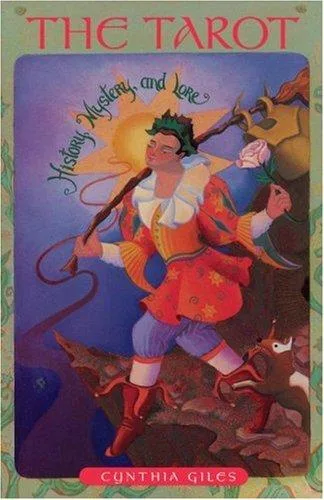
The tarot
📖
The tarot
Cynthia Elizabeth Giles
4.1
65
The emerald tablet
📖
The emerald tablet
Dennis William Hauck
4.3
71
Corpus hermeticum
📖
Corpus hermeticum
Hermes Trismegistus
4.1
65
MASTERPIECE
Poemander
📖
Poemander
Hermes Trismegistus.
4.1
65
TRENDING
Isis Magic
📖
Isis Magic
M. Isidora Forrest
4.1
64
SCHOLAR'S PICK
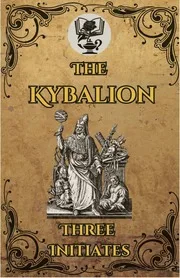
The Kybalion
📖
The Kybalion
William Walker Atkinson
4.3
72

What are Egyptian Mysteries?

Egyptian Mysteries refer to the secret religious and philosophical teachings of ancient Egyptian cults, particularly those focused on death, resurrection, and divine knowledge. These traditions influenced later Hellenistic and Gnostic movements, emphasizing spiritual transformation and cosmic understanding. The concept often encompasses the perceived esoteric wisdom embedded within Egyptian mythology, rituals, and hieroglyphic texts, suggesting a hidden layer of meaning accessible only to initiates. This body of knowledge is believed to underpin various occult and philosophical systems.

Best Books for Complete Beginners

For those new to Egyptian Mysteries, start with accessible overviews that introduce core concepts. 'The Kybalion' by Three Initiates offers a concise primer on Hermetic philosophy, directly linking it to ancient Egyptian and Greek thought. E. A. Wallis Budge's 'Legends of the Gods: The Egyptian Texts' provides translations of foundational myths, crucial for understanding the divine narratives. Belle M. Wagner's 'Within the Temple of Isis' presents a more accessible interpretation of Egyptian symbolism and its spiritual significance, making it a good starting point for grasping the esoteric dimensions.

Intermediate Reading

Intermediate readers can delve deeper with comprehensive works that bridge ancient texts and modern occultism. Helena Blavatsky's 'Isis Unveiled' (Volumes 1 & 2, 1877) is a seminal, albeit dense, exploration of ancient Egyptian secrets and their connection to global esoteric traditions. Curtiss Frank Homer and Harriette Augusta's 'The Voice of Isis' (1914) offers further insights into the spiritual and mystical aspects associated with the goddess Isis. C. J. S. Thompson's 'The Mystery and Romance of Alchemy and Pharmacy' touches upon Egyptian influences in these ancient sciences.

Classical / Advanced Texts

Advanced study requires engaging with primary source translations and specialized analyses. E. A. Wallis Budge's extensive translations, such as 'Legends of the Gods: The Egyptian Texts,' are indispensable for direct engagement with ancient Egyptian literature. 'The Eighth Book of Moses: A Greco-Egyptian Grimoire' (2005) provides a look into practical magical traditions that blended Egyptian and Hellenistic elements. Florian Ebeling's 'The Secret History of Hermes Trismegistus' (2020) offers a scholarly examination of Hermeticism from antiquity to modern times, contextualizing its Egyptian roots.

Reading Order — Step by Step

Begin with 'The Kybalion' for a foundational understanding of Hermetic principles. Follow with Belle M. Wagner's 'Within the Temple of Isis' for symbolic interpretations. Progress to E. A. Wallis Budge's 'Legends of the Gods' for direct mythic content. In month two, tackle Helena Blavatsky's 'Isis Unveiled' (Volumes 1 & 2) for a broad, challenging overview. By month three, explore 'The Eighth Book of Moses' for grimoire traditions and Florian Ebeling's 'The Secret History of Hermes Trismegistus' for historical context. Supplement with C. J. S. Thompson's work on alchemy and pharmacy as needed.

Frequently Asked Questions

Which Egyptian Mysteries book should I read first?

For a direct introduction to the core principles, begin with 'The Kybalion' by Three Initiates. It concisely outlines Hermetic philosophy, which is central to many interpretations of Egyptian Mysteries.

Are 'Isis Unveiled' volumes difficult?

Helena Blavatsky's 'Isis Unveiled' is extensive and covers a vast range of topics. While foundational for understanding Theosophy's view of ancient mysteries, it is best approached after grasping basic Hermetic and Egyptian concepts.

What is the connection between Hermeticism and Ancient Egypt?

Hermeticism is a philosophical and mystical tradition attributed to Hermes Trismegistus, a syncretic figure combining the Greek god Hermes and the Egyptian god Thoth. Its texts, like 'The Kybalion,' frequently reference ancient Egyptian wisdom and cosmology.

Are there practical magic books related to Egyptian Mysteries?

Yes, texts like 'The Eighth Book of Moses: A Greco-Egyptian Grimoire' offer insights into magical practices that emerged from the fusion of Egyptian and Hellenistic traditions during the Greco-Roman period.

Where can I find translations of ancient Egyptian texts?

Works by E. A. Wallis Budge, such as 'Legends of the Gods: The Egyptian Texts,' provide accessible translations of key Egyptian religious and mythological writings, serving as primary source material.

How do modern witchcraft and Wicca relate to Egyptian Mysteries?

Many modern pagan and witchcraft traditions, including Wicca, incorporate symbolism, deities, and concepts derived from ancient Egyptian religion and esoteric philosophies. Books like 'The Complete Guide To Wicca And Witchcraft' may touch upon these connections.

Why Each Book Matters

On Being A Pagan

On Being A Pagan

"On Being A Pagan" offers an exploration of contemporary paganism, its diverse practices, and its connection to ancient spiritual traditions. While the author is unknown, the text likely discusses how modern paganism often draws inspiration from polytheistic cultures, including ancient Egypt. It explores themes of nature worship, deity veneration, and personal spirituality, providing context for how the ancient Egyptian Mysteries continue to influence modern religious practices and beliefs. The book often covers ethical considerations within paganism.

Divine creature

Divine creature

by Adamo Antonacci

Adamo Antonacci's "Divine Creature" explores the concept of humanity's inherent divinity and potential for spiritual evolution. While not solely focused on the Egyptian Mysteries, the book draws upon universal esoteric principles that resonate with ancient wisdom traditions, including the Hermetic idea of the human as a microcosm of the macrocosm. It encourages readers to recognize and cultivate their inner divine spark, aligning with the transformational goals often found within mystery schools. The narrative often uses symbolic language to convey deep philosophical ideas.

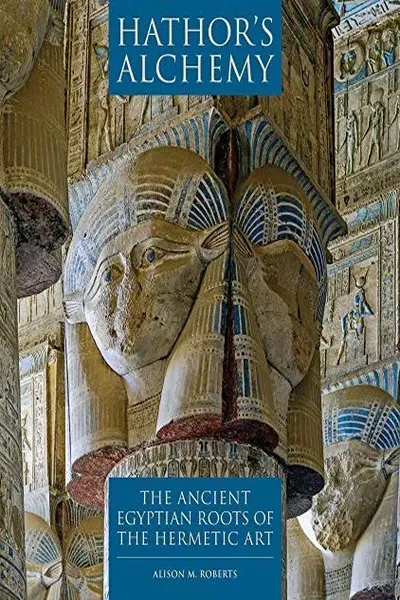
Hathor's Alchemy

Hathor's Alchemy

by Alison M. Roberts

Alison M. Roberts's "Hathor's Alchemy" likely explores the spiritual and transformative aspects associated with the ancient Egyptian goddess Hathor, a deity of love, beauty, music, and motherhood, often linked to cosmic creation. The book would delve into the symbolic alchemy of personal transformation through Hathor's energies, drawing parallels between her myths and the process of spiritual refinement. It connects ancient Egyptian wisdom with modern esoteric practice, highlighting Hathor's role in the broader Egyptian Mysteries of creation and rebirth.

Hermetica

Hermetica

by Brian P. Copenhaver

Brian P. Copenhaver's *Hermetica* is a comprehensive and scholarly translation of the core Hermetic texts, including the *Corpus Hermeticum* and the *Asclepius*. This edition provides not only accurate English renditions but also extensive historical and philosophical commentary, making the complex wisdom of the Egyptian Mysteries accessible to modern readers. It meticulously traces the historical context and intellectual lineage of these influential ancient writings, offering critical insights into their impact on Western thought.

The Black Cross

The Black Cross

by Briggs, Olive M. (Olive Mary)

Olive M. Briggs's "The Black Cross" is a historical novel that, while not directly an occult text, often weaves in themes of mystery, ancient secrets, and hidden societies, which can resonate with the allure of the Egyptian Mysteries. Set against a backdrop of historical intrigue, the narrative explores symbols and enigmatic events that hint at deeper, unspoken knowledge. The book's atmosphere of suspense and its exploration of ancient artifacts contribute to its esoteric appeal, inviting readers to ponder the secrets of the past.

Kabbalah.

Kabbalah.

by Charles Poncé

Charles Poncé's work on *Kabbalah* offers an insightful examination of this profound Jewish mystical tradition, exploring its intricate cosmology, symbolism, and practices. The book often draws parallels between Kabbalistic concepts, such as the Tree of Life, and other ancient esoteric systems, including those found within the Egyptian Mysteries and Hermetic philosophy. It discusses the interconnectedness of divine emanations and the path to spiritual enlightenment, demonstrating how ancient wisdom traditions share common threads in their quest for ultimate truth.

Hermes Christianus

Hermes Christianus

by Claudio Moreschini

Claudio Moreschini's "Hermes Christianus" examines the complex relationship and eventual integration of Hermetic philosophy into early Christian thought. This scholarly work explores how elements of the Egyptian Mysteries, particularly the teachings attributed to Hermes Trismegistus, were perceived and adapted by Christian thinkers during the Roman Empire. It highlights the intellectual dialogue between pagan wisdom and nascent Christianity, revealing how Hermetic concepts influenced theological debates and mystical interpretations in the early centuries AD.

Way of Hermes

Way of Hermes

by Clement Salaman

Clement Salaman's *Way of Hermes* offers a selection of the most significant Hermetic texts, including excerpts from the *Corpus Hermeticum* and the *Asclepius*, translated and annotated for contemporary readers. This collection provides an accessible entry point into the profound philosophical and spiritual teachings attributed to Hermes Trismegistus, which are deeply rooted in the Egyptian Mysteries. Salaman's work emphasizes the practical application of Hermetic wisdom for personal growth and understanding the divine nature of the cosmos.

The tarot

The tarot

by Cynthia Elizabeth Giles

Cynthia Elizabeth Giles's exploration of *The Tarot* delves into the symbolic language and esoteric meanings embedded within the cards, often tracing their conceptual roots to ancient Egyptian and Hermetic wisdom. This book serves as a guide to understanding the Major and Minor Arcana, illustrating how their archetypal images reflect universal spiritual principles. It highlights the tarot's role as a tool for self-discovery and divination, connecting its visual narratives to older mystical traditions, thus aligning with the symbolic depth found in the Egyptian Mysteries.

Ceremonial magic

Ceremonial magic

by Daniel Cohen

Daniel Cohen's "Ceremonial Magic" explores the history and practices of ritual magic, often tracing its lineage through various esoteric traditions, including those influenced by the Egyptian Mysteries. The book likely covers the principles, tools, and rituals involved in ceremonial magic, from invoking spirits to performing complex rites for spiritual attainment or specific outcomes. It provides historical context for magical practices, showing how ancient wisdom traditions have shaped the development of Western esotericism over centuries.

Divine Fire

Divine Fire

by David Woo

David Woo's *Divine Fire* explores themes of spiritual awakening, transformation, and the sacred flame within, often drawing inspiration from a broad spectrum of mystical traditions. While not exclusively focused on the Egyptian Mysteries, it touches upon universal esoteric principles that resonate with ancient wisdom, including concepts of inner light and divine essence. The book encourages readers to ignite their own spiritual potential and pursue a path of enlightenment, reflecting the transformative journey inherent in many ancient mystery schools.

The emerald tablet

The emerald tablet

by Dennis William Hauck

Dennis William Hauck's work on "The Emerald Tablet" delves into one of the most revered and enigmatic texts in alchemical and Hermetic traditions, traditionally attributed to Hermes Trismegistus. This book provides historical context, multiple translations, and in-depth commentary on the tablet's concise maxims, such as "as above, so below." It explores how these principles encapsulate the essence of cosmic unity and the transformative process of alchemy, making it a critical text for understanding the deeper philosophical currents within the Egyptian Mysteries.

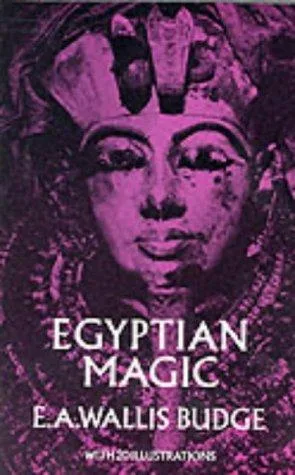
Egyptian magic

Egyptian magic

by E. A. Wallis Budge

E. A. Wallis Budge, a renowned Egyptologist, provides a detailed examination of the magical practices, beliefs, and rituals of ancient Egypt in this authoritative work. *Egyptian Magic* explores the use of amulets, spells, incantations, and divine names for protection, healing, and influencing the gods. It delves into the role of magic in daily life, religious ceremonies, and funerary rites, offering invaluable insights into the practical aspects of the Egyptian Mysteries. Budge's translations of ancient texts reveal specific magical formulae.

Talking Xmas Story

Talking Xmas Story

by Edwin VanGorder

Edwin VanGorder's "Talking Xmas Story" is an unexpected inclusion in an "Egyptian Mysteries" collection, as it is a narrative focused on the Christmas holiday. This particular work would likely explore themes of celebration, tradition, and perhaps spiritual reflection within a Christian context. Its presence here might suggest a broad interpretation of "mysteries" or simply be an outlier. It does not directly relate to ancient Egyptian esotericism, but could be considered in a context of universal spiritual narratives.

The eternal Hermes

The eternal Hermes

by Faivre, Antoine

Antoine Faivre's "The Eternal Hermes" is a scholarly and insightful exploration of the figure of Hermes Trismegistus and the Hermetic tradition throughout history. Faivre, a leading scholar of Western esotericism, traces the evolution of Hermetic thought from its ancient Egyptian roots through the Renaissance and into modern times. The book illuminates how the wisdom of the Egyptian Mysteries has been continuously reinterpreted and integrated into various mystical and philosophical systems, emphasizing its enduring influence on intellectual history.

Isis Unveiled

Isis Unveiled

H.P. Blavatsky's monumental work *Isis Unveiled* is a foundational text of Theosophy, exploring the hidden wisdom of ancient religions, sciences, and philosophies. It extensively discusses the esoteric traditions of ancient Egypt, comparing them with other mystical systems worldwide and asserting a universal ancient wisdom tradition. Blavatsky dedicates significant portions to explaining the symbolism and profound spiritual insights of the Egyptian Mysteries, arguing that they hold keys to understanding the universe's true nature and humanity's spiritual evolution.

Corpus hermeticum

Corpus hermeticum

by Hermes Trismegistus

The "Corpus Hermeticum" is a collection of 17 Greek treatises attributed to the legendary sage Hermes Trismegistus, representing the core philosophical texts of Hermeticism. These dialogues and sermons explore profound subjects such as the nature of God, the cosmos, the human soul, and the path to spiritual enlightenment. It is a cornerstone for understanding the intellectual and spiritual landscape of the Egyptian Mysteries, offering direct access to the ancient wisdom that influenced Neoplatonism, Gnosticism, and Renaissance occultism.

Divine Pymander

Divine Pymander

by Hermes Trismegistus

The "Divine Pymander," also known as *Poimandres*, is a pivotal text within the *Corpus Hermeticum*, attributed to Hermes Trismegistus. It recounts a profound vision where the Divine Mind (Pymander) reveals the secrets of creation, the nature of God, and the path to human salvation. This work is fundamental to understanding the cosmology and spiritual philosophy of the Egyptian Mysteries, detailing the descent of the soul and its potential for re-ascent. It outlines the process of spiritual rebirth through knowledge.

Poemander

Poemander

by Hermes Trismegistus.

This foundational text of Hermetic philosophy, often considered the first book of the *Corpus Hermeticum*, presents a cosmic vision revealed to Hermes Trismegistus by Poimandres, the Divine Mind. It outlines the creation of the universe, the fall of humanity, and the path to spiritual regeneration through gnosis. The dialogue format guides the reader through profound metaphysical concepts, emphasizing the importance of reason and divine understanding. It explicitly discusses the divine origin of the human soul and its journey back to the source, a central theme in the Egyptian Mysteries.

Ancient Egypt

Ancient Egypt

by Jim Pipe

Jim Pipe's "Ancient Egypt" provides a compelling and informative overview of one of history's most fascinating civilizations. This book covers the essential aspects of ancient Egyptian life, from its pharaohs and pyramids to its complex religious beliefs and daily routines. It offers a solid historical and cultural foundation, which is crucial for anyone seeking to understand the context of the Egyptian Mysteries. The book includes details on the Nile's importance, hieroglyphs, and the pantheon of gods and goddesses.

Isis Magic

Isis Magic

by M. Isidora Forrest

M. Isidora Forrest's *Isis Magic* is a practical guide and devotional work dedicated to the ancient Egyptian goddess Isis, a central figure in the Egyptian Mysteries. The book provides historical context for Isis worship, explores her various epithets and manifestations, and offers contemporary rituals, meditations, and magical practices for modern devotees. It emphasizes connecting with the goddess's transformative power for healing, wisdom, and protection, bridging ancient reverence with contemporary spiritual paths. Forrest's work includes specific invocations and ceremonial structures for personal practice.

The tarot reader

The tarot reader

by Nancy Shavick

Nancy Shavick's "The Tarot Reader" is a guide for interpreting tarot cards, focusing on practical applications for divination and self-understanding. While primarily a how-to book for reading the tarot, it implicitly connects to the rich symbolic heritage that has roots in ancient esoteric traditions, including the Egyptian Mysteries. The book provides insights into the meanings of individual cards and spreads, helping readers unlock the archetypal wisdom contained within the tarot for personal guidance and spiritual insight. It offers methods for intuitive interpretation.

Hymns of Hermes

Hymns of Hermes

by P. Mead

P. Mead's "Hymns of Hermes" presents a collection of devotional and philosophical verses attributed to Hermes Trismegistus, reflecting the profound spiritual insights of Hermeticism. These hymns offer poetic expressions of cosmic truths, the nature of the divine, and the human soul's journey towards enlightenment, central to the Egyptian Mysteries. The text provides a lyrical and contemplative approach to understanding the Hermetic tradition, allowing readers to engage with its spiritual essence through invocation and praise. It includes translations of ancient Greek and Coptic texts.

The Kybalion HTP

The Kybalion HTP

by Three Initiates

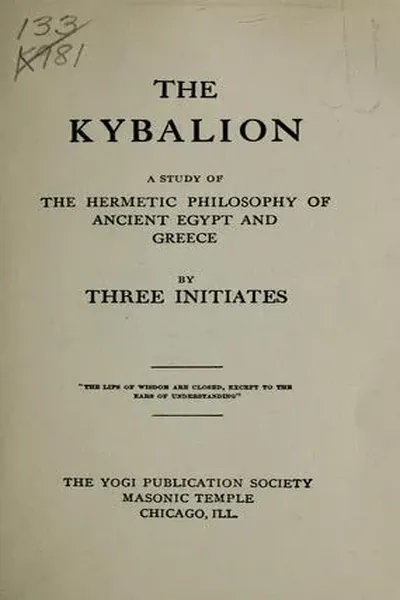
"The Kybalion HTP" (Hermetic Teachings and Principles) is another edition or interpretation of the foundational Hermetic text, *The Kybalion*, attributed to "Three Initiates." This work elucidates the seven universal principles of Hermetic philosophy, which are deeply rooted in the wisdom of the Egyptian Mysteries. It provides a concise and practical guide to understanding metaphysical laws such as Mentalism, Correspondence, and Vibration, aiming to empower readers with knowledge to influence their reality. The "HTP" likely indicates an expanded or annotated version.

The Kybalion

The Kybalion

by William Walker Atkinson

Attributed to "Three Initiates," *The Kybalion* is a seminal text that distills the seven Hermetic principles, purportedly derived from the ancient wisdom of Hermes Trismegistus and the Egyptian Mysteries. These principles—Mentalism, Correspondence, Vibration, Polarity, Rhythm, Cause and Effect, and Gender—offer a framework for understanding the universe and influencing reality. The book presents these profound esoteric laws in an accessible manner, making it a cornerstone for students of occult philosophy and a popular introduction to Hermetic thought.

Esoteric Library
Browse Esoteric Library
📚 All 52,000+ Books 🜍 Alchemy & Hermeticism 🔮 Magic & Ritual 🌙 Witchcraft & Paganism Astrology & Cosmology 🃏 Divination & Tarot 📜 Occult Philosophy ✡️ Kabbalah & Jewish Mysticism 🕉️ Mysticism & Contemplation 🕊️ Theosophy & Anthroposophy 🏛️ Freemasonry & Secret Societies 👻 Spiritualism & Afterlife 📖 Sacred Texts & Gnosticism 👁️ Supernatural & Occult Fiction 🧘 Spiritual Development 📚 Esoteric History & Biography
Esoteric Library
📑 Collections 📤 Upload Your Book
Account
🔑 Sign In Create Account
Info
About Esoteric Library