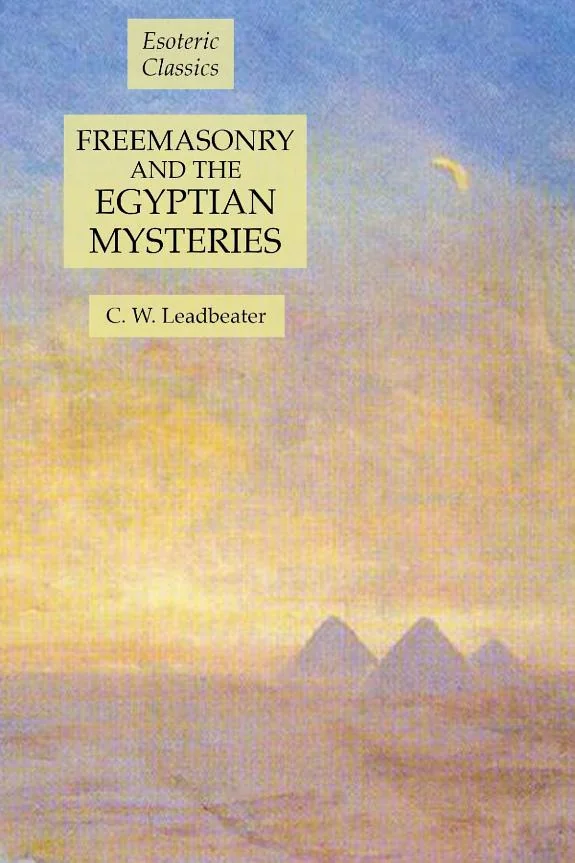
Freemasonry and the Egyptian Mysteries: Esoteric Classics
 73
73

Freemasonry and the Egyptian Mysteries: Esoteric Classics
C. W. Leadbeater's exploration of Freemasonry's potential Egyptian roots offers a compelling, if occasionally speculative, comparative study. His strength lies in meticulously drawing parallels between specific Masonic allegories and Egyptian mythology, particularly evident in his discussion of Osiris and the symbolism of divine judgment. The work makes a solid case for the thematic resonance of Egyptian concepts like cyclical rebirth within Masonic ritual. However, the book sometimes leans heavily on interpretation without always providing definitive historical evidence for direct transmission, a common challenge in tracing ancient esoteric lineages. A particularly striking section details the symbolic weight of the Eye of Horus within both traditions. While not a definitive historical treatise, it serves as a valuable primer for those interested in the symbolic underpinnings of Western esotericism.
This book effectively bridges ancient Egyptian spirituality with Masonic symbolism.
📝 Description
73
In 1913, C. W. Leadbeater connected Freemasonry to ancient Egyptian rites.
C. W. Leadbeater's work, first published in 1913, examines the historical and symbolic links between ancient Egyptian mystery traditions and the development of Masonic ritual. He proposes a lineage for fraternal orders that reaches back to Egypt's sacred rites. The book scrutinizes Egyptian deities like Osiris and Isis, analyzing how their iconography and mythology appear in Masonic symbolism. It also addresses the human desire for initiation and the pursuit of esoteric knowledge across different eras.
Leadbeater's analysis centers on Egyptian deities as archetypes in initiatory systems. He details how concepts of resurrection, divine judgment, and the cyclical nature of life and death, key to Egyptian belief, find echoes in Masonic allegory. The text uses hieroglyphs and temple architecture as visual references, suggesting a transmission of symbolic language over centuries.
The book probes the enduring appeal of mystery schools and the reasons individuals seek ceremonial initiation. Leadbeater considers the nature of hidden knowledge and how symbolism conveys truths that ordinary language cannot. He connects these ancient pursuits to a universal human need for self-understanding and cosmic awareness. The core of the work compares specific Masonic degrees and rituals with ancient Egyptian practices and beliefs, highlighting shared elements in oaths, tools, and stages of enlightenment.
This book fits within the Western esoteric tradition, particularly the study of ancient mystery religions and their influence on later occult and fraternal organizations. Leadbeater, a prominent figure in Theosophy, often sought to demonstrate the universality of spiritual principles by tracing them through diverse historical and cultural systems. His work here aligns with a common esoteric interest in identifying common roots for various spiritual paths, suggesting that Freemasonry draws upon a deep wellspring of ancient Egyptian wisdom and initiatory practices.
💡 Why Read This Book?
• Gain insight into the symbolic language of Freemasonry by understanding its potential connections to Egyptian deities like Osiris and Isis, as explored in the text's comparative analysis. • Discover the enduring reasons for human participation in mystery traditions, a theme elaborated upon in Leadbeater's examination of ancient initiatory practices. • Appreciate the specific parallels drawn between Masonic allegories and Egyptian concepts of resurrection and divine judgment, offering a deeper understanding of esoteric symbolism.
⭐ Reader Reviews
Honest opinions from readers who have explored this book.
❓ Frequently Asked Questions
What is the primary argument presented by C. W. Leadbeater regarding Freemasonry and Ancient Egypt?
Leadbeater argues that Freemasonry may have roots in the ancient Egyptian mystery traditions, examining how Egyptian deities and symbology, such as that of Osiris, are reflected in Masonic rituals and allegory.
Which Egyptian deities are specifically discussed in relation to Masonic symbolism?
The book specifically examines deities like Osiris and Isis, exploring how their mythological roles and iconographic representations potentially influenced the symbolic framework of Freemasonry.
Does the book provide concrete evidence of direct historical links between Ancient Egypt and Freemasonry?
While Leadbeater meticulously draws symbolic and thematic parallels, the work primarily focuses on comparative analysis rather than presenting definitive historical documentation of direct transmission from Ancient Egypt to Freemasonry.
What does the author suggest about the human impulse for participating in mystery traditions?
Leadbeater suggests that participation in mystery traditions stems from a universal human desire for esoteric knowledge, self-understanding, and connection to cosmic principles, a drive he sees echoed in both Egyptian rites and Masonic initiation.
What is the significance of Egyptian hieroglyphs and temple architecture in this work?
Hieroglyphs and temple architecture are presented as visual anchors that help illustrate the potential transmission of symbolic language and esoteric ideas from Ancient Egypt, providing concrete examples of the symbology discussed.
When was C. W. Leadbeater's work originally published?
The original publication date for this specific edition is January 12, 2020, though Leadbeater himself was a prolific writer active in the late 19th and early 20th centuries.
🔮 Key Themes & Symbolism
Egyptian Deities in Masonry
The work meticulously traces the symbolic resonance of Egyptian gods, particularly Osiris and Isis, within the framework of Masonic ritual. Leadbeater argues that their archetypal roles—representing death, rebirth, and divine judgment—provide a foundational layer of meaning for key Masonic allegories. The analysis looks at how specific attributes and narratives of these deities are reinterpreted through Masonic symbolism, suggesting a conscious or unconscious preservation of ancient wisdom across millennia.
The Nature of Mystery Traditions
This theme addresses the fundamental human drive toward initiation and the acquisition of hidden knowledge. Leadbeater explores why individuals are drawn to symbolic ceremonies and esoteric teachings, linking this impulse to a deep-seated quest for self-discovery and cosmic understanding. The book posits that these traditions offer a structured path for spiritual development, using allegory and ritual to convey profound truths about existence and consciousness.
Symbolic Language and Transmission
A central focus is on the enduring power of symbols to transmit esoteric knowledge across cultures and time. Leadbeater examines how Egyptian hieroglyphs, temple architecture, and specific iconographic motifs may have informed the symbolic vocabulary of Freemasonry. The work highlights the deliberate use of symbolic language in initiatory systems to communicate complex ideas that transcend ordinary discourse, suggesting a continuity of esoteric thought.
Ritual and Allegory
The book provides a detailed comparative study of Masonic rituals and the practices of ancient Egyptian mystery schools. It dissects specific Masonic allegories, drawing parallels with Egyptian myths and ceremonies, especially concerning themes of death, resurrection, and enlightenment. Leadbeater illustrates how ritual acts as a vehicle for experiential learning, allowing initiates to engage with profound philosophical and spiritual concepts.
💬 Memorable Quotes
Direct passages from the work, attributed to the author.
“The student of symbolism will find much to interest him in the Egyptian religion.”
— This statement underscores Leadbeater's view that Egyptian religious practices are a fertile ground for understanding symbolic languages, hinting at the rich allegorical content available for comparative study with other esoteric systems like Freemasonry.
“The symbolism of the Eye of Horus is deeply tied to concepts of protection, royal power, and healing.”
— This highlights a specific, potent symbol from Ancient Egypt. Its connection to themes of sovereignty and well-being suggests its potential influence on symbolic systems that deal with authority, guidance, and the restoration of wholeness.
“Why do men seek the Mysteries?”
— This rhetorical question frames the book's exploration into the core human impulse for initiation and esoteric knowledge, suggesting that the allure of mystery traditions is a fundamental aspect of the human psyche.
“The Osiris myth is central to understanding Egyptian conceptions of death and resurrection.”
— This points to the significance of the Osiris narrative as a key allegorical framework within Egyptian belief, and implicitly, its potential relevance for understanding similar themes of cyclical existence and spiritual rebirth in other traditions.
“The ritualistic elements in Freemasonry often echo ancient modes of initiation.”
— This suggests a direct or indirect continuity between the ceremonial practices of Freemasonry and those found in ancient initiatory systems, positioning Masonic rituals as a modern expression of age-old methods for spiritual development.
🌙 Esoteric Significance
Tradition
This work is firmly rooted in the Theosophical tradition, which posits a universal wisdom religion underlying all exoteric faiths. Leadbeater's approach seeks to demonstrate a direct line of esoteric transmission from the ancient Egyptian Mysteries, considered a foundational pillar of Western esotericism, to the later development of Freemasonry.
Symbolism
Key symbols explored include the Eye of Horus, representing divine protection and royal authority, and the Osiris myth, symbolizing death and resurrection. Leadbeater interprets these within the context of Masonic allegory, linking the Egyptian concepts of judgment and rebirth to the stages of spiritual progress experienced by initiates.
Modern Relevance
Contemporary students of Western Esotericism, comparative mythology, and ritual studies continue to engage with Leadbeater's work. His detailed symbolic comparisons provide a foundation for understanding how ancient archetypes inform modern initiatory orders, influencing discussions in fields ranging from occult history to depth psychology.
👥 Who Should Read This Book
• Students of Western Esotericism seeking to understand the historical and symbolic connections between Ancient Egypt and Freemasonry. • Practicing Freemasons interested in exploring the deeper, allegorical meanings behind their rituals and symbolism. • Comparative religion scholars examining the transmission of religious and mystical ideas across cultures and epochs.
📜 Historical Context
Written by C. W. Leadbeater, a prominent figure in the Theosophical Society, this work emerged during a period of intense interest in comparative religion and esoteric traditions in the late 19th and early 20th centuries. The Theosophical movement, founded by Helena Blavatsky in 1875, actively sought to uncover universal spiritual truths underlying all world religions and mythologies. Leadbeater's exploration of Freemasonry's potential Egyptian links aligns with this broader Theosophical project of identifying ancient, hidden wisdom. His contemporaries, such as Rudolf Steiner, also engaged with Masonic symbolism and ancient mysteries, though often from different theoretical standpoints. The intellectual currents favored syncretism and the belief in a primordial, global esoteric tradition. While not subject to formal censorship, such works were often viewed with skepticism by mainstream academia, which prioritized empirical historical evidence over symbolic or speculative connections.
📔 Journal Prompts
The symbolic weight of Osiris and the Egyptian concept of resurrection in Masonic allegory.
The enduring human quest for initiation and the role of mystery traditions.
Parallels between Egyptian hieroglyphic language and Masonic symbolic communication.
The archetypal significance of Egyptian deities like Isis within initiatory frameworks.
Connecting the purpose of ancient mystery schools to modern spiritual seeking.
🗂️ Glossary
Initiation
A ceremonial rite of passage marking entry into a new stage of knowledge, spiritual understanding, or membership within a society or order, often involving symbolic trials and teachings.
Allegory
A story, poem, or picture that can be interpreted to reveal a hidden meaning, typically a moral or political one, often used in esoteric traditions to convey spiritual truths.
Esoteric
Intended for or likely to be understood by only a small number of people with a specialized knowledge or interest; relating to mystical or supernatural affairs.
Symbolism
The use of symbols to represent ideas and qualities by giving them symbolic meanings that are different from their literal sense.
Mystery Tradition
A religious or spiritual system characterized by secret rites and teachings, often involving initiation and the revelation of hidden doctrines, prominent in ancient Greece and Egypt.
Theosophy
A spiritual movement founded in the late 19th century, aiming to discover the divine wisdom underlying all religions, often through the study of ancient texts and esoteric traditions.
Masonic Ritual
The ceremonial proceedings and symbolic enactments used within the fraternity of Freemasonry to impart its teachings and principles to its members.
This book appears in 1 collection
🔮 Readers Also Liked
Browse all →




From the “Egyptian Mysteries” Collection
View all →






More Free Sacred Texts & Gnosticism Books
View all →