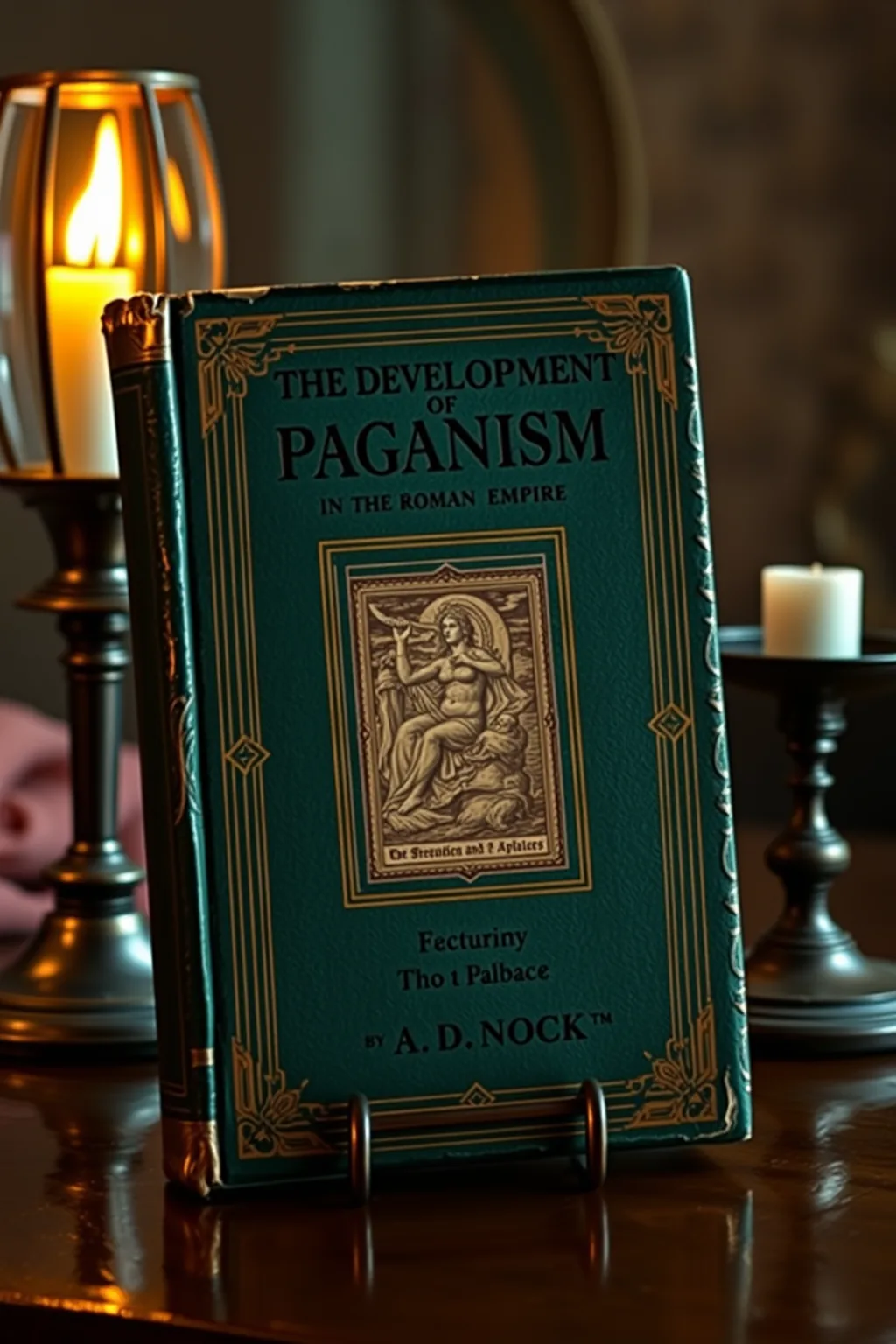
The Development of Paganism in the Roman Empire
 82
82

The Development of Paganism in the Roman Empire



A. D. Nock's The Development of Paganism in the Roman Empire is a must-read for anyone delving into the esoteric and occult traditions of the ancient world. Nock's meticulous research and scholarly insights provide a comprehensive overview of how paganism evolved and adapted within the Roman Empire. The book's structured approach, from official religion to popular piety and the influence of Eastern and Western provinces, makes it accessible yet profound. For modern esoteric seekers, this text offers a deep dive into the historical roots of pagan practices, shedding light on the spiritual and religious dynamics that have shaped our understanding of witchcraft and paganism. The value of this book lies in its ability to bridge the gap between academic history and spiritual exploration, making it an essential read for both scholars and practitioners.
📝 Description
82
A. D. Nock's 1933 study traces the evolution of Roman paganism beyond simple state cults.
Published in 1933, A. D. Nock's study examines the complex religious life of the Roman Empire. It moves beyond a surface-level view of Roman state religion to investigate the diverse beliefs and practices that constituted paganism. Nock details how these varied traditions interacted and developed during a period of considerable social and spiritual change.
The book analyzes the symbolic language and underlying philosophies that informed Roman religious experience. It shows how individual devotion and philosophical inquiry shaped popular religious understanding alongside established civic cults. Nock's work illuminates the esoteric dimensions of Roman belief, connecting them to broader cultural currents.
Nock's book engages with the scholarly study of ancient religion, situating Roman practices within a broader context of spiritual inquiry that characterized the Hellenistic and Roman periods. It addresses the philosophical systems and mystery traditions that offered alternative or complementary paths to understanding the divine. The work recognizes that Roman religion was not monolithic but comprised a rich array of beliefs and devotional forms.
💡 Why Read This Book?
Reading The Development of Paganism in the Roman Empire today provides a unique perspective on the evolution of pagan religious practices and their influence on modern spirituality. This book offers insights into the historical context of witchcraft and paganism, helping readers understand the roots of contemporary esoteric traditions. Whether you are a scholar, a spiritual seeker, or simply curious about the occult, this text will enrich your understanding of the ancient world's mystical heritage.
⭐ Reader Reviews
Honest opinions from readers who have explored this book.
❓ Frequently Asked Questions
What is the main focus of this book?
The main focus of this book is the development of paganism within the Roman Empire, exploring the interplay between official religion, popular piety, and the influences of Eastern and Western provinces.
Who is the author of this book?
The author is A. D. Nock, a renowned historian and theologian known for his extensive research on ancient religions.
Is this book suitable for beginners in esoteric studies?
While the book is academically rigorous, it is accessible to beginners with an interest in esoteric studies, providing a foundational understanding of paganism and witchcraft in the Roman Empire.
🔮 Key Themes & Symbolism
Esoteric Traditions
The book studies the esoteric traditions that defined paganism in the Roman Empire, revealing the hidden knowledge and symbolism that permeated the spiritual field of the time.
Spiritual Transformation
Nock's work examines the spiritual transformation that occurred during the Roman Empire, highlighting the mystical practices and beliefs that shaped the religious landscape.
Symbolism and Ritual
The book explores the symbolism and rituals that were central to pagan practices, offering readers a deep understanding of the mystical underpinnings of these traditions.
💬 Memorable Quotes
Direct passages from the work, attributed to the author.
“The spiritual field of the Roman Empire was a range of mystical practices and beliefs.”
— This highlights the rich and complex nature of paganism during this era.
“Paganism in the Roman Empire was defined by its esoteric traditions and hidden knowledge.”
— This underscores the mystical and occult elements that were central to pagan practices.
“The rituals and symbols of paganism held deep philosophical significance.”
— This reveals the profound spiritual insights that can be gained from studying these traditions.
“The transformation of spirituality in the Roman Empire was marked by a quest for hidden truths.”
— This emphasizes the spiritual journey that seekers undertook during this time.
“The mystical underpinnings of paganism continue to influence modern spirituality.”
— This highlights the enduring relevance of these ancient traditions to contemporary spiritual practices.
🌙 Esoteric Significance
Tradition
This book belongs to the Hermetic tradition, which emphasizes the pursuit of hidden knowledge and the mystical underpinnings of spiritual practices.
Symbolism
Key symbols include rituals and practices that held deep philosophical significance, revealing the esoteric traditions that defined paganism.
Modern Relevance
This book matters today because it provides valuable insights into the esoteric traditions that have influenced modern spirituality, making it relevant to practitioners and seekers of ancient wisdom.
👥 Who Should Read This Book
Beginners interested in paganism and ancient mysticism will find a rich foundation for further study. Scholars of religious history will appreciate the depth of research and theological insights. Spiritual seekers will be drawn to the mystical and occult practices explored in the book. Practitioners of modern paganism will gain valuable insights into the roots of their spiritual traditions.
📜 Historical Context
The Development of Paganism in the Roman Empire was written during a time of significant spiritual and cultural transformation. The book was important when written because it provided a comprehensive examination of the mystical and occult practices that defined paganism during the Roman Empire. Its influence can be seen in the ongoing study of religious history and the exploration of esoteric traditions. The era in which this book was written was marked by a renewed interest in ancient wisdom and the mystical underpinnings of spiritual practices.
📔 Journal Prompts
How do the esoteric traditions of paganism influence modern spirituality?
What hidden knowledge can be gained from studying the mystical practices of the Roman Empire?
How did the spiritual transformation in the Roman Empire shape the religious landscape?
What are the key symbols and rituals that defined paganism during this time?
How can the insights from this book be applied to contemporary spiritual practices?
🗂️ Glossary
Paganism
A term used to describe the polytheistic religions of the ancient world, often characterized by esoteric traditions and mystical practices.
Esoteric Traditions
Spiritual practices and beliefs that are known only to a select few, often involving hidden knowledge and symbolism.
Mystical Practices
Rituals and beliefs that seek to uncover the hidden truths of the spiritual world.
Symbolism
The use of symbols and rituals to convey deep philosophical and spiritual insights.
Hermetic Tradition
A spiritual tradition that emphasizes the pursuit of hidden knowledge and the mystical underpinnings of spiritual practices.
This book appears in 2 collections
🔮 Readers Also Liked
Browse all →





From the “Witchcraft” Collection
View all →









More Free Witchcraft & Paganism Books
View all →