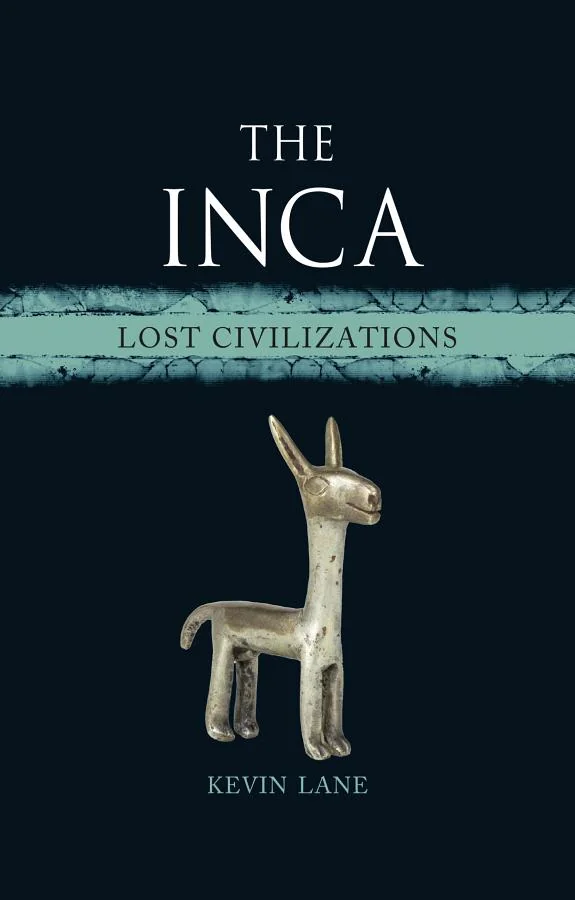
The Inca
 75
75

The Inca
Kevin Lane’s "The Inca" presents a welcome, data-driven perspective on a civilization too often shrouded in legend. Lane commendably avoids sensationalism, focusing instead on the empirical evidence of Inca statecraft and engineering. His detailed examination of the *mit'a* system, for instance, clarifies how a vast empire was sustained through organized labor rather than monetary exchange. However, the sheer density of information, while a strength for specialists, may prove daunting for the general reader. The section discussing the theological underpinnings of the Sapa Inca's authority, while accurate, lacks a certain narrative flair that could have made these complex beliefs more accessible. Lane’s rigorous scholarship is undeniable, but at times it feels as if the human element is slightly overshadowed by the mechanics of empire. The book is a valuable resource for understanding the Inca's pragmatic achievements.
📝 Description
75
Kevin Lane's 2022 book reassesses the Inca Empire beyond common myths.
Published in 2022, Kevin Lane's "The Inca" offers a detailed scholarly review of the Inca Empire, moving past popular notions to provide a carefully researched account of its history. The book follows the empire's growth from its beginnings in the Andes, describing its complex systems of administration, its religious beliefs, and its impressive architecture. Lane questions the comparison of the Inca to the Romans, highlighting their distinct achievements.
This work is aimed at those seriously studying pre-Columbian history, archaeology, and the structures of ancient empires. Readers interested in advanced construction, particularly in difficult environments, will find thorough explanations of Inca terracing and road networks. Those wanting to grasp the social and political organization of large ancient societies, different from those in the Old World, will value Lane's examination.
The Inca Empire, prominent in the 15th and early 16th centuries, was a high point of South American civilization before the Spanish conquest. Lane's book positions the Inca within the broader history of the Andes, contrasting their unified imperial system with earlier local cultures. He discusses the empire's swift expansion under rulers like Pachacuti Inca Yupanqui and its eventual fall after Francisco Pizarro arrived in 1532.
While "The Inca" focuses on historical and archaeological evidence, its examination of Inca cosmology, divine kingship, and the integration of religion into imperial power touches upon themes often considered esoteric. The book scrutinizes the symbolic weight of sites like Machu Picchu and the worldview that supported such a vast, centralized state. By detailing the *quipu* system and the *mita* labor, Lane illuminates the practical and ideological underpinnings of an ancient society whose achievements continue to inspire wonder and speculation about lost knowledge.
💡 Why Read This Book?
• Gain a concrete understanding of the *mit'a* labor system, a unique form of state organization that mobilized vast populations for public works, as detailed in Chapter 4, offering insights into pre-modern governance. • Explore the intricate Qhapaq Ñan road system, learning about the engineering principles that allowed the Inca to connect their empire across the challenging Andes, a topic covered in Chapter 6. • Grasp the significance of the *quipu*, the knotted string recording system, and how it functioned as a sophisticated tool for administration and communication in an empire without a written script, as discussed in Chapter 5.
⭐ Reader Reviews
Honest opinions from readers who have explored this book.
❓ Frequently Asked Questions
What distinguishes Kevin Lane's approach to the Inca Empire from earlier historical accounts?
Lane's 2022 publication emphasizes a reassessment based on current archaeological findings and a critical examination of Spanish chronicles, moving beyond romanticized notions to present a more empirically grounded view of Inca administration and engineering.
How did the Inca manage such a vast empire geographically?
The Inca utilized the Qhapaq Ñan, an extensive road system spanning over 25,000 miles, and the *mit'a* system, a mandatory public service obligation, to administer and connect their territories across the formidable Andean landscape.
What role did religion play in the Inca Empire?
Religion was integral to Inca statecraft. The Sapa Inca was considered divine, and religious ceremonies and the worship of deities like Inti (the Sun God) were used to legitimize imperial rule and foster social cohesion across diverse regions.
Was the Inca Empire technologically advanced for its time?
Indeed. The Inca demonstrated remarkable advancements in civil engineering, particularly in stonemasonry, terrace farming adapted to steep slopes, and sophisticated water management systems, alongside their unique *quipu* record-keeping.
When did the Inca Empire reach its zenith and begin its decline?
The Inca Empire reached its peak in the early 15th century and expanded significantly under rulers like Pachacuti. Its decline began with the arrival of Spanish conquistadors led by Francisco Pizarro in 1532, exacerbated by internal strife.
What is the significance of the 'Romans of the Americas' comparison?
This comparison highlights the Inca's impressive engineering, infrastructure development (roads, aqueducts), and administrative organization that facilitated the governance of a large, diverse territory, akin to the Roman Empire's achievements in Europe.
🔮 Key Themes & Symbolism
Imperial Engineering Prowess
Lane meticulously details the Inca's astonishing feats of civil engineering, transforming the treacherous Andean landscape into a functional empire. This includes the construction of the Qhapaq Ñan, a vast road network essential for communication and troop movement, and the development of sophisticated agricultural terracing systems that supported a large population. The book explores how these physical infrastructures were intrinsically linked to the empire's administrative control and ideological projection, demonstrating a pragmatic approach to empire-building.
The Mit'a Labor System
A central theme is the *mit'a*, the Inca system of mandatory public service. Lane dissects its organization, highlighting how it functioned as the backbone of the empire's economy and infrastructure development. This labor tax, required from all able-bodied subjects, fueled monumental construction projects, agricultural expansion, and military campaigns. The work clarifies how *mit'a* differed from slavery, representing a reciprocal obligation between the state and its people, albeit one enforced by imperial authority.
Quipu: An Empire's Record
The book examines the *quipu*, the complex system of knotted cords used by the Inca for record-keeping and communication. Lane explains its structure and the types of information it could convey, from census data and tribute records to historical accounts. This exploration underscores the Inca's intellectual ingenuity in developing a sophisticated information management system without a phonetic script, crucial for governing their expansive domain.
Cosmology and State Legitimacy
Lane looks at the Inca worldview, where the Sapa Inca was revered as a descendant of the sun god Inti. This divine lineage was a core part of imperial ideology, used to legitimize the conquest and rule over diverse populations. The book explores how religious practices, cosmology, and the manipulation of sacred landscapes were interwoven with political power, reinforcing social order and imperial authority.
💬 Memorable Quotes
Direct passages from the work, attributed to the author.
“The Inca integrated their monumental architecture directly into the challenging Andean topography.”
— This highlights the builders' deep understanding of their environment, where structures like Machu Picchu were not imposed upon the landscape but harmonized with it, showcasing advanced planning and execution.
“The *mit'a* system was the engine driving the empire's vast public works.”
— This emphasizes the critical role of organized, compulsory labor in the Inca economy, underpinning their ability to construct extensive road networks, agricultural terraces, and massive buildings across their territory.
“Record-keeping via *quipu* allowed for centralized control over a geographically dispersed population.”
— This points to the ingenuity of the Inca in managing complex data without alphabetic writing, demonstrating how their system facilitated efficient administration and governance across the empire.
“Spanish accounts often struggled to comprehend the Inca's non-monetary economic system.”
— This observation underscores the fundamental differences between European and Andean economic structures, particularly the Inca reliance on reciprocal labor and redistribution rather than currency.
“The divine status of the Sapa Inca provided a unifying element for diverse conquered peoples.”
— This interpretation focuses on the political utility of religious belief, showing how the emperor's perceived divinity served as a powerful tool for consolidating power and fostering loyalty within the vast Inca realm.
🌙 Esoteric Significance
Tradition
While "The Inca" is primarily a historical and archaeological text, its exploration of Inca cosmology and divine kingship touches upon themes relevant to esoteric traditions interested in solar cults and the sacredness of leadership. The Inca worldview, with its emphasis on cosmic order, ancestor veneration, and the divine mandate of the Sapa Inca, parallels elements found in various ancient mystery schools and solar-centric esoteric lineages. Lane's factual presentation provides the empirical basis for understanding these deeply ingrained belief systems that structured both the spiritual and political lives of the empire.
Symbolism
Central symbols explored include Inti, the Sun God, representing divine authority, cosmic power, and the source of life, intrinsically linked to the Sapa Inca's legitimacy. The *llautu*, the royal fringe worn by the Inca ruler, symbolized his supreme status and connection to the divine. The *Pachacuti* concept, often translated as 'earth-shaker' or 'world-reformer,' signifies cyclical renewal and transformative cosmic shifts, a potent symbol of divine intervention and imperial destiny within the Inca cosmology.
Modern Relevance
Contemporary esoteric thinkers and practitioners interested in shamanism, indigenous wisdom traditions, and comparative cosmology may find Lane's factual accounts of Inca beliefs and practices clear. Concepts like the integrated worldview, the reverence for natural forces, and the concept of cyclical time offer alternative perspectives to Western rationalism. While not an esoteric text itself, "The Inca" provides the historical and cultural context for understanding how ancient civilizations perceived the sacred and its manifestation in societal structures, influencing modern explorations of earth-based spirituality and ancient wisdom.
👥 Who Should Read This Book
• Students of comparative empires and ancient civilizations seeking detailed analyses of state formation, infrastructure, and administration beyond the Greco-Roman or Egyptian paradigms. • Archaeologists and historians specializing in the Americas who require up-to-date research on Inca society, technology, and belief systems, particularly concerning the *mit'a* and *quipu* systems. • Readers interested in the practical application of engineering and resource management in challenging environments, offering case studies in sustainable development and large-scale project execution from the 15th century.
📜 Historical Context
Kevin Lane's "The Inca" emerges in 2022, a period of renewed academic interest in pre-Columbian civilizations, building upon decades of archaeological and historical research. Its publication follows significant works by scholars like John Hemming and Kim MacQuarrie, who have previously explored the empire's rise and fall. Lane situates his work within this ongoing scholarly conversation, offering a synthesis that integrates recent findings. The early 21st century has seen a greater emphasis on understanding indigenous perspectives and challenging colonial narratives, a trend Lane embraces. Unlike earlier, more celebratory accounts, Lane's approach is critical, examining the mechanisms of Inca control and the social stratification inherent in their imperial project. The book implicitly engages with the legacy of figures like Hiram Bingham, whose rediscovery of Machu Picchu in 1911 ignited global fascination but also sometimes overshadowed the complex socio-political realities of the Inca state.
📔 Journal Prompts
The architectural integration of Inca sites with the Andean landscape.
The socio-economic implications of the *mit'a* system.
The function and symbolic weight of the *quipu* in imperial administration.
The relationship between the Sapa Inca's divine status and political control.
The engineering solutions employed to manage water resources in arid Andean regions.
🗂️ Glossary
Sapa Inca
The supreme ruler of the Inca Empire, considered a divine descendant of the sun god Inti. His authority was absolute, and his person was sacred.
Mit'a
A mandatory public service system in the Inca Empire, requiring citizens to contribute labor for state projects, infrastructure, and military campaigns for a set period annually.
Quipu
A complex system of knotted cords used by the Inca for record-keeping, accounting, and possibly historical narration. It represented a sophisticated method of data management in the absence of a written script.
Qhapaq Ñan
The extensive Inca road system, spanning over 25,000 miles across the Andes, facilitating communication, transportation, and the administration of the vast empire.
Inti
The ancient Inca god of the sun, considered the most important deity and the divine ancestor of the Sapa Inca. Worship of Inti was central to the state religion.
Andes
The longest continental mountain range in the world, forming the backbone of South America. The Inca Empire was largely situated within this challenging, high-altitude environment.
Pachacuti
Considered the greatest Inca emperor, who transformed the Kingdom of Cusco into the vast Tawantinsuyu empire during the 15th century. Also refers to a concept of world renewal or transformation.
This book appears in 1 collection
🔮 Readers Also Liked
Browse all →








From the “Lost Civilizations” Collection
View all →


More Free Esoteric History & Biography Books
View all →