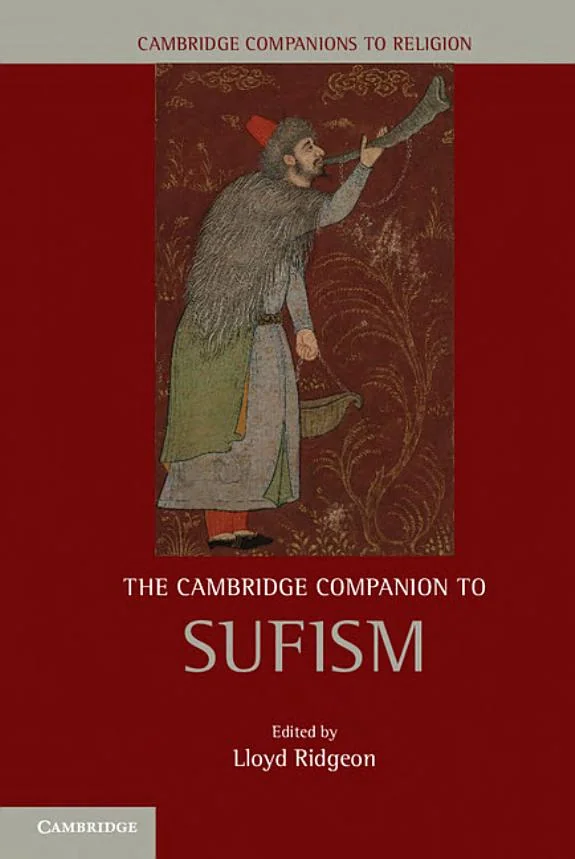
The Cambridge Companion to Sufism
 78
78

The Cambridge Companion to Sufism
Lloyd Ridgeon’s edited volume, The Cambridge Companion to Sufism, presents a commendable effort to map the vast terrain of Islamic mysticism for a scholarly audience. Its strength lies in its chronological approach, beginning with the formative centuries of Islam and tracing the evolution of Sufi thought through distinct historical periods. The inclusion of essays on Sufism's reception in the West and its modern manifestations is particularly timely. However, the collection occasionally suffers from a degree of unevenness in its essays; while some chapters offer penetrating analysis, others feel more like summaries. A notable passage that highlights the book's utility is its exploration of the concept of *wahdat al-wujūd* (unity of being), contextualizing it within specific historical debates. Despite minor inconsistencies, the companion serves as a solid, if dense, academic resource for understanding Sufism's intricate development.
📝 Description
78
Lloyd Ridgeon's 2015 Cambridge Companion surveys the Islamic mystical tradition, moving past simple views.
This volume offers a thorough academic overview of Islamic mysticism. It examines Sufism's varied expressions across history and different regions, avoiding overly simple explanations. The book is organized chronologically and thematically, detailing the evolution of important ideas and practices within Sufism. It is designed for students, academics, and dedicated practitioners of Islamic studies and comparative religion. Those who want a deep, scholarly grasp of Sufism, its historical development, and its philosophical foundations will find it particularly useful. This work serves as a scholarly reference for readers ready to move beyond introductory material and engage with the complexities of Sufi thought and practice.
The book was published in 2015, a time of both growing global attention to Sufism and significant geopolitical challenges affecting it. Its appearance in academic discourse reflects a wider scholarly aim to comprehend Islamic traditions in their full depth, departing from generalized interpretations. The collection engages with centuries of Sufi intellectual history, covering figures from its early proponents to those of the present day. The book systematically clarifies core Sufi concepts, with detailed discussions on divine love ('ishq'), the spiritual path ('sulūk'), self annihilation ('fanā'), and the master-disciple bond. It also covers the varied literary and poetic traditions that have conveyed Sufi teachings.
As a companion to Sufism, this book engages with a tradition often considered esoteric within Islam. Sufism's emphasis on direct, personal experience of the divine, its reliance on spiritual guides, and its rich symbolic language place it within a broader spectrum of mystical and contemplative practices found across world religions. While rooted in Islamic theology, its focus on inner transformation and the dissolution of the ego resonates with contemplative traditions beyond its immediate religious context. The volume unpacks concepts central to this inner path, making them accessible for academic study.
💡 Why Read This Book?
• Gain an understanding of Sufism's evolution from its early Islamic roots to the present day, as detailed in the chronological sections. • Explore the concept of *fanā* (annihilation of the self) within its historical and theological context, as presented in the thematic chapters. • Examine the diverse literary expressions of Sufism, including poetry and prose, and their role in transmitting mystical teachings across centuries.
⭐ Reader Reviews
Honest opinions from readers who have explored this book.
❓ Frequently Asked Questions
When was The Cambridge Companion to Sufism first published?
The Cambridge Companion to Sufism was first published in 2015, edited by Lloyd Ridgeon, offering a modern academic perspective on this ancient mystical tradition.
What is the primary focus of the book regarding Sufism's history?
The book traces the evolution of Sufism from its formative period in early Islam through to its contemporary expressions, detailing key figures and intellectual developments across centuries.
Who is the intended audience for this companion?
This companion is intended for students, scholars, and serious practitioners of Islamic studies and comparative religion seeking a detailed academic understanding of Sufism.
Does the book discuss specific Sufi concepts or only general history?
The book systematically unpacks core Sufi concepts such as divine love ('ishq'), spiritual stages ('sulūk'), and self-annihilation ('fanā'), contextualizing them historically and theologically.
Are there discussions on Sufism's presence outside the Middle East?
Yes, the work includes explorations of Sufism's reception in the West and its modern manifestations, acknowledging its global reach and diverse forms.
What kind of academic approach does the book take?
It adopts a scholarly, critical approach, moving beyond simplistic portrayals to examine the diversity and complexity of Sufi thought and practice across different eras.
🔮 Key Themes & Symbolism
Evolution of Mystical Practice
This volume meticulously charts the development of Sufi practices from their earliest attestations in the Islamic world. It examines how rituals, devotional exercises, and the pursuit of spiritual knowledge transformed over centuries, influenced by historical events and interactions with other intellectual traditions. The book highlights the shift from asceticism in early Sufism to more complex theological and philosophical elaborations in later periods, demonstrating a dynamic evolution rather than a static doctrine.
The Concept of Divine Love
Central to Sufi thought is the concept of 'ishq,' or divine love, which the companion explores in depth. It analyzes how this passionate yearning for God shaped Sufi ethics, poetry, and philosophical outlooks. The book contrasts different theological interpretations of love's role in the spiritual journey, from its depiction as a consuming fire to its function as a vehicle for unity with the Divine. This theme underscores Sufism's emphasis on affective experience in religious devotion.
Spiritual Path and Attainment
The book elucidates the structured spiritual journey, or 'sulūk,' undertaken by Sufi aspirants. It details the various stages, stations, and ethical disciplines required to progress towards spiritual realization. Key concepts like 'fanā' (annihilation of the ego) and 'baqā' (subsistence in God) are examined, providing insights into the ultimate goals of Sufi practice. The critical role of the spiritual guide (shaykh) in navigating this path is also a recurring focus.
Sufism in Global Context
Beyond its origins in the Middle East, the companion addresses Sufism's diffusion and adaptation across diverse cultures and geographical regions. It investigates how Sufi orders and ideas have interacted with local traditions and political landscapes, from South Asia to North Africa and the West. This global perspective reveals the adaptability of Sufi thought and its enduring relevance in various socio-historical contexts, including its modern reception.
💬 Memorable Quotes
Direct passages from the work, attributed to the author.
“The evolution of Sufism from its formative period to the present.”
— This foundational statement captures the book's primary objective: to provide a historical overview of Sufism's development across its entire lifespan, highlighting its dynamic nature.
“Sufism is often understood through the lens of divine love ('ishq').”
— This highlights a central tenet of Sufi mysticism, emphasizing the passionate, devotional aspect that distinguishes it within Islamic thought and practice.
“The spiritual path ('sulūk') involves distinct stages and disciplines.”
— This points to the structured, experiential nature of Sufi training, where progress towards spiritual realization is achieved through specific practices and ethical commitments.
“The concept of 'fanā' signifies the annihilation of the self.”
— This defines a critical Sufi goal, representing the dissolution of the ego's boundaries as a means to achieving union or profound awareness of the Divine.
“Sufism's global reception and contemporary forms are also examined.”
— This indicates the book's scope extends beyond historical origins to address Sufism's ongoing influence and adaptation in the modern world.
🌙 Esoteric Significance
Tradition
While Sufism is primarily an Islamic mystical tradition, its emphasis on inner transformation, direct experience of the Divine, and symbolic interpretation of scripture aligns it with broader esoteric currents. Within the Esoteric Library's purview, it shares common ground with Hermeticism and Gnosticism in its pursuit of hidden knowledge and spiritual gnosis. This companion offers a scholarly bridge, allowing readers to understand Sufism's unique path within its Islamic framework while recognizing shared esoteric aspirations for transcendence and union with ultimate reality.
Symbolism
Key symbols explored include the heart (qalb) as the locus of divine perception, the journey of the lover towards the Beloved representing the soul's quest for God, and the concept of 'no-thingness' or emptiness (*lā shay'*) as the ultimate reality beyond conceptualization. The book likely discusses the use of poetry and music (samā') as symbolic vehicles for expressing ineffable spiritual states, transcending ordinary language.
Modern Relevance
Contemporary thinkers and practitioners in various spiritual circles, including those engaged with comparative mysticism and mindfulness, draw upon Sufi concepts. The emphasis on the transformative power of love, the integration of contemplative practice into daily life, and the search for inner peace continues to resonate. Scholars and practitioners exploring the intersection of psychology and spirituality often reference Sufi psychology and its nuanced understanding of the human soul and its potential for growth.
👥 Who Should Read This Book
• Students of Islamic Studies: Gain a structured historical and thematic overview of Sufism, essential for understanding its place within Islamic civilization. • Comparative Religion Scholars: Analyze Sufism's unique mystical path and its relationship to other contemplative traditions, identifying shared esoteric themes. • Aspiring Mystics and Contemplatives: Explore the rich philosophical and practical dimensions of a major world mystical path, including concepts like divine love and spiritual stages.
📜 Historical Context
Published in 2015, The Cambridge Companion to Sufism entered a scholarly landscape increasingly focused on Islamic intellectual history and devotional practices. The early 21st century saw a surge in academic interest in Sufism, partly as a counterpoint to more politicized interpretations of Islam. This volume contributes to a broader effort to present Sufism not as a monolithic entity, but as a diverse tradition with complex historical roots. The book engages with the long lineage of Sufi thought, which stretches back to the ascetics of early Islam, figures like Hasan al-Basri in the 8th century, and the development of key concepts through scholars such as al-Ghazali and Ibn Arabi. At the time of its publication, scholars like Carl W. Ernst were actively reshaping understandings of Islamic mysticism, emphasizing its internal diversity. The companion implicitly addresses competing schools of thought within Islam, positioning Sufism's mystical path as a distinct, though often integrated, dimension of the faith.
📔 Journal Prompts
The early asceticism of Sufism and its foundational principles.
Reflecting on the concept of divine love ('ishq') as presented.
The stages of the spiritual path ('sulūk') and personal application.
The role of the master-disciple relationship in Sufi traditions.
Modern interpretations and global presence of Sufism.
🗂️ Glossary
Sufism
The mystical or inward dimension of Islam, focused on the pursuit of direct experience of God and spiritual purification of the heart.
'Ishq
Passionate, often overwhelming, divine love; a central concept in Sufi thought describing the soul's ardent yearning for God.
Sulūk
The spiritual path or journey undertaken by a Sufi aspirant, involving stages, disciplines, and ethical practices aimed at spiritual growth.
Fanā
Annihilation or extinction of the ego; the dissolution of the individual self's perceived separateness in the overwhelming presence of God.
Baqā
Subsistence or abiding in God; the state achieved after fanā, where the self realizes its existence is contingent upon and sustained by the Divine.
Shaykh
A spiritual guide or master in Sufism, responsible for leading disciples on the spiritual path and interpreting teachings.
Samā'
Spiritual concert or audition; a form of Sufi devotional practice often involving music, chanting, and sometimes ecstatic movement (like whirling).
This book appears in 1 collection
🔮 Readers Also Liked
Browse all →








From the “Sufism” Collection
View all →






More Free Esoteric History & Biography Books
View all →