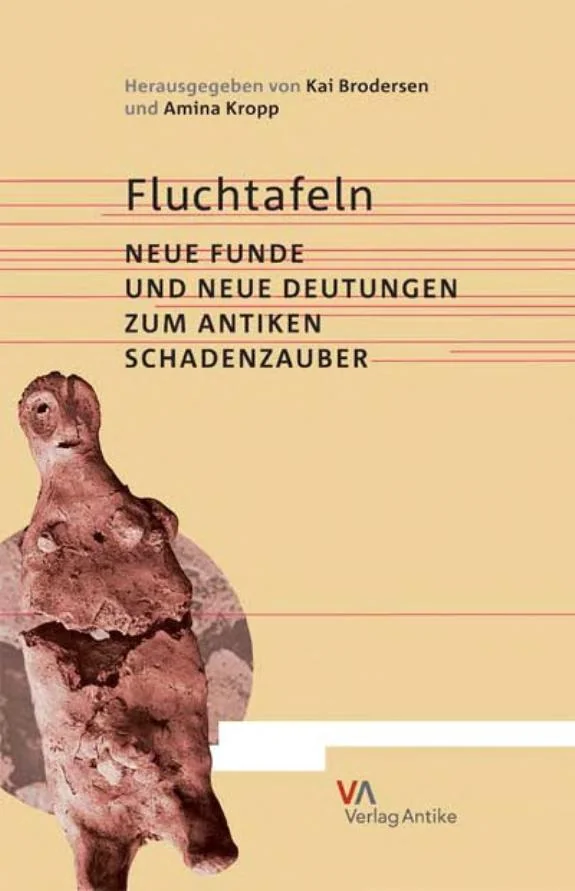
Fluchtafeln
 72
72

Fluchtafeln
The chilling efficacy of ancient curses is laid bare in *Fluchtafeln*, offering a stark look at human animosity channeled through ritual. Brodersen and Kropp present a rigorous catalog of these potent artifacts, moving beyond mere description to analyze their social and psychological underpinnings. A particular strength lies in the detailed examination of inscriptions, revealing the raw, often desperate, pleas for retribution. For instance, the inclusion of a curse against a rival who has married the object of affection—a scenario both petty and profound in its human drama—underscores the personal stakes involved. However, the book's academic density may prove a barrier for casual readers; its focus remains squarely on scholarly analysis rather than accessible narrative. Despite this, *Fluchtafeln* serves as an invaluable, if unsettling, window into the darker currents of ancient belief and practice.
📝 Description
72
Kai Brodersen and Amina Kropp's 2004 book examines ancient curse tablets, or defixiones.
Fluchtafeln analyzes the ancient practice of curse tablets, also known as defixiones, and other forms of sympathetic magic. The book details the rituals, inscriptions, and materials used in their creation and deployment across various ancient Mediterranean cultures. It investigates how these artifacts were used to invoke harm against enemies, rivals, or perceived wrongdoers, offering a focused examination of a specific class of magical artifacts. The study acknowledges the widespread nature of such practices, from ancient Greece and Rome to later periods, providing an overview of their function in ancient society.
The core concepts revolve around sympathetic magic, the belief that actions performed on an effigy or representation can affect the actual person. The book details the linguistic formulas used in curses, often invoking deities or underworld spirits to enact vengeance. It also covers the physical aspects, such as the use of lead tablets, burial sites, and the symbolic destruction of objects like dolls, all intended to bind or harm the target. This work is valuable for scholars of classical antiquity, religious studies, and the history of magic, as well as for practitioners of modern occultism interested in historical binding and cursing rituals.
Curse tablets represent a tangible manifestation of ancient magical beliefs, particularly those rooted in sympathetic magic. The practice reflects a desire to influence events and individuals through ritual action, often invoking supernatural forces to achieve a desired outcome. This book situates these practices within the broader history of magic and ritual in the ancient Mediterranean, a period where the lines between religion, magic, and everyday life were often blurred. Understanding defixiones offers insight into the anxieties, social dynamics, and belief systems prevalent in classical societies.
💡 Why Read This Book?
• Gain specific knowledge about the function and creation of ancient curse tablets, understanding the historical context of sympathetic magic as detailed in the book's examination of artifacts from Greece and Rome. • Explore the psychological motivations behind ancient curses by analyzing specific examples, such as the plea for vengeance against a rival mentioned in the text, revealing the deeply personal nature of these rituals. • Understand the role of deities and supernatural forces in ancient magic, as *Fluchtafeln* details how practitioners invoked gods and spirits to enact harm, providing insight into ancient religious beliefs.
⭐ Reader Reviews
Honest opinions from readers who have explored this book.
❓ Frequently Asked Questions
What are Fluchtafeln?
Fluchtafeln, or curse tablets, were small lead sheets inscribed with spells or binding rituals in antiquity. They were typically buried or placed in sacred locations to magically inflict harm, influence events, or compel individuals.
Who were the primary users of curse tablets?
Curse tablets were used by ordinary people across various social strata in the ancient world, not just elites. They were employed for personal grievances, legal disputes, romantic rivalries, and business competition.
What ancient cultures utilized curse tablets?
Curse tablets have been found across the ancient Mediterranean world, including in ancient Greece, Rome, and Egypt. Their practice spanned centuries, from approximately the 5th century BCE to the 6th century CE.
What kind of magic is represented by Fluchtafeln?
Fluchtafeln represent a form of sympathetic magic, where the inscription and ritual acted upon a representation or symbol to affect the intended target. This often involved binding the target's actions or invoking misfortune.
Where were curse tablets typically buried?
Curse tablets were often buried in graves, tombs, or near bodies of water like wells and springs, which were considered liminal spaces connecting the human world to the underworld or divine realms.
What is the scholarly significance of studying Fluchtafeln?
Studying Fluchtafeln provides crucial insights into ancient social history, legal practices, religious beliefs, and the everyday anxieties and conflicts of people living in antiquity, revealing their methods of seeking justice or retribution.
🔮 Key Themes & Symbolism
Sympathetic Magic
The core of *Fluchtafeln* lies in the exploration of sympathetic magic, the principle that 'like affects like.' The book meticulously details how ancient individuals used representations—such as inscribed lead tablets or effigies—to influence their enemies or rivals. This involved invoking supernatural forces to enact harm, binding their actions, or ensuring their downfall. The practice demonstrates a profound belief in the interconnectedness of the material and spiritual worlds, where a ritual act could have tangible consequences on a distant target.
Ancient Grievances and Justice
Beyond mere magical practice, *Fluchtafeln* sheds light on the social fabric and legal shortcomings of antiquity. The inscriptions often reveal deeply personal disputes, from romantic betrayals to business rivalries and legal frustrations. When formal justice systems failed or were inaccessible, individuals turned to curse tablets as a means of seeking retribution or asserting control. The book illustrates how these artifacts served as a desperate, yet potent, form of recourse in the ancient world.
Invocation of Deities and Spirits
A significant aspect of curse tablet practice, as presented in *Fluchtafeln*, is the active solicitation of supernatural aid. Practitioners frequently called upon chthonic deities, underworld spirits, or even specific gods associated with vengeance and justice. These invocations were not passive requests but often forceful commands, imbuing the curses with the perceived power of the divine or infernal realms. This highlights the complex relationship between humanity and the supernatural in ancient belief systems.
Ritualistic Destruction and Binding
The physical manipulation of objects is central to the curses discussed in *Fluchtafeln*. The use of lead, a heavy and malleable metal, was common for its association with the underworld and its permanence. The act of piercing dolls, bending tablets, or sealing them in tombs represented the binding or destruction of the target's will, body, or fortune. These ritualistic actions were designed to symbolically enact the desired misfortune upon the victim.
💬 Memorable Quotes
Direct passages from the work, attributed to the author.
“Someone buries a magic doll that has been pierced through the eye, neck, chest, stomach, hips, and anus.”
— This vivid description points to the ritualistic violence inherent in many curse tablets. The specific targeting of body parts signifies a desire to inflict pain, incapacitate, or symbolically destroy the victim through the doll's suffering.
“Someone implores for nothing but a bad end for their opponent.”
— This highlights the direct and often brutal intent behind curse tablets. The focus is not on subtle manipulation but on wishing ultimate ruin or death upon an adversary, demonstrating the raw animosity channeled through these artifacts.
“The great god of all gods is invoked for vengeance.”
— This demonstrates the appeal to higher powers, even the supreme deities, in seeking retribution. It shows that individuals believed these gods possessed the authority and power to enact justice or punishment according to their pleas.
“A curse tablet is inscribed with specific demands for harm.”
— This general concept underscores the functional nature of curse tablets. They were not abstract expressions of anger but precisely worded magical instruments designed to achieve specific outcomes against a named individual.
💡 Key Ideas
Editorial paraphrase of the work's core concepts — not direct quotes.
Someone asks the greatest of all gods for revenge against Priscilla, who made the grave mistake of marrying someone else.
This paraphrased concept captures the essence of many personal grievances recorded on curse tablets. It illustrates how ancient magic was often employed to address deeply human, often petty, conflicts and desires for retribution, revealing the personal stakes behind the ritual.
🌙 Esoteric Significance
Tradition
The practices detailed in *Fluchtafeln* align with broader currents of folk magic and ritualistic petition found across many ancient traditions, rather than a single codified esoteric lineage like Hermeticism or Kabbalah. However, they share common ground with traditions that emphasize sympathetic magic and the manipulation of spiritual forces for personal ends. The invocation of chthonic deities and the use of binding spells connect these practices to ancient Mediterranean religious beliefs, which often blurred the lines between 'magic' and 'religion' in ways distinct from modern Western esotericism.
Symbolism
Lead, the primary material for curse tablets, symbolized the underworld, permanence, and a connection to Saturn/Kronos, often associated with death and binding. The act of piercing or mutilating dolls or the tablet itself represented the symbolic destruction or incapacitation of the target's body, will, or fortune. Burial in graves or near water sources symbolized liminality, connecting the curse to the underworld or realms where spirits resided, amplifying its power.
Modern Relevance
Contemporary practitioners of witchcraft and modern occultism, particularly those interested in historical magical practices, draw inspiration from the methods described in *Fluchtafeln*. The concepts of sympathetic magic, targeted binding spells, and the use of personal effigies continue to inform ritualistic work. Scholars and enthusiasts of comparative religion also reference these practices to understand the historical evolution of belief systems and the persistent human desire to influence outcomes through supernatural means.
👥 Who Should Read This Book
['• Students of Classical Antiquity seeking to understand the social dynamics and belief systems of ancient Greece and Rome beyond formal literature.', '• Practitioners of Western Esotericism interested in the historical roots of sympathetic magic, binding spells, and ritualistic curses.', '• Comparative Religion scholars examining the intersection of belief, magic, and social practice in ancient societies.']
📜 Historical Context
The practice of creating and using curse tablets, or *defixiones*, flourished across the Hellenistic and Roman worlds from roughly the 5th century BCE to the 6th century CE. This period saw a surge in magical practices as individuals sought agency in a world often governed by unpredictable forces and social inequalities. *Fluchtafeln* engages with a rich body of scholarship that has emerged since the late 19th century, spurred by archaeological finds in sites like Athens and Pompeii. While contemporary philosophy and religion offered more structured ethical frameworks, the populace frequently turned to more direct, often illicit, means of addressing grievances. The work implicitly contrasts these personal, often vengeful, magical acts with the more formalized legal and religious systems of the time. The scholarly study of these texts gained momentum with figures like Ulrich von Wilamowitz-Moellendorff and has continued with scholars such as Christopher Faraone and Roy Kotansky, who have analyzed the linguistic and ritualistic dimensions.
📔 Journal Prompts
The ancient plea for revenge against Priscilla, concerning her marriage choice.
The ritualistic piercing of a doll through specific body parts.
The invocation of the 'greatest of all gods' for vindictive purposes.
The practice of burying curse tablets in graves or near water.
The specific inscriptions found on lead tablets detailing desired misfortunes.
🗂️ Glossary
Defixiones
The Latin term for curse tablets, referring to inscribed sheets of lead or other materials used for magical spells, typically to harm or bind someone.
Sympathetic Magic
A form of magic based on the principle that like affects like; actions performed on an effigy or representation are believed to affect the person or object it represents.
Chthonic Deities
Gods and goddesses associated with the underworld, the earth, and the afterlife. They were often invoked in curses and binding spells.
Binding Spell
A magical ritual intended to restrain, immobilize, or prevent someone from acting, often used in curses to stop an opponent's actions.
Liminal Space
A transitional or in-between place or state, such as thresholds, boundaries, or graves, often considered potent sites for magical rituals.
Vengeance Spell
A magical incantation or ritual specifically designed to inflict harm, misfortune, or retribution upon an enemy or perceived wrongdoer.
Hellenistic Period
The historical period following the conquests of Alexander the Great, roughly from 323 BCE to 31 BCE, characterized by the spread of Greek culture and syncretic religious practices.
This book appears in 1 collection
🔮 Readers Also Liked
Browse all →






From the “Incantations” Collection
View all →








More Free Esoteric History & Biography Books
View all →