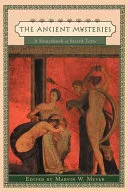
The Ancient Mysteries
 76
76

The Ancient Mysteries
Meyer’s "The Ancient Mysteries" offers a sober, academic survey of the religious landscape of the ancient Mediterranean, focusing on the transition from Olympian worship to more personalized cultic experiences. The work excels in its clear exposition of the historical forces that propelled the rise of mystery religions, particularly during the Hellenistic period. Meyer carefully delineates the differences between public cult and private initiation, highlighting the latter's appeal for direct spiritual encounter. A notable strength is the detailed examination of select mystery cults, providing a solid foundation for understanding their structure and function. However, the book occasionally feels overly descriptive, sometimes lacking the deeper interpretive spark that might truly illuminate the practitioners' subjective experiences. While Meyer references the Eleusinian Mysteries extensively, a more thorough engagement with the symbolic language and potential ecstatic states, perhaps drawing parallels with later Gnostic traditions, could have enriched the analysis. Nevertheless, it remains a valuable resource for its precise historical grounding.
📝 Description
76
Marvin W. Meyer's 1987 book traces the rise of personal cults in the Hellenistic world.
Marvin W. Meyer's "The Ancient Mysteries" examines a significant shift in ancient religious practice. The book details how the expansion of Hellenistic culture, following Alexander the Great's conquests, created a demand for religious frameworks that offered direct spiritual engagement. This need was met by the emergence of mystery religions, which contrasted with the older Olympian pantheon.
Meyer analyzes the structure, appeal, and impact of these secret rites. He contrasts the declining public authority of figures like Zeus with the growing attraction of cults such as the Eleusinian Mysteries and the cult of Dionysus. The book situates these developments within the Hellenistic period, a time of cultural exchange and religious syncretism, and argues for the concept of 'mystery religion' as a private, often secret, cult requiring initiation. These cults offered adherents a more profound connection to the divine, often through symbolic death and rebirth, and provided a sense of community and personal salvation distinct from civic worship.
This book places itself within the study of ancient mystery religions, a field that investigates private, often secret, cults of the ancient Mediterranean world. These traditions, distinct from public state cults, emphasized personal experience, initiation, and often promised salvation or a closer relationship with the divine. Meyer's work focuses on the Hellenistic period, a crucial era when these cults flourished and transformed religious life, offering an alternative to traditional polytheism and laying groundwork for later esoteric traditions.
💡 Why Read This Book?
• Gain a concrete understanding of the Eleusinian Mysteries, including their initiatory structure and the promise of a blessed afterlife, as detailed in the Hellenistic context Meyer provides. • Learn about the historical shift away from the Olympian gods towards personal religious experiences that occurred around the 4th century BCE, a pivotal moment in Western spiritual history. • Grasp the core appeal of mystery cults, which offered adherents a direct, often secret, connection to the divine, a concept central to understanding esoteric traditions.
⭐ Reader Reviews
Honest opinions from readers who have explored this book.
❓ Frequently Asked Questions
What is the primary difference between Olympian religion and the mystery cults discussed by Meyer?
Meyer explains that Olympian religion was largely civic and public, focused on communal worship of gods like Zeus. Mystery cults, conversely, were private, secret associations requiring initiation, offering adherents a personal, direct spiritual experience and often promising salvation.
During which historical period did mystery religions particularly flourish, according to the book?
The book emphasizes the Hellenistic period, roughly from the death of Alexander the Great in 323 BCE to the Roman conquest of Egypt in 31 BCE, as a time when these personal and experiential religions gained significant traction.
What is the significance of initiation in the context of ancient mystery religions?
Initiation was the gateway to the core teachings and rituals of mystery cults. Meyer illustrates how this process often involved symbolic acts of death and rebirth, granting the initiate a unique, transformative relationship with the divine.
Does Marvin W. Meyer discuss specific figures associated with these mystery cults?
While Meyer focuses more on the cults themselves, he references figures like Dionysus and implicitly discusses the role of hierophants and other officiants within the initiatory framework he describes.
What does the book suggest about the decline of the Olympian gods' influence?
Meyer posits that the Olympian gods' divine status waned as people sought more immediate and personal religious experiences. The rise of a cosmopolitan world made traditional, localized deities seem less relevant to individual concerns.
What is the academic approach taken in 'The Ancient Mysteries'?
Meyer adopts a scholarly, historical approach, analyzing the evolution of religious practices and the socio-cultural factors influencing the rise of mystery cults, rather than focusing on devotional or occult interpretations.
🔮 Key Themes & Symbolism
Shift from Olympian Pantheon
Meyer details how the popular consent that once upheld Zeus and the Olympian gods began to diminish. As the ancient world became more interconnected, individuals sought religious experiences that addressed their immediate concerns and offered personal salvation, moving away from the more distant, civic-focused worship of the Olympians. This transition highlights a fundamental change in the human search for the divine.
The Nature of Mystery Religions
The book defines mystery religions as secret cults that flourished particularly during the Hellenistic period. Adherence was a matter of personal choice, requiring initiation into sacred rites. Meyer emphasizes that these religions offered adherents a more profound, direct connection to the divine, often involving symbolic journeys of transformation and promising a better fate in the afterlife.
Hellenistic Religious Evolution
Meyer situates the rise of mystery cults within the specific historical milieu of the Hellenistic era (post-Alexander the Great). This period saw increased cultural exchange and syncretism, leading to a diversification of religious practices. The book explores how this cosmopolitan environment fostered a demand for personalized spiritual fulfillment that traditional public cults could no longer fully satisfy.
Initiation and Personal Experience
A core concept is the transformative power of initiation. Meyer explains how these secret rituals provided participants with a unique, often deeply personal, encounter with the sacred. This emphasis on individual experience and transformation marked a departure from the communal and ritualistic focus of earlier religious forms, paving the way for later esoteric developments.
💬 Memorable Quotes
Direct passages from the work, attributed to the author.
“Olympian luster diminished in favor of religious experiences more immediate to the concerns of people.”
— This succinctly captures the core thesis: the ancient world's religious focus shifted from the grand, distant gods of Olympus to cults offering direct, personal engagement with the divine and solutions to everyday existential needs.
“These experiences were provided by the mysteries, religions that flourished particularly during the Hellenistic period.”
— Meyer identifies the mystery religions as the primary vehicle for this shift. Their growth during the Hellenistic era underscores the changing spiritual landscape and the increasing desire for secret, initiatory paths to understanding and salvation.
“Adherents decided, through personal choice, to be initiated into secret practices.”
— This highlights the voluntary and individualistic nature of joining mystery cults. Unlike state-sponsored religion, participation was a deliberate act of faith and a quest for something specific that the initiate sought personally.
“The gods of shining Olympus were in reality divine only by popular consent.”
— This provocative interpretation suggests that the authority of the Olympian gods was not inherent but socially constructed. As societal views changed, so did the perceived divinity of these ancient figures, opening space for new religious forms.
“Religious experiences more immediate to the concerns of people living in an increasingly cosmopolitan ancient world.”
— This phrase explains the driving force behind the appeal of mystery cults. In a complex, interconnected world, individuals sought spiritual answers and solace that directly addressed their personal lives and existential anxieties.
🌙 Esoteric Significance
Tradition
While Meyer's work is primarily historical and academic, it lays crucial groundwork for understanding Western esoteric traditions. The mystery religions he analyzes—particularly those focused on death-rebirth cycles and direct divine communion—are precursors to later Gnostic, Hermetic, and Neoplatonic schools. His focus on personal transformation through ritual initiation aligns with the core tenets of many esoteric paths seeking inner gnosis and spiritual evolution.
Symbolism
Key symbols explored include the rites of Persephone and Demeter in the Eleusinian Mysteries, representing descent, loss, and eventual return—metaphors for the soul's journey through the material world and its potential for spiritual rebirth. The Dionysian mysteries, with their ecstatic rituals and emphasis on divine madness, symbolize the dissolution of the ego to achieve union with the divine, a recurring motif in esoteric thought.
Modern Relevance
Contemporary esoteric practitioners, particularly those involved in Neopaganism, Hellenistic Reconstructionism, and various forms of Western Mystery Tradition, draw heavily on the historical understanding of these cults. Meyer's work provides a scholarly basis for understanding the archetypal patterns of initiatory religion that continue to inspire modern spiritual seekers looking for embodied, experiential paths to the sacred.
👥 Who Should Read This Book
• Students of comparative religion and ancient history seeking a scholarly overview of the shift from Olympian worship to mystery cults in the Hellenistic period. • Individuals interested in the psychological and social drivers behind religious adherence, particularly the appeal of secret societies and personal spiritual quests. • Practitioners of Western esoteric traditions looking for historical context on the origins of initiatory practices and the search for direct divine experience.
📜 Historical Context
Marvin W. Meyer's "The Ancient Mysteries" emerged in 1999, situating itself within the ongoing academic discourse on ancient Mediterranean religions. The book primarily engages with the Hellenistic period (c. 323–31 BCE), a time characterized by vast cultural diffusion and religious syncretism following Alexander the Great’s conquests. Meyer contrasts the waning influence of the traditional Olympian cults with the ascendance of mystery religions, such as the Eleusinian Mysteries and the cult of Dionysus. These cults offered adherents direct, personal spiritual experiences and promised salvation, appealing to individuals in an increasingly cosmopolitan world where older, civic-focused religious forms felt less relevant. Contemporaries like Walter Burkert, in his seminal "Ancient Mystery Cults" (1987), had already laid significant groundwork in the academic study of these phenomena, emphasizing ritual action and communal identity. Meyer's work builds upon this foundation, providing a detailed historical overview and analysis of the appeal and function of these secret rites.
📔 Journal Prompts
The perceived decline of Olympian divinity by the 4th century BCE.
The personal choice involved in ancient initiation rites.
The promise of immediate religious experience in a cosmopolitan world.
The structure and appeal of the Eleusinian Mysteries.
The contrast between public cult and secret religious practice.
🗂️ Glossary
Hellenistic Period
The era in Mediterranean history roughly spanning from the death of Alexander the Great in 323 BCE to the Roman conquest of Egypt in 31 BCE, characterized by widespread Greek cultural influence and syncretism.
Mystery Religions
Ancient cults requiring initiation for participation, characterized by secret rites and promising adherents a personal, transformative religious experience, often related to death and rebirth.
Olympian Gods
The principal deities of the Greek pantheon, including Zeus, Hera, Poseidon, and Athena, who resided on Mount Olympus and were traditionally worshipped in public, civic contexts.
Initiation
The formal process of admission into a group or society, particularly in mystery religions, involving secret rituals and teachings that impart special knowledge or status to the candidate.
Cosmopolitanism
The ideology or attitude of being a citizen of the world; in the ancient context, it refers to the interconnectedness of diverse cultures and peoples in large urban centers and empires.
Eleusinian Mysteries
Ancient initiatory rites celebrated annually at Eleusis near Athens, in honor of Demeter and Persephone, promising initiates a blessed afterlife.
Syncretism
The blending of different religious beliefs, practices, and traditions, often occurring when cultures interact, leading to the merging of deities or the adaptation of rituals.