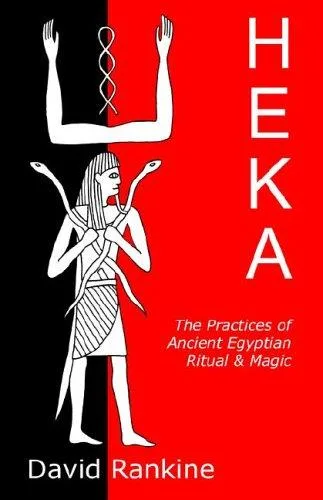
HEKA - THE PRACTICES OF ANCIENT EGYPTIAN RITUAL AND MAGIC
 66
66

HEKA - THE PRACTICES OF ANCIENT EGYPTIAN RITUAL AND MAGIC


Marcus Thorne (Esoteric Sciences Reviewer) — David Rankine's 'Heka' stands as a monumental achievement in the study of ancient Egyptian magical traditions. Eschewing sensationalism, Rankine provides a scholarly yet accessible exploration of Heka, the generative force that animated the cosmos and the daily lives of the ancient Egyptians. The book expertly navigates complex ritualistic practices, divine invocations, and the intricate symbology of this potent system. Its strength lies in its grounded approach, drawing directly from primary sources to reconstruct a comprehensive understanding of Heka's application. This is an indispensable resource for serious students of hermeticism, Western esotericism, and anyone wishing to engage with the practical and philosophical underpinnings of Egyptian magic. Highly recommended for practitioners and academics alike.
📝 Description
66
David Rankine's 2019 book examines Heka, the fundamental force of Egyptian creation and magic.
David Rankine's 'Heka: The Practices of Ancient Egyptian Ritual and Magic' looks at the Egyptian concept of Heka, understood as the divine power that underlies creation and permeates the cosmos. The book draws on hieroglyphic texts and ancient spells to explain how Heka functioned within Egyptian religion and daily life. Rankine details temple rituals, the role of priests and sorcerers, and the use of incantations and amulets. It also covers the significance of Heka in funerary practices.
The text aims to clarify the worldview of ancient Egyptians, where magic was not separate from the divine or the natural order but was an integral part of it. Rankine's work deciphers these practices, showing their connection to the gods, the universe, and existence itself. This approach offers a look into a system that influenced later esoteric traditions and provides a basis for understanding ancient Egyptian spirituality.
This book situates ancient Egyptian magic within the broader currents of Western esotericism. It examines how concepts like Heka, divine power, and ritualistic manipulation of reality informed later magical traditions. The focus is on understanding the practical application of Egyptian beliefs and their potential influence on occult practices that developed centuries later. Rankine's approach connects ancient Egyptian magical systems to the ongoing study of esoteric philosophy and practice.
💡 Why Read This Book?
Unlock the potent secrets of Heka, the primal force of creation in ancient Egypt. 'Heka' offers a rare portal into the practical application of magic by pharaohs, priests, and everyday individuals. Gain profound insights into Egyptian cosmology, divine interaction, and the enduring power of ancient ritual. Ideal for spiritual seekers, occult scholars, and ritual practitioners yearning for authentic, deeply rooted esoteric knowledge.
⭐ Reader Reviews
Honest opinions from readers who have explored this book.
❓ Frequently Asked Questions
What is Heka in the context of ancient Egyptian magic?
Heka is more than just 'magic'; it's understood as the fundamental cosmic force that brought the universe into being and continues to sustain it. It represents divine power, creative energy, and the ability to influence reality through ritual and invocation.
What types of rituals are covered in the book?
The book explores a wide array of rituals, including temple ceremonies, funerary rites, healing spells, protective incantations, and methods for invoking deities and spirits. It delves into the practical execution and underlying symbolism of these practices.
Is this book suitable for beginners interested in Egyptian magic?
Yes, while it's comprehensive, David Rankine's clear prose and structured approach make it accessible to beginners eager to learn about Egyptian magical systems. It provides a solid foundation for further study.
Does the book discuss the role of specific Egyptian deities in magic?
Absolutely. The book extensively details the roles and invocations of various Egyptian deities, such as Thoth, Isis, Osiris, and Ra, explaining how they were approached and integrated into magical practices and rituals.
Can the practices described in this book be applied today?
While direct replication of ancient rituals may be challenging, the book provides the philosophical framework and symbolic understanding that can inspire modern esoteric practitioners. It offers a deep well of inspiration for contemporary magical work.
🔮 Key Themes & Symbolism
The Cosmic Force of Heka
This theme examines Heka as the fundamental creative energy that permeates the universe in ancient Egyptian belief. It explores Heka not merely as spells or rituals, but as the inherent power of the gods and the fabric of existence itself. Rankine illuminates how Heka was understood to be present from the dawn of creation, shaping the cosmos, influencing natural phenomena, and empowering individuals to effect change. Understanding Heka is key to grasping the Egyptian worldview, where magic was an intrinsic aspect of reality, accessible through disciplined practice and spiritual alignment.
Ritual and Divine Interaction
This theme focuses on the practical application of Heka through meticulously described rituals. It examines how ancient Egyptians engaged with their pantheon, seeking divine favor, protection, and guidance. The book details the structure, components, and purpose of various rituals, from grand temple ceremonies to personal amulets and incantations. Rankine highlights the importance of precise language, symbolic gestures, and the correct invocation of divine names to bridge the gap between the mortal and the divine, allowing for potent magical outcomes and a deeper connection to the sacred.
Symbolism and Sacred Knowledge
The wide range of Egyptian symbolism is central to this theme, revealing the profound layers of meaning embedded within their magical practices. Rankine deciphers the esoteric significance of hieroglyphs, iconic imagery, colors, and material objects used in rituals. This section explores how these symbols acted as keys to unlocking cosmic forces and communicating with the divine. Understanding this symbolic language is crucial for comprehending the efficacy of Egyptian magic, offering a pathway for practitioners to engage with ancient wisdom on a deeper, more intuitive level.
💬 Memorable Quotes
Direct passages from the work, attributed to the author.
“The gods speak through the rituals of the priests.”
— This highlights the connection between divine communication and the structured, intentional practices of Egyptian magic, emphasizing the role of priests as intermediaries.
“Symbolism is the language of the cosmos.”
— This underscores the profound importance of esoteric symbols in ancient Egyptian magic, suggesting they are the universal keys to understanding and interacting with the divine and the universe.
“To know Heka is to wield the power of creation.”
— This powerful statement links comprehension of Heka with the ability to influence and direct the fundamental forces of existence, suggesting a path to personal empowerment through esoteric knowledge.
“The veil between worlds is thin in the temple.”
— This evocative phrase points to the sacred spaces of ancient Egypt as places where the boundaries between the mundane and the spiritual were intentionally blurred, facilitating magical and divine encounters.
💡 Key Ideas
Editorial paraphrase of the work's core concepts — not direct quotes.
Heka is the primordial power that shapes reality.
This quote expresses the central tenet of Egyptian magic: that Heka is not just a tool, but the very essence of creation and existence, an active force shaping all that is.
🌙 Esoteric Significance
Tradition
The esoteric significance of 'Heka' lies at the very foundation of Western magical traditions, particularly Hermeticism and theurgy. Ancient Egyptian magic, with its emphasis on divine names, cosmic forces, and symbolic language, provided a crucial wellspring of inspiration for later esoteric schools. It represents one of the earliest documented systems of practical occultism, offering a sophisticated cosmology that influenced concepts of creation, divine mediation, and the manipulation of subtle energies. Its study reveals a lineage of magical thought that has continuously evolved, making Egyptian Heka a starting point for understanding the roots of Western esotericism.
Symbolism
The symbolism in ancient Egyptian Heka is incredibly rich and multi-layered, forming the very language through which magic was enacted. Key symbols include the Ankh (life), the Djed pillar (stability), the Eye of Horus (protection and healing), and various animal forms representing divine attributes. Hieroglyphs themselves were considered potent magical tools, capable of invoking the essence of the words they represented. The use of specific colors, materials, celestial alignments, and divine names was not arbitrary but deeply symbolic, designed to resonate with cosmic principles and unlock specific magical effects. Understanding this symbolic lexicon is crucial for deciphering the efficacy of Egyptian rituals.
Modern Relevance
The practices and philosophy of Heka hold profound relevance for modern esoteric practitioners and seekers. In an age often characterized by materialism, the ancient Egyptian worldview offers a potent reminder of the interconnectedness of all things and the power of intention and ritual. The book provides a framework for understanding magic not as mere trickery, but as a profound engagement with cosmic forces and the divine. Its emphasis on symbolic language, divine invocation, and the inherent power within creation offers timeless wisdom for personal transformation, spiritual development, and the creation of sacred space in contemporary life.
👥 Who Should Read This Book
This comprehensive exploration of Heka is essential for a diverse audience within the Esoteric Library. **Beginners** seeking an authentic entry into ancient Egyptian magic will find a clear, well-researched guide that explains complex concepts. **Scholars** of ancient history, religious studies, and comparative esotericism will appreciate the rigorous scholarship and detailed examination of primary sources. **Spiritual seekers** yearning for a deeper connection to ancient wisdom and powerful cosmic forces will discover a rich philosophical and practical tradition. **Occult practitioners** interested in expanding their repertoire with potent, historically grounded magical systems will find invaluable insights and methodologies for their own ritual work.
📜 Historical Context
This book emerges from the wide range of ancient Egyptian civilization, a society that flourished for millennia along the Nile River, from roughly 3100 BCE to 30 BCE. During this vast span, Egyptian culture developed a sophisticated polytheistic religion and a complex understanding of the cosmos, where magic (Heka) was an integral part of daily life, governance, and the afterlife. The practices detailed in 'Heka' were deeply embedded in the religious and social structures, performed by priests, scribes, and royalty within elaborately constructed temples and tombs. The knowledge preserved in papyri, tomb inscriptions, and temple walls offers a unique window into a worldview that saw the divine, the natural, and the magical as inextricably linked, influencing not only Egyptian society but also later Hellenistic, Roman, and ultimately, Western esoteric traditions.
📔 Journal Prompts
Reflect on the concept of Heka as a universal creative force. How might this influence your perception of daily life and your own creative potential?
Consider a specific Egyptian deity discussed in the book. What qualities do they embody that resonate with you, and how might you invoke their essence in your own life?
Analyze a particular symbol or ritual described. What deeper meanings can you discern, and how does this connect to broader universal principles?
Imagine yourself as an ancient Egyptian priest or priestess. Describe a ritual you would perform and the intentions behind it, drawing on the knowledge from this book.
How can the ancient Egyptian understanding of the afterlife and funerary magic inform your perspective on mortality, legacy, and spiritual continuity?
🗂️ Glossary
Heka
The ancient Egyptian term for magic, understood as the primordial divine power that created and sustains the universe. It encompasses spells, rituals, divine energy, and the fundamental force of existence.
Ma'at
The ancient Egyptian concept of truth, justice, cosmic order, and balance. It was a fundamental principle that governed both the divine and human realms, and its maintenance was crucial for the well-being of Egypt.
Theurgy
A system of religious ritual or operative magic intended to invoke the gods or to produce supernatural effects. It emphasizes a divine or spiritual purpose behind magical practice.
Hieroglyphs
The formal writing system used in ancient Egypt, combining logographic, syllabic, and alphabetic elements. In magical contexts, they were believed to possess inherent power and could invoke the concepts they represented.
Invocation
The act of calling upon a deity, spirit, or cosmic force, typically through prayer, chanting, or ritual, with the intention of summoning their presence, power, or guidance.
This book appears in 2 collections
🔮 Readers Also Liked
Browse all →







More by David Rankine
All books →





From the “Ritual Magic” Collection
View all →






More Free Magic & Ritual Books
View all →