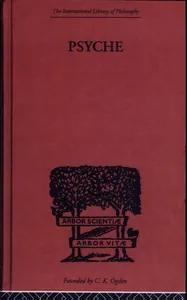
Saint Bride and Her Book

 78
78

Saint Bride and Her Book
Julia Bolton Holloway’s meticulous edition of Saint Bride and Her Book is an essential scholarly tool. Holloway’s introduction and annotations illuminate the complex textual history and theological underpinnings of Bridget of Sweden’s revelations, particularly the "Book of the Bride." The strength lies in its scholarly rigor, offering a primary source crucial for understanding medieval female spirituality. However, the density of the academic apparatus, while valuable for researchers, may present a barrier for the casual reader seeking direct devotional engagement. The inclusion of passages detailing Bridget’s visions of the Crucifixion, for instance, is starkly rendered, demanding careful contemplation. This is less a popular devotional text and more a critical academic resource.
📝 Description
78
Julia Bolton Holloway provides the first English translation of Saint Bridget of Sweden's "Book of the Bride" in 2017.
This volume presents a critical English edition of the "Book of the Bride," a text attributed to Saint Bridget of Sweden (c. 1303-1373). Julia Bolton Holloway's translation makes accessible a significant medieval mystical work previously unavailable in English. The original revelations, compiled after Bridget's death, circulated widely and shaped religious discourse in the 14th century.
This edition places Bridget's visions within the landscape of medieval visionary writing and late medieval devotional movements. It is intended for scholars of religious history and medieval literature, especially those examining female mystics and visionary traditions. Readers interested in Christian mysticism and devotional texts will also find value here.
Saint Bridget's "Book of the Bride" emerges from the rich tradition of medieval Christian mysticism, a period marked by intense personal encounters with the divine. Her visions, presented as direct dialogues with Christ, reflect a common practice among mystics of seeking inner spiritual guidance. The compilation and dissemination of such texts after the author's death were typical for the era, allowing their spiritual insights to influence broader religious communities and contemplative practices.
💡 Why Read This Book?
• Gain insight into the specific visions and theological framework of Saint Bridget of Sweden, as presented in the "Book of the Bride," offering a direct window into 14th-century Christian mysticism. • Understand the historical and textual transmission of Bridget's *Revelations*, a key aspect of medieval European spirituality, through Holloway’s scholarly introduction and notes. • Explore the devotional practices and symbolic language used by a prominent medieval female mystic, providing a unique perspective on the spiritual life of the era.
⭐ Reader Reviews
Honest opinions from readers who have explored this book.
❓ Frequently Asked Questions
Who was Saint Bridget of Sweden and when did she live?
Saint Bridget of Sweden (c. 1303-1373) was a Swedish mystic, visionary, and the founder of the Bridgettine Order. Her spiritual experiences and revelations significantly influenced late medieval religious life across Europe.
What is the significance of the "Book of the Bride"?
The "Book of the Bride" is a compilation of visions attributed to Saint Bridget, focusing on her mystical experiences, particularly concerning the Passion of Christ and the Virgin Mary, offering profound theological and devotional content.
What is Julia Bolton Holloway's contribution to this edition?
Julia Bolton Holloway provides the first English translation and critical scholarly edition of this specific part of Bridget's revelations, offering extensive historical context and textual analysis.
When was the first edition of Julia Bolton Holloway's work published?
Julia Bolton Holloway's first published edition of Saint Bride and Her Book was in 2000, building on earlier work and research into Bridget of Sweden's writings.
What historical period does Saint Bride and Her Book primarily address?
The book deals with the spiritual and theological landscape of the 14th century, the era in which Saint Bridget of Sweden lived and received her visions.
Is this book suitable for general readers or primarily for academics?
While academically rigorous, the book offers significant insights for serious students of medieval mysticism and devotional literature, making it valuable for both scholars and dedicated general readers interested in the subject.
🔮 Key Themes & Symbolism
Visionary Revelation
The text is fundamentally a collection of divine visions, presented as direct communications from Christ to Saint Bridget. These revelations provide an intimate look into medieval Christian cosmology and eschatology, detailing celestial events, spiritual truths, and prophecies. The nature of divine inspiration and the reception of such messages by the human soul are central, placing it within a long tradition of prophetic and visionary literature in Christianity.
The Passion of Christ
A significant portion of the "Book of the Bride" is dedicated to vivid and often harrowing descriptions of Christ's Passion. These passages are not merely narrative but serve as focal points for intense meditative prayer and devotional empathy. The suffering of Christ is presented as a profound mystery and the ultimate act of divine love, intended to draw the reader into a deeper spiritual union with the divine.
Marian Devotion
The Virgin Mary plays an important role in Bridget's visions, often depicted as a compassionate intercessor and a model of spiritual purity and obedience. The "Book of the Bride" explores Mary's own spiritual journey and her relationship with Christ, offering a framework for understanding her significance within the Catholic Church's devotional practices. This emphasis reflects the strong Marian cult prevalent in the medieval period.
The Bridgettine Order
While the "Book of the Bride" predates the formal establishment of the Bridgettine Order, it lays the spiritual and theological groundwork for its foundation. The visions often contain directives and insights related to monastic life, prayer, and community, reflecting Bridget's intention to create a new religious order dedicated to contemplative prayer and service, inspired by her mystical experiences.
💬 Memorable Quotes
Direct passages from the work, attributed to the author.
“Christ's wounds are the gates through which the soul enters into Paradise.”
— This evocative metaphor highlights the salvific significance of Christ's suffering. It suggests that spiritual salvation and heavenly reward are accessed through contemplation and identification with Christ's sacrifice.
“The Mother of God wept for the sorrows of her Son.”
— This highlights the deep empathy and shared suffering between the Virgin Mary and Jesus. It underscores Marian devotion and her role as a co-sufferer and intercessor in the narrative of salvation.
💡 Key Ideas
Editorial paraphrase of the work's core concepts — not direct quotes.
The soul that loves God truly finds no burden too heavy to bear.
This paraphrased concept emphasizes the transformative power of divine love, suggesting that genuine spiritual connection negates worldly suffering and makes even the most arduous trials feel manageable.
See my wounds, my beloved, for they are the testament of my love for you.
A paraphrased expression of divine love, this speaks to the core of Bridget's mystical experience: a direct, personal dialogue with Christ where suffering is presented as the ultimate proof of divine affection and commitment to humanity.
Pray without ceasing, for prayer is the bridge between man and God.
This paraphrased concept stresses the continuous and vital nature of prayer in maintaining a connection with the divine. It defines prayer as the essential conduit for spiritual communication and relationship.
🌙 Esoteric Significance
Tradition
Bridget of Sweden's work aligns with the Christian mystical tradition, emphasizing direct experience of the divine and interior prayer. It shares common ground with Gnostic traditions in its focus on hidden knowledge revealed through spiritual insight, and with Hermeticism in its exploration of divine correspondence and cosmic order, though firmly rooted within orthodox Catholic theology. Her visions serve as a conduit for esoteric understanding, translating divine realities into symbolic language accessible to the initiated.
Symbolism
The text is rich with symbolism. The **Crucifixion** is a central motif, representing not just Christ's suffering but the paradoxical nature of divine love achieved through sacrifice. The **Virgin Mary** symbolizes purity, intercession, and the receptive soul capable of divine union. **Light** and **celestial visions** represent divine presence and revelation, informative the path of the spiritual journey and the mysteries of the afterlife.
Modern Relevance
Contemporary practitioners of contemplative prayer and Christian esoteric traditions often draw inspiration from Bridget's devotional intensity and her direct, experiential approach to faith. Thinkers exploring female spirituality and historical mysticism find her work foundational. Her emphasis on inner vision and divine dialogue speaks to modern seekers interested in personalized spiritual paths outside rigid institutional frameworks.
👥 Who Should Read This Book
• Scholars of medieval religious history and literature seeking primary source material on female mystics and visionary writing. • Students of Christian mysticism and devotional practices interested in the spiritual field of 14th-century Europe. • Readers engaged with comparative religion and the history of esoteric traditions seeking to understand the roots of Western mystical thought.
📜 Historical Context
Saint Bridget of Sweden's revelations emerged in the 14th century, a period marked by the Avignon Papacy, the Black Death, and significant shifts in European religious and political landscapes. Her visions, compiled posthumously, gained widespread circulation, influencing figures like Catherine of Siena and contributing to a burgeoning interest in personal, direct mystical experience. While the Church was consolidating its power, Bridget's writings offered a counter-narrative of intimate divine communion accessible through vision and prayer. Her work competed with, yet also complemented, the scholastic theology dominant in universities, offering a more affective and experiential path to faith. The Bridgettine Order she founded, though facing its own challenges, became a notable monastic force. The reception of her visions was generally positive, though like many mystics, her writings were subject to scrutiny regarding their authenticity and interpretation.
📔 Journal Prompts
The nature of divine revelation as experienced by Saint Bridget.
Contemplation of Christ's Passion through Bridget's visions.
The symbolic role of the Virgin Mary in medieval devotion.
Reflections on the "Book of the Bride" as a spiritual guide.
The concept of prayer as a bridge between the human and divine.
🗂️ Glossary
Revelations
Supernatural disclosures of divine will or knowledge, typically granted to individuals through visions or direct divine communication.
Mysticism
The pursuit of spiritual truth through direct, intuitive experience of the divine, often involving altered states of consciousness or profound spiritual insight.
Passion of Christ
The series of events in the Gospels detailing Christ's suffering, crucifixion, and death, a central focus of Christian devotional practice and theology.
Eschatology
The branch of theology concerned with death, judgment, and the final destiny of the soul and of humankind.
Devotional Literature
Writings intended to inspire religious devotion, often through prayer, meditation, or contemplation of sacred events and figures.
Bridgettine Order
A Catholic religious order founded by Saint Bridget of Sweden in the 14th century, dedicated to prayer, contemplation, and service.
Intercessor
In a religious context, a person or entity (like the Virgin Mary) who pleads on behalf of others to a higher power.
This book appears in 1 collection
🔮 Readers Also Liked
Browse all →







From the “Visions” Collection
View all →




More Free Esoteric History & Biography Books
View all →