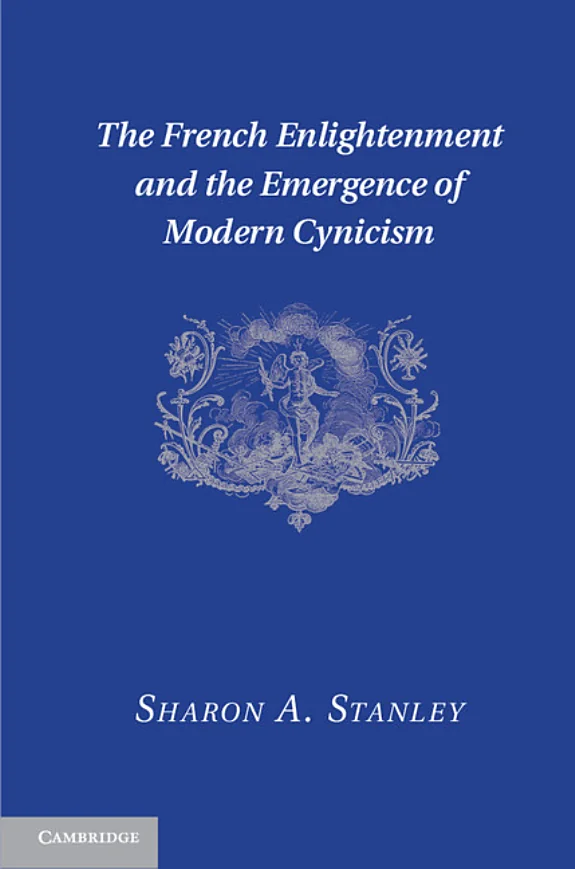
The French Enlightenment and the Emergence of Modern Cynicism
 73
73

The French Enlightenment and the Emergence of Modern Cynicism
Stanley's meticulous examination of Enlightenment philosophy offers a vital corrective to contemporary discourse that frames cynicism as a recent affliction. The strength of this book lies in its detailed engagement with primary texts, particularly its analysis of Diderot's skeptical undertones regarding social progress. While the prose can be dense, requiring focused attention, the core argument—that the seeds of modern cynicism were sown during an era ostensibly dedicated to reason—is powerfully made. The section discussing Rousseau's conflicted views on societal corruption is particularly illuminating, demonstrating how even proponents of reform harbored deep reservations about human perfectibility. This is not a book for casual readers, but for those serious about understanding the historical underpinnings of modern disillusionment, it provides essential context. Stanley's work compels us to rethink the origins and potential roles of cynicism in public life.
📝 Description
73
Sharon A. Stanley's 2023 book traces modern cynicism to the French Enlightenment.
Sharon A. Stanley's "The French Enlightenment and the Emergence of Modern Cynicism" argues that the 18th-century Age of Reason, often associated with optimism, actually fostered the roots of contemporary skepticism and distrust. The book examines how thinkers like Diderot and Rousseau, through their critiques of society and human nature, inadvertently created an intellectual climate where deep suspicion could grow. Stanley contends this was not an accidental consequence but a significant development arising from the era's intense questioning of established ideas.
The work challenges the idea that cynicism is a purely modern phenomenon. Instead, it positions the Enlightenment as a period where the sophisticated, detached cynicism common today began to form. Stanley suggests this historical critique and disillusionment offers a new way to understand democratic health, proposing that certain forms of skepticism might even contribute to its vitality. The book reevaluates the intellectual legacy of this era, moving beyond simple notions of progress.
While not overtly occult, this work engages with the philosophical underpinnings of belief and disillusionment that resonate within esoteric traditions. Many esoteric paths seek to uncover hidden truths or question conventional reality. Stanley's examination of how reason itself can lead to skepticism and a questioning of societal structures mirrors the critical inquiry found in various mystical and philosophical systems. It situates the intellectual shifts of the Enlightenment as a precursor to later movements that would also probe the nature of perception and societal constructs, sometimes leading to a detached or critical worldview.
💡 Why Read This Book?
• Understand the philosophical origins of modern distrust by examining the specific critiques of Denis Diderot during the French Enlightenment, a period of radical intellectual upheaval. • Gain a new perspective on democratic health by analyzing how the skepticism of Jean-Jacques Rousseau, over 200 years ago, might have informed later critiques of governance. • Identify the historical precursors to contemporary cynicism through Stanley's detailed analysis of 18th-century philosophical debates, moving beyond simplistic notions of it as a purely modern phenomenon.
⭐ Reader Reviews
Honest opinions from readers who have explored this book.
❓ Frequently Asked Questions
When was "The French Enlightenment and the Emergence of Modern Cynicism" first published?
The book was first published on March 19, 2012, offering a modern scholarly perspective on historical philosophical trends.
Which specific philosophers does Sharon A. Stanley analyze in relation to cynicism?
Stanley primarily discusses Denis Diderot and Jean-Jacques Rousseau, exploring their contributions to the intellectual climate that fostered modern cynicism.
Does the book argue that cynicism is a new phenomenon?
No, the book explicitly challenges this notion, demonstrating that recognizable forms of modern cynicism have much earlier roots in the French Enlightenment.
What is the book's stance on cynicism and democracy?
Stanley suggests that certain forms of cynicism may contribute to the health of democracies, offering a counterpoint to views that see it as purely destructive.
What historical period is the primary focus of the book?
The primary focus is the French Enlightenment, a pivotal era in Western thought that significantly shaped modern philosophical and social attitudes.
Is this book suitable for beginners in philosophy?
While accessible to dedicated readers, the book delves deeply into complex philosophical arguments, making it most suitable for those with some background in the subject.
🔮 Key Themes & Symbolism
The Enlightenment's Paradoxical Skepticism
This theme explores how an era celebrated for reason and progress simultaneously fostered deep skepticism about human nature and societal institutions. Stanley examines how the very tools of rational inquiry, applied to social and political structures, led thinkers like Diderot to question established truths and human motives, laying groundwork for a more critical, and at times disengaged, outlook that persists today.
Rousseau's Critique of Civilization
The book focuses on Jean-Jacques Rousseau's complex relationship with society, highlighting his arguments that civilization corrupts natural goodness. This exploration reveals how his profound critique, while aiming for reform, also contributed to a worldview where societal constructs are inherently suspect, feeding into the cynical disposition of questioning all established norms and authorities.
Cynicism Beyond the Contemporary
Challenging the popular view of cynicism as a recent phenomenon, this theme traces its lineage back to the intellectual ferment of the 18th century. Stanley argues that the foundations of modern cynicism were established during the French Enlightenment, demonstrating its historical depth and the cyclical nature of critical thought that reappears across different eras.
Skepticism and Democratic Vitality
Contrary to common assumptions, this theme posits that cynicism, when historically contextualized, might play a role in maintaining democratic health. By scrutinizing the Enlightenment's skeptical critiques, Stanley suggests that a degree of distrust towards power and pronouncements can serve as a vital check, fostering a more discerning and resilient citizenry.
💬 Memorable Quotes
Direct passages from the work, attributed to the author.
“The Enlightenment's faith in reason also produced its deepest doubts.”
— This concept highlights the inherent tension within the Enlightenment period, where the pursuit of rational understanding led not only to optimism but also to profound skepticism about human capacity and societal structures.
“Diderot's critiques questioned the very foundations of social progress.”
— This points to Denis Diderot's philosophical approach, suggesting that his incisive critiques of societal norms and human motivations during the Enlightenment fostered a skeptical outlook that challenged optimistic views of human advancement.
“Rousseau saw civilization as a corrupting force.”
— This captures a core aspect of Jean-Jacques Rousseau's philosophy as presented in the book, indicating his view that societal development and artificial constructs often lead to moral and natural degradation.
“The health of democracy may depend on a certain skepticism.”
— This interpretation suggests Stanley's argument that a degree of critical doubt, rather than outright cynicism, can act as a beneficial element within democratic systems, preventing complacency and promoting vigilance.
💡 Key Ideas
Editorial paraphrase of the work's core concepts — not direct quotes.
Cynicism is not a modern invention, but a historical echo.
This paraphrased idea emphasizes the book's central argument: that contemporary cynicism has deep roots in earlier intellectual movements, particularly the French Enlightenment, and is not a solely 21st-century development.
🌙 Esoteric Significance
Tradition
While not explicitly aligning with a single esoteric lineage, this work contributes to esoteric thought by examining the philosophical underpinnings of skepticism, a crucial element in many mystical traditions that question empirical reality and societal constructs. It bridges rationalist philosophy with the esoteric concern for uncovering hidden truths or deconstructing accepted falsehoods, relevant to Gnostic and Hermetic traditions that emphasize critical discernment.
Symbolism
The 'Age of Reason' itself can be viewed as a symbol of the human attempt to grasp ultimate truth through intellect, a common theme in esoteric quests. The philosophers discussed, particularly their critiques of established dogma, symbolize the hermeneutic or deconstructive impulse to strip away illusions. The emergence of cynicism can be seen as a shadow aspect of this quest, where the pursuit of truth leads to a rejection of all perceived truths, a cautionary motif in esoteric paths.
Modern Relevance
Contemporary esoteric thinkers and practitioners interested in social critique, the nature of perception, and the deconstruction of societal illusions find relevance here. Those exploring modern occultism or critical theory within spiritual contexts can draw upon Stanley's analysis to understand how rationalist critiques have shaped contemporary worldviews, influencing how esoteric ideas are received or dismissed in secular society.
👥 Who Should Read This Book
• Students of Western philosophy interested in the intellectual currents of the French Enlightenment and their long-term impact on modern thought. • Scholars of social and political theory seeking to understand the historical roots of cynicism and its complex relationship with democratic societies. • Readers of esoteric literature who wish to explore the philosophical underpinnings of skepticism and critique, connecting rationalist thought to broader questions of perception and societal illusion.
📜 Historical Context
The French Enlightenment, spanning roughly from the mid-17th to the late 18th century, was a period of intense intellectual and philosophical activity. Thinkers like Denis Diderot and Jean-Jacques Rousseau engaged in radical critiques of traditional authority, religion, and social hierarchies, advocating for reason, individualism, and secularism. This era saw the rise of the 'philosophes,' who disseminated ideas through encyclopedias, salons, and pamphlets. However, alongside this push for progress, a counter-current of skepticism and disillusionment emerged. Stanley's work positions itself within this complex intellectual landscape, challenging the simplistic narrative of Enlightenment optimism. By focusing on the emergence of cynicism, the book engages with contemporary scholarship that often views cynicism as a purely modern problem, showing its historical antecedents. This challenges thinkers who might associate the Enlightenment solely with progressive ideals, highlighting thinkers like Diderot who, through their critical analyses, inadvertently contributed to a more skeptical worldview.
📔 Journal Prompts
The Enlightenment's paradoxical embrace of reason and doubt.
Denis Diderot's skepticism regarding societal progress.
Jean-Jacques Rousseau's view of civilization as corrupting.
The historical lineage of modern cynicism.
Cynicism's potential role in democratic discourse.
🗂️ Glossary
French Enlightenment
An intellectual and cultural movement in 18th-century Europe, emphasizing reason, individualism, and skepticism towards traditional authority, which profoundly shaped modern Western thought.
Cynicism
An attitude characterized by a general distrust of others' motives, belief that people are motivated purely by self-interest, and a rejection of sincerity or idealism.
Denis Diderot
A key figure of the French Enlightenment, known for co-founding the Encyclopédie, whose writings explored philosophy, science, and art, often with a critical and skeptical perspective.
Jean-Jacques Rousseau
A Genevan philosopher whose work influenced the Enlightenment and French Revolution, known for his theories on social contract, education, and his critique of civilization's corrupting influence.
Rationalism
A philosophical approach emphasizing reason as the primary source of knowledge and justification, often contrasted with empiricism.
Social Contract Theory
A philosophical concept that individuals implicitly or explicitly consent to surrender some of their freedoms and submit to the authority of a ruler or government in exchange for protection of their remaining rights.
Secularism
The principle of separation of the state from religious institutions, advocating for public life to be based on secular rather than religious grounds.
This book appears in 1 collection
🔮 Readers Also Liked
Browse all →








From the “Enlightenment” Collection
View all →






More Free Esoteric History & Biography Books
View all →