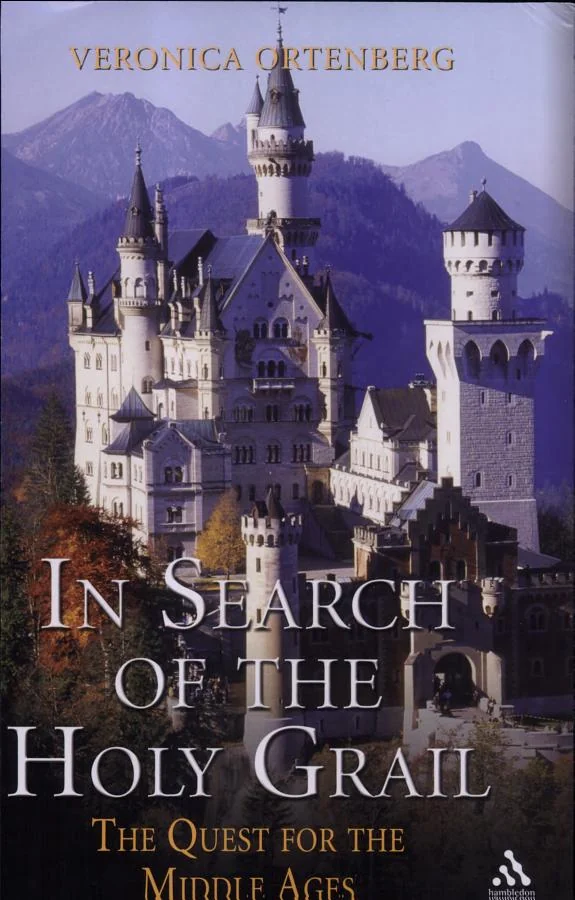
In Search of the Holy Grail
 78
78

In Search of the Holy Grail
Ortenberg's "In Search of the Holy Grail" offers a lucid, if somewhat conventional, survey of medievalism's afterlife. The author effectively demonstrates how later eras, particularly the Romantics and various nationalist factions, selectively excavated medieval motifs. A notable strength is the clear articulation of how concepts like chivalry and Gothic architecture became potent symbols for Romantic revivalism and even for ideologically driven historical revisionism. The work's limitation lies in its broad scope; while comprehensive, it sometimes sacrifices depth for breadth, particularly when touching on the more complex appropriations by groups like the Nazis. The section discussing the Nazis' selective use of medieval imagery, while brief, is particularly stark in its illustration of how history can be weaponized. Ultimately, Ortenberg provides a solid overview for understanding the enduring, often problematic, allure of the medieval past.
📝 Description
78
Veronica Ortenberg's 1999 book examines how the European Middle Ages continue to shape modern thought and art.
Veronica Ortenberg's study, published in 1999, analyzes the persistent influence of the European Middle Ages (500-1500 AD) on later cultural periods. The work carefully details how medieval attitudes, values, and artistic expressions have been reinterpreted and used by subsequent movements. It emphasizes the important role of medieval Christianity in forming European identity and artistic traditions, showing its lasting effect.
This book is for readers interested in the historical roots of Western culture, especially those who study the development of art, literature, and political ideas. Experts in medieval history, Romanticism, and nationalist ideologies will find useful connections. It speaks to anyone wanting to grasp how historical periods become mythologized and are employed to support current agendas, particularly concerning national identity and cultural heritage.
While not strictly an esoteric text, Ortenberg's work engages with how historical periods and their symbols are mythologized and repurposed. This resonates with esoteric traditions that often draw upon and recontextualize elements from various historical epochs, seeking deeper meanings or spiritual connections. The book's analysis of how concepts like chivalry and Gothic aesthetics transcend their original context mirrors esoteric practices of symbolic interpretation and the search for hidden continuities across time.
💡 Why Read This Book?
• Understand how medieval aesthetics, like Gothic architecture, were reappropriated by Romantic artists seeking historical roots. • Grasp the function of medieval Christianity as a cultural bedrock influencing European identity across centuries. • Analyze the selective invocation of chivalric ideals and medieval narratives by nationalist movements to construct historical legitimacy.
⭐ Reader Reviews
Honest opinions from readers who have explored this book.
❓ Frequently Asked Questions
What specific medieval elements does Veronica Ortenberg discuss as influential?
Ortenberg's work highlights the influence of medieval Christianity, Gothic architecture, and the concept of chivalry as key elements that resonated with later periods.
Which artistic and political movements drew inspiration from the Middle Ages?
The book points to Romanticism as a major artistic movement heavily influenced by medievalism, and also discusses how various nationalist groups, including the Nazis, looked back to medieval periods.
What is the timeframe for the Middle Ages as discussed in the book?
The book focuses on the period between 500 AD and 1500 AD, considering this millennium as a significant source of cultural and ideological material for later eras.
How does Ortenberg connect medieval values to the modern world?
Ortenberg illustrates this connection by showing how medieval attitudes and values, particularly those related to religion, art, and social structures, have been continuously reinterpreted and utilized in modern cultural discourse.
What is the significance of medieval Christianity according to the author?
The work posits medieval Christianity as an essential background to European culture, providing a rich legacy that influenced subsequent artistic, political, and literary developments.
Does the book focus on the Holy Grail legend itself?
While the title suggests a focus on the Holy Grail, the book's primary aim is to survey the broader influence of the Middle Ages on later periods, using the Grail legend perhaps as a symbolic touchstone for medieval quests and ideals.
🔮 Key Themes & Symbolism
Medievalism's Cultural Resonance
Ortenberg's analysis demonstrates how the period between 500 and 1500 AD functions as a persistent cultural touchstone. Far from being a static historical era, the Middle Ages are presented as a dynamic source of inspiration and ideological framing for subsequent generations. The book details how specific medieval elements, such as chivalric codes and religious devotion, are selectively retrieved and recontextualized to serve the needs of later artistic, political, and social movements, underscoring the constructed nature of historical influence.
Christianity as a Cultural Foundation
The work emphasizes the pervasive influence of medieval Christianity, positioning it as a fundamental pillar of European culture. It argues that the rich legacy of this religious era provided an essential backdrop against which later developments in art, literature, and philosophy unfolded. This perspective moves beyond a purely theological interpretation to explore Christianity's role in shaping societal values, artistic motifs, and the very conceptual framework of Western civilization.
The Mythologizing of the Past
A critical aspect explored is the tendency for later periods to mythologize the Middle Ages, often projecting idealized notions onto this historical epoch. Ortenberg examines how movements like Romanticism selectively adopted elements such as Gothic architecture and chivalry, viewing them through a lens of nostalgia or as exemplars of perceived lost virtues. This process of selective retrieval and idealization is shown to be a recurring phenomenon in how cultures engage with their own histories.
Medievalism in Nationalist Ideologies
The book critically addresses the instrumentalization of medieval imagery and narratives within nationalist movements. It points out how groups, including the Nazis, selectively drew upon medieval heritage – be it through architectural styles or perceived ancestral connections – to legitimize their political agendas and forge a sense of historical continuity and national identity. This highlights the power of historical narratives in shaping contemporary political discourse.
💬 Memorable Quotes
Direct passages from the work, attributed to the author.
“Many artistic, political and literary movements have drawn inspiration and sought their roots in the thousand years between 500 and 1500 AD.”
— This statement expresses the book's central thesis: the Middle Ages are not merely a historical period but an active source from which later cultural expressions derive meaning and legitimacy.
“Medieval Christianity, and its rich legacy, has been the essential background to European culture as a whole.”
— This highlights the pervasive, foundational role of medieval Christian thought and practice, suggesting it forms an indispensable context for understanding subsequent European cultural evolution.
“Gothic architecture and chivalry were two keys to Romanticism.”
— This points to specific medieval elements that became potent symbols for the Romantic movement, illustrating how later eras selectively engage with historical aesthetics and ideals.
“Nationalists, including the Nazis, looked back to [the Middle Ages]...”
— This indicates the book's exploration of how political ideologies, even extreme ones, have historically appropriated medieval motifs to construct narratives of national identity and historical continuity.
💡 Key Ideas
Editorial paraphrase of the work's core concepts — not direct quotes.
The work surveys the influence of the Middle Ages... on later periods and on the modern world.
This accurately summarizes the book's objective: to trace the enduring impact and reinterpretations of medieval culture across subsequent centuries and into contemporary times.
🌙 Esoteric Significance
Tradition
While not explicitly an esoteric text in the vein of Hermeticism or Kabbalah, the book engages with the cultural legacy that *feeds* esoteric traditions. It situates medieval Christianity and chivalric ideals as foundational elements that later esoteric movements often drew upon, sometimes directly, sometimes indirectly through Romantic or occult revivals. The work implicitly acknowledges how these historical periods provided archetypal narratives and symbols that resonate with mystical and occult inquiries.
Symbolism
The book indirectly touches upon potent symbols that hold esoteric significance. The Holy Grail itself, though not the sole focus, represents ultimate spiritual attainment, divine grace, and hidden knowledge – core themes in many esoteric paths. Chivalry, beyond its social context, can be interpreted as an archetypal quest for purity, valor, and service, mirroring the initiate's journey. Gothic architecture, with its soaring forms and stained glass, evokes aspiration towards the divine and the use of light and space for sacred purposes.
Modern Relevance
Contemporary thinkers and practitioners in fields like comparative mythology, Jungian psychology (exploring archetypes), and even certain strains of neo-Paganism and esoteric Christianity may find Ortenberg's work relevant. By tracing the historical lineage of medieval motifs, the book provides context for how these symbols and narratives continue to inform modern quests for meaning, spirituality, and identity, even outside explicitly religious or occult frameworks.
👥 Who Should Read This Book
• Students of cultural history and medievalism seeking to understand the long-term impact of the Middle Ages on Western thought. • Art and literature scholars interested in the Romantic movement and the ways historical periods are selectively revisited for inspiration. • Readers of political theory and history who wish to examine how nationalist ideologies have historically constructed narratives of heritage and identity.
📜 Historical Context
Published in 2006, Veronica Ortenberg's "In Search of the Holy Grail" emerged at a time when scholarly interest in medievalism and its cultural impact remained robust. The late 20th and early 21st centuries saw extensive work on how the Middle Ages were perceived and utilized during periods like the Romantic era and by various nationalist movements. Ortenberg's contribution sits within this discourse, offering a broad survey of medieval influences on later European culture. Key contemporaries in the study of medievalism include scholars like John Ruskin (though much earlier, his ideas on Gothic architecture were foundational), and later figures examining the reception of the Middle Ages in literature and art. The work's focus on the appropriation of medieval ideals by nationalist groups, including the Nazis, aligns with critical analyses that emerged from the mid-20th century onwards, questioning romanticized notions of the past and exposing their political exploitation.
📔 Journal Prompts
The influence of Gothic architecture on Romanticism.
Medieval Christianity's role as a cultural background.
The concept of chivalry in later periods.
Nationalist appropriation of medieval imagery.
The thousand years between 500 and 1500 AD as a source of roots.
🗂️ Glossary
Middle Ages
The historical period in Europe spanning roughly from the 5th to the 15th century AD, characterized by feudalism, the dominance of Christianity, and significant developments in art, architecture, and philosophy.
Medieval Christianity
The religious beliefs, practices, and cultural expressions associated with the Christian Church during the Middle Ages, profoundly shaping European society, art, and intellectual life.
Gothic Architecture
A style of architecture that flourished in Europe during the High and Late Middle Ages, characterized by pointed arches, ribbed vaults, and flying buttresses, often associated with cathedrals.
Chivalry
The medieval knightly system of ideals and social code of conduct, emphasizing bravery, loyalty, honor, courtesy, and protection of the weak.
Romanticism
An artistic, literary, and intellectual movement originating in Europe towards the end of the 18th century, emphasizing emotion, individualism, and glorification of the past and nature.
Nationalism
An ideology and movement characterized by the promotion of the interests of a particular nation, especially with the aim of gaining and maintaining the nation's sovereignty.
Medievalism
The study or imitation of the Middle Ages, particularly in art, literature, and culture, often involving a romanticized view of the period.
This book appears in 1 collection
🔮 Readers Also Liked
Browse all →







From the “Holy Grail” Collection
View all →







More Free Esoteric History & Biography Books
View all →