Quest of the Holy Grail
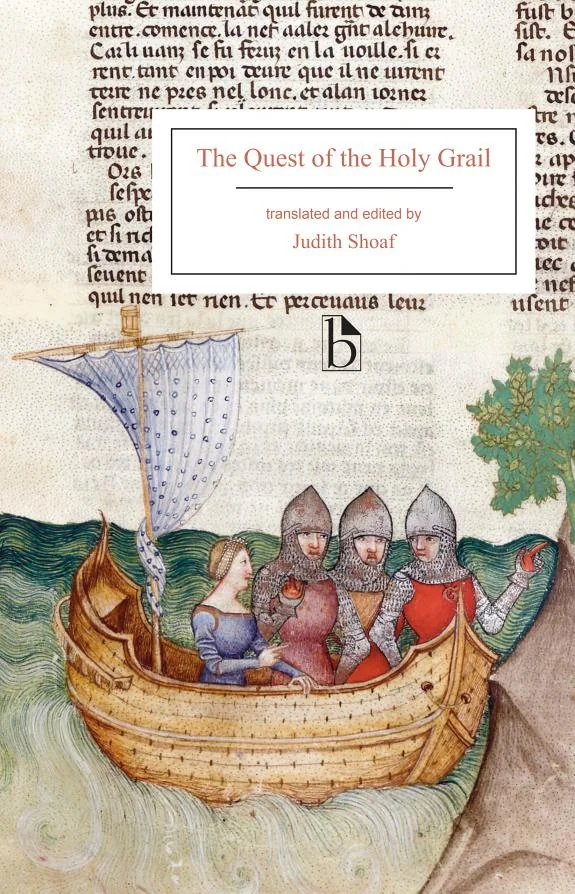
 83
83

Quest of the Holy Grail
The "Quest of the Holy Grail" offers a starkly different perspective on the Arthurian legends than many popular retellings. This translation, focusing on the Lancelot-Graal section, emphasizes the spiritual and theological underpinnings of the narrative. Its strength lies in the meticulous scholarly apparatus. The notes and guides are genuinely helpful, illuminating the allegorical layers and historical context without becoming intrusive. A particularly resonant passage is the depiction of the spiritual trials faced by the knights, which highlights the stark contrast between worldly chivalry and divine aspiration. However, the sheer density of the text, even in this excerpted form, can be daunting for the uninitiated. The archaic language, even when translated, requires careful attention. Ultimately, this is a scholarly edition that demands engagement but rewards it with a profound appreciation for the Grail legend's Christian roots.
📝 Description
83
This 1910 translation details the spiritual quest for the Holy Grail within the Old French Lancelot-Graal.
This text translates a key portion of the Old French Lancelot-Graal romance, focusing on the allegorical pursuit of the Holy Grail. It frames the Arthurian legends not just as tales of knights and adventure, but as integral to Christian history, placing King Arthur in a spiritual lineage. The translation includes extensive notes and guides intended to help readers grasp its literary and historical significance. This work is a valuable resource for anyone studying medieval literature, romance traditions, or early Christian history. It will appeal to scholars and enthusiasts interested in exploring the Grail legend beyond its more secular interpretations. Those who appreciate detailed textual analysis and historical context, particularly concerning the intersection of mythology, religion, and social history in medieval France, will find this edition especially useful.
The Lancelot-Graal, also known as the Vulgate Cycle, was written around the mid-13th century. This period in France saw intense religious devotion and evolving literary styles, where chivalric ideals often merged with spiritual and allegorical meanings. The work itself emerged during a time of significant religious fervor and literary innovation, grappling with the Christianization of older myths and shaping the Arthurian mythos for centuries. Its creation reflects the cultural and spiritual currents of medieval France.
Within the broader tradition of Arthurian romance, the Lancelot-Graal represents a significant development in allegorical literature. The quest for the Grail, as depicted here, moves beyond simple adventure to symbolize an inner spiritual transformation. This aligns with contemplative traditions that view external journeys as metaphors for internal spiritual progress. The emphasis on divine grace and the trials faced by knights seeking spiritual attainment connects to mystical interpretations of Christian doctrine, where the pursuit of God involves overcoming personal flaws and worldly temptations. The text thus serves as a bridge between chivalric romance and esoteric Christian contemplation.
💡 Why Read This Book?
• Gain insight into the allegorical significance of the Grail quest, understanding its representation of spiritual purification and divine grace as depicted in the Lancelot-Graal section. • Appreciate the historical context of 13th-century French romance, recognizing how this work shaped Arthurian legends and integrated them with Christian narratives. • Explore the symbolic journeys of knights like Galahad and Lancelot, learning about the interplay between earthly chivalry and the pursuit of sacred spiritual attainment.
⭐ Reader Reviews
Honest opinions from readers who have explored this book.
❓ Frequently Asked Questions
What is the historical origin of the Quest of the Holy Grail section?
This section is part of the Lancelot-Graal, also known as the Vulgate Cycle, a monumental compilation of Arthurian romances likely produced in France around the mid-13th century.
Who is Galahad in the Quest of the Holy Grail?
Galahad is portrayed as the purest knight, destined to achieve the Grail quest. His character represents spiritual perfection and the ultimate success in the Grail's pursuit.
How does this text differ from other Arthurian legends?
Unlike more secular adventures, this section heavily emphasizes the spiritual and allegorical dimensions, presenting the Grail quest as a Christian pilgrimage and a test of divine worthiness.
What is the significance of the Holy Grail in this narrative?
The Grail functions as a symbol of divine presence, spiritual enlightenment, and God's grace. Achieving the quest signifies profound spiritual attainment and purity of heart.
What kind of scholarly support is provided in this translation?
The translation includes extensive notes and guides designed to help readers understand the text's literary and historical context, as well as its allegorical meanings.
When was the Lancelot-Graal cycle compiled?
The Lancelot-Graal, of which the Quest of the Holy Grail is a part, was compiled in the 13th century, likely around the 1230s and 1240s.
🔮 Key Themes & Symbolism
Spiritual Purity and Divine Grace
The narrative meticulously details the concept of spiritual purity as a prerequisite for achieving the Grail. Knights are tested not by martial prowess alone, but by their inner sanctity and devotion. The Grail itself is depicted as a conduit for divine grace, accessible only to those who have undergone rigorous moral and spiritual purification. This contrasts sharply with the earthly achievements of knights like Lancelot, whose human failings, though he is a great warrior, ultimately hinder his quest.
The Christianization of Romance
This work represents a significant effort to infuse the chivalric romance genre with deep Christian theology and allegory. It recontextualizes the Arthurian court, placing King Arthur not just as a secular ruler but as a figure within a divinely ordained history. The quest becomes a metaphor for the soul's journey towards God, integrating themes of sin, confession, and redemption into the fabric of knightly adventure, reflecting the era's religious fervor.
The Nature of the Quest
The 'Quest of the Holy Grail' explores the many-sided nature of a sacred journey. It is not merely a physical pursuit but a profound spiritual trial. The text differentiates between those who seek the Grail for personal glory or earthly reward and those who pursue it out of pure devotion. The success of Galahad, the perfect knight, illustrates the divine favor bestowed upon selfless spiritual endeavor, highlighting the limitations of human ambition in sacred matters.
Allegory and Symbolism
The entire narrative functions as an extended allegory. The Grail is the primary symbol, representing divine mystery and ultimate truth. The visions experienced by the knights, the mystical chambers they enter, and the divine interventions all serve symbolic purposes. The text employs these symbolic elements to convey complex theological ideas about God's plan, the nature of sin, and the path to spiritual enlightenment in a way that speaks to medieval Christian understanding.
💬 Memorable Quotes
Direct passages from the work, attributed to the author.
“The quest for the Grail is a spiritual trial, not merely an earthly adventure.”
— This highlights the core allegorical nature of the narrative. It emphasizes that the true measure of success lies in spiritual purity and divine favor, rather than martial skill or worldly honor, setting it apart from typical chivalric romances.
“The Grail signifies divine presence and unattainable grace for the unworthy.”
— This interpretation focuses on the symbolic weight of the Grail. It is understood as a representation of God's direct influence and a sacred mystery that remains beyond the reach of those who are morally or spiritually compromised.
“Arthur's court grapples with the divine and the earthly.”
— This reflects the tension within the narrative between the secular world of chivalry and the spiritual demands of the Grail quest. It suggests that even the most powerful earthly kingdom is subject to higher, divine imperatives.
“The journey tests the knight's soul, not just his sword.”
— This emphasizes the internal nature of the Grail quest. The trials faced are designed to purify the knight's character and spirit, revealing that spiritual fortitude is more critical than physical combat prowess.
💡 Key Ideas
Editorial paraphrase of the work's core concepts — not direct quotes.
Galahad's purity grants him access where others fail.
This paraphrased concept points to the central role of Galahad as the ideal knight. His outstanding virtue is presented as the direct reason for his unique ability to achieve the Grail, underscoring the theme that spiritual perfection is the ultimate key.
🌙 Esoteric Significance
Tradition
While not strictly tied to a single esoteric lineage like Hermeticism or Kabbalah, the Quest of the Holy Grail deeply engages with Christian mysticism and Gnostic themes of spiritual ascent. Its focus on inner purification, divine illumination, and the attainment of a sacred objective aligns with broader Western esoteric traditions that explore the soul's journey towards the divine. The quest can be seen as a symbolic path of initiation, mirroring the structure of many esoteric orders that require trials and spiritual discipline.
Symbolism
The central symbol is the Holy Grail, representing divine presence, ultimate spiritual knowledge, and the feminine principle of divine grace. The quest itself symbolizes the arduous journey of the soul towards enlightenment, fraught with tests of faith, purity, and perseverance. The figure of Galahad embodies the perfected initiate, achieving union with the divine through absolute spiritual detachment from worldly desires and temptations.
Modern Relevance
Contemporary esoteric practitioners and scholars of Western esotericism often reference the Grail legend for its archetypal depiction of the spiritual quest. It informs modern explorations of chivalric ideals as spiritual disciplines, the search for inner wisdom, and the integration of the sacred into daily life. Movements focusing on Grail mysteries, often blending historical inquiry with spiritual interpretation, continue to draw inspiration from this foundational text.
👥 Who Should Read This Book
• Students of medieval literature and Christian allegory seeking to understand the evolution of Arthurian legends and their theological underpinnings. • Researchers of Western Esotericism interested in the Grail myth's archetypal representation of spiritual initiation and the soul's journey. • Devotees of Arthurian lore looking for a scholarly translation that emphasizes the spiritual and mystical dimensions of the quest, moving beyond secular adventure narratives.
📜 Historical Context
The Quest of the Holy Grail emerges from the vibrant literary range of 13th-century France, a period when Arthurian romances were immensely popular and evolving rapidly. The Lancelot-Graal, or Vulgate Cycle, to which this text belongs, was a colossal prose compilation that sought to synthesize and expand upon existing legends, injecting a strong spiritual and theological dimension. Composed likely between the 1230s and 1240s, it reflected a deep societal engagement with Christian doctrine and the quest for spiritual meaning. This cycle represented a significant departure from earlier, more secular romances like those by Chrétien de Troyes, who himself wrote an earlier, unfinished Grail romance. The Vulgate Cycle's emphasis on Christian allegory and the spiritual failings of its heroes, particularly Lancelot, marked an important shift in the genre, influencing subsequent Arthurian literature for centuries.
📔 Journal Prompts
The symbolic meaning of the Grail in relation to divine grace.
Lancelot's earthly prowess versus his spiritual limitations.
The nature of the trials faced by the knights on the quest.
Galahad's perfection as an archetype for spiritual attainment.
The integration of Christian doctrine within the romance genre.
🗂️ Glossary
Lancelot-Graal
Also known as the Vulgate Cycle, this is a vast compilation of Old French prose romances concerning King Arthur and his knights, dating from the 13th century. It significantly shaped the Arthurian legend.
Galahad
The son of Lancelot, renowned as the purest knight of the Round Table, destined to achieve the quest for the Holy Grail. He represents perfect spiritual virtue.
Holy Grail
In this context, the Grail is a sacred object, often depicted as a cup or dish, symbolizing divine grace, spiritual enlightenment, and the presence of Christ. Its quest is a central theme.
Chivalry
The medieval knightly code of conduct, emphasizing bravery, honor, courtesy, and loyalty. In this text, it is often contrasted with or elevated to spiritual ideals.
Allegory
A literary work where characters, events, and settings represent abstract ideas or principles, typically moral or religious. The Quest of the Holy Grail is heavily allegorical.
Round Table
The legendary fellowship of knights presided over by King Arthur. It symbolizes unity, equality, and the ideals of chivalry within Arthur's court.
Vulgate Cycle
An alternative name for the Lancelot-Graal, referring to its comprehensive and foundational nature within Arthurian literature.
This book appears in 1 collection
🔮 Readers Also Liked
Browse all →









From the “Holy Grail” Collection
View all →









More Free Occult Philosophy Books
View all →