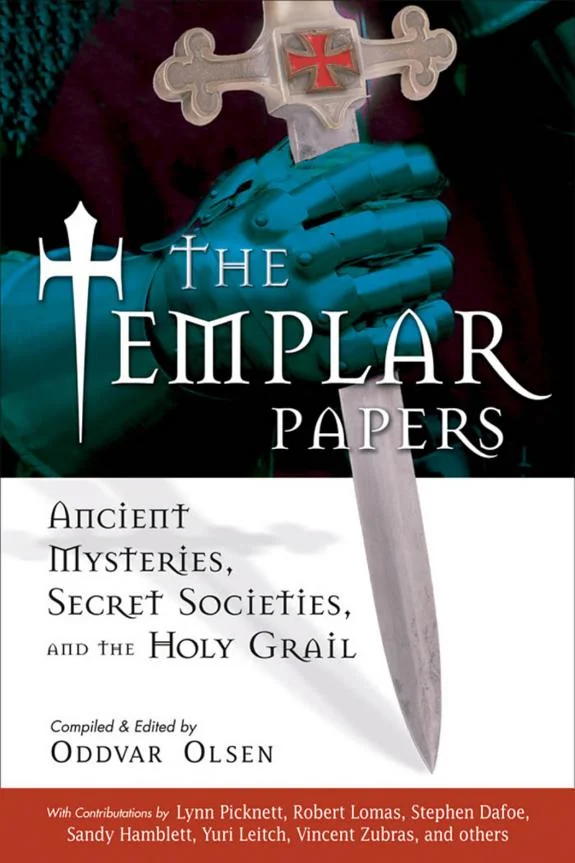
The Templar Papers
 73
73

The Templar Papers
Oddvar Olsen's "The Templar Papers" offers a commendable, if somewhat uneven, survey of the Knights Templar's historical footprint and subsequent mythologization. Olsen, acting as editor and contributor, has assembled a diverse group of voices, presenting a valuable resource for those seeking to untangle fact from persistent fiction. The strength lies in its breadth, touching upon the order's military origins, its financial influence, and its abrupt dissolution under Philip IV in 1307. However, the collection occasionally falters by giving undue weight to fringe theories without sufficient critical debunking, blurring the lines between historical analysis and speculative lore. A particularly striking section examines the accusations of heresy leveled against the Templars, such as denying Christ, which, while historically documented as part of their trials, is here sometimes presented with an air of possibility rather than as a product of coercive interrogation tactics. Ultimately, "The Templar Papers" serves as a useful, if sometimes disorienting, exploration of a legend that refuses to fade.
📝 Description
73
Oddvar Olsen's 2006 compilation, 'The Templar Papers,' examines the Knights Templar's history and mythology.
"The Templar Papers," published in 2006, presents a range of scholarly and esoteric views on the Knights Templar. Historian Oddvar Olsen compiled contributions from various experts. The book seeks to clarify the historical context of the medieval military order, its supposed secrets, and its lasting impact. It goes beyond a basic historical account to cover the symbolic, spiritual, and conspiracy theories associated with the Templars throughout history.
This collection is for readers deeply interested in the Knights Templar. It aims to help understand both the order's actual history and the myths that grew around it. Students of medieval history, followers of esoteric traditions, and those curious about the lore of secret societies will find it appealing. The book is suitable for readers who value a comprehensive approach, considering both documented facts and speculative ideas.
This book enters the tradition of Western esotericism that has long been fascinated by the Knights Templar. From the Enlightenment onwards, speculative writers have linked the Templars to various secret traditions, including Rosicrucianism and Freemasonry. Olsen's work engages with this lineage by examining not just the historical order, but also the occult interpretations and conspiracy theories that have become part of its enduring mystique. It addresses the persistent idea that the Templars preserved or transmitted hidden knowledge, influencing later esoteric movements.
💡 Why Read This Book?
• Gain insight into the historical context of the Knights Templar's suppression, understanding the specific events of 1307 initiated by Philip IV of France and their alleged heresies. • Explore the evolution of Templar myths, tracing how figures like Jacques de Molay became central to later esoteric traditions and conspiracy theories. • Analyze the diverse expert perspectives presented by Oddvar Olsen, differentiating between scholarly analysis and speculative interpretations of Templar symbolism and legacy.
⭐ Reader Reviews
Honest opinions from readers who have explored this book.
❓ Frequently Asked Questions
When were the Knights Templar officially suppressed?
The Knights Templar were suppressed following the mass arrests and trials initiated on Friday, October 13, 1307, by King Philip IV of France, leading to the order's eventual dissolution by Pope Clement V in 1312.
What were some of the main accusations against the Templars?
During their trials, Templars were accused of various heresies, including spitting on the cross, denying Christ, idol worship (specifically of a head referred to as Baphomet), and engaging in homosexual practices.
Who was Jacques de Molay?
Jacques de Molay was the 23rd and last Grand Master of the Knights Templar, famously arrested in 1307 and later executed in 1314 after recanting his forced confessions.
Does "The Templar Papers" discuss the Templars' connection to Freemasonry?
Yes, the book explores the historical and speculative links between the Knights Templar and the development of Freemasonry, particularly in the 18th century, examining how Templar symbolism was adopted.
What is the significance of the year 1307 in relation to the Templars?
The year 1307 is critical because it marks the beginning of the systematic persecution and arrest of Templars across France, orchestrated by King Philip IV, leading to the order's downfall.
Is "The Templar Papers" based solely on historical fact?
No, the book presents a compilation of historical analysis alongside various esoteric and conspiratorial interpretations that have emerged over centuries, requiring readers to discern between documented history and later legend.
🔮 Key Themes & Symbolism
Historical Foundation
The work meticulously details the Knights Templar's origins as a monastic military order established around 1119 in the Kingdom of Jerusalem. It outlines their an important role in the Crusades, their papal recognition, and their rapid accumulation of wealth and influence across Europe. The book emphasizes their initial purpose: protecting pilgrims on the dangerous routes to the Holy Land, a fact often overshadowed by later esoteric interpretations. It grounds the narrative in the specific socio-political climate of the 12th and 13th centuries, before their dramatic fall.
Suppression and Accusations
A significant portion of "The Templar Papers" addresses the dramatic suppression of the order in 1307. It examines the charges of heresy, blasphemy, and idolatry levied against the Templars by King Philip IV of France, detailing the coercive interrogation tactics used during the trials. The book presents the papal bull *Vox in excelso* (1312) and *Ad providam* (1312) as key documents in the order's official dissolution and the transfer of its assets, exploring the political motivations behind Philip's actions.
Esoteric Legacy and Mythos
Beyond historical fact, the collection examines the wide range of myths that have enveloped the Templars. It explores their alleged connection to secret knowledge, Gnostic traditions, and the Holy Grail. The work traces how figures like Bernard of Clairvaux and later occultists and Freemasons reinterpreted Templar symbolism, linking them to various secret societies and conspiracies that persist to this day. This theme addresses the order's enduring appeal as a symbol of hidden power and mystery.
Symbolic Interpretations
The book scrutinizes the various symbols associated with the Knights Templar, such as the eight-pointed cross, the double-headed eagle, and the concept of Baphomet. It investigates how these symbols have been interpreted across different eras and esoteric traditions, from their potential religious or military significance in the medieval period to their adoption and reinterpretation in occultism and conspiracy theories. The aim is to understand how these visual and conceptual elements contribute to the Templar legend.
💬 Memorable Quotes
Direct passages from the work, attributed to the author.
“The trials initiated in 1307 were less about theological truth and more about royal avarice and consolidating power.”
— This interpretation highlights the political machinations behind the suppression of the Knights Templar. It suggests that King Philip IV's primary motivations were financial gain and neutralizing a powerful, independent organization, rather than genuine concern over religious orthodoxy.
“The Templar cross became a potent symbol, transmuted from a marker of military devotion to an emblem of hidden wisdom.”
— This statement points to the symbolic evolution of the Templar cross. Initially a badge of their military and religious commitment, it later became associated with esoteric knowledge and secret societies, signifying a transformation in its meaning over time.
“Examining the Templars requires separating the historical order from the legion of myths that have accrued around it.”
— This concept emphasizes the critical approach needed when studying the Templars. It underscores the challenge of distinguishing the documented historical reality of the medieval knights from the vast, often contradictory, body of legends and theories developed later.
“The accusations of heresy, though likely extracted under duress, became the official justification for the order's demise.”
— This interpretation focuses on the controversial nature of the charges against the Templars. It suggests that the heresy accusations, even if coerced, served as the critical pretext for Pope Clement V and King Philip IV to dismantle the organization.
💡 Key Ideas
Editorial paraphrase of the work's core concepts — not direct quotes.
Centuries after their dissolution, the Templars remained a fertile ground for speculation, fueling narratives of secret lineages and lost treasures.
This paraphrase captures the enduring fascination with the Templars. It suggests that even after their historical suppression, their story provided a compelling basis for ongoing myths, conspiracies, and imaginative storytelling about hidden legacies and wealth.
🌙 Esoteric Significance
Tradition
The work engages primarily with the Western esoteric tradition, particularly its fascination with medieval chivalric orders and perceived Gnostic or Hermetic lineages. While the Knights Templar were a Catholic military order, their post-suppression mythos has been absorbed into Freemasonry, Rosicrucianism, and various conspiracy theories. "The Templar Papers" examines how these later traditions reinterpreted Templar symbols and alleged secret knowledge, often divorcing them from their original historical and religious context to fit into frameworks of hidden spiritual or occult power.
Symbolism
Key symbols explored include the Templar Cross, often depicted as an eight-pointed cross, representing martyrdom and the eight beatitudes, but later reinterpreted in esoteric circles as representing cosmic balance or hidden geometries. The figure of Baphomet, associated with the heresy charges during the trials, is examined not just as a historical accusation but as a symbol of dualistic or occult deities in later occultism. The concept of the 'lost knowledge' of the Temple, whether interpreted as architectural secrets, Grail lore, or Gnostic wisdom, is central to the esoteric appeal.
Modern Relevance
Contemporary thinkers and practitioners in fields like Western Esotericism, comparative religion, and historical conspiracy theory continue to draw from the Templar legend. Groups within Freemasonry, particularly higher degrees, directly reference Templar traditions. Modern authors and researchers exploring the intersection of history, myth, and spirituality often cite the Templars as a prime example of how a historical entity can transcend its origins to become a potent symbol in contemporary belief systems and narrative constructions.
👥 Who Should Read This Book
• Students of medieval military orders: Those researching the historical context of the Crusades and the socio-political impact of the Knights Templar, particularly their suppression in 1307. • Enthusiasts of esoteric history: Readers intrigued by the evolution of secret societies, conspiracy theories, and the occult interpretations of historical events and symbols. • Comparative mythology researchers: Individuals interested in how historical figures and events become mythologized and incorporated into diverse belief systems and cultural narratives over centuries.
📜 Historical Context
Published in 2006, "The Templar Papers" arrived during a resurgence of popular interest in the Knights Templar, a phenomenon amplified by works like Dan Brown's "The Da Vinci Code" (2003). Olsen's compilation engages with this contemporary fascination while situating itself within a longer tradition of Templar scholarship and speculation that dates back to the Enlightenment. The book confronts the historical reality of the order's dramatic suppression in 1307 under Philip IV of France, an important event that sparked centuries of debate. It acknowledges established historical scholarship concerning the Crusades and medieval finance, while also addressing the competing school of thought that views the Templars as custodians of esoteric secrets. The reception of Templar theories has often been polarized; while academic historians focus on primary sources from the period, popular culture embraces more speculative narratives, a dichotomy Olsen's work attempts to bridge.
📔 Journal Prompts
The accusations of heresy leveled against the Templars during their 1307 trials.
The transformation of Templar symbolism from medieval devotion to esoteric meaning.
The enduring appeal of the Knights Templar as a subject of conspiracy theories.
Jacques de Molay's role in the Templar narrative and subsequent legend.
The distinction between the historical Knights Templar and their later mythologized identity.
🗂️ Glossary
Knights Templar
A Catholic military order founded around 1119, active during the Crusades, known for protecting pilgrims and its eventual suppression in the early 14th century.
Philip IV of France
King of France from 1285 to 1314, instrumental in the arrest and suppression of the Knights Templar, driven by financial needs and political ambition.
Jacques de Molay
The last Grand Master of the Knights Templar, arrested in 1307 and executed in 1314, whose figure became central to Templar lore.
Heresy Trials
The series of interrogations and legal proceedings initiated against the Knights Templar in 1307, resulting in accusations of blasphemy and unorthodox practices.
Baphomet
An alleged idol or head that Templars were accused of worshipping during their trials; its true nature and origin remain debated and subject to esoteric interpretation.
Papal Bull
An official decree issued by a Pope. Key bulls related to the Templars include *Omne Datum Optimum*, *Militia Dei*, *Vox in excelso*, and *Ad providam*.
Esotericism
Belief systems and practices focused on hidden knowledge, spiritual insight, or mystical experience, often distinct from mainstream religious or scientific doctrines.
This book appears in 2 collections
🔮 Readers Also Liked
Browse all →








From the “Templar Knights” Collection
View all →![EBOOK COLLECTION ( PART 8) [ CSI][h 33t]](/img/thumb/ebook-collection-part-8-csi-h-33t.webp)






More Free Esoteric History & Biography Books
View all →