The Treasure, the Temple and the Holy Grail
 83
83

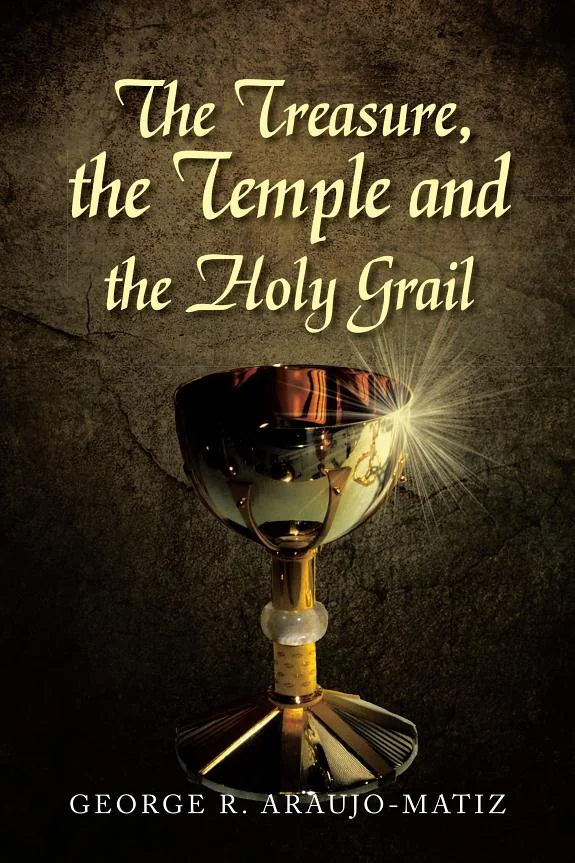
The Treasure, the Temple and the Holy Grail
Araujo-Matiz tackles the perennial question of the Holy Grail with a blend of historical speculation and devout inquiry. The book's strength lies in its earnest attempt to ground the legend in tangible possibilities, moving beyond pure myth. However, the author's strong devotional stance, while central to the work's intent, occasionally overshadows a more critical historical analysis. A particularly compelling section explores the potential materials of the Grail, moving beyond the simple chalice to consider more symbolic interpretations of its physical form. While the work inspires faith, readers seeking purely critical historical dissection might find its conclusions lean heavily on belief. Nevertheless, for those open to a spiritually-infused exploration of a profound mystery, "The Treasure, the Temple and the Holy Grail" offers a unique perspective.
📝 Description
83
George R. Araujo-Matiz's 2013 book examines the Holy Grail's origins and significance beyond legend.
Published in 2013, "The Treasure, the Temple and the Holy Grail" by George R. Araujo-Matiz addresses the persistent mystery surrounding the Holy Grail. The author seeks to uncover its origins, track its possible historical movements, and comprehend its meaning beyond simple myth. Araujo-Matiz suggests that the physical details and location of the sacred cup have been lost to time, yet the book provides a way to think about it and rekindle faith.
The book is for those seeking spiritual understanding, especially concerning Christian esotericism, Grail stories, and the figure of the historical Jesus. It suits readers who value academic investigation combined with heartfelt reflection, aiming to strengthen belief and offer a clearer grasp of sacred objects and their place in history and faith. The author engages with the long history of Grail lore, which became more prominent in the 19th century with works such as Wolfram von Eschenbach's "Parzival." Araujo-Matiz's work appears in a modern period where scholarly critique often conflicts with devotional viewpoints.
This book enters the long tradition of Grail literature, a subject that has captivated minds for centuries. While Wolfram von Eschenbach's "Parzival" helped popularize the legend in the 19th century, Araujo-Matiz writes in a contemporary setting where critical history often stands against devotional readings. The author attempts to connect academic doubt with spiritual desire, situating the book within this ongoing conversation about faith and historical interpretation.
💡 Why Read This Book?
• Gain insight into specific theories regarding the Grail's material composition and its historical placement after the Last Supper, a detail often lost in broader retellings. • Understand how the author connects the physical search for the Grail with a call for renewed Christian faith, offering a devotional framework for engaging with esoteric mysteries. • Explore the concept of the Grail's origin and material being "lost in the fabric of time," providing a unique perspective on how historical obscurity can impact spiritual belief.
⭐ Reader Reviews
Honest opinions from readers who have explored this book.
❓ Frequently Asked Questions
What specific mysteries does George R. Araujo-Matiz aim to address regarding the Holy Grail?
The book seeks to address the origin of the Holy Grail and its placement after the Last Supper, acknowledging that its exact material and location have become obscured by history.
When was "The Treasure, the Temple and the Holy Grail" first published?
The book was first published on February 26, 2013.
What is the author's primary hope for readers of this book?
The author hopes the book inspires faith in "our Lord" and fosters a belief that the Cup may eventually be found for the benefit of all Christianity.
What kind of approach does the book take towards the Holy Grail legend?
It takes an approach that blends historical investigation with a devotional perspective, aiming to inspire faith rather than purely critical analysis.
Who is the author of "The Treasure, the Temple and the Holy Grail"?
The author is George R. Araujo-Matiz.
What is the main subject matter of the book?
The book's main subject is the Holy Grail, exploring its origins, potential historical journey, and spiritual significance.
🔮 Key Themes & Symbolism
The Grail's Lost Origins
The work grapples with the historical "loss" of the Holy Grail's precise origins and material composition. It suggests that this obscurity isn't merely an accident of time but perhaps a deliberate veil, prompting deeper spiritual contemplation and faith. The book posits that understanding the Grail requires looking beyond simple historical records to symbolic and devotional interpretations, acknowledging that its true essence might be spiritual rather than purely physical.
Faith and the Sacred Cup
A central tenet is the belief that the rediscovery or even the continued contemplation of the Holy Grail can serve to strengthen Christian faith. Araujo-Matiz frames the quest for the Grail as an act of devotion, suggesting that the hope for its eventual revelation holds a benefit for all of Christianity. This perspective encourages readers to view the legend not just as an historical puzzle but as a catalyst for spiritual renewal and belief.
Temple and Treasure Symbolism
Beyond the Grail itself, the book likely explores the symbolic significance of "The Temple" and "The Treasure." These elements, when juxtaposed with the Holy Grail, suggest a layered esoteric meaning. The "Temple" could represent a spiritual sanctuary or the inner self, while "The Treasure" might allude to divine knowledge or ultimate spiritual attainment. The interplay of these concepts offers a rich ground for exploring Christian mysticism.
Historical Investigation Meets Devotion
The book attempts to bridge the gap between rigorous historical inquiry and personal faith. While acknowledging the difficulty in pinpointing concrete facts about the Grail, it emphasizes the value of the quest and the spiritual insights gained. This approach is crucial for readers who wish to reconcile scholarly curiosity with a desire for spiritual meaning, particularly within a Christian context.
💬 Memorable Quotes
Direct passages from the work, attributed to the author.
“The origin and material has been lost in the fabric of time.”
— This statement captures the core mystery the book aims to explore, highlighting how historical processes obscure definitive knowledge about the Holy Grail's physical attributes.
“we only could hope that the event in this book has inspire my faith in our Lord.”
— This reflects the author's personal spiritual objective for the work, emphasizing its role as a devotional tool intended to bolster Christian belief through contemplation of the Grail.
“the Cup may be found for the benefit of all Christianity.”
— This expresses a profound hope for the Grail's potential revelation, linking its discovery not just to historical curiosity but to a significant spiritual uplift for the entire Christian community.
“One of the mysteries that this book want to address is the origin and where the sacred cup was placed after it was used in the last dinner.”
— This directly states the book's central investigative purpose, focusing on the Grail's genesis and its subsequent historical trajectory after its use in the Last Supper.
“At this point of time and space, we only could hope...”
— This phrase underscores the author's acknowledgment of the present limitations in definitively locating or understanding the Grail, framing the book's contribution as one of hope and inspiration.
🌙 Esoteric Significance
Tradition
The work engages primarily with the Christian esoteric tradition, specifically concerning the legends of the Holy Grail. While not explicitly aligning with a single lineage like Kabbalah or Hermeticism, it draws upon the devotional and mystical streams within Christianity that have historically interpreted biblical narratives and artifacts in symbolic, non-literal ways. It seeks to revive a sense of wonder and spiritual pursuit associated with the Grail quest.
Symbolism
The "Holy Grail" itself is the primary symbol, representing not just a physical cup but potentially the chalice of the Last Supper, the blood of Christ, or even a spiritual vessel of divine grace. "The Temple" can symbolize the sacred space, both external (like Jerusalem's Temple) and internal (the human body as a temple of the Holy Spirit). "The Treasure" often signifies spiritual enlightenment, divine knowledge, or ultimate salvation sought through the quest.
Modern Relevance
In contemporary esoteric circles, "The Treasure, the Temple and the Holy Grail" speaks to a continued interest in bridging historical research with spiritual belief. Thinkers and practitioners in the emergent fields of comparative mythology and comparative religion, particularly those focusing on Christian symbolism, might find its devotional framing useful. It speaks to those seeking to imbue historical mysteries with spiritual meaning in an age often dominated by secular analysis.
👥 Who Should Read This Book
• Devotees of Christian esotericism seeking to deepen their understanding of Grail traditions through a faith-affirming lens. • Researchers of comparative mythology and religious studies interested in how historical legends are interpreted and maintained within spiritual communities. • Individuals on a personal spiritual journey who are drawn to the symbolism of the Grail and wish to explore its potential for fostering faith and contemplation.
📜 Historical Context
Published in 2013, George R. Araujo-Matiz's "The Treasure, the Temple and the Holy Grail" entered a discourse on Grail legends already rich with centuries of interpretation. The modern era had seen intense historical-critical approaches, exemplified by scholars like Jessie L. Weston in the early 20th century, who explored pagan roots and fertility rites influencing Grail romances. Simultaneously, religious and esoteric circles continued to seek spiritual and literal truths within the mythos. Araujo-Matiz's work positions itself within this dichotomy, attempting to offer a devotional perspective that acknowledges historical obscurity while reaffirming faith. It emerged at a time when interest in Christian mysticism and historical Jesus studies remained active, though often with divergent methodologies.
📔 Journal Prompts
The Grail's lost origin and material: reflect on how historical obscurity might serve a spiritual purpose.
Contemplation of the "sacred cup" after the Last Dinner: what does this specific moment represent for your faith?
The author's hope for the "benefit of all Christianity": how might a rediscovered Grail impact contemporary religious practice?
The blend of "treasure" and "temple" in the title: explore the symbolic relationship between seeking external relics and cultivating inner spiritual space.
Reflect on the "fabric of time" as it relates to preserving or obscuring sacred historical narratives.
🗂️ Glossary
Holy Grail
The sacred cup used by Jesus at the Last Supper. Its legend has evolved over centuries, encompassing various interpretations as a physical relic, a symbol of spiritual enlightenment, or a vessel of divine grace.
Last Supper
The final meal Jesus shared with his apostles before his crucifixion, a central event in Christian theology and the traditional context for the origin of the Holy Grail.
Sacred Cup
An alternative term for the Holy Grail, emphasizing its religious importance and its role in Christian ritual and legend.
Fabric of Time
A metaphorical expression referring to the passage of history and the way events, knowledge, and artifacts become obscured or lost over extended periods.
Esoteric
Relating to or accessible only by a relatively small number of people with a specialized knowledge or interest; often pertaining to mystical or spiritual traditions.
Devotion
Love, loyalty, or commitment to a deity or religious cause. In this context, it refers to the faith-based approach the author takes towards exploring the Grail legend.
Christian Esotericism
Mystical or hidden traditions within Christianity that emphasize direct experience of the divine, symbolic interpretation of scripture, and esoteric knowledge.
This book appears in 1 collection
🔮 Readers Also Liked
Browse all →









From the “Holy Grail” Collection
View all →
![EBOOK COLLECTION ( PART 8) [ CSI][h 33t]](/img/thumb/ebook-collection-part-8-csi-h-33t.webp)








More Free Occult Philosophy Books
View all →