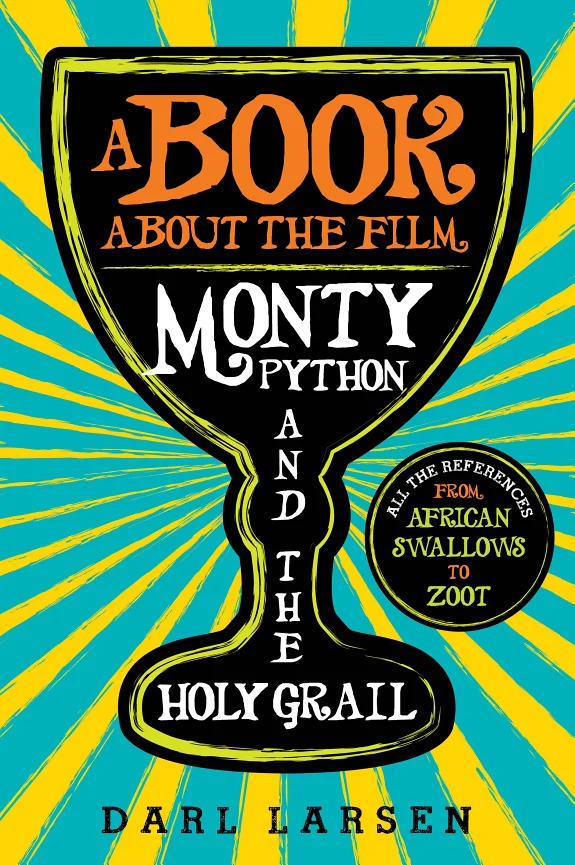
A Book about the Film Monty Python and the Holy Grail
 79
79

A Book about the Film Monty Python and the Holy Grail
Larsen's "A Book about the Film Monty Python and the Holy Grail" attempts to codify the chaotic brilliance of the 1975 film. The strength lies in its detailed breakdown of the Python members' individual contributions and the collaborative spark that ignited the project. Larsen highlights how the film’s genesis from "Monty Python's Flying Circus" informed its structure and comedic sensibilities. However, the work sometimes gets bogged down in exhaustive plot summaries, at times sacrificing analytical depth for descriptive breadth. A notable passage effectively dissects the recurring "witch trial" scene, revealing its layered comedic and philosophical implications regarding logic and belief. While the book provides a thorough account, it occasionally misses the anarchic spirit that defines the film itself. It offers a solid academic frame for a work that thrives on its deliberate lack of one.
📝 Description
79
Darl Larsen's 2015 book examines the 1975 film Monty Python and the Holy Grail as a cultural and comedic artifact.
Published in 2015, Darl Larsen's book analyzes the 1975 film Monty Python and the Holy Grail, moving beyond simple fandom to a critical look at the comedy group's work. The book traces the film's origins from "Monty Python's Flying Circus," detailing the writing and production process. It places the film within the context of 1970s British comedy and the lasting influence of the Python troupe's unique style. Larsen considers the cultural environment that fostered such unconventional humor.
The analysis dissects the film's structure, its satire, and the recurring elements that create its surreal atmosphere. Larsen examines how the Pythons reinterpreted Arthurian legend, medieval themes, and filmmaking itself. Key analytical concepts include anachronism, meta-commentary, and the intentional disruption of cinematic norms. This approach rewards both casual viewers and those interested in comedy studies, British cultural history, or medievalism.
While "Monty Python and the Holy Grail" is primarily a comedy, Larsen's analysis situates the film within a tradition of cultural critique and deconstruction. The Pythons' work, particularly their engagement with established narratives like Arthurian legend, can be seen as a form of symbolic inversion. This approach shares an esoteric interest in revealing underlying structures and challenging conventional interpretations of myth and storytelling. The book's focus on meta-commentary and the breaking of narrative rules also aligns with esoteric thought that questions perceived reality and the methods by which it is constructed.
💡 Why Read This Book?
• Gain an understanding of the specific comedic techniques and satirical targets employed in "Monty Python and the Holy Grail," as detailed in Larsen's analysis of the film's deconstruction of Arthurian legend. • Appreciate the historical context of 1970s British comedy, learning how the film's 1975 release fit within or departed from contemporary humor movements. • Discover the intricate production details and creative evolution from "Monty Python's Flying Circus" to the feature film, offering insights into the collaborative process of the Python members.
⭐ Reader Reviews
Honest opinions from readers who have explored this book.
❓ Frequently Asked Questions
When was Monty Python and the Holy Grail first released?
The film "Monty Python and the Holy Grail" was first released in 1975, marking the troupe's first feature-length film composed of entirely new material.
What was the predecessor to the film discussed in Larsen's book?
The predecessor to the film "Monty Python and the Holy Grail" was the British television series "Monty Python's Flying Circus," which aired from 1969 to 1974.
Who are the main members of the comedy group discussed?
The book discusses the six members of Monty Python: Graham Chapman, John Cleese, Terry Gilliam, Eric Idle, Terry Jones, and Michael Palin.
What medieval legend does the film parody?
The film "Monty Python and the Holy Grail" parodies the legend of King Arthur and his Knights of the Round Table.
In what year was Darl Larsen's book first published?
Darl Larsen's "A Book about the Film Monty Python and the Holy Grail" was first published on March 6, 2015.
What is a key theme explored regarding the film's humor?
A key theme explored is the film's use of surrealism, anachronism, and meta-commentary to subvert traditional narrative and comedic expectations.
🔮 Key Themes & Symbolism
Deconstruction of Arthurian Legend
Larsen's work meticulously details how "Monty Python and the Holy Grail" dismantles the hallowed myths of King Arthur. The book examines the film's deliberate subversion of chivalric ideals, historical accuracy, and the very concept of heroism. By juxtaposing the grandeur of legend with the squalor of peasant life and anachronistic elements, the film, as analyzed by Larsen, critiques romanticized notions of the past and the nature of storytelling itself. The analysis highlights how the Pythons used the familiar framework of the Arthurian quest to explore absurdity and the limitations of narrative coherence.
Surrealism and Meta-Commentary
The book explores the Python troupe's embrace of surrealism, a hallmark inherited from "Monty Python's Flying Circus." Larsen identifies how the film employs non-sequiturs, illogical sequences, and dreamlike transitions to disorient and amuse. Furthermore, the analysis studies the film's meta-commentary, where the characters and narrative sometimes acknowledge their artificiality or the filmmaking process itself. This self-awareness, present in the film's 1975 release, challenges audience expectations and blurs the lines between fiction and reality, a technique Larsen unpacks with academic rigor.
Medievalism as Cultural Trope
Larsen's "A Book about the Film Monty Python and the Holy Grail" investigates the film's engagement with medievalism not as historical reconstruction but as a cultural trope ripe for satire. The book examines how the Pythons exploited popular perceptions of the Middle Ages – its perceived brutality, simplicity, and religious fervor – for comedic effect. The analysis considers how the film's portrayal of peasant life, knights, and religious figures serves as a commentary on societal structures and human nature, detached from strict historical accuracy.
The Creative Process of Monty Python
Beyond analyzing the film's content, Larsen's work offers insights into the collaborative and individual creative processes of the Monty Python members. The book traces the evolution of ideas from "Monty Python's Flying Circus" to the feature film, detailing how the six comedians developed their unique comedic voice. It explores the challenges and innovations involved in creating a cohesive narrative from disparate sketches and how the group's distinct personalities shaped the final product released in 1975.
💬 Memorable Quotes
Direct passages from the work, attributed to the author.
“The work explores how the film's creators approached Arthurian legend not as historical fact but as a malleable narrative for comedic subversion.”
— This interpretation highlights the book's focus on how the Python troupe used the familiar Arthurian mythos as a vehicle for satire, dissecting its romanticized elements and replacing them with absurdity.
“Larsen analyzes the deliberate inclusion of anachronisms as a key device for disrupting audience expectations and generating humor.”
— This points to the book's examination of how the film intentionally places modern elements into a medieval setting, a technique that serves to underscore the film's surreal nature and critique conventional historical narratives.
“The analysis considers the film's engagement with the concept of faith and belief through its characters' quests and interactions.”
— This interpretation suggests the book studies the philosophical undertones of the film, examining how the pursuit of the Holy Grail and the characters' often-absurd convictions reflect broader themes of skepticism and devotion.
💡 Key Ideas
Editorial paraphrase of the work's core concepts — not direct quotes.
The book details the transition from "Monty Python's Flying Circus" to a feature-length narrative structure.
This paraphrased concept emphasizes the book's exploration of the Pythons' creative evolution, specifically how they adapted their sketch-based television format into a cohesive, albeit unconventional, cinematic story.
The work dissects the film's humor as a product of both British comedic traditions and avant-garde influences.
This paraphrase indicates that Larsen's book contextualizes the film's comedy by linking it to established British humor while also acknowledging its more experimental and surreal aspects.
🌙 Esoteric Significance
Tradition
While "Monty Python and the Holy Grail" is not explicitly aligned with a single esoteric tradition, its embrace of the absurd and its deconstruction of mythic quests can be seen through a Gnostic lens. The film's critique of established narratives and its portrayal of flawed, often misguided, seekers of a divine object (the Grail) echo Gnostic themes of challenging dogma and seeking hidden knowledge. Larsen's analysis, though academic, can illuminate these parallels for those interested in how secular media engages with archetypal spiritual journeys.
Symbolism
The Holy Grail itself, a central symbol, transcends its Christian origins to represent ultimate attainment, enlightenment, or divine truth – a concept explored in various esoteric traditions. The Knights' often futile quests, their internal squabbles, and their susceptibility to earthly distractions symbolize the challenges and pitfalls inherent in any spiritual path. The coconuts, a famously absurd element, can be interpreted as representing false idols or the mundane replacement of genuine spiritual inquiry with superficial mimicry.
Modern Relevance
Contemporary thinkers and practitioners in fields like meme culture, postmodern philosophy, and even certain branches of comedic theory draw parallels with the Python's approach. The film's legacy of challenging authority, subverting expectations, and finding humor in the existential absurd continues to inform online discourse and creative expression. Larsen's book provides a critical framework for understanding how these comedic techniques, born in the 1970s, have become embedded in contemporary cultural critique and artistic output.
👥 Who Should Read This Book
• Film studies students and scholars examining the evolution of British comedy and surrealist cinema. • Cultural historians interested in the 1970s, analyzing how media reflected and shaped societal attitudes towards myth, history, and authority. • Fans of Monty Python seeking a deeper understanding of the creative process and thematic underpinnings of their seminal 1975 film.
📜 Historical Context
Darl Larsen's "A Book about the Film Monty Python and the Holy Grail," published in 2015, examines a cultural artifact from 1975. This era saw a burgeoning of alternative comedy and a questioning of traditional narratives. The film emerged from the ashes of "Monty Python's Flying Circus," which concluded its run in 1974, and represented a significant step for the troupe into feature filmmaking. The comedic range of the 1970s included other significant British acts like The Goons and beyond, but the Pythons carved a unique niche with their absurdist, often intellectual, brand of humor. While not facing direct censorship, the film's unconventional nature and irreverent take on sacred subjects like Arthurian legend positioned it as a counter-cultural statement. Its reception, while largely positive, highlighted a divide between those who embraced its anarchic style and those who found it nonsensical, a point often discussed in later analyses like Larsen's.
📔 Journal Prompts
The film's critique of chivalric ideals, as explored in the book.
The use of anachronism in "Monty Python and the Holy Grail."
The meta-commentary within the narrative structure of the film.
The portrayal of peasant life versus Arthurian legend.
The symbolic representation of the Holy Grail quest.
🗂️ Glossary
Arthurian Legend
A body of medieval literature and subsequent retellings concerning the legendary King Arthur, his knights (such as the Knights of the Round Table), and their quests, most notably for the Holy Grail.
Monty Python's Flying Circus
A surreal sketch comedy television series created by and starring the Python group, which aired on the BBC from 1969 to 1974. It served as the foundation for the group's later film work.
Anachronism
The chronological misplacement of persons, events, or customs in relation to historical periods; in film, often used for comedic or thematic effect.
Surrealism
An artistic and literary movement that emphasizes the irrational, the unconscious, and dreamlike imagery, often juxtaposing unexpected elements.
Meta-commentary
Commentary that draws attention to the artificiality of the work it is commenting on, such as a character acknowledging they are in a film or play.
Medievalism
The imitation or evocation of the Middle Ages in art, literature, or popular culture, often romanticized or distorted from historical reality.
Satire
The use of humor, irony, exaggeration, or ridicule to expose and criticize people's stupidity or vices, particularly in the context of contemporary politics and other topical issues.
This book appears in 1 collection
🔮 Readers Also Liked
Browse all →








From the “Holy Grail” Collection
View all →![EBOOK COLLECTION ( PART 8) [ CSI][h 33t]](/img/thumb/ebook-collection-part-8-csi-h-33t.webp)







More Free Occult Philosophy Books
View all →