Daodejing Owc
 78
78

Daodejing Owc
The "Daodejing Owc" edition tackles a text so ubiquitous it risks becoming background noise. This presentation, however, aims to strip away layers of academic or devotional accretion, focusing on the Daodejing as a manual for an esoteric worldview. Its strength lies in its specific focus, attempting to extract principles applicable to inner transformation rather than purely philosophical debate. The interpretation of Wu Wei, for instance, is presented not as passive resignation but as a dynamic alignment with natural forces, a concept explored in the work's third chapter. A limitation, however, is the potential for this specialized approach to alienate those seeking a more straightforward scholarly or historical account. The dense philosophical propositions, while central to the text's power, can demand significant prior engagement with Taoist thought. The "Daodejing Owc" offers a pointed reading, best suited for those already inclined towards its specific esoteric interpretations.
📝 Description
78
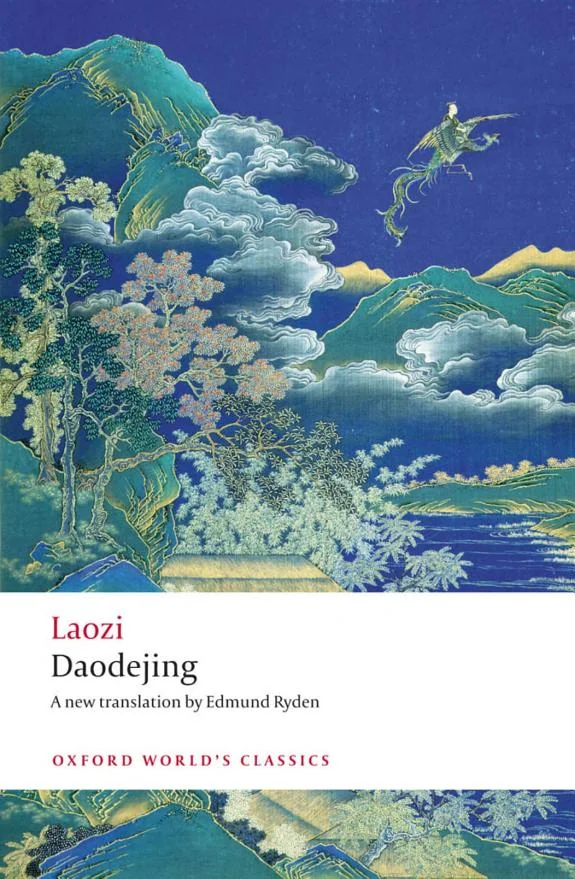
The 2008 Daodejing Owc offers a specific lens on Laozi's foundational Taoist text.
This 2008 edition of the Daodejing, attributed to Laozi, focuses on the text's esoteric dimensions. It is not simply a translation but an engagement with the deeper philosophical and spiritual meanings. The book is intended for serious students of Eastern philosophy, comparative religion scholars, and practitioners of esoteric traditions. It aims to provide a more profound understanding of Taoist principles for those who find conventional interpretations insufficient. Readers seeking to explore the mystical and metaphysical aspects of Taoism, and the connection between ancient thought and modern spirituality, will find value in this edition.
The Daodejing itself likely originated between the 4th and 6th centuries BCE in China, during a period of significant philosophical development. This edition enters a long lineage of commentary and reinterpretation, acknowledging centuries of scholarship and esoteric practice. It engages with fundamental Taoist concepts like the Tao, De, Wu Wei, and the interplay of Yin and Yang. The work also examines principles of naturalness, simplicity, and humility as paths to spiritual alignment. It considers the cyclical nature of existence, the wisdom of paradox, and the strength found in yielding.
This edition engages with the Daodejing through the lens of its esoteric traditions. The text has long been a subject of mystical interpretation, moving beyond its philosophical pronouncements to explore deeper spiritual states and practices. The Owc edition situates itself within this lineage of hidden meanings and subtle understandings, seeking to reveal dimensions often overlooked in more conventional readings. It connects with a history of practitioners and commentators who viewed the Daodejing not just as a text, but as a guide to inner transformation and alignment with the natural order.
💡 Why Read This Book?
• Learn how the concept of Wu Wei, as presented in the "Daodejing Owc," can be applied to achieve greater efficacy through non-interference, a practical approach to daily challenges distinct from mere inaction. • Gain insight into the esoteric interpretation of the Tao, understanding it not just as a philosophical principle but as a fundamental energetic force that governs existence, as detailed in the edition's examination of the Tao. • Discover the practical application of Yin and Yang principles, moving beyond simple duality to comprehend their role in achieving balance and harmony within oneself and one's environment, a core tenet discussed throughout the text.
⭐ Reader Reviews
Honest opinions from readers who have explored this book.
❓ Frequently Asked Questions
What is the "Daodejing Owc" and how does it differ from other versions?
The "Daodejing Owc" is a specific edition of the ancient Chinese text attributed to Laozi, first published in 2008. It focuses on the esoteric and metaphysical interpretations of the Daodejing, aiming to reveal deeper spiritual principles beyond standard philosophical or historical readings.
Who is Laozi and what is his significance in Taoism?
Laozi is traditionally considered the founder of Taoism and the author of the Daodejing. While his historical existence is debated, he is revered as a sage whose teachings, dating back to approximately the 4th century BCE, form the bedrock of Taoist philosophy and spiritual practice.
What are the core principles of Taoism discussed in this book?
The "Daodejing Owc" explores central Taoist concepts such as the Tao (the Way), De (virtue/power), Wu Wei (effortless action), and the interplay of Yin and Yang, emphasizing naturalness, simplicity, and spiritual alignment.
Is this edition suitable for beginners to Taoism?
While the "Daodejing Owc" offers a unique perspective, its focus on esoteric interpretations might be best suited for those with some foundational knowledge of Taoist philosophy or a specific interest in its mystical dimensions.
When was the Daodejing originally written?
The original composition of the Daodejing is generally dated to the Spring and Autumn or Warring States periods in China, roughly between the 4th and 6th centuries BCE, though scholarly debate continues on its precise origins.
What is the significance of the year 2008 in relation to this book?
The year 2008 marks the first publication date of this specific "Daodejing Owc" edition. This indicates a modern engagement with the ancient text, offering contemporary insights or a particular scholarly/esoteric focus.
🔮 Key Themes & Symbolism
The Nature of the Tao
This theme examines the concept of the Tao as the ultimate, ineffable reality that underlies all existence. The "Daodejing Owc" emphasizes the Tao's formlessness, its role as the source of all things, and the paradoxical nature of describing it. It suggests that true understanding comes not from intellectualization but from intuitive apprehension, aligning oneself with its natural flow rather than imposing one's will upon it. The work explores how the Tao operates subtly, guiding the universe without overt intervention, a principle crucial for esoteric practice.
Wu Wei: Effortless Action
Wu Wei is presented as a central tenet for living in harmony with the Tao. This theme moves beyond a simple translation of 'non-action' to encompass a profound understanding of acting in accordance with natural principles, without force or striving. The "Daodejing Owc" highlights how embracing Wu Wei leads to greater effectiveness and peace, enabling one to accomplish tasks by yielding to circumstances and understanding the opportune moment. It is depicted as a state of dynamic balance, where action arises spontaneously and without resistance.
The Power of Simplicity and Stillness
The work explores how simplicity and stillness are pathways to spiritual clarity and power. By shedding desires, attachments, and intellectual complexities, one can return to a more fundamental, natural state. The "Daodejing Owc" suggests that in quietude, one can perceive the subtle workings of the Tao and cultivate inner strength. This theme underscores the esoteric value of introspection and detachment from the material world, advocating for a life guided by inner wisdom rather than external validation or societal pressures.
The Paradox of Opposites
A recurring theme is the interconnectedness and interdependence of apparent opposites, such as being and non-being, hardness and softness, light and dark. The "Daodejing Owc" illustrates how these dualities are not in conflict but are two sides of the same reality, both essential for understanding the whole. This paradoxical view encourages a non-dualistic perspective, fostering acceptance and balance. It suggests that true wisdom lies in recognizing the unity underlying apparent distinctions, a core principle in many esoteric traditions.
💬 Memorable Quotes
Direct passages from the work, attributed to the author.
“The Tao that can be told is not the eternal Tao.”
— This foundational statement underscores the ineffable nature of the ultimate reality. It suggests that any attempt to define or categorize the Tao through language is inherently limited, failing to capture its true, boundless essence which exists beyond conceptualization.
“The sage stays behind, and thus is ahead; lets go, and thus holds.”
— This paradoxical statement illustrates the principle of Wu Wei. The sage achieves leadership and control not through overt assertion but by stepping back, yielding, and allowing natural processes to unfold, demonstrating a profound understanding of effective, non-forceful action.
“All things are done by means of [the Tao], yet it makes no claim.”
— This highlights the Tao's role as the generative source and operating principle of the universe. It acts through all phenomena without ego or intent, demonstrating a perfect example of effortless creation and sustenance that inspires emulation.
“To know the male and yet guard the female is to be the ravine of the world.”
— This refers to the interplay of Yin (female, passive, receptive) and Yang (male, active, assertive). Guarding the female principle signifies embracing receptivity and humility, which are seen as the source of immense, unassailable power and essential for maintaining cosmic balance.
“When the best student hears of the Tao, he practices it diligently. When the average student hears of the Tao, he is uncertain whether to keep or to lose it. When the lowest student hears of the Tao, he laughs heartily at it.”
— This parable illustrates varying levels of receptivity to profound truth. The best readily embrace it, the average are hesitant, and the uninitiated dismiss it, showing how the depth of one's understanding influences one's reaction to esoteric knowledge.
🌙 Esoteric Significance
Tradition
The Daodejing is a cornerstone text for Taoism, an indigenous Chinese tradition that, while distinct, shares common ground with broader esoteric concepts found in Hermeticism and Gnosticism concerning the nature of ultimate reality and the path to spiritual realization. It diverges from Western esoteric systems by focusing on natural cycles and a decentralized cosmology rather than divine hierarchies or astrological correspondences, though elements of inner alchemy and energetic cultivation are present in later Taoist developments.
Symbolism
Key symbols include the 'Tao' itself, representing the unnamable, ultimate principle or 'Way' of the universe; 'water,' symbolizing the yielding, persistent, and life-giving nature of the Tao, which adapts and overcomes through gentleness; and the 'uncarved block' (Pu), representing original simplicity and the state of potentiality before the imposition of artificial distinctions and desires, a return to which is central to spiritual practice.
Modern Relevance
Contemporary thinkers and practitioners in fields ranging from mindfulness and contemplative practices to martial arts and leadership studies draw inspiration from the Daodejing's principles. Schools of thought emphasizing natural living, ecological harmony, and non-violent communication often reference its concepts of Wu Wei and alignment with natural rhythms. Its exploration of paradox and non-dualistic thinking also appeals to those engaged in modern spiritual inquiry and comparative philosophy.
👥 Who Should Read This Book
• Students of Eastern philosophy and comparative religion seeking a foundational text that underpins Taoist thought and its esoteric interpretations. • Practitioners of meditation, mindfulness, and contemplative disciplines interested in the principles of Wu Wei and stillness for inner cultivation. • Individuals drawn to mystical and metaphysical inquiry looking for ancient wisdom on living in harmony with universal principles and understanding the nature of reality.
📜 Historical Context
The Daodejing, attributed to Laozi, emerged from the turbulent intellectual milieu of ancient China, likely between the 4th and 6th centuries BCE, during the Spring and Autumn or Warring States periods. This era was characterized by intense philosophical inquiry, with competing schools like Confucianism and Mohism offering distinct visions for social and ethical order. The Daodejing presented a radical alternative, emphasizing naturalness, spontaneity, and a mystical understanding of the cosmos over rigid social structures or human-centric ethics. Its concepts of the Tao and Wu Wei challenged prevailing norms, offering a path of inner cultivation and alignment with universal principles. The text's reception has been varied; while foundational to Taoism, its philosophical depth and esoteric implications have also attracted centuries of commentary and reinterpretation, influencing thinkers across East Asia and beyond. The "Daodejing Owc" edition, published in 2008, engages with this long lineage, seeking to highlight the text's mystical dimensions for a contemporary audience.
📔 Journal Prompts
The concept of the Tao as the unnamable source.
Wu Wei in the context of daily decision-making.
The symbolism of water as presented in the text.
Reflecting on the paradox of opposites and their unity.
The value of simplicity and its relation to inner peace.
🗂️ Glossary
Tao (or Dao)
The fundamental, ineffable principle and underlying reality of the universe in Taoism. It is the 'Way' that is the source of all things, yet cannot be fully described or grasped by ordinary means.
De (or Te)
Often translated as virtue, power, or integrity. It represents the manifestation of the Tao in individual beings and things; the inherent quality or virtue that arises from living in accordance with the Tao.
Wu Wei
A core Taoist principle meaning 'non-action' or 'effortless action.' It signifies acting in harmony with the natural flow of the Tao, without force, striving, or artificiality, leading to greater effectiveness and balance.
Yin and Yang
The complementary, interdependent forces or principles that govern the universe. Yin represents passive, dark, feminine qualities, while Yang represents active, light, masculine qualities. They are in constant interplay and balance.
Pu (Uncarved Block)
A symbol representing original simplicity, naturalness, and the state of potentiality before desires and societal conditioning intervene. It signifies returning to one's true, unadulterated nature.
Ch'i (or Qi)
The vital life force or energy that flows through all things. While not explicitly detailed in the Daodejing's earliest layers, it is a fundamental concept in Taoist philosophy and practice, related to the manifestation of the Tao.
Sage (Sheng Ren)
An enlightened individual who embodies the principles of the Tao, particularly Wu Wei. The sage acts with wisdom, humility, and in accordance with natural law, often achieving great influence through non-assertion.
This book appears in 1 collection
🔮 Readers Also Liked
Browse all →







From the “Taoism” Collection
View all →


More Free Esoteric History & Biography Books
View all →