St. Laurence & the Holy Grail
 75
75

St. Laurence & the Holy Grail
Janice Bennett's St. Laurence & the Holy Grail offers a compelling, albeit sometimes narrowly focused, examination of the Chalice of Valencia's claim to Grail status. The strength lies in its diligent tracing of the relic's provenance through the specific traditions of Aragón, connecting it directly to Saint Laurence. However, the work could benefit from a broader engagement with other Grail scholarship, as its arguments sometimes feel insulated. The detailed discussion of the Chalice of Valencia's physical description and its monastic custodianship at San Juan de la Peña is particularly strong. Ultimately, Bennett presents a well-researched case for a specific relic, urging readers to consider its unique historical narrative.
📝 Description
75
Janice Bennett's 2003 book investigates Saint Laurence's link to the Holy Grail.
Janice Bennett's 2003 work, "St. Laurence & the Holy Grail," examines a specific historical and legendary connection between the martyr Saint Laurence and the relic known as the Holy Grail. The book focuses on the Chalice of Valencia, tracing its purported journey from Rome to Spain and its association with the tradition of Aragón. Bennett situates this narrative within the context of the Valerian persecution in 258 AD, the year of Saint Laurence's martyrdom. It follows the veneration of the chalice in the Monastery of San Juan de la Peña, a site in the Spanish Pyrenees.
The central arguments presented include the identification of the Chalice of Valencia as the authentic Holy Grail and the historical role Saint Laurence played in its transfer to Spain. The book also discusses the importance of monastic traditions in safeguarding sacred artifacts and touches on the symbolism surrounding both the chalice and the martyrdom. This study is intended for serious researchers of early Christian history, Grail legends, and the transmission of relics, particularly those interested in the Iberian Peninsula's religious heritage and the iconography of Saint Laurence.
This book enters the long tradition of Grail literature, which often intertwines historical inquiry with legendary accounts and symbolic interpretation. It specifically addresses the historical and devotional pathways through which relics, like the Chalice of Valencia, became focal points for spiritual belief and narrative. By examining the veneration of a specific artifact and its purported connection to a significant early Christian martyr, the work engages with the historical construction of sacred objects and their place within religious and regional identities. It stands as an example of how historical research can illuminate the origins and development of enduring legends.
💡 Why Read This Book?
• Understand the specific historical claims linking the Chalice of Valencia to Saint Laurence, moving beyond general Grail lore. • Explore the monastic traditions of San Juan de la Peña in the Spanish Pyrenees and their role in preserving sacred artifacts. • Analyze the historical context of the Valerian persecution in 258 AD and its connection to the martyrdom of Saint Laurence.
⭐ Reader Reviews
Honest opinions from readers who have explored this book.
❓ Frequently Asked Questions
What specific relic is identified as the Holy Grail in Janice Bennett's book?
The book identifies the Chalice of Valencia as the Holy Grail, exploring its historical veneration within the Monastery of San Juan de la Peña in the Spanish Pyrenees.
What role does Saint Laurence play in the Holy Grail tradition according to this book?
According to the tradition of Aragón, Saint Laurence, martyred in 258 AD, is credited with sending the Chalice of Valencia to Spain, thus connecting him directly to the relic.
Where was the Monastery of San Juan de la Peña located?
The Monastery of San Juan de la Peña was built into a rocky outcropping in the Spanish Pyrenees, serving as a key location for the veneration of the Chalice of Valencia.
When was Janice Bennett's St. Laurence & the Holy Grail first published?
The book was first published on March 8, 2011, making its research and arguments relatively contemporary within Grail studies.
What historical event is associated with Saint Laurence's martyrdom?
Saint Laurence was martyred on a gridiron during the Valerian persecution in Rome in 258 AD, an event central to his hagiography and the book's historical context.
Does the book discuss other potential Holy Grail relics?
While focusing on the Chalice of Valencia, the book implicitly engages with the broader scholarly debate surrounding the identification of the Holy Grail, contrasting its specific claim.
🔮 Key Themes & Symbolism
Chalice of Valencia Provenance
The work meticulously investigates the historical lineage of the Chalice of Valencia, presenting evidence for its veneration in the Monastery of San Juan de la Peña. It details the specific traditions of Aragón that attribute the chalice's arrival in Spain to Saint Laurence, offering a focused argument for its authenticity as the Holy Grail, distinct from other purported relics.
Saint Laurence and the Relic
Bennett examines the critical role attributed to Saint Laurence, the Roman martyr of 258 AD, in the transfer of the sacred cup to Spain. This section explores hagiographical traditions and their intersection with the physical history of the artifact, linking the saint's martyrdom directly to the relic's presence in the Iberian Peninsula.
Pyrenean Monastic Traditions
The book highlights the significance of the Monastery of San Juan de la Peña, a historical monastic site built into the Spanish Pyrenees. It discusses how such secluded religious communities served as custodians of sacred relics, preserving their history and veneration across centuries, and how this specific monastery became central to the Chalice of Valencia's narrative.
Grail Legend vs. Historical Artifact
Bennett navigates the space between medieval legends of the Holy Grail and the tangible history of specific artifacts. The work presents the Chalice of Valencia not just as a symbol, but as a historical object with a documented, albeit traditional, provenance, challenging readers to consider the interplay of myth and material history.
💬 Memorable Quotes
Direct passages from the work, attributed to the author.
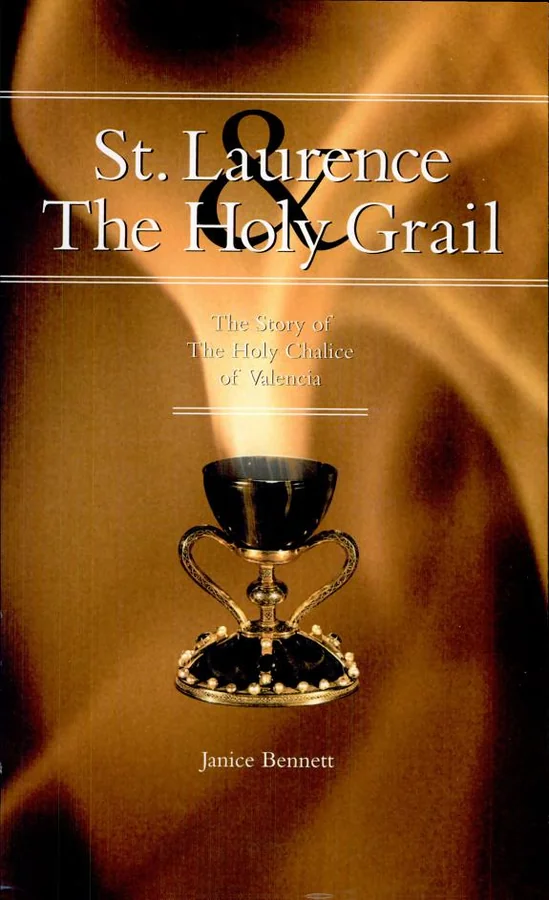
“The tradition of Aragón has always insisted that the flaming agate cup of the Holy Chalice was sent to Spain by St. Laurence.”
— This statement expresses the core thesis connecting the relic to Saint Laurence and the specific regional lore of Aragón, setting the stage for the book's historical investigation.
“Many scholars are convinced that The Holy Chalice of Valencia is the Holy Grail.”
— This highlights the book's focus on a particular artifact widely believed by some to be the authentic relic, positioning it within ongoing academic and historical debates.
“Venerated by monks in the secluded Monastery of San Juan de la Peña, built into a rocky outcropping of the Spanish Pyrenees.”
— This descriptive passage grounds the legend in a specific, evocative location, emphasizing the relic's monastic custodianship and its dramatic geographical setting.
“St. Laurence, the glorious Spaniard martyred on a gridiron during the Valerian persecution in Rome in 258 AD.”
— This provides essential biographical and historical context for Saint Laurence, establishing his identity and the circumstances of his martyrdom, which is central to the relic's narrative.
“Now there is new evidence: A si”
— This fragment suggests the book presents novel findings or re-evaluations of existing evidence, signaling an argumentative approach to the historical claims surrounding the Chalice of Valencia.
🌙 Esoteric Significance
Tradition
The work engages with Christian esoteric traditions, particularly those focused on relics and their spiritual significance. While not strictly Hermetic or Gnostic, it explores the veneration of sacred objects as conduits of spiritual power and historical memory, aligning with devotional practices found within various Christian mystical lineages.
Symbolism
The primary symbol is the 'flaming agate cup,' representing the Chalice itself. This symbol carries weight from the Last Supper and the crucifixion, imbued with notions of divine sacrifice and sacramental grace. Saint Laurence, martyred on a gridiron, also becomes a potent symbol of endurance, faith, and the suffering inherent in spiritual devotion.
Modern Relevance
Contemporary interest in relic authenticity, historical Jesus studies, and the enduring power of Grail legends draws upon works like Bennett's. Researchers and practitioners exploring devotional practices, the history of sacred objects, and the intersection of historical fact and spiritual belief find value in its specific case study.
👥 Who Should Read This Book
• Researchers of Christian relics and their historical transmission, particularly those interested in Iberian traditions. • Students of medieval legends and the Arthurian cycle seeking to understand specific artifact claims. • Devotees and scholars of Saint Laurence interested in the historical context of his martyrdom and associated traditions.
📜 Historical Context
Published in 2011, Janice Bennett's work engages with medieval hagiography and Grail scholarship during a period of continued interest in historical and religious artifacts. The book situates its narrative within the mid-3rd century, specifically the Valerian persecution of 258 AD, which led to the martyrdom of Saint Laurence. It directly addresses the traditions of Aragón concerning the Holy Chalice of Valencia, contrasting with more generalized Grail quests. While not engaging directly with specific contemporaries in a polemical manner, Bennett's research implicitly interacts with scholars who have studied Iberian relics and early Christian martyrdoms. The reception of such works often involves scrutiny from both religious historians and Grailologists, assessing the evidence presented against established textual and archaeological records.
📔 Journal Prompts
The tradition of Aragón regarding the Holy Chalice of Valencia.
Saint Laurence's role in the relic's journey to Spain.
The significance of monastic seclusion for relic preservation at San Juan de la Peña.
Comparing the Chalice of Valencia with other purported Holy Grail artifacts.
The symbolism of Saint Laurence's martyrdom in relation to sacred vessels.
🗂️ Glossary
Holy Chalice of Valencia
A specific agate cup housed in Valencia Cathedral, believed by some traditions to be the actual cup used by Jesus at the Last Supper and brought to Spain.
Saint Laurence
A 3rd-century Christian martyr, traditionally believed to have been martyred on a gridiron in Rome during the reign of Emperor Valerian in 258 AD.
Tradition of Aragón
A specific historical and cultural lineage within the region of Aragón, Spain, which holds particular beliefs and narratives, including those concerning the Holy Chalice.
Monastery of San Juan de la Peña
A historic Benedictine monastery in the Spanish Pyrenees, known for its unique architecture built into a rock face and its historical role in safeguarding relics.
Valerian Persecution
A period of Roman persecution of Christians under Emperor Valerian, which began in 257 AD and intensified in 258 AD, leading to the martyrdom of many prominent Christians.
Agate Cup
Refers to the material composition of the Chalice of Valencia, described as being made of agate, a cryptocrystalline form of silica.
Hagiography
The writing of the lives of saints, often involving accounts of miracles, martyrdoms, and spiritual significance, forming a basis for traditional beliefs.
This book appears in 1 collection
🔮 Readers Also Liked
Browse all →








From the “Holy Grail” Collection
View all →







More Free Sacred Texts & Gnosticism Books
View all →