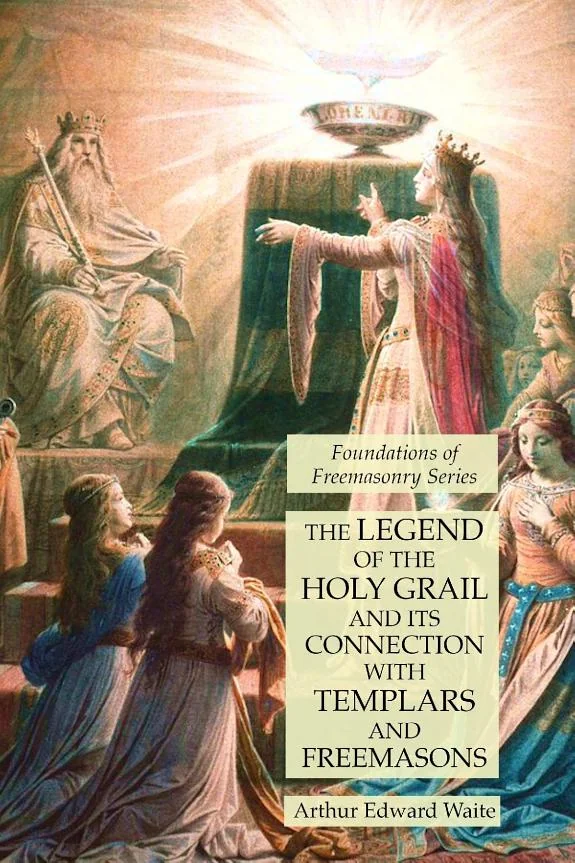
The Legend of the Holy Grail and its Connection with Templars and Freemasons: Foundations of Freemasonry Series
 72
72

The Legend of the Holy Grail and its Connection with Templars and Freemasons: Foundations of Freemasonry Series
Arthur Edward Waite's "The Legend of the Holy Grail and its Connection with Templars and Freemasons" offers a dense, scholarly exploration that privileges historical and symbolic linkage over sensationalism. Waite's strength lies in his encyclopedic knowledge of medieval romances and esoteric traditions, meticulously drawing parallels between the Grail legend, the Templar Order, and the nascent structure of Freemasonry. He avoids speculative leaps, instead presenting a carefully constructed argument for symbolic continuity. A notable limitation is the book's academic density; readers unfamiliar with the source material might find it inaccessible. The detailed analysis of the symbolism within the *Livre de Caradoc* as a precursor to Masonic allegory is particularly illuminating, demonstrating Waite’s rigorous method. This work is a foundational text for understanding the intellectual currents that shaped early modern occultism and Masonic historiography.
📝 Description
72
Arthur Edward Waite's 1911 work examines the Grail, Templars, and Freemasonry's symbolic links.
Arthur Edward Waite's "The Legend of the Holy Grail and its Connection with Templars and Freemasons" is a detailed study of the interconnected myths of the Grail, the Knights Templar, and the origins of Freemasonry. Waite, known for his extensive writings on occult and mystical subjects, carefully analyzes historical accounts, popular legends, and esoteric interpretations. He builds an argument for shared symbolic and historical roots among these potent traditions. The book is for readers serious about Western esotericism, comparative mythology, and Masonic history. It offers a rigorous analysis that moves beyond common myths. Those interested in the history of secret societies and the development of mystical symbolism will find considerable content here.
This work is especially suited for individuals researching the philosophical foundations of Freemasonry and its possible links to medieval chivalric orders and Arthurian legends. Waite's scholarship positions the Grail not just as a relic but as a symbol for spiritual achievement and secret knowledge. He also investigates the Templar Order's esoteric traditions and their hypothesized influence on Masonic rituals and symbolism. The book aims to connect these disparate threads into a cohesive understanding of Western esoteric traditions.
Published in 1911, Waite's book appeared during a period of significant interest in occultism and ancient traditions. It engaged with figures like Helena Blavatsky and Rudolf Steiner, who were developing Theosophy. Waite sought to establish a scholarly basis for mystical inquiries, contrasting his work with more speculative theories common at the time. He referenced early Grail romances and Masonic rituals to support his arguments about the shared symbolic lineage of these traditions.
💡 Why Read This Book?
• Understand the symbolic evolution of the Grail legend from Arthurian romance to its esoteric interpretations within Freemasonry, as detailed in Waite's analysis of medieval texts. • Grasp the specific historical connections Waite posits between the Knights Templar and early Masonic lodges, examining shared ritualistic elements and organizational structures. • Discover Waite's scholarly methodology for tracing esoteric traditions, learning how he connects chivalric ideals and mystical quests to the philosophical foundations of Freemasonry.
⭐ Reader Reviews
Honest opinions from readers who have explored this book.
❓ Frequently Asked Questions
What is the primary argument presented by Arthur Edward Waite regarding the Holy Grail, Templars, and Freemasons?
Waite argues that the legend of the Holy Grail, the history of the Knights Templar, and the foundational mythology of Freemasonry are deeply interconnected through shared symbolism and esoteric purpose, suggesting a continuity of spiritual quest across these traditions.
When was Arthur Edward Waite's work on the Holy Grail originally published?
While this specific edition is from 2020, Arthur Edward Waite's extensive research and writings on occult subjects, including the connections between the Grail, Templars, and Freemasons, were primarily produced in the late 19th and early 20th centuries.
Does this book present the Holy Grail as a literal object?
No, Waite primarily treats the Holy Grail as a potent symbol representing spiritual attainment, hidden knowledge, and divine truth, rather than a physical artifact. He explores its narrative and symbolic significance.
What is the relationship between the Knights Templar and Freemasonry according to Waite?
Waite suggests that Freemasonry inherited and adapted many symbolic elements and ideals from the Knights Templar, particularly concerning chivalry, spiritual discipline, and the pursuit of esoteric wisdom.
Is this book suitable for beginners interested in the Holy Grail?
While informative, the book's scholarly depth and focus on historical and symbolic connections may be challenging for absolute beginners. Readers with some background in mythology or esoteric studies will benefit most.
What specific esoteric traditions does Waite draw upon?
Waite integrates elements from Christian mysticism, Arthurian legend, Hermeticism, and Kabbalistic thought to interpret the symbolism associated with the Grail, Templars, and Freemasonry.
🔮 Key Themes & Symbolism
Grail as Spiritual Symbol
Waite posits the Holy Grail not as a relic but as a profound symbol of spiritual illumination and the ultimate object of the mystic quest. He traces its metamorphosis from medieval romance's object of chivalric pursuit to an emblem of inner gnosis and divine connection, explored through the lens of esoteric philosophy. This symbolic interpretation underpins its relevance across disparate traditions seeking ultimate truth.
Templar-Masonic Continuity
The work meticulously examines the purported lineage between the Knights Templar and Freemasonry. Waite investigates how the Templars' organizational structure, their emphasis on secrecy, and their alleged possession of esoteric knowledge might have been transmitted to the burgeoning Masonic craft. This connection is presented not as direct succession but as a spiritual and symbolic inheritance, influencing Masonic ritual and philosophy.
Esoteric Foundations of Freemasonry
This theme studies the philosophical and mystical underpinnings of Freemasonry, arguing that its rituals and allegories are rooted in ancient mystery traditions and medieval chivalric orders. Waite seeks to demonstrate how the symbolism of the Grail quest and the Templar ethos provide a framework for Masonic teachings on morality, spiritual development, and the pursuit of hidden wisdom, essential for understanding its esoteric dimension.
Symbolic Language and Allegory
Waite underscores the importance of symbolic language in conveying esoteric truths. The book analyzes the allegorical narratives found in Grail legends and Masonic rituals, interpreting recurring motifs such as the quest, the castle, and sacred geometry. This focus on deciphering symbolic meaning is central to understanding how spiritual concepts are preserved and transmitted across historical epochs and secret societies.
💬 Memorable Quotes
Direct passages from the work, attributed to the author.
“The Grail is the vessel of the divine mystery.”
— This interpretation highlights Waite's view of the Grail as a central symbol in esoteric traditions, representing not just a physical object but the embodiment of sacred knowledge and spiritual revelation.
“Chivalry found its highest expression in the quest.”
— Waite uses this to frame the Grail quest as the pinnacle of medieval knightly ideals, suggesting that this pursuit of a sacred goal laid symbolic groundwork for later esoteric orders focused on spiritual attainment.
“Allegory conceals profound truths.”
— This reflects Waite's method of textual analysis, emphasizing that the true meaning of myths and rituals, like those surrounding the Grail and Freemasonry, lies beneath the surface narrative, accessible through symbolic interpretation.
“The search for the Grail is a path of spiritual regeneration.”
— This captures Waite's understanding of the Grail legend's purpose within esoteric traditions – it represents an internal journey towards purification and enlightenment, mirroring the aims of Masonic initiation.
💡 Key Ideas
Editorial paraphrase of the work's core concepts — not direct quotes.
Templar secrets echo in Masonic degrees.
This paraphrase suggests Waite's central thesis: that the esoteric knowledge and rituals associated with the Knights Templar were preserved and reinterpreted within the structure of Freemasonry.
🌙 Esoteric Significance
Tradition
Waite's work is deeply rooted in the Western Esoteric Tradition, particularly drawing from Christian mysticism, Hermeticism, and Kabbalistic interpretations of symbolism. It seeks to bridge medieval chivalric romances and Arthurian legends with the philosophical framework of Freemasonry, positioning itself within the lineage of occult scholarship that interprets historical narratives through a spiritual lens.
Symbolism
Key symbols explored include the Holy Grail itself, representing spiritual perfection and divine knowledge; the Cross, signifying sacrifice and initiation within the Templar context; and Masonic architectural symbols, which Waite connects to the building of spiritual temples and the attainment of higher consciousness. The Rose Cross symbol, often associated with Rosicrucianism and influential in Waite's own thought, also implicitly informs his interpretation of these interconnected traditions.
Modern Relevance
Contemporary esoteric researchers and Masonic historians continue to reference Waite's foundational work for its detailed analysis of symbolic connections. His interpretations influence modern discussions on comparative mythology, the evolution of Western mystery schools, and the philosophical depth of Masonic ritual. Thinkers exploring the archetype of the spiritual quest and the transmission of esoteric knowledge across centuries find value in his scholarly approach.
👥 Who Should Read This Book
• Students of Western Esotericism researching the historical and symbolic links between medieval legends and modern initiatory orders, seeking Waite's specific interpretations. • Freemasons interested in the deeper philosophical and historical context of their fraternity's origins and symbolic language, beyond standard ritual texts. • Comparative mythology scholars examining the evolution of archetypal narratives, specifically the Grail quest and its adaptation into various spiritual and fraternal systems.
📜 Historical Context
Published during a period of fervent occult revival and historical re-evaluation, Arthur Edward Waite's work on the Grail, Templars, and Freemasons emerged in the early 20th century. This era saw figures like Helena Blavatsky popularizing esoteric philosophies, prompting serious scholars like Waite to meticulously investigate the historical and symbolic underpinnings of Western mysticism. Waite’s approach contrasted with more speculative contemporary occultists, emphasizing rigorous textual analysis of medieval romances and early Masonic documents. He engaged implicitly with the scholarly debates surrounding the origins of Freemasonry, particularly the prevalent theories linking it to the Templars, a subject also explored by Masonic writers like Robert Macoy. Waite sought to establish a more grounded, albeit esoteric, interpretation, reading through the complex intersection of legend, history, and mystical tradition that fascinated intellectuals and secret societies alike.
📔 Journal Prompts
The Grail's symbolic representation of spiritual attainment and its connection to Templar ideals.
Analyze the transition of chivalric virtues into Masonic tenets as described by Waite.
Consider the significance of secrecy in both the Templar Order and early Freemasonry.
Reflect on how Waite interprets the allegory of the quest for hidden knowledge.
Explore the potential symbolic lineage between the Templars' spiritual pursuits and Masonic degrees.
🗂️ Glossary
Holy Grail
In Waite's context, not necessarily a physical cup, but a potent symbol of spiritual enlightenment, divine grace, and the ultimate object of the mystic quest, central to Arthurian legend and esoteric interpretation.
Knights Templar
A medieval Catholic military order founded around 1119, known for its role in the Crusades and its alleged possession of secret knowledge, often linked esoterically to Freemasonry.
Freemasonry
A fraternal organization originating in the late 16th to early 17th century, using allegorical rituals based on stonemasonry to impart moral and spiritual lessons to its members.
Arthurian Legend
A body of medieval literature and folklore centered on the legendary King Arthur, his knights, and the quest for the Holy Grail, serving as a rich source of symbolism for esoteric traditions.
Esotericism
Belief systems and practices concerned with hidden knowledge, spiritual insight, and mystical experience, often transmitted through initiation and symbolic interpretation, as explored by Waite.
Allegory
The use of symbols and symbolic narratives to convey hidden meanings, particularly moral or spiritual truths, a key method Waite employs to interpret Grail legends and Masonic rituals.
Spiritual Regeneration
A core concept in many mystical traditions, referring to the process of inner transformation and purification leading to a higher state of spiritual consciousness, often presented as a goal within Masonic teachings.
This book appears in 1 collection
🔮 Readers Also Liked
Browse all →








From the “Holy Grail” Collection
View all →
![EBOOK COLLECTION ( PART 8) [ CSI][h 33t]](/img/thumb/ebook-collection-part-8-csi-h-33t.webp)







More Free Sacred Texts & Gnosticism Books
View all →