Drifting Through Samsara
 78
78

Drifting Through Samsara
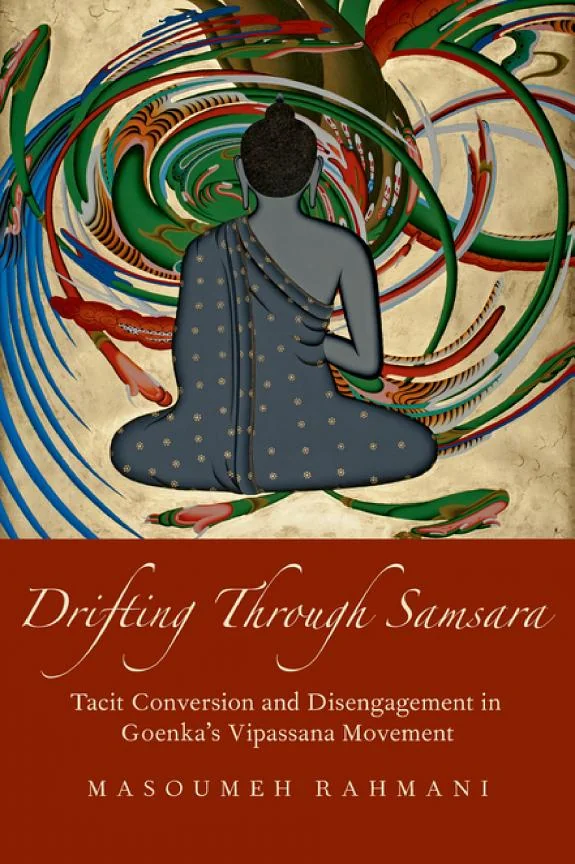
Masoumeh Rahmani's "Drifting Through Samsara" offers a granular look at the often-overlooked phenomenon of spiritual disaffiliation, specifically through the lens of Vipassana practitioners. Rather than broadly categorizing deconversion, Rahmani meticulously details the sequential stages, from the initial "Conversion Career" to the profound "Breathing New Self into Not-Self." The strength of the work lies in its detailed analysis of "Disaffiliation Trajectories," providing a nuanced understanding of how individuals shed deeply ingrained practices. A limitation, however, is the occasional academic density, which might make certain sections challenging for readers less familiar with sociological theory. The exploration of "Tacit Conversion" as a precursor to overt leaving is particularly insightful, illustrating subtle shifts in commitment. The book ultimately serves as a vital academic contribution to understanding religious and spiritual change.
📝 Description
78
Masoumeh Rahmani's 2022 book examines disaffiliation from spiritual paths through Vipassana meditation.
Drifting Through Samsara analyzes the process of leaving established spiritual or philosophical traditions, with a specific focus on experiences stemming from Vipassana meditation. Rahmani structures the study around distinct stages of departure, beginning with "Conversion Careers" and progressing through "Tacit Conversion" and "Pragmatic Leaving." The final phase, "Deconversion: Breathing New Self into Not-Self," addresses the psychological and social dynamics involved in letting go of deeply held belief systems. This work is suited for academics in the fields of religion, sociology, and psychology. It will also resonate with individuals who have experienced significant shifts in their spiritual or philosophical outlook, particularly those connected to Buddhist practices or intensive meditation retreats. Researchers who focus on religious change, deconversion, or the personal experience of spiritual disaffiliation will find its case studies and theoretical structure useful.
The book was published in 2022, a time when academic interest in how religious and non-religious identities form is growing. It builds upon sociological theories of conversion and apostasy, applying them to less conventional spiritual involvements such as intensive Vipassana retreats. Rahmani addresses the increasing scholarly attention given to 'post-Buddhist' or 'secular Buddhist' trends, where people engage with Buddhist techniques without following traditional religious frameworks. This phenomenon has been observed worldwide since the late 20th century.
This book engages with the modern evolution of spiritual practices, particularly those derived from Buddhist traditions like Vipassana meditation. It situates these practices within a broader conversation about religious and non-religious identity, exploring how individuals detach from or redefine their engagement with these traditions. The work acknowledges a global trend since the late 20th century where individuals adopt elements of Buddhist thought and practice outside of formal religious structures. Rahmani's analysis contributes to understanding the lived experience of navigating these shifts in belief and practice.
💡 Why Read This Book?
• Gain a precise understanding of "Disaffiliation Trajectories," learning to identify distinct phases in spiritual leaving that go beyond simple conversion or rejection, as detailed in Chapter 5. • Explore the concept of "Deconversion: Breathing New Self into Not-Self," which reframes the end of a spiritual path as a creative process of identity reconstruction, as discussed in Chapter 6. • Analyze "Vipassana Disaffiliation Narratives," understanding the unique challenges and perspectives of individuals leaving intensive meditation contexts, a focus of Chapter 4.
⭐ Reader Reviews
Honest opinions from readers who have explored this book.
❓ Frequently Asked Questions
What is the primary focus of "Drifting Through Samsara"?
The book primarily focuses on the process of spiritual disaffiliation, specifically examining the narratives and trajectories of individuals leaving Vipassana meditation practices and Buddhist-influenced paths.
What does the term 'Tacit Conversion' refer to in this book?
'Tacit Conversion' describes a subtle, often unacknowledged shift in commitment or belief that can precede overt disaffiliation from a spiritual path or practice.
Who is Masoumeh Rahmani?
Masoumeh Rahmani is the author of "Drifting Through Samsara," a work first published in 2022 that analyzes deconversion and spiritual disaffiliation.
What are the main stages of leaving discussed in the book?
The book outlines several stages, including "Conversion Career," "Tacit Conversion," "Pragmatic Leaving," and ultimately "Deconversion: Breathing New Self into Not-Self."
Does the book offer practical advice for deconversion?
While the book is primarily an academic analysis, its detailed examination of "Disaffiliation Trajectories" can offer conceptual clarity and understanding for those navigating such experiences.
What is the significance of the Vipassana context in the book?
The Vipassana context is crucial as it provides specific case studies for analyzing deconversion, allowing the author to explore unique "Vipassana Disaffiliation Narratives."
🔮 Key Themes & Symbolism
Spiritual Disaffiliation
This theme centers on the deliberate and often complex process by which individuals detach from established spiritual, religious, or philosophical systems. Rahmani meticulously charts the various stages, from initial engagement and subtle shifts in belief ("Tacit Conversion") to active departure ("Pragmatic Leaving"). The work emphasizes that disaffiliation is not always a sudden break but can be a gradual unfolding, marked by distinct "Disaffiliation Trajectories" that vary significantly among individuals.
Deconversion as Reconstruction
A core argument is that deconversion, particularly the "Deconversion: Breathing New Self into Not-Self" phase, is not solely an ending but a vital, generative process. It involves shedding old identities and frameworks to construct a new sense of self and meaning. This perspective moves beyond viewing deconversion as a loss or failure, highlighting its potential for personal evolution and the creation of new existential ground.
Vipassana Narratives
The book specifically analyzes experiences within Vipassana meditation retreats. It focuses on "Vipassana Disaffiliation Narratives" to illustrate how intensive spiritual practices can lead to unique forms of questioning and eventual departure. The appendix detailing a "Vipassana Ten-day Course Timetable" grounds these narratives in the practical structure of such retreats, offering context for the psychological and social dynamics explored.
Identity and Belief Shifts
Rahmani examines how the adoption and subsequent abandonment of spiritual paths fundamentally alter an individual's identity and worldview. The "Conversion Career" is explored as a formative period, while "Pragmatic Leaving" highlights decisions influenced by practical concerns. The overarching analysis traces the intricate relationship between evolving beliefs and the continuous reshaping of the self.
💬 Memorable Quotes
Direct passages from the work, attributed to the author.
“Deconversion: Breathing New Self into Not-Self”
— This chapter title captures the book's central thesis: that leaving a spiritual path is not merely an erasure but an active, creative process of rebuilding one's identity and understanding of existence.
“Vipassana Disaffiliation Narratives”
— This phrase points to the specific, often unique, stories and experiences of individuals who depart from intensive Vipassana meditation retreats, highlighting the particularities of this form of spiritual leaving.
“Tacit Conversion”
— Suggests a subtle, unstated adherence or shift in perspective that often precedes more overt engagement or, conversely, disengagement from a spiritual discipline.
“Pragmatic Leaving”
— Indicates a disaffiliation driven by practical considerations, functional difficulties, or perceived ineffectiveness of a spiritual path in addressing real-world concerns.
“Disaffiliation Trajectories”
— This concept refers to the varied paths and patterns individuals follow as they move away from a spiritual commitment or practice, acknowledging the non-linear and diverse nature of this process.
🌙 Esoteric Significance
Tradition
While not explicitly adhering to a single Western esoteric lineage like Hermeticism or Kabbalah, "Drifting Through Samsara" engages with the broader spiritual landscape where such traditions intersect with Eastern contemplative practices. Its focus on deconstruction and reconstruction of self aligns with perennialist philosophies that suggest an underlying unity in diverse spiritual paths, while simultaneously analyzing the mechanics of leaving those paths. The work's examination of consciousness and self-transformation touches upon themes common in esoteric thought.
Symbolism
The concept of "Samsara" itself, from Buddhist cosmology, symbolizes the cycle of suffering, death, and rebirth, representing the spiritual or psychological state from which individuals seek release or transformation. The act of "Deconversion" can be seen as a symbolic death and rebirth, shedding an old skin of belief to emerge into a new existential reality. The appendix detailing a "Vipassana Ten-day Course Timetable" functions symbolically, representing the structured, often intense, environment that can precipitate profound personal shifts.
Modern Relevance
Contemporary thinkers and practitioners exploring secular Buddhism, mindfulness studies, and the psychology of well-being are directly engaged by Rahmani's analysis. The work provides a critical lens for understanding the lived experiences behind the widespread adoption and subsequent questioning of meditation practices. It informs discussions on religious non-affiliation, the evolution of spiritual identities in secular societies, and the psychological impact of intensive spiritual training, relevant to fields like positive psychology and consciousness studies.
👥 Who Should Read This Book
• Scholars of religion and sociology: Researchers investigating conversion, deconversion, and the sociology of modern spiritual movements will find a detailed case study and theoretical framework. • Individuals undergoing spiritual transitions: Those who have experienced or are experiencing shifts away from intensive meditation practices or other spiritual paths can gain conceptual clarity. • Comparative religion students: Students and practitioners interested in the lived experience of Buddhist-influenced practices and their potential for disaffiliation will find valuable insights.
📜 Historical Context
Published in 2022, Masoumeh Rahmani's "Drifting Through Samsara" enters a scholarly conversation that has been evolving significantly since the late 20th century. The rise of "McMindfulness" and secular interpretations of Buddhist practices created fertile ground for examining how individuals engage with and subsequently disengage from these paths outside traditional religious frameworks. The work builds upon established sociological theories of conversion and apostasy, notably pioneered by scholars like Rodney Stark and Roger Finke, but adapts them to the specific context of intensive meditation retreats. Rahmani's focus on "Vipassana Disaffiliation Narratives" addresses a contemporary phenomenon of spiritual seeking and leaving that gained prominence as Western interest in Eastern contemplative traditions surged, particularly from the 1970s onwards. The book's detailed breakdown of "Disaffiliation Trajectories" offers a nuanced counterpoint to earlier, more monolithic understandings of religious change.
📔 Journal Prompts
Reflect on the "Conversion Career" stages described in Chapter 1 and how they relate to your own past involvements.
Consider the "Pragmatic Leaving" concept and identify specific practical reasons that might influence spiritual disaffiliation.
Analyze the "Deconversion: Breathing New Self into Not-Self" framework in relation to personal identity reconstruction.
Explore the potential implications of "Tacit Conversion" on one's spiritual trajectory.
Map out your own potential "Disaffiliation Trajectories" based on the models presented in the text.
🗂️ Glossary
Samsara
In Buddhist cosmology, the cyclical existence of birth, death, and rebirth, characterized by suffering and driven by karma. The title suggests a journey through or beyond this cycle.
Vipassana
A form of Buddhist meditation practice focusing on insight into the true nature of reality, often taught in intensive silent retreats, such as the ten-day courses mentioned.
Conversion Career
The process and stages an individual undergoes in adopting a new religious or spiritual identity, viewed as a developmental path rather than a single event.
Tacit Conversion
A subtle, often unacknowledged, shift in belief or commitment that can precede more overt forms of conversion or disaffiliation.
Pragmatic Leaving
Disaffiliation from a spiritual path or practice based on practical considerations, such as perceived ineffectiveness or incompatibility with daily life.
Disaffiliation Trajectories
The varied paths and patterns individuals follow when moving away from a spiritual or religious commitment, acknowledging the diversity of such experiences.
Deconversion
The process of ceasing to identify with or practice a previously held religious or spiritual belief system.
This book appears in 1 collection
🔮 Readers Also Liked
Browse all →









From the “Vipassana” Collection
View all →





More Free Sacred Texts & Gnosticism Books
View all →