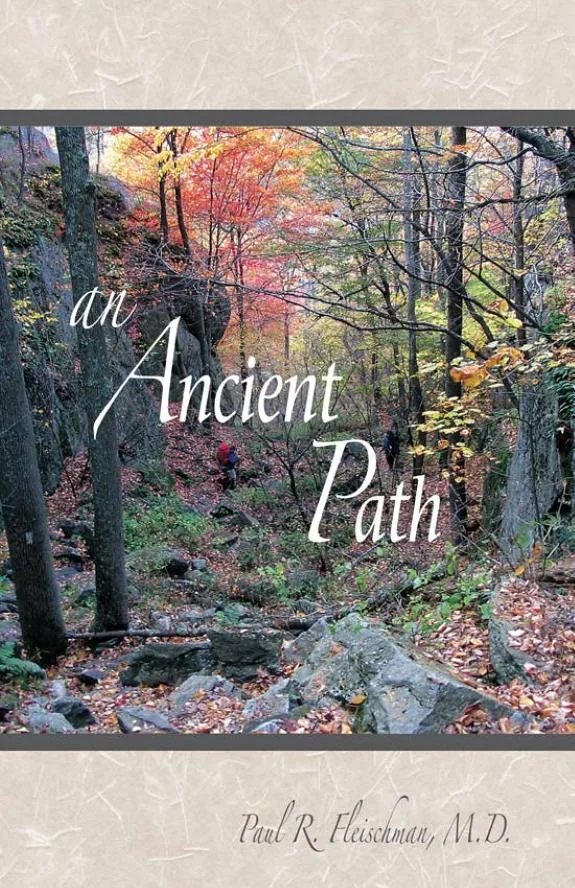
An Ancient Path
 79
79

An Ancient Path
Fleischman’s An Ancient Path offers a grounded perspective on Vipassana meditation, moving beyond abstract philosophy to practical application. The strength lies in its directness; the talks, delivered to diverse global audiences, retain an accessible, non-dogmatic tone. Fleischman avoids overly technical jargon, making the core tenets of Goenka’s teachings comprehensible. A particularly effective section discusses the mind’s tendency towards habitual reactions, illustrating how the practice of observing sensations can disrupt these patterns. However, the format of collected talks, while broad in scope, occasionally lacks the deep thematic cohesion of a single-authored treatise. The limitation is not in content, but in the slightly episodic nature of the presentation. This collection is a clear, unadorned guide for developing mindful awareness.
📝 Description
79
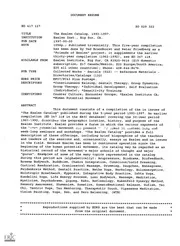
Paul R. Fleischman's An Ancient Path collects talks on Vipassana meditation as taught by S.N. Goenka.
An Ancient Path gathers talks by Paul R. Fleischman on Vipassana meditation, following the lineage of S.N. Goenka. These talks were delivered to international audiences in cities such as Boston, Madrid, Vienna, and Dublin. The book offers an introduction for newcomers to Vipassana and serves as a useful review for those already practicing. It is suitable for anyone interested in mindfulness meditation, particularly the Vipassana tradition. The content touches on mental well-being, stress reduction, and the cultivation of inner peace. Fleischman's discussions connect universal themes to diverse backgrounds, reaching a wide range of individuals seeking spiritual or psychological insight.
The book addresses how Vipassana meditation applies to modern life. It discusses how concentrated attention and a balanced attitude can help with mental health concerns, build emotional strength, and bring about greater tranquility. The central instruction is to observe reality directly, without judgment, as a way to understand the mind and lessen suffering. This approach aims to help practitioners develop resilience and find a more stable internal state.
Published in 2012, An Ancient Path speaks to a growing global interest in contemplative practices. Vipassana meditation, originating in ancient Indian traditions, was systematically introduced to the West and later widely disseminated by figures like S.N. Goenka. Fleischman's talks contribute to this transmission, providing a contemporary voice for an old discipline. The book's teachings align with the broader Buddhist path focused on understanding the nature of mind and reality through direct experience.
💡 Why Read This Book?
• Gain practical techniques for cultivating inner peace and mental clarity, directly informed by Dr. Paul R. Fleischman's experience teaching Vipassana meditation in diverse locations like Vienna and Dublin. • Understand how mindfulness, as taught by S.N. Goenka, can be applied to everyday challenges, fostering resilience and reducing mental distress, as explored in the talks. • Discover a clear introduction to Vipassana meditation that respects both its ancient origins and its relevance for modern mental health concerns, presented without esoteric embellishment.
⭐ Reader Reviews
Honest opinions from readers who have explored this book.
❓ Frequently Asked Questions
What is Vipassana meditation as taught by S.N. Goenka?
Vipassana, meaning 'insight', is a meditation technique focused on observing reality as it is, through direct, non-judgmental awareness of sensations. S.N. Goenka revived and popularized this method, emphasizing its universal applicability and ethical foundation.
How does An Ancient Path address mental health?
The book connects Vipassana practice to mental well-being by explaining how observing the mind’s habitual reactions can reduce suffering and cultivate equanimity, offering practical strategies for managing stress and emotional turbulence.
Who was Paul R. Fleischman and his connection to S.N. Goenka?
Dr. Paul R. Fleischman was a physician and a senior teacher of Vipassana meditation in the tradition of S.N. Goenka. He delivered numerous talks globally, sharing the practical application of the teachings.
Where were the talks in An Ancient Path originally given?
The selections in An Ancient Path were delivered to diverse audiences worldwide, including specific locations such as Boston, Madrid, Vienna, and Dublin, showcasing the global reach of Goenka's teachings.
Is this book suitable for beginners in meditation?
Yes, An Ancient Path is designed as a valuable introduction to Vipassana meditation for newcomers, while also serving as an inspiring resource for those already engaged in the practice.
What distinguishes the Vipassana taught by S.N. Goenka?
Goenka's approach emphasizes practical application in daily life, focusing on the observation of breath and bodily sensations to develop insight and equanimity, presented within a framework of universal ethics and non-sectarianism.
🔮 Key Themes & Symbolism
Mindfulness as a Tool
The core of An Ancient Path lies in presenting mindfulness, specifically Vipassana, not as a mere philosophical concept but as a practical, actionable tool. Fleischman details how the systematic observation of bodily sensations and mental processes, without judgment, can directly address everyday psychological challenges. This focus on empirical self-observation, a hallmark of Goenka’s teaching, is presented as a means to understand the impermanent nature of experience and thereby reduce suffering. The talks underscore that consistent practice cultivates a stable, clear mind capable of responding to life’s events with equanimity rather than reactivity.
Cultivating Inner Peace
Fleischman explores the direct correlation between the practice of Vipassana and the attainment of inner peace. He elucidates how the mind, often agitated by desires and aversions, can find a settled state through disciplined awareness. By observing the arising and passing of phenomena without attachment or aversion, practitioners learn to disengage from the cycle of craving and discontent. This process, detailed across various talks given in international settings, demonstrates that true peace is not an external acquisition but an internal cultivation achievable through dedicated mindfulness.
Vipassana and Mental Health
A significant theme is the application of Vipassana meditation to contemporary mental health concerns. Fleischman, drawing from his background, discusses how the practice can alleviate symptoms associated with stress, anxiety, and depression by fostering a non-reactive relationship with one’s thoughts and emotions. The talks explain that by directly experiencing the transient nature of mental states, individuals can lessen their identification with distressing thoughts and develop greater emotional regulation. This perspective positions Vipassana as a powerful adjunct to conventional mental wellness strategies.
The Goenka Tradition
An Ancient Path is deeply rooted in the specific lineage of Vipassana meditation as taught by S.N. Goenka. Fleischman faithfully transmits Goenka’s emphasis on the technique itself—the observation of breath and bodily sensations—as the primary means of purification. The book highlights Goenka’s method of presenting these ancient teachings in a universally accessible, non-sectarian manner, suitable for people of all backgrounds. The talks reflect Goenka’s pedagogical approach, which stresses diligent, earnest practice over intellectual theorizing.
💬 Memorable Quotes
Direct passages from the work, attributed to the author.
“The mind habitually reacts with aversion to unpleasantness and craving for pleasantness.”
— This highlights a fundamental human tendency that meditation seeks to address. By observing these reactions non-judgmentally, one can begin to understand their origins and lessen their compulsive hold, leading to greater inner stability.
“Vipassana is the process of observing things as they really are, moment to moment.”
— This defines the essence of the practice: direct, unmediated experience. It emphasizes the importance of present-moment awareness and the development of insight through keen observation, rather than relying on conceptual understanding.
“The practice is about understanding the nature of impermanence.”
— This points to a core insight gained through Vipassana. Recognizing that all phenomena, both internal and external, are transient helps to dissolve attachment and aversion, which are primary sources of suffering.
“Mental health is improved by developing equanimity towards sensations.”
— This statement links the practice directly to psychological well-being. Equanimity, the ability to remain balanced amidst changing experiences, is presented as a key outcome of sustained mindful observation.
“These talks were given to diverse audiences across the world.”
— This factual statement underscores the universal applicability and broad appeal of the Vipassana teachings as presented by Goenka and his senior teachers like Fleischman, transcending cultural and geographical boundaries.
🌙 Esoteric Significance
Tradition
The work aligns with the Buddhist tradition of Vipassana, specifically as revitalized and presented by S.N. Goenka. While rooted in Buddhist philosophy concerning suffering (dukkha) and impermanence (anicca), Goenka’s method is intentionally non-sectarian, focusing on the practical, experiential aspects of mind training rather than religious dogma. Fleischman’s talks transmit this approach, emphasizing the universality of the techniques for mental purification and insight, making it accessible beyond a strictly Buddhist framework.
Symbolism
While An Ancient Path primarily focuses on direct experience rather than overt symbolism, the core 'symbols' are internal. The breath serves as a primary anchor, representing the constant, ever-present reality of life's flux. Bodily sensations function as a map of experience, indicating areas of tension or equanimity. The arising and passing of thoughts and feelings are symbolic of impermanence itself, urging the practitioner to observe without clinging or rejecting.
Modern Relevance
Fleischman's work remains highly relevant for contemporary mindfulness practitioners, secular meditators, and those in therapeutic fields seeking accessible, effective techniques for stress reduction and emotional regulation. Thinkers and educators in fields like positive psychology and contemplative neuroscience often draw upon the principles of Vipassana, as taught by Goenka and articulated by teachers like Fleischman, to understand and promote mental well-being. The emphasis on direct experience and non-judgmental awareness appeals to modern demands for authenticity and groundedness.
👥 Who Should Read This Book
• Individuals new to meditation seeking a clear, practical introduction to Vipassana as taught by S.N. Goenka, benefiting from Fleischman’s accessible explanations. • Experienced practitioners of mindfulness or Vipassana looking to deepen their understanding and refine their practice, drawing inspiration from talks given in diverse international settings. • Those interested in the intersection of mental health and contemplative practices, seeking to understand how mindfulness can foster equanimity and reduce psychological distress.
📜 Historical Context
An Ancient Path emerged in 2012, a period marked by widespread Western adoption of Eastern contemplative practices. Mindfulness, particularly Vipassana meditation, had gained significant traction, moving from niche spiritual circles into mainstream psychology and wellness. The teachings of S.N. Goenka, who began systematically teaching in India in the 1960s and later expanded globally, represented a direct, non-sectarian transmission of ancient Indian meditation techniques. Fleischman, as one of Goenka's senior international teachers, played an important role in disseminating these methods. The book arrived at a time when figures like Jon Kabat-Zinn had already popularized secular mindfulness-based stress reduction (MBSR) programs, creating a receptive audience for authentic, tradition-based teachings like Goenka’s, which Fleischman's talks explicate.
📔 Journal Prompts
The habitual reaction of the mind to unpleasant sensations.
The practice of observing impermanence moment to moment.
Developing equanimity towards bodily sensations.
The role of craving and aversion in creating suffering.
Applying mindfulness to everyday challenges encountered after meditation.
🗂️ Glossary
Vipassana
A Pali word meaning 'insight' or 'clear seeing'. It refers to a meditation practice focused on observing reality as it is, through direct, non-judgmental awareness of sensations and mental phenomena.
S.N. Goenka
A renowned teacher who played a significant role in bringing Vipassana meditation, as taught by his teacher Sayagyi U Ba Khin, to a global audience in a non-sectarian format.
Equanimity
A state of mental calmness and composure, especially in difficult situations. In Vipassana, it means observing experiences without reacting with craving or aversion.
Impermanence (Anicca)
The Buddhist concept that all conditioned phenomena are in a constant state of flux and change. Recognizing impermanence is a key insight in Vipassana practice.
Suffering (Dukkha)
A central concept in Buddhist philosophy, referring to the inherent unsatisfactoriness or stress of existence, often arising from craving and aversion.
Mindfulness
The quality or state of being conscious or aware of something. In meditation, it involves paying attention to the present moment, non-judgmentally.
Sensations
Physical feelings or perceptions experienced by the body. In Vipassana, sensations are observed as primary objects of meditation to understand impermanence and conditionality.
This book appears in 1 collection
🔮 Readers Also Liked
Browse all →







From the “Vipassana” Collection
View all →




More Free Sacred Texts & Gnosticism Books
View all →