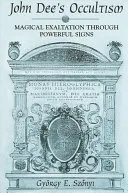
John Dee's Occultism
 82
82

John Dee's Occultism
György E. Szőnyi's "John Dee's Occultism" moves beyond the sensationalism often attached to Dee's name, presenting him as a pivotal intellectual figure of the Renaissance. Szőnyi's analysis of "magical thinking" as a distinct epistemological framework, drawing from classical sources to Dee's contemporaries, is particularly compelling. The book's strength lies in its meticulous engagement with Dee's own voluminous writings, illuminating how his scientific and spiritual endeavors were conceptually linked, rather than disparate. For instance, the detailed breakdown of Dee's mathematical cosmology as a foundation for his occult pursuits provides a vital corrective to simplistic portrayals. However, the dense academic prose, while precise, may prove challenging for readers less familiar with Renaissance philosophy or esoteric traditions. The book's focus on intellectual history means it offers less on the practical application or lived experience of Dee's magic. Ultimately, "John Dee's Occultism" is an essential, if demanding, scholarly resource for understanding a key figure at the nexus of early modern thought and esoteric practice.
📝 Description
82
György E. Szőnyi's 2002 study examines John Dee's occultism beyond his popular image.
György E. Szőnyi's "John Dee's Occultism" scrutinizes the 16th-century English polymath, moving past his common perception as Queen Elizabeth I's astrologer. The book analyzes Dee's substantial writings and the intellectual climate he inhabited, situating his engagement with magic and science within the broader currents of Renaissance European thought. Szőnyi investigates the philosophical bases of what he terms "magical thinking," tracing its presence in classical, medieval, and Renaissance traditions. The work is chiefly for academics and students of Renaissance intellectual history, the history of science, and Western esotericism. It is aimed at readers interested in a rigorous, text-based study of occult philosophy as it existed in the 16th century. Those seeking to understand the connections between early modern science, philosophy, and magical traditions will find considerable material here.
Szőnyi places Dee's activities within the dynamic, often contested, intellectual environment of the Renaissance. This era witnessed a revival of Neoplatonism and Hermeticism, alongside the development of new scientific methods. Dee was a contemporary of figures like Giordano Bruno and Tycho Brahe. His work unfolded at a time when the distinctions between natural philosophy, mathematics, and what were then called "occult" or "magical" arts were not sharply defined and were subject to both official support and religious censure.
This book examines John Dee's engagement with Hermeticism and Neoplatonism, key currents in Renaissance esotericism. It situates his "angelic magic" within a historical framework where the study of ancient texts and the pursuit of hidden knowledge were intertwined with emerging natural philosophy. Szőnyi's work analyzes how these traditions informed Dee's intellectual projects, aiming to restore divine knowledge and understand the cosmos through complex systems that blended mathematics, cosmology, and spiritual inquiry. The study highlights the period's intellectual ferment, where magic and early science were not always separate disciplines.
💡 Why Read This Book?
• Gain a nuanced understanding of John Dee's "magical thinking" by examining his intellectual lineage from classical philosophers to Renaissance thinkers, as detailed in Szőnyi's analysis. • Appreciate the integrated nature of early modern science and spirituality by exploring how Dee's mathematical and cosmological studies informed his occult philosophy. • Understand Dee's "angelic magic" not as mere superstition, but as a complex system for restoring divine knowledge, a concept Szőnyi thoroughly dissects.
⭐ Reader Reviews
Honest opinions from readers who have explored this book.
❓ Frequently Asked Questions
What is "magical thinking" according to Szőnyi's analysis of John Dee?
Szőnyi defines "magical thinking" as a specific mode of understanding the cosmos prevalent in the Renaissance, distinct from but often overlapping with emerging scientific rationalism. It involves a belief in the interconnectedness of all things and the potential for human will to influence natural and supernatural forces.
How does "John Dee's Occultism" place Dee within European cultural history?
The book positions Dee as a central figure in Renaissance European cultural history, analyzing his scientific and spiritual writings as reflections of traditional mysticism and contemporary intellectual currents, particularly Neoplatonism and Hermeticism.
Does the book discuss John Dee's "angelic magic" or Enochian system?
Yes, Szőnyi revisits Dee's "angelic magic" (often referred to as Enochian) as a sophisticated intellectual project. The work explores its aims, which included restoring divine knowledge and cosmic order, rather than dismissing it as mere superstition.
Who were John Dee's contemporaries mentioned in the book?
While the book focuses on Dee, it situates him within the intellectual milieu of the Renaissance. Figures like Giordano Bruno and Tycho Brahe were contemporaries whose work shared the era's intellectual ferment, though they are not the primary focus.
What is the primary academic discipline of the author, György E. Szőnyi?
György E. Szőnyi is an academic whose work focuses on Renaissance intellectual history, the history of science, and esoteric traditions, as evidenced by his detailed analysis in "John Dee's Occultism."
When was "John Dee's Occultism" originally published?
The book "John Dee's Occultism" by György E. Szőnyi was first published on July 2, 2010. This edition provides a scholarly perspective on John Dee's complex intellectual contributions.
🔮 Key Themes & Symbolism
Renaissance Magical Thinking
The work scrutinizes "magical thinking" as a distinct epistemology during the Renaissance, tracing its roots from classical philosophy through medieval thought to figures like John Dee. It argues that this mode of thought, far from being irrational, provided a framework for understanding the cosmos and humanity's place within it, often integrating with emerging scientific inquiry and spiritual aspirations.
The Integration of Science and Spirit
Szőnyi highlights how John Dee perceived no strict dichotomy between his scientific pursuits, such as mathematics and astronomy, and his spiritual or "occult" interests. The book demonstrates how Dee viewed these areas as interconnected, with cosmology and mathematics serving as foundational elements for his divinatory and angelic communication practices.
The "Angelic Magic" of John Dee
The book offers a scholarly re-evaluation of Dee's "angelic magic," often known as Enochian magic. Szőnyi presents it not as simple conjuration, but as a profound intellectual and spiritual endeavor aimed at recovering divine knowledge and restoring cosmic order. The analysis explores the theoretical underpinnings and systematic nature of this practice.
John Dee's Intellectual Context
"John Dee's Occultism" situates Dee within the broader intellectual currents of the European Renaissance. It examines the influence of Neoplatonism, Hermeticism, and the Renaissance "revival" of ancient wisdom. By analyzing Dee's writings against this backdrop, the book clarifies his role in the complex transition from medieval to early modern thought.
💬 Memorable Quotes
Direct passages from the work, attributed to the author.
“Analysis of "magical thinking" across classical, medieval, and Renaissance philosophers.”
— This indicates the book's methodology, tracing a lineage of thought that underpinned occult traditions and connecting them to John Dee's own intellectual framework.
“Dee's scientific and spiritual writings as reflective sources of traditional mysticism.”
— This suggests that Szőnyi views Dee's work not as an anomaly, but as a manifestation of established mystical traditions, harmonizing his mathematical and esoteric interests.
“Exploring the intellectual foundations of magic.”
— This highlights the book's focus on the philosophical and theoretical underpinnings of magic, treating it as a system of knowledge and practice worthy of serious academic inquiry.
“Renaissance mathematician and "conjurer to Queen Elizabeth."”
— This phrase captures the dual nature of John Dee's public and private intellectual life, which the book aims to reconcile and explain through scholarly analysis.
“Dee's place in the chronology of European cultural history.”
— This points to the book's broader ambition: to understand Dee not just as an individual, but as a significant figure whose work marks a particular phase in the development of Western thought and culture.
🌙 Esoteric Significance
Tradition
The work situates John Dee's practices within the Western Esoteric Tradition, particularly its Hermetic and Neoplatonic currents. It examines how Dee sought to synthesize ancient wisdom, Christian theology, and natural philosophy, aiming for a form of spiritualized knowledge and cosmic understanding. Szőnyi analyzes Dee's "angelic magic" as a systematic attempt to access divine intelligence, aligning with Renaissance Hermetic ideals of correspondence between the macrocosm and microcosm.
Symbolism
Key symbols explored include the angelic language (Enochian script), representing a divine means of communication and cosmic order. The book likely also touches upon the symbolic significance of mathematics and geometry in Dee's worldview, seen as reflecting the perfect order of creation. Celestial bodies and their perceived influences, central to Renaissance cosmology and astrology, would also feature as symbolic representations of divine will and natural law.
Modern Relevance
Contemporary practitioners and scholars of Western Esotericism, particularly those interested in Hermeticism, ceremonial magic, and the history of divination, draw on Szőnyi's work. His rigorous analysis of Dee's intellectual framework offers a model for understanding the integration of disparate knowledge systems. Thinkers exploring the philosophical underpinnings of magic and the historical evolution of consciousness find value in Szőnyi's contextualization of Dee's complex spiritual and scientific endeavors.
👥 Who Should Read This Book
• Students of Renaissance intellectual history: Gain a nuanced understanding of the period's philosophical landscape and the integration of science, magic, and religion through the lens of a key figure. • Scholars of Western Esotericism: Deepen your knowledge of Hermeticism and ceremonial magic by examining primary source material analysis and theoretical frameworks. • Researchers in the History of Science: Explore the pre-Enlightenment understanding of natural philosophy and its connections to occult practices, challenging modern distinctions between science and magic.
📜 Historical Context
György E. Szőnyi's "John Dee's Occultism" emerges from the fertile ground of Renaissance studies, a period (roughly 14th-17th centuries) marked by a fervent rediscovery of classical texts and a complex interplay between emerging scientific inquiry and enduring mystical traditions. Dee himself, active in the 16th century, was a contemporary of figures like Tycho Brahe and, to a lesser extent, Giordano Bruno, though their engagement with occult matters differed. This era saw a significant revival of Neoplatonism and Hermeticism, philosophies that Dee deeply integrated into his worldview. Szőnyi's work is particularly valuable for its scholarly approach, contrasting with earlier, often sensationalist, accounts of Dee. The intellectual climate was one where natural philosophy, mathematics, astrology, and alchemy were not rigidly separated as they are today. While Dee enjoyed royal patronage from Queen Elizabeth I, his occult practices also courted controversy and suspicion, reflecting the era's precarious balance between intellectual exploration and religious orthodoxy. The book thus places Dee's "magical thinking" within this specific historical nexus.
📔 Journal Prompts
John Dee's "magical thinking" as an epistemological framework.
The intellectual foundations of magic in classical, medieval, and Renaissance sources.
The role of mathematics in bridging Dee's scientific and spiritual pursuits.
Analysis of Dee's "angelic magic" as a system for divine knowledge.
The place of John Dee within the chronology of European cultural history.
🗂️ Glossary
Magical Thinking
A mode of cognition analyzed by Szőnyi, prevalent in the Renaissance, characterized by a belief in interconnectedness, symbolic correspondences, and the efficacy of will or ritual to influence reality, often distinct from empirical science.
Renaissance Occultism
The diverse range of esoteric beliefs and practices—including Hermeticism, Neoplatonism, alchemy, and astrology—that experienced a revival and transformation during the European Renaissance (c. 14th-17th centuries).
Neoplatonism
A philosophical system derived from Plato, emphasizing the transcendent One, emanation, and the ascent of the soul, which significantly influenced Renaissance thinkers and occult traditions.
Hermeticism
A religious, philosophical, and esoteric tradition based on writings attributed to Hermes Trismegistus, emphasizing divine knowledge, cosmic principles, and the potential for human spiritual transformation.
Angelic Magic / Enochian Magic
The system of spiritual communication and invocation developed by John Dee and Edward Kelley, involving unique angelic languages and complex rituals, aimed at receiving divine instruction and order.
Natural Philosophy
The historical term for the study of nature and the physical universe, encompassing what we now understand as physics, astronomy, biology, and chemistry, often intertwined with metaphysics and theology in the pre-modern era.
Chronology of European Cultural History
The sequential ordering of significant events, movements, and intellectual developments within the cultural evolution of Europe, providing context for understanding specific historical figures and their contributions.