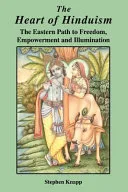
The Heart of Hinduism
 84
84

The Heart of Hinduism
Stephen Knapp's "The Heart of Hinduism" attempts to demystify a vast spiritual tradition, succeeding in large part through its direct engagement with source material. The strength lies in its systematic presentation of complex philosophical ideas, drawing extensively from Vedic texts to support its claims about spiritual identity and potential. Knapp’s clarity in explaining concepts like Brahman and Atman is commendable, offering a solid foundation for newcomers. However, the work occasionally leans towards a specific devotional interpretation, which, while valid within Hinduism, might present a less nuanced picture of the tradition's full spectrum of philosophical schools. A particular passage detailing the different *yugas* (cosmic ages) offers a stark, cyclical view of time that is both intellectually stimulating and a clear demonstration of the Vedantic cosmological framework. Despite its occasional devotional emphasis, the book serves as a valuable, well-referenced primer on core Hindu doctrines.
📝 Description
84
Stephen Knapp's 2005 book, The Heart of Hinduism, distills Vedic and Hindu philosophy for a general audience.
First published in 2005, The Heart of Hinduism by Stephen Knapp aims to present the core ideas and devotional practices of Vedic and Hindu traditions. Knapp's intention was to make these concepts accessible to readers with limited time for research, focusing on the spiritual identity and potential described in Vedic texts. The book acts as a guide to key philosophical and scriptural knowledge within Hinduism.
This work is suited for individuals new to Hindu thought, including students of comparative religion and those curious about its fundamental concepts. It clarifies the devotional practices and philosophical ideas that influence a large part of global spiritual life. The book offers a more integrated and philosophically sound view compared to some less scholarly interpretations of Hinduism, using direct references from Sanskrit texts.
The Heart of Hinduism situates itself within the broader context of Western engagement with Eastern spiritual traditions, particularly during the early 21st century. At a time when interest in yoga and Vedic philosophy grew, often through simplified or fragmented sources, Knapp's book offered a more cohesive philosophical perspective. It drew upon Sanskrit scriptures to provide an integrated understanding, countering less academic presentations and contributing to literature that makes complex theological systems comprehensible to a wider readership.
💡 Why Read This Book?
• Gain a foundational understanding of Vedic philosophy, including concepts like Brahman and Atman, as presented through Knapp's direct engagement with texts like the Vedas and Upanishads. • Discover the principles of Bhakti Yoga, the path of devotion, and its central role in Hindu spiritual practice, as detailed in the book's exploration of devotional Hinduism. • Grasp the concept of *Moksha*, or spiritual liberation, and the means to achieve it according to Vedic teachings, offering a distinct perspective on spiritual goals not commonly found in Western thought.
⭐ Reader Reviews
Honest opinions from readers who have explored this book.
❓ Frequently Asked Questions
What is the primary goal of Stephen Knapp's 'The Heart of Hinduism'?
The book aims to provide a clear, accessible guide to the essential philosophical and devotional heart of Vedic/Hindu tradition, using numerous references from sacred texts.
Who would benefit most from reading 'The Heart of Hinduism'?
Individuals new to Eastern philosophies, students of comparative religion, or anyone seeking a concise understanding of Hindu wisdom without extensive research into Vedic manuscripts.
Does the book cover the devotional aspects of Hinduism?
Yes, it specifically addresses the devotional heart of the Vedic/Hindu philosophy, exploring practices and concepts related to Bhakti Yoga.
What kind of references does the book use?
The work utilizes numerous references from Vedic texts and scriptures to support its explanations of Hindu philosophy and spiritual concepts.
When was 'The Heart of Hinduism' first published?
The book was first published in 2005.
What is a key concept explored in the book regarding individual potential?
The book emphasizes understanding one's real potential and spiritual identity as presented in the Vedic texts, offering insights into inherent spiritual capabilities.
🔮 Key Themes & Symbolism
Spiritual Identity
The book posits that a core teaching within Vedic texts concerns the true spiritual identity of an individual, distinct from the material body and mind. Knapp elaborates on the concept of the soul (*Atman*) as eternal and connected to the ultimate reality (*Brahman*). This exploration aims to shift the reader's self-perception from a temporary physical existence to an enduring spiritual nature, a central tenet for understanding Hindu soteriology and epistemology. The work guides readers to access this knowledge directly from the scriptures.
Vedic Philosophy's Core
Knapp distills the essence of Vedic philosophy, focusing on its most significant doctrines and practices. He presents the foundational knowledge found in scriptures like the Vedas and Upanishads, aiming to provide clarity on complex theological and metaphysical concepts. The emphasis is on the essential wisdom, making the rich library of Vedic manuscripts more approachable for those without extensive scholarly backgrounds. This theme centers on the accessibility of profound spiritual truths.
Devotional Path (Bhakti Yoga)
Beyond philosophical inquiry, 'The Heart of Hinduism' highlights the crucial role of devotion, or Bhakti Yoga, within the tradition. This aspect focuses on the loving service and surrender to the Divine as a primary means of spiritual realization. Knapp explains how this devotional path is integral to the Vedic system, offering a powerful emotional and relational dimension to spiritual practice. It is presented as a direct and accessible route to understanding the Divine.
Spiritual Potential
A significant theme is the inherent spiritual potential within every being, as revealed by Vedic wisdom. The book encourages readers to recognize and cultivate this potential, moving beyond mundane concerns to embrace a higher spiritual consciousness. Knapp illustrates how understanding one's true nature, as described in the scriptures, unlocks this latent capacity for spiritual growth and fulfillment. The work serves as a map to this inner resource.
💬 Memorable Quotes
Direct passages from the work, attributed to the author.
“The Vedic texts present knowledge regarding your real potential and spiritual identity.”
— This statement captures the book's core purpose: to reveal the inherent spiritual nature and capabilities of individuals as described in ancient Hindu scriptures.
“The devotional heart of the Vedic/Hindu philosophy is essential.”
— This emphasizes that understanding Hinduism requires appreciating its devotional dimension, Bhakti Yoga, not just its philosophical doctrines.
“Access to the most important knowledge presented in the Vedic texts.”
— The author aims to provide readers with key insights from vast Vedic literature, acting as a curated guide to its profound wisdom.
“Especially good for anyone who lacks the time to research the many topics...”
— This highlights the book's utility for modern readers, offering a condensed and understandable overview of complex topics within Hindu scriptures.
“To see their insights and wisdom.”
— The book's objective is to illuminate the profound wisdom contained within the diverse philosophical and spiritual teachings of the Vedic tradition.
🌙 Esoteric Significance
Tradition
While rooted in Vedic and Hindu traditions, Knapp's work can be seen as bridging classical philosophy with modern esoteric inquiry. It aligns with the perennial philosophy's aim of revealing universal spiritual truths across diverse traditions. By focusing on the 'heart' of Hinduism, it taps into the devotional and experiential aspects often emphasized in esoteric lineages, presenting them as accessible pathways to self-realization, akin to how other esoteric traditions might interpret Gnostic or Hermetic texts.
Symbolism
The concept of Brahman, the all-pervading, impersonal ultimate reality, serves as a key symbolic principle, representing unity and the ground of all existence. Atman, the individual soul, symbolizes the divine spark within, mirroring Brahman. The cyclical nature of time, represented by the *yugas*, symbolizes cosmic processes of creation, preservation, and dissolution, offering a grand, esoteric perspective on existence beyond human lifespans.
Modern Relevance
Contemporary practitioners of yoga and mindfulness, often seeking deeper philosophical underpinnings for their practices, can find valuable context in Knapp's work. Thinkers and authors who explore the intersection of science and spirituality, or those interested in non-dualistic philosophies, may draw upon the Vedic concepts presented. The book's emphasis on inherent spiritual potential speaks to modern self-help and personal development movements that incorporate spiritual elements.
👥 Who Should Read This Book
• Beginning students of comparative religion seeking a clear, textually supported introduction to Hindu philosophy and its core concepts. • Spiritual seekers interested in Eastern traditions who want to understand the foundational beliefs and devotional practices of Hinduism without overwhelming academic jargon. • Individuals curious about the Vedic origins of concepts like karma, reincarnation, and spiritual liberation, looking for a guide that synthesizes scriptural wisdom.
📜 Historical Context
Published in 2005, Stephen Knapp's "The Heart of Hinduism" entered a landscape where interest in Eastern spirituality was high, yet often met with superficial or generalized interpretations. The early 21st century saw a surge in Western engagement with yoga and meditation, sometimes divorced from their philosophical roots. Knapp's work aimed to provide a more textually grounded and philosophically robust introduction to Vedic and Hindu thought, contrasting with more popular, less scholarly accounts. It emerged during a period when comparative religious studies were gaining academic traction, and authors like Diana Eck were also contributing to broader understanding of Hinduism in the West. Knapp's approach, emphasizing direct scriptural reference, offered an alternative to approaches that might have been influenced by the Hare Krishna movement's specific theological interpretations or broader New Age syncretism. The book's reception was part of a larger trend of making complex religious traditions accessible.
📔 Journal Prompts
Reflect on the concept of Atman as presented in the book; how does this differ from common Western notions of the self?
Consider the role of Bhakti Yoga in your own spiritual or personal life.
Analyze the implications of the Vedic concept of Brahman for understanding reality.
How might the Vedic understanding of spiritual potential influence your daily actions?
Explore the Vedic view of time through the concept of yugas and its impact on perspective.
🗂️ Glossary
Brahman
The ultimate reality or absolute consciousness in Hinduism, understood as the supreme spiritual principle that is the source and sustainer of all existence.
Atman
The individual soul or true self, believed in Hinduism to be eternal, unchanging, and ultimately identical with Brahman.
Vedas
The oldest and most authoritative scriptures of Hinduism, comprising hymns, rituals, and philosophical insights believed to be revealed knowledge.
Upanishads
A collection of philosophical texts within the Vedas, focusing on the nature of reality, the self, and the path to liberation (Moksha).
Bhakti Yoga
The spiritual path of devotion, characterized by loving service, adoration, and surrender to the Divine.
Moksha
Liberation from the cycle of birth, death, and rebirth (samsara); spiritual salvation or enlightenment.
Karma
The law of cause and effect, where actions performed in this life influence future consequences and rebirths.