What is Vipassana?
Vipassana, meaning 'to see things as they really are,' is a form of Buddhist meditation focused on developing insight into the impermanent nature of reality. It involves observing sensations, thoughts, and emotions without judgment, cultivating mindfulness and equanimity. The practice aims to purify the mind by systematically eradicating the mental defilements that lead to suffering, ultimately fostering liberation from the cycle of dissatisfaction.
Best Books for Complete Beginners
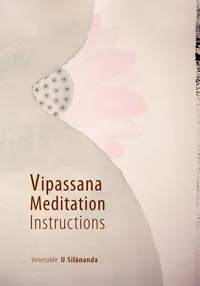
For those new to Vipassana, starting with accessible introductions is key. 'Vipassana Meditation Instructions' by VENERABLE U SīLāNANDA offers clear, step-by-step guidance. 'Die Kunst des Lebens' by William Hart provides a practical framework for integrating the practice into daily life. 'Wissenswertes über Vipassana' by Hans Gruber serves as a good primer on the core concepts. '60 Minuten zum Glück' by Daniel Jeschke suggests quick methods for stress reduction through mindfulness. Finally, 'The Book of Vipassana Secrets' by Numa offers an engaging entry point into the tradition.
Intermediate Reading
Moving beyond the basics, intermediate texts deepen understanding of Vipassana's theoretical and practical aspects. 'An Ancien Path' by Paul R. Fleischman explores the historical and psychological dimensions of the practice. 'Achtsamkeitsmeditation und Wege zur Einsicht' by Frank Boaz Leder connects mindfulness with the path to insight. 'Vipassana – der Quantensprung in eine andere Dimension' by Claudia Pillat examines transformative potential. 'Mitten ins Leben – Frieden finden mit Vipassana-Meditation' by Werner Vogd and Dunja Batarilo offers further integration strategies.
Classical / Advanced Texts
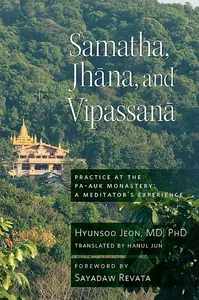
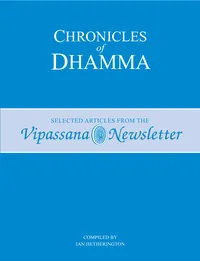
For serious students, engaging with classical sources and advanced interpretations is crucial. 'Samatha, Jhana, and Vipassana' by Hyun-Soo Jeon provides a scholarly look at related meditative states. 'Chronicles of Dhamma' by S.N. Goenka offers insights from a highly influential modern teacher. 'Bodhicharyavatara: Governing The Bodhisattvas-Way Of Life (vol.18)' by Madan G. Chitkara touches upon related Mahayana concepts. 'Theravada' by Quelle Wikipedia serves as a reference for the tradition's doctrinal basis.
Reading Order — Step by Step
Begin with foundational texts for a solid understanding. Weeks 1-2: Start with 'Vipassana Meditation Instructions' by VENERABLE U SīLāNANDA and 'Wissenswertes über Vipassana' by Hans Gruber. Month 2: Progress to 'Die Kunst des Lebens' by William Hart and 'An Ancien Path' by Paul R. Fleischman to integrate practice into daily life. Month 3+: Explore 'Vipassana Meditation' by Joseph Goldstein and study 'Chronicles of Dhamma' by S.N. Goenka for deeper theoretical insights and practical application.
Frequently Asked Questions
Which Vipassana book should I read first?
For beginners, 'Vipassana Meditation Instructions' by VENERABLE U SīLāNANDA is highly recommended for its clear, step-by-step approach. Alternatively, 'Wissenswertes über Vipassana' by Hans Gruber offers a solid overview of the practice's fundamentals.
What is the main goal of Vipassana meditation?
The primary goal of Vipassana is to develop insight into the true nature of reality, specifically understanding impermanence, suffering, and non-self, leading to the eradication of mental impurities and liberation from suffering.
Is Vipassana related to Buddhism?
Yes, Vipassana is a core meditation practice within the Buddhist tradition, particularly prominent in Theravada Buddhism, though its principles are explored in various contexts.
How does Vipassana differ from mindfulness?
While mindfulness is a key component of Vipassana, Vipassana is a specific meditation technique aiming for useful insights into reality. Mindfulness, in a broader sense, is the general faculty of present-moment awareness, which Vipassana cultivates and utilizes.
Can I practice Vipassana without a teacher?
While introductory books can guide initial practice, long-term and deep progress in Vipassana is often best supported by guidance from experienced teachers, especially during retreats.
What is the role of observing sensations in Vipassana?
Observing bodily sensations is central to Vipassana. By noting them with equanimity, practitioners develop direct understanding of impermanence and the mind's conditioned reactions to pleasant, unpleasant, or neutral feelings.
Are there different types of Vipassana?
While the core principles remain consistent, different lineages and teachers may emphasize specific techniques or approaches. The Vipassana taught by S.N. Goenka is one widely practiced method.