Along the Path
 82
82

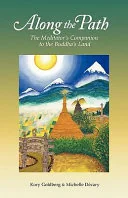
Along the Path
Goldberg and Decary's guide offers a commendable focus on the biographical and historical significance of the Buddha's journey across India and Nepal. The strength lies in its detailed descriptions of pilgrimage sites, grounding the reader in specific locations like Bodh Gaya and Sarnath. However, the narrative occasionally feels more like a compilation of facts than a cohesive philosophical exploration. A particular passage detailing the significance of the Bodhi Tree at Bodh Gaya provides a solid anchor, illustrating the book's potential. While valuable for its informational content, the work could benefit from a more integrated analysis of the esoteric implications of these sacred landscapes. It serves as a competent, if not deeply revelatory, resource for understanding Buddhist pilgrimage geography.
📝 Description
82
Published in 2012, Along the Path details sacred sites in India and Nepal connected to Siddhartha Gautama.
Kory Goldberg and Michelle Decary's 2012 book, Along the Path, functions as both a travelogue and historical anthology focused on pilgrimage sites in India and Nepal associated with the Buddha. The authors present narratives and historical accounts of these locations, aiming to offer context and inspiration for those traveling to them. This work is for spiritual seekers, students of Buddhism, and history enthusiasts interested in the origins and development of Buddhist pilgrimage traditions. It will appeal to individuals planning a trip to India or Nepal, or those who want to understand the geographical and historical foundations of Buddhist practice from a distance. Travelers seeking a deeper connection to these sites beyond simple tourism will find its contents particularly valuable.
The book places its subject within the larger history of Buddhism, particularly the development of pilgrimage routes and the veneration of sites tied to the Buddha's life. It acknowledges the long tradition of visiting these locations, a practice central to Buddhism for centuries. The work also implicitly engages with the renewed interest in Eastern spirituality and travel seen in the late 20th and early 21st centuries. Central to the book is the idea of pilgrimage as a spiritual discipline and a way to connect with the historical Buddha.
Along the Path engages with a long-standing tradition within esoteric Buddhism that emphasizes the spiritual significance of physical locations tied to enlightened beings. Pilgrimage is viewed not merely as travel but as a practice that can facilitate spiritual realization, allowing practitioners to connect with the energy and history of sacred places. The book details sites like Lumbini, Bodh Gaya, Sarnath, and Kushinagar, which are central to Buddhist cosmology and spiritual development, offering insights into how these locations function as focal points for contemplation and devotion.
💡 Why Read This Book?
• Gain a tangible connection to the Buddha's historical footprint by exploring detailed accounts of key pilgrimage sites like Lumbini, the Buddha's birthplace, and Bodh Gaya, where enlightenment occurred. • Understand the spiritual significance of specific locations, learning how events from Siddhartha Gautama's life shaped the practice of Buddhist pilgrimage for centuries. • Discover the narratives and legends surrounding sacred sites, enriching your appreciation of Buddhist history beyond simple geographical markers, as presented in chapters on Sarnath and Kushinagar.
⭐ Reader Reviews
Honest opinions from readers who have explored this book.
❓ Frequently Asked Questions
What specific sacred sites related to the Buddha are covered in Along the Path?
The book extensively covers major pilgrimage destinations connected to the Buddha's life, including Lumbini (birthplace), Bodh Gaya (enlightenment), Sarnath (first sermon), and Kushinagar (death). It provides historical context and narratives for each.
Who are the authors of Along the Path?
The authors are Kory Goldberg and Michelle Decary. The book was first published in 2012, with its original release date on June 26th of that year.
What is the primary focus of the book's content?
The primary focus is on the sacred sites in India and Nepal associated with the life and teachings of the Buddha. It presents these as pilgrimage locations rich with stories and historical significance.
Is Along the Path a practical travel guide or a historical text?
It functions as both. While it details sacred sites, its emphasis is on the inspiring stories and spiritual connections to these locations, making it a guidebook with a strong historical and narrative component.
What category does Esoteric Library assign to this book?
Esoteric Library categorizes Along the Path under 'Esoteric' literature, recognizing its focus on spiritual journeys, sacred geography, and the life of a foundational spiritual figure.
When was the first edition of Along the Path published?
The first edition of Along the Path was published on June 26, 2012. This date marks the initial release of the guidebook and anthology by Kory Goldberg and Michelle Decary.
🔮 Key Themes & Symbolism
Sacred Geography of Buddhism
This theme examines the physical locations where central events in the Buddha's life occurred, transforming them into sacred destinations. Sites like Bodh Gaya, where Siddhartha Gautama attained enlightenment under the Bodhi Tree, are presented not merely as geographical points but as energetic centers imbued with millennia of devotion. The book emphasizes how these places become focal points for spiritual practice and pilgrimage, connecting modern seekers to the historical Buddha's earthly presence and teachings.
The Pilgrim's Journey
Along the Path explores the concept of pilgrimage as a transformative process. It details the narratives associated with traveling to sites such as Lumbini, the Buddha's birthplace, and Sarnath, where he delivered his first sermon. The act of visiting these locations is framed as a spiritual discipline, offering a path to deeper understanding and connection. The book highlights the stories and legends that have accumulated around these journeys, enriching the experience for those who undertake them.
Life and Teachings of the Buddha
The book is structured around the biographical events of Siddhartha Gautama's life and the core tenets of his teachings. Each sacred site is linked to specific moments – his birth, enlightenment, first sermon, and parinirvana (death). This approach provides a narrative framework for understanding Buddhist philosophy and practice through its historical origins. The stories serve to illustrate the principles of the Dharma, making them accessible through a geographical and historical lens.
Anthology of Stories
A significant aspect of Along the Path is its presentation of diverse stories and historical accounts related to each pilgrimage site. These narratives range from canonical accounts to local legends that have evolved over centuries. By compiling these diverse sources, the book offers a multi-faceted perspective on the sanctity of places like Kushinagar. This approach enriches the reader's understanding, providing layers of meaning beyond simple historical facts.
💬 Memorable Quotes
Direct passages from the work, attributed to the author.
“The Bodhi Tree at Bodh Gaya marks the spot of ultimate realization.”
— This statement emphasizes the profound spiritual significance of the Bodhi Tree. It's presented not just as a plant, but as the physical anchor point for the Buddha's enlightenment, a symbol of awakening that draws pilgrims seeking their own spiritual breakthroughs.
“Lumbini's serene gardens hold the memory of the Buddha's birth.”
— This conveys the sacred atmosphere of Lumbini, the birthplace of Siddhartha Gautama. The quote evokes a sense of peace and historical reverence associated with the site, marking it as the origin point of the Buddha's earthly existence.
“Kushinagar signifies the Great Passing, the final journey.”
— This refers to Kushinagar as the site of the Buddha's parinirvana, or final passing from the cycle of rebirth. The phrase 'Great Passing' underscores the solemnity and ultimate significance of this event within Buddhist cosmology and pilgrimage.
“Pilgrimage connects the seeker to the Buddha's tangible past.”
— This interpretation suggests that visiting sacred sites allows individuals to feel a direct connection to the historical Buddha. The physical presence at these locations bridges the gap of time, making the spiritual journey more immediate and personal.
💡 Key Ideas
Editorial paraphrase of the work's core concepts — not direct quotes.
Sarnath is where the Wheel of Dharma began to turn.
This quote highlights Sarnath as the location of the Buddha's first teaching, symbolizing the commencement of his public ministry and the dissemination of Buddhist principles. It signifies the initiation of a spiritual movement that would profoundly influence global thought.
🌙 Esoteric Significance
Tradition
While not strictly adhering to a single Western esoteric lineage like Hermeticism or Kabbalah, *Along the Path* engages with the profound spiritual geography central to Vajrayana Buddhism and Mahayana traditions. It explores the concept of sacred sites as energetic conduits, aligning with esoteric philosophies that view physical locations as imbued with spiritual power and historical resonance tied to enlightened beings.
Symbolism
The book implicitly explores symbolism tied to key Buddhist sites. The Bodhi Tree at Bodh Gaya symbolizes enlightenment and the potential for awakening within all beings. The Stupa, a recurring architectural motif at these sites, represents the Buddha's enlightened mind and the path to liberation. The Ganges River, often near pilgrimage routes, symbolizes purification and the cyclical nature of existence in Indic traditions.
Modern Relevance
Contemporary spiritual seekers and practitioners of mindfulness, meditation, and somatic experiencing draw on the principles highlighted in works like *Along the Path*. The focus on sacred geography and the biographical journey of the Buddha speaks to modern interests in embodied spirituality, historical connection, and the therapeutic potential of pilgrimage, influencing fields from spiritual tourism to contemplative arts.
👥 Who Should Read This Book
['• Aspiring pilgrims to India and Nepal: Those planning a journey to Buddhist sacred sites will find practical context and inspirational narratives to deepen their travel experience.', '• Students of Buddhism: Individuals seeking to understand the historical and geographical foundations of Buddhist practice will benefit from the detailed accounts of key locations.', '• Comparative religion scholars: Researchers interested in the evolution of pilgrimage traditions and the veneration of sacred landscapes will find valuable source material.']
📜 Historical Context
Published in 2012, Goldberg and Decary's *Along the Path* emerged during a period of renewed global interest in Eastern spiritual traditions and contemplative practices. The early 21st century saw a significant increase in accessible travel to India and Nepal, coinciding with a popularization of Buddhist thought in Western circles, influenced by figures like the Dalai Lama and scholars such as Thich Nhat Hanh. While contemporary academic Buddhist studies were complex, often debating textual authenticity and historical accuracy, popular interest frequently focused on the experiential and devotional aspects of the tradition. This book caters to that popular interest, offering a narrative-driven approach to sacred geography. It implicitly engages with the legacy of earlier Westerners drawn to India, such as Helena Blavatsky and the Theosophical Society in the late 19th century, who also explored Buddhist sites, though their interpretations often differed significantly from the historical-critical methods gaining ground in academia.
📔 Journal Prompts
The sacred geography of Bodh Gaya and its role in the Buddha's enlightenment.
Reflect on the concept of the 'Wheel of Dharma' as initiated at Sarnath.
Consider the significance of Lumbini as the birthplace of Siddhartha Gautama.
Analyze the symbolism of Kushinagar as the site of the Buddha's parinirvana.
Explore the transformation of a physical location into a sacred pilgrimage site.
🗂️ Glossary
Siddhartha Gautama
The given name of the historical Buddha, who founded Buddhism. His life story and teachings form the basis of the book's exploration of sacred sites.
Bodh Gaya
A significant pilgrimage site in India where Siddhartha Gautama is said to have attained enlightenment under the Bodhi Tree, becoming the Buddha.
Lumbini
The birthplace of Siddhartha Gautama, located in modern-day Nepal. It is a major pilgrimage destination for Buddhists worldwide.
Sarnath
The deer park near Varanasi, India, where the Buddha is believed to have delivered his first sermon after attaining enlightenment, setting the Wheel of Dharma in motion.
Kushinagar
The location in India where the Buddha is said to have attained parinirvana, his final passing from the cycle of rebirth. It is another key pilgrimage site.
Pilgrimage
A journey to a sacred place undertaken for religious or spiritual reasons. In Buddhism, it often involves visiting sites associated with the Buddha's life and teachings.
Dharma
In Buddhism, this refers to the teachings of the Buddha, the cosmic law and order, and the path to enlightenment. The first sermon at Sarnath is central to its dissemination.
This book appears in 1 collection
🔮 Readers Also Liked
Browse all →









From the “Vipassana” Collection
View all →







More Free Occult Philosophy Books
View all →