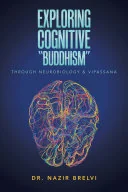
Exploring Cognitive “Buddhism”
 71
71

Exploring Cognitive “Buddhism”
Dr. Nazir Brelvi's "Exploring Cognitive 'Buddhism'" is an ambitious project, attempting to map the conceptual terrain where ancient contemplative practices meet modern neuroscience. The strength of the work lies in its meticulous approach to defining terms and historical lineages, particularly its engagement with the pre-20th century philosophical underpinnings. However, the book sometimes struggles under the weight of its own academic apparatus; the prose can become dense, occasionally obscuring the very insights it seeks to illuminate. A particularly compelling passage discusses the Buddhist concept of *anatta* (non-self) in relation to emergent properties in complex systems, offering a novel perspective on a well-trod philosophical path. While it may require careful reading, the intellectual rigor makes it a valuable contribution for those seeking to understand the scientific study of Buddhist thought. It serves as a thorough academic survey rather than a spiritual guide.
📝 Description
71
Published in 2020, Dr. Nazir Brelvi's "Exploring Cognitive 'Buddhism'" analyzes Buddhist philosophy through the lens of cognitive science.
This 2020 academic study investigates the connections between Buddhist thought and modern cognitive science. Dr. Brelvi aims to bridge these distinct fields, revisiting fundamental questions about the mind, perception, and reality. The book is intended for those with a background in comparative philosophy, cognitive psychology, or contemplative traditions. It offers substantial material for readers interested in the scientific study of meditation, consciousness, and the historical dialogue between Eastern philosophies and Western science. This is not an introduction to meditation practice but a scholarly examination for individuals already familiar with related concepts.
The work scrutinizes Buddhist ideas like mindfulness, impermanence, and non-self using cognitive models. It considers how Buddhist epistemology, which prioritizes direct experience and analytical meditation, might inform or challenge current cognitive theories. The study also addresses the phenomenological aspects of consciousness and seeks empirical support for subjective experiences.
Emerging from a scholarly tradition that seeks to align ancient contemplative insights with contemporary scientific understanding, this book follows in the footsteps of earlier attempts to bridge spiritual and materialist worldviews. It engages with the ongoing discourse on consciousness, a field that has drawn contributions from both secular researchers and individuals from contemplative backgrounds. The work participates in a lineage of intellectual inquiry that questions the nature of mind and subjective experience from multiple perspectives.
💡 Why Read This Book?
• Gain a structured understanding of how Buddhist concepts like *anatta* are analyzed through contemporary cognitive science models, offering a unique perspective beyond popularizations, as presented in the book's exploration of consciousness. • Understand the historical dialogue between ancient contemplative traditions and scientific inquiry, tracing intellectual threads back to thinkers who engaged with these questions before 2020. • Acquire a framework for evaluating claims about consciousness and meditation by learning to differentiate between philosophical interpretation and empirical findings, as Dr. Brelvi meticulously distinguishes them.
⭐ Reader Reviews
Honest opinions from readers who have explored this book.
❓ Frequently Asked Questions
What is the primary goal of Dr. Nazir Brelvi's "Exploring Cognitive 'Buddhism'"?
The book's primary goal is to synthesize Buddhist philosophical concepts with contemporary cognitive science, seeking innovative answers to enduring questions about consciousness and perception that have roots in ancient mythologies.
When was "Exploring Cognitive 'Buddhism'" first published?
"Exploring Cognitive 'Buddhism'" by Dr. Nazir Brelvi was first published on February 17, 2020.
What specific ancient mythologies does the book reference?
The original blurb mentions ancient Egyptian, Greek, and Hindu mythologies as historical touchpoints for the enduring questions the book seeks to address.
Is this book a practical guide to Buddhist meditation?
No, the book is an academic and philosophical exploration, not a practical guide. It analyzes Buddhist concepts through a cognitive science lens rather than providing meditation instruction.
What is the "Cognition/Consciousness series" mentioned in the blurb?
The "Cognition/Consciousness series" appears to be a collection of works focused on the scientific and philosophical study of the mind, with Dr. Brelvi's book being a recent addition to this academic line.
Who is Dr. Nazir Brelvi?
Dr. Nazir Brelvi is the author of "Exploring Cognitive 'Buddhism'" and has authored other works within the Cognition/Consciousness series, indicating a focus on the intersection of these fields.
🔮 Key Themes & Symbolism
Mindfulness and Cognitive Models
The work dissects the practice of mindfulness, a core part of Buddhist traditions, by examining its potential correlates within modern cognitive science frameworks. It investigates how concepts like attention regulation, present-moment awareness, and executive control, as studied in psychology, align with or diverge from traditional Buddhist understandings of mental cultivation. The book aims to provide a more empirical understanding of these states, moving beyond purely subjective experience to explore measurable cognitive processes.
The Concept of Non-Self (Anatta)
A central theme is the exploration of *anatta*, the Buddhist doctrine of non-self. Dr. Brelvi examines this concept not just as a metaphysical assertion but as a cognitive phenomenon. The book probes how the dissolution of a fixed, inherent self might be understood in terms of neural processes, emergent properties of complex systems, or the absence of a unified ego-controller as theorized in some cognitive architectures. This offers a fresh perspective on a profound philosophical idea.
Epistemology and Experiential Knowledge
The book examines Buddhist epistemology, which often prioritizes direct, experiential knowledge gained through meditation and introspection. It contrasts this with Western empirical and rationalist approaches to knowledge acquisition. Dr. Brelvi questions how these distinct methods of knowing might inform each other and whether scientific methodologies can adequately capture or validate the insights derived from contemplative practices, particularly concerning consciousness.
Bridging Ancient Wisdom and Modern Science
The overarching theme is the reconciliation of ancient religious and philosophical thought with contemporary scientific inquiry. The book positions itself within a long tradition of attempting to harmonize disparate worldviews, seeking innovative answers to perennial questions about existence and the nature of reality. It highlights the potential for cross-disciplinary dialogue to enrich our understanding of both the mind and the cosmos.
💬 Memorable Quotes
Direct passages from the work, attributed to the author.
“The work explores how ancient Egyptian, Greek, and Hindu mythologies grappled with questions now addressed by cognitive science.”
— This highlights the book's ambition to connect contemporary scientific research on the mind with the foundational philosophical inquiries found in the earliest human mythologies and spiritual traditions.
“Dr. Brelvi seeks to reconcile various scientific and religious thoughts for innovative answers.”
— This indicates a synthetic approach, aiming to bridge perceived divides between empirical research and spiritual doctrines to foster new understandings of consciousness and existence.
“The book is part of the Cognition/Consciousness series.”
— This situates the work within a specific academic context, suggesting a focus on the scientific and philosophical study of mental processes and awareness.
“The author aims to address age-old questions lingering in social consciousness.”
— This emphasizes the book's engagement with fundamental, persistent human inquiries about life, reality, and the self that have echoed through history.
“The publication date is February 17, 2020.”
— This provides a concrete anchor for the book's place within contemporary scholarship, indicating its engagement with recent developments in cognitive science and philosophy.
🌙 Esoteric Significance
Tradition
While not strictly adhering to a single esoteric lineage, the work draws heavily on Buddhist philosophy, which itself contains esoteric dimensions often explored through advanced meditative and philosophical practices. It interfaces with traditions that seek direct experiential knowledge of reality, aligning with Gnostic or Hermetic pursuits of inner wisdom, albeit through a modern, cognitive-scientific lens. It represents an attempt to translate esoteric insights into a language understandable within secular academic discourse.
Symbolism
Key symbolic motifs are less about overt iconography and more about conceptual frameworks. The concept of *emptiness* (*sunyata*), for instance, can be seen as a symbolic representation of the absence of inherent existence, which the book explores through cognitive models of self-perception. Similarly, the *wheel of life* (*bhava-chakra*) symbolizes the cyclical nature of conditioned existence, which Brelvi might analyze through cognitive biases and feedback loops in consciousness.
Modern Relevance
Contemporary thinkers and practitioners in fields like embodied cognition, neurophenomenology, and even secular mindfulness movements can find resonance in Brelvi's work. Researchers investigating the neurological underpinnings of altered states of consciousness, or philosophers of mind seeking to integrate subjective experience with objective scientific data, may draw upon its analytical framework for understanding how ancient contemplative insights can inform modern scientific paradigms.
👥 Who Should Read This Book
• Students of comparative religion and philosophy: Those seeking to understand the complex interplay between Buddhist doctrines and Western scientific theories of mind will find a detailed comparative analysis. • Cognitive scientists and neuroscientists: Researchers interested in the neurological and cognitive correlates of meditative states and consciousness will benefit from the book's structured examination of these phenomena. • Philosophers of mind: Individuals exploring theories of consciousness, selfhood, and epistemology will find valuable material for engaging with non-Western philosophical perspectives through a scientific lens.
📜 Historical Context
Published in early 2020, "Exploring Cognitive 'Buddhism'" enters a scholarly landscape where the dialogue between contemplative traditions and cognitive science has been active for decades. It follows in the footsteps of researchers and thinkers who, since the mid-20th century, have sought empirical grounding for meditative states, a trend exemplified by figures like Alan Watts and later, more formally, by research initiatives at institutions like the Mind and Life Institute. Dr. Brelvi's work engages with this ongoing discourse, aiming to synthesize findings and philosophical arguments. It emerges in an era where neuroscience is increasingly capable of studying brain activity during meditation, offering new avenues for comparison with ancient philosophical claims about the mind. Unlike earlier, more speculative works, Brelvi's book appears to adopt a more rigorous, academic approach, attempting to bridge the gap through detailed conceptual analysis rather than solely relying on anecdotal evidence or broad philosophical parallels.
📔 Journal Prompts
The concept of *anatta* and its potential correlates in cognitive architecture.
Reconciling the Buddhist emphasis on experiential knowledge with empirical scientific methods.
Ancient mythologies and their enduring questions about consciousness.
The cognitive function of mindfulness in secular versus traditional contexts.
Identifying biases in current cognitive models of selfhood.
🗂️ Glossary
Anatta
A fundamental Buddhist doctrine signifying 'non-self' or 'no-soul,' asserting that there is no permanent, unchanging self or essence in sentient beings. The work explores this concept through cognitive lenses.
Mindfulness
A mental state achieved by focusing one's awareness on the present moment, while calmly acknowledging and accepting one's feelings, thoughts, and bodily sensations. The book examines its cognitive underpinnings.
Epistemology
The theory of knowledge, especially with regard to its methods, validity, and scope. Buddhist epistemology emphasizes direct experience, which the book contrasts with scientific methods.
Cognitive Science
An interdisciplinary field that studies the mind and its processes, including perception, language, memory, reasoning, and emotion, using approaches from psychology, computer science, philosophy, and neuroscience.
Phenomenology
The philosophical study of the structures of experience and consciousness as experienced from the first-person point of view. The book considers its relevance to contemplative traditions.
Metaphysics
The branch of philosophy that deals with the first principles of things, including abstract concepts such as being, knowing, substance, cause, identity, time, and space. The book examines Buddhist metaphysical claims.
Contemplative Traditions
Spiritual or philosophical practices that aim to cultivate deep reflection, insight, and awareness, often through meditation and introspection, such as Buddhism.
This book appears in 1 collection
🔮 Readers Also Liked
Browse all →









From the “Vipassana” Collection
View all →








More Free Sacred Texts & Gnosticism Books
View all →