The Clock of Vipassana Has Struck
 83
83

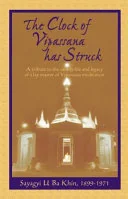
The Clock of Vipassana Has Struck
The primary strength of "The Clock of Vipassana Has Struck" lies in its direct access to the teachings of U Ba Khin, presented through the lens of his most prominent student, S. N. Goenka. Goenka’s own biographical sketches and commentary provide a crucial bridge, illuminating the personality and pedagogical approach of his teacher. The extensive interview format with Pierluigi Confalonieri offers valuable historical context for U Ba Khin's efforts to propagate Dhamma outside of traditional monastic settings, particularly his role in establishing centers in India and abroad. A notable limitation, however, is the book's dense academic tone at times, which might present a barrier for absolute beginners to Vipassana. While the entirety of U Ba Khin’s philosophy is explored, the section detailing the progression from basic observation to profound insight could benefit from more explicit, step-by-step guidance, mirroring the clarity often found in Goenka's own discourses. Nonetheless, the collection stands as an authoritative compilation for those committed to understanding the lineage. It effectively captures the essence of U Ba Khin's rigorous yet compassionate Dhamma.
📝 Description
83
Published in 1999, this volume collects the key writings of Vipassana master U Ba Khin.
This book gathers the essential teachings of Sayagyi U Ba Khin, the teacher of S. N. Goenka. It includes biographical information and a substantial commentary from Goenka himself, marking the centenary of U Ba Khin's birth. The text serves as a thorough introduction to U Ba Khin's approach to Dhamma practice. It is written for dedicated students of meditation, especially those following the Vipassana lineage passed down by U Ba Khin and Goenka. Individuals seeking a clearer grasp of the practical and philosophical aspects of this meditation path will find it valuable. Furthermore, those studying Buddhist philosophy and history will benefit from its historical context.
U Ba Khin, who was active in Burma (now Myanmar) in the mid-20th century, played a significant role in reintroducing Vipassana meditation in a more accessible format. This collection places his contributions within the wider context of Buddhist renewal and the global spread of meditation techniques. The book presents Dhamma not as a religious doctrine, but as a universal, practical method for purifying the mind and freeing oneself from suffering.
U Ba Khin's teachings represent a direct transmission of Theravada Buddhist insight meditation, known as Vipassana. This tradition emphasizes direct experiential understanding of reality's nature, particularly the three marks of existence: impermanence, suffering, and non-self. His work is situated within the lineage of Burmese meditation masters who sought to preserve and disseminate these practices, making them available beyond monastic circles. The emphasis on Dhamma as a practical, non-sectarian method for mental liberation aligns with a broader esoteric current in Buddhism that prioritizes inner transformation over ritual or dogma.
💡 Why Read This Book?
• Understand the direct lineage of S. N. Goenka's Vipassana method by studying the teachings of his own teacher, U Ba Khin, as presented in this 1999 compilation. • Gain historical perspective on the global spread of meditation techniques originating from Burma (Myanmar) in the mid-20th century, contextualizing U Ba Khin's work. • Grasp the core principles of sila, samadhi, and panna as presented by U Ba Khin, understanding their interconnectedness in the path of Vipassana.
⭐ Reader Reviews
Honest opinions from readers who have explored this book.
❓ Frequently Asked Questions
Who was Sayagyi U Ba Khin and why is he significant?
Sayagyi U Ba Khin (1899-1971) was a lay Buddhist meditation teacher from Burma (Myanmar). He is highly significant as the primary teacher of S. N. Goenka, who played a pivotal role in bringing Vipassana meditation to a global audience.
What is Vipassana as taught by U Ba Khin?
Vipassana, as taught by U Ba Khin, is a practical, non-sectarian method of mental purification through mindful observation of reality as it is, focusing on impermanence, suffering, and non-self.
What role does S. N. Goenka play in this book?
S. N. Goenka, U Ba Khin's most prominent student, provides biographical information, commentary, and an extensive interview that contextualizes U Ba Khin's teachings and life within this 1999 publication.
When was 'The Clock of Vipassana Has Struck' first published?
The book 'The Clock of Vipassana Has Struck' was first published in 1999, coinciding with the centenary of Sayagyi U Ba Khin's birth.
Is this book suitable for beginners in meditation?
While it contains foundational teachings, the book delves into the philosophy and historical context, making it particularly valuable for serious students and practitioners of Vipassana rather than absolute beginners.
What is Dhamma in the context of U Ba Khin's teachings?
For U Ba Khin, Dhamma refers to the universal truth and the practical path to liberation from suffering, understood as a method of mental purification applicable to all people, regardless of their religious background.
🔮 Key Themes & Symbolism
The Path of Vipassana
The book elucidates Vipassana not as a ritual, but as a direct, empirical method for understanding the nature of reality. It emphasizes meticulous observation of bodily sensations to perceive the impermanent (anicca), unsatisfactory (dukkha), and selfless (anatta) nature of all phenomena. This insight, cultivated through sustained practice, is presented as the key to liberation from suffering. The work details how this practice transcends mere intellectual understanding, requiring direct, personal experience to dismantle ingrained mental conditioning.
Dhamma as Universal Practice
Central to U Ba Khin's approach, as conveyed in this collection, is the concept of Dhamma as a universal, non-sectarian path for mental purification. The book highlights his commitment to teaching this practice to people of all backgrounds, irrespective of their religious beliefs. This secular framing of Buddhist principles aimed to make the path accessible and relevant to modern life, focusing on ethical conduct (sila), mental discipline (samadhi), and wisdom (panna) as practical tools for well-being.
The Teacher-Student Lineage
The compilation underscores the vital role of the teacher-student relationship in transmitting profound spiritual knowledge. The extensive commentary and interview with S. N. Goenka serve to illuminate the methods and spirit of his own teacher, U Ba Khin. This dynamic reveals how core teachings are preserved, adapted, and passed down through generations, ensuring the continuity and integrity of the practice while allowing for its dissemination to new contexts.
Mental Purification and Liberation
The ultimate aim presented is the purification of the mind, leading to liberation from suffering. The book details how Vipassana practice directly confronts and erodes the 'defilements'—greed, hatred, and delusion—that bind individuals to cyclical suffering. By cultivating equanimity and insight into the impermanent flux of existence, practitioners are guided towards a state of profound peace and freedom from mental agitation and attachment.
💬 Memorable Quotes
Direct passages from the work, attributed to the author.
“The Dhamma is the truth of the nature of things.”
— This concise statement captures U Ba Khin's view of Dhamma as an objective reality, the fundamental principles governing existence, rather than a set of religious dogmas. It emphasizes the empirical and discoverable nature of this truth through direct observation.
“One must observe the truth of impermanence, the truth of suffering, the truth of non-self.”
— This highlights the Three Marks of Existence (Tilakkhana) as the core experiential insights gained through Vipassana. The emphasis is on direct observation, not just intellectual assent, to dismantle illusions about permanence, self, and inherent happiness.
“The teaching is a path of self-discipline and self-control.”
— This interpretation underscores the practical, active nature of the Dhamma path. It is not about passive acceptance or external intervention, but about the diligent, internal work of cultivating awareness and equanimity through one's own efforts.
“One must eradicate craving and aversion.”
— This points to the root causes of suffering according to the Dhamma. The practice is designed to weaken and eventually eliminate the habitual reactions of craving for pleasant experiences and aversion to unpleasant ones, thereby freeing the mind.
“The practice is a scientific method for the purification of the mind.”
— This framing by U Ba Khin positions Vipassana as an objective, verifiable system of inquiry. It suggests that the mind's workings can be studied and improved through systematic observation and disciplined practice, akin to scientific experimentation.
🌙 Esoteric Significance
Tradition
While rooted in the Theravada Buddhist tradition of Burma, U Ba Khin's teaching of Vipassana as presented here transcends sectarian boundaries, aligning with a broader esoteric current that seeks direct experiential knowledge of reality, independent of dogma. His emphasis on Dhamma as a universal, practical path for mental purification appeals to traditions like Hermeticism or Gnosticism in their pursuit of inner transformation and direct apprehension of truth, albeit through distinct methodologies.
Symbolism
The 'Clock' in the title itself serves as a potent symbol, representing the relentless, impartial passage of time and the cyclical nature of existence (samsara). It implies that the moment for clear insights and liberation is ever-present, measured by the unfolding of impermanent phenomena. The concept of 'Dhamma' functions symbolically as the underlying order and truth of the universe, which the practitioner seeks to directly perceive and align with through diligent practice.
Modern Relevance
U Ba Khin's rigorous, experiential approach to Vipassana continues to influence contemporary mindfulness-based interventions (MBIs) and secularized meditation practices. Thinkers and practitioners in fields ranging from clinical psychology (e.g., MBSR, MBCT) to neuroscience, and even organizational leadership, draw upon the core principles of mindfulness and equanimity he championed. His legacy is evident in the widespread adoption of meditation techniques aimed at stress reduction and enhanced well-being.
👥 Who Should Read This Book
• Dedicated practitioners of Vipassana meditation seeking to deepen their understanding of the foundational teachings transmitted through S. N. Goenka's lineage, as U Ba Khin's original methods are explored. • Students of Buddhist philosophy interested in the practical application and historical development of mindfulness techniques outside of traditional academic study. • Individuals exploring non-sectarian paths to mental purification and self-understanding, looking for a rigorous, experiential approach to confronting suffering.
📜 Historical Context
Published in 1999, "The Clock of Vipassana Has Struck" emerged during a global surge of interest in meditation and mindfulness, often framed within a secular, psychological context. U Ba Khin (1899-1971) operated primarily in Burma (Myanmar) during the mid-20th century, a period following the country's independence and amidst a broader effort to revive and adapt Buddhist traditions. He was a lay teacher, emphasizing the practical, non-sectarian aspects of Vipassana, distinguishing his approach from more scholastic or purely monastic Buddhist studies prevalent at the time. His work gained prominence partly through his students, most notably S. N. Goenka, who began teaching internationally in the 1960s. While figures like the Dalai Lama were also gaining international recognition for Tibetan Buddhist traditions, U Ba Khin's method offered a distinct, direct experiential path focused intensely on insight meditation (Vipassana) and ethical conduct (Sila) as taught by the Buddha. The book’s publication commemorates his centenary, solidifying his legacy within the growing field of contemplative science and practice.
📔 Journal Prompts
The observed impermanence (anicca) of bodily sensations.
The eradication of craving and aversion.
U Ba Khin's concept of Dhamma as universal truth.
The interplay between sila, samadhi, and panna.
The significance of the 'Clock' symbol in relation to time and liberation.
🗂️ Glossary
Vipassana
A Pali word meaning 'insight' or 'clear seeing'. It refers to a meditation practice focused on observing reality as it is, leading to wisdom and liberation from suffering.
Dhamma
In this context, refers to the universal truth, the natural law governing existence, and the practical path taught by the Buddha for mental purification and liberation from suffering.
Sila
Ethical conduct or morality. It forms the foundation of the path, involving abstaining from harmful actions and cultivating wholesome behavior, which helps in calming the mind.
Samadhi
Concentration or mental unification. It refers to the development of a steady, focused mind through meditation, essential for penetrating insight.
Panna
Wisdom or insight. It is the direct understanding of the true nature of reality, achieved through Vipassana meditation, leading to liberation.
Anicca
Impermanence. The fundamental characteristic of all conditioned phenomena, observed through Vipassana as constant change and flux.
Dukkha
Suffering or unsatisfactoriness. The inherent stress, pain, and discontent present in conditioned existence, observed as a result of impermanence and non-self.
Anatta
Non-self. The absence of a permanent, independent, inherent self or soul in all phenomena, a key insight leading to detachment and liberation.
This book appears in 1 collection
🔮 Readers Also Liked
Browse all →









From the “Vipassana” Collection
View all →






More Free Occult Philosophy Books
View all →