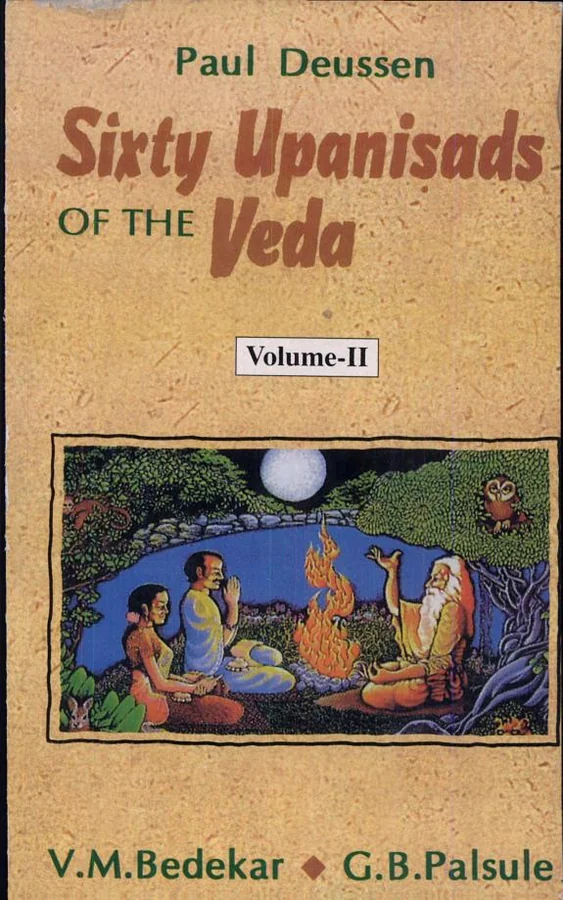
Sixty Upanishads of the Veda
 84
84

Sixty Upanishads of the Veda
Paul Deussen's "Sixty Upanishads of the Veda" is a monumental undertaking that brings clarity to some of the most significant philosophical texts in human history. Deussen's strength lies in his rigorous scholarship and his ability to present complex Sanskrit thought in a comprehensible English framework. He doesn't shy away from the intellectual challenges inherent in the Upanishads, offering detailed explanations that illuminate the philosophical arguments. One particularly insightful section details the concept of 'neti neti' (not this, not this) as a method for understanding the ineffable nature of Brahman, a concept Deussen unpacks with characteristic thoroughness. However, the sheer density of the material and Deussen's own philosophical leanings, evident in his commentary, might present a barrier for absolute beginners, requiring a degree of prior philosophical grounding. Despite this, the work serves as an indispensable resource for anyone seeking a deep, academic engagement with the Upanishads. It is a foundational text for understanding the origins of Vedanta.
📝 Description
84
Paul Deussen's "Sixty Upanishads of the Veda" appeared in its full English form in 1997.
This volume presents Paul Deussen's English translation and commentary on sixty key Upanishadic texts. These Sanskrit scriptures, composed between roughly 800 BCE and 200 CE, conclude the Vedas and are central to Hindu philosophy, especially the Vedanta school. Deussen's work includes not only the translated verses but also contextual information and philosophical analysis, aiming to make these complex texts more accessible. The book is intended for students of comparative religion, philosophy, and Eastern spiritual traditions. It will be of interest to academics studying Vedic literature, Sanskrit scholars needing reliable translations, and practitioners of Vedanta or Advaita Vedanta who want to consult the original sources. Those interested in the historical development of Indian thought, the origins of mystical concepts, or the philosophical basis of meditation will find value here.
The Upanishads arose during a time of significant intellectual change in ancient India, a period where Vedic ritualism faced reevaluation. They shifted focus toward philosophical inquiry and introspection. Key themes include Brahman (ultimate reality), Atman (the self), karma, and moksha (liberation). Deussen, a notable German Indologist, compiled this work as Western academic interest in Indian philosophy grew in the late 19th and early 20th centuries. His effort contributed to the scholarly study and Western introduction of these texts. His approach reflected the philosophical currents of his era.
The Upanishads represent a pivotal shift within the Vedic tradition, moving from ritualistic concerns toward metaphysical speculation. They form the philosophical bedrock of Vedanta, a major school of Hindu thought. Deussen's translation and commentary place these texts within the context of Western academic study of Indian philosophy, bridging the gap between ancient Indian wisdom and modern scholarly inquiry. His work aids in understanding the esoteric dimensions of Brahman, the nature of the self (Atman), and the path to liberation (moksha) as articulated in these foundational texts.
💡 Why Read This Book?
• Gain a foundational understanding of Brahman and Atman, the central concepts of Vedanta, as elucidated through Deussen's detailed translations of texts like the Brihadaranyaka Upanishad. • Explore the philosophical underpinnings of karma and samsara, learning how these ideas, discussed extensively in the Katha Upanishad, shape the understanding of existence and liberation. • Grasp the esoteric method of 'neti neti' for realizing the Absolute, a key interpretive theme Deussen highlights in his commentary on passages from the Brihadaranyaka and Chandogya Upanishads.
⭐ Reader Reviews
Honest opinions from readers who have explored this book.
❓ Frequently Asked Questions
When was Paul Deussen's "Sixty Upanishads of the Veda" first published?
The comprehensive edition of Paul Deussen's "Sixty Upanishads of the Veda," featuring his translation and commentary, was first published on September 1, 1997.
What is the primary philosophical tradition discussed in the Upanishads?
The Upanishads are foundational to Hindu philosophy, particularly the Vedanta school, which explores the nature of ultimate reality (Brahman) and the self (Atman).
Who was Paul Deussen and what was his contribution?
Paul Deussen was a German Indologist and philosopher in the late 19th and early 20th centuries, renowned for his extensive translations and philosophical analyses of Indian texts, including the Upanishads.
Are these Upanishads considered early or late Vedic texts?
The Upanishads are generally considered the concluding portions or philosophical appendices of the Vedas, representing a shift from earlier Vedic ritualism to metaphysical inquiry.
What does the term 'Upanishad' mean?
'Upanishad' is often translated as 'to sit near' or 'sitting down close to,' implying secret teachings passed from guru to disciple.
Does the book cover the principal Upanishads?
Yes, the work includes sixty Upanishads, encompassing the major and most philosophically significant texts that form the basis of Vedanta philosophy.
🔮 Key Themes & Symbolism
The Unity of Atman and Brahman
This theme, central to Advaita Vedanta, posits the identity between the individual soul (Atman) and the ultimate reality (Brahman). Deussen meticulously traces this concept through various Upanishads, such as the Mandukya and Brihadaranyaka, illustrating how the self is not separate from the cosmic consciousness. The philosophical discussions explore the implications of this non-dualistic understanding for human existence, suffering, and liberation, moving beyond ritualistic interpretations of earlier Vedic periods.
Karma and Rebirth (Samsara)
The Upanishads, as presented by Deussen, examine the principles of karma, the law of cause and effect governing actions and their consequences, and samsara, the cycle of birth, death, and rebirth. Texts like the Katha Upanishad explore the mechanics of this cycle and the paths leading to liberation from it. Deussen's commentary unpacks the ethical and metaphysical dimensions of these concepts, explaining how they form the bedrock of spiritual aspiration for release from worldly existence.
The Path to Moksha (Liberation)
Liberation (moksha) from the cycle of samsara is the ultimate goal discussed in these scriptures. Deussen highlights the Upanishadic emphasis on jnana (knowledge), particularly the knowledge of the Atman-Brahman identity, as the primary means to achieve this. Practices such as meditation, contemplation, and the renunciation of desires are explored as essential components of this spiritual journey, as detailed in Upanishads like the Shvetashvatara.
The Nature of Reality and Consciousness
Deussen's work illuminates the Upanishadic exploration of the fundamental nature of reality and consciousness. The texts investigate the relationship between the phenomenal world and the underlying absolute, often described as pure consciousness. Concepts like Maya (illusion) and the states of consciousness (waking, dreaming, deep sleep, and the transcendental fourth state, Turiya) are analyzed, providing a sophisticated metaphysical framework that profoundly influenced subsequent Indian philosophical schools.
💬 Memorable Quotes
Direct passages from the work, attributed to the author.
“The Self is to be heard of, to be reflected on, to be meditated upon.”
— This expresses the Upanishadic method of spiritual realization. It's not merely intellectual assent but a process involving attentive listening to teachings, deep contemplation, and sustained meditative practice to internalize the truth of the Self.
“Where there is darkness, there is no light; where there is no darkness, there is light.”
— This aphorism, often found in discussions on ignorance versus knowledge, highlights the Upanishadic view of spiritual awakening as a transition from the obscurity of ignorance (avidya) to the luminosity of wisdom (vidya).
“He who knows Me, shall be liberated.”
— This statement underscores the salvific power of knowledge in the Upanishads. True liberation (moksha) is not achieved through ritual alone, but through direct, experiential knowing of the ultimate reality.
“All this is Brahman.”
— This profound declaration from the Chandogya Upanishad asserts the omnipresence and all-encompassing nature of the Absolute. It signifies a non-dualistic worldview where everything in existence is an manifestation of Brahman.
“The knower of Brahman attains the Highest.”
— This highlights the supreme status granted to one who attains knowledge of Brahman. It implies that this knowledge is the ultimate achievement, leading to the highest state of being and freedom.
🌙 Esoteric Significance
Tradition
The Upanishads are a foundational source for the Vedanta tradition within Hinduism, which itself has numerous esoteric interpretations and practices. While not strictly part of the Western esoteric lineage (like Hermeticism or Kabbalah), their concepts of Brahman, Atman, Maya, and liberation have deeply influenced Theosophy and various modern spiritual movements seeking universal truths beyond dogma. Deussen's work bridges classical Indian philosophy with Western philosophical inquiry, making these esoteric concepts accessible.
Symbolism
Key symbols include 'Om,' representing the primordial sound and the totality of existence, often explored in the Mandukya Upanishad. The 'cave of the heart' symbolizes the inner sanctuary where the Atman resides, accessible through meditation. The 'chariot' analogy in the Katha Upanishad represents the body as a vehicle for the soul, with the mind, senses, and self as its components, requiring skillful guidance for a spiritual journey.
Modern Relevance
Contemporary spiritual teachers, mindfulness practitioners, and philosophers continue to draw from Upanishadic thought. Concepts like non-duality, the nature of consciousness, and the pursuit of inner peace through self-knowledge are highly relevant. Schools of psychology and consciousness studies often reference Upanishadic ideas about the mind and reality, finding resonance in their ancient exploration of subjective experience and ultimate truth.
👥 Who Should Read This Book
• Academic researchers in comparative religion and Indology seeking authoritative translations and scholarly analysis of foundational Vedic texts. • Students of Vedanta and Advaita Vedanta desiring a deep, text-based understanding of the philosophical origins of their tradition. • Philosophers and spiritual seekers interested in exploring the metaphysical concepts of consciousness, reality, and liberation from a historical and textual perspective.
📜 Historical Context
Paul Deussen's monumental translation and commentary on the Upanishads emerged in the late 19th and early 20th centuries, a period marked by burgeoning Western academic interest in Eastern philosophies. The Upanishads themselves represent a significant pivot in Vedic tradition, shifting focus from the ritualistic Brahmanas to profound philosophical speculation around 800-200 BCE. During Deussen's era, figures like Swami Vivekananda were introducing Vedanta to the West, while Western scholars like Max Müller had already begun translating Vedic texts. Deussen's work, deeply informed by German idealism and his own philosophical background, engaged with the Upanishads not just as religious texts but as philosophical treatises. His scholarship contributed to a more systematic academic study of Indian thought, positioning the Upanishads as precursors to major philosophical systems like Buddhism and Jainism, and critically, as the bedrock of the Vedanta school.
📔 Journal Prompts
The concept of Brahman as the underlying reality of all existence.
The relationship between the individual self (Atman) and the universal Self (Brahman).
The Upanishadic understanding of Maya and its effect on perception.
The role of knowledge (Jnana) in achieving liberation (Moksha).
The symbolic meaning of the 'cave of the heart' in Upanishadic meditation.
🗂️ Glossary
Brahman
The ultimate, unchanging reality that is the source and sustainer of all existence. Often described as pure consciousness, it is the absolute principle underlying the universe.
Atman
The individual soul or self. In many Upanishadic schools, particularly Advaita Vedanta, Atman is identical with Brahman.
Moksha
Liberation or release from the cycle of birth, death, and rebirth (samsara). It is the ultimate spiritual goal in Hinduism.
Samsara
The continuous cycle of birth, death, and reincarnation, driven by karma. It is often associated with suffering and ignorance.
Karma
The law of cause and effect, where actions (karma) create consequences that determine one's future experiences and rebirths.
Jnana
Knowledge, particularly spiritual knowledge or wisdom. In Vedanta, it refers to the direct realization of the Atman-Brahman identity.
Maya
Illusion or cosmic deception. It refers to the power that conceals the true nature of reality (Brahman) and projects the world of multiplicity.
This book appears in 1 collection
🔮 Readers Also Liked
Browse all →









From the “Upanishads” Collection
View all →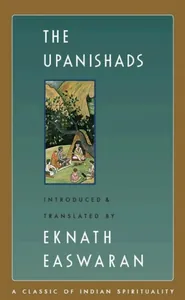








More Free Sacred Texts & Gnosticism Books
View all →