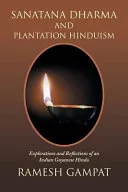
Sanatana Dharma and Plantation Hinduism
 80
80

Sanatana Dharma and Plantation Hinduism
Ramesh Gampat’s "Sanatana Dharma and Plantation Hinduism" offers a granular look at how Hindu traditions were lived and reshaped in Guyana. The author’s careful attention to demographic data, such as the noted percentage shifts in the Hindu population, grounds the discussion in a tangible reality. A particular strength lies in the nuanced explanation of how communal rituals, from the domestic puja to the community yajña, functioned as vital cultural and spiritual touchstones for indentured laborers and their descendants. However, the narrative occasionally feels dense, with its statistical detail sometimes overshadowing the lived experience it aims to illuminate. The discussion on the adaptation of Vedic rituals under plantation conditions is compelling, but a deeper exploration of the theological underpinnings of these adaptations would have added another layer of insight. The book succeeds in detailing the persistence of Sanatana Dharma amidst the unique pressures of the Guyanese plantation system.
📝 Description
80
Ramesh Gampat's 2012 work contrasts Vedic adherence with Hindu adaptations in Guyana's indentured labor system.
Sanatana Dharma and Plantation Hinduism examines the evolution of Hindu practice in Guyana. It contrasts the adherence to ancient Vedic traditions, known as Sanatana Dharma, with the adaptations and syncretisms that occurred within the indentured labor system, a phenomenon often termed "Plantation Hinduism."
The book traces demographic shifts, such as the Hindu population's decline from 83.5 percent in 1880 to 62.8 percent in 2012, to understand how religious identity was maintained and transformed under colonial conditions. The narrative is framed by the 19th and 20th centuries, a period marked by the British Empire's indenture system. This system brought millions of Indians, including Hindus, to colonies like Guyana, creating unique pressures and opportunities that shaped religious expression away from its Indian homeland. The text implicitly engages with the broader study of postcolonial religious formations.
The central concepts revolve around "Sanatana Dharma," representing enduring, orthodox principles of Hinduism, and "Plantation Hinduism," denoting localized practices developed under plantation life. The book discusses how daily rituals like puja, annual events like jhandi and havan, and more elaborate yajñas served as anchors for community and identity amidst historical upheaval and demographic change.
This work situates itself within the study of religious diaspora and postcolonial formations. It analyzes how a major world religion, Hinduism, adapted to a new environment under duress. The focus on the specific practices that arose from the indentured labor system, distinct from their origins in India, speaks to broader questions of how tradition is preserved, altered, and reinvented when removed from its original context. It examines the mechanisms by which communities maintain religious identity through ritual and communal organization in challenging circumstances.
💡 Why Read This Book?
• Gain insight into the specific challenges and adaptations of Hindu religious practices during the indentured labor era in Guyana, as detailed by the demographic data from 1880 to 2012. • Understand the distinction and interplay between "Sanatana Dharma" and "Plantation Hinduism," appreciating how ancient traditions evolved under unique colonial pressures. • Learn about the function of specific rituals like the annual jhandi, havan, and the communal yajña as anchors of identity and community for Guyanese Hindus.
⭐ Reader Reviews
Honest opinions from readers who have explored this book.
❓ Frequently Asked Questions
What is the main difference between Sanatana Dharma and Plantation Hinduism as discussed in the book?
Sanatana Dharma refers to the orthodox, enduring principles of Hinduism, while "Plantation Hinduism" denotes the modified practices and syncretisms that emerged among Hindus in plantation societies like Guyana due to specific historical and social conditions.
When did Hindus constitute a majority in Guyana's Indian population?
According to the book, Hindus were 83.5 percent of Guyana's Indian population in 1880. Their proportion declined to 62.8 percent by 2012, indicating a significant demographic shift.
What types of Hindu rituals are mentioned as being practiced in Guyana?
The book mentions annual rituals like jhandi and havan, more elaborate communal events like yajña, and short daily home pujas involving prayers, offerings, and devotional practices.
What historical period does Ramesh Gampat focus on regarding Hindu practices in Guyana?
The book primarily focuses on the period of indentured servitude and its aftermath, spanning from the late 19th century (e.g., 1880) through to the early 21st century (e.g., 2012).
Does the book discuss Hindu diaspora experiences outside of Guyana?
While the primary focus is Guyana, the blurb indicates the work considers Guyanese Hindus "at home and in the diaspora," suggesting a broader relevance to the global Hindu diaspora.
What does the term 'yajña' refer to in the context of the book?
Yajña is described as a more elaborate and costly ritual, often performed once or twice in a lifetime, to which everyone is welcome, contrasting with the more frequent jhandi or havan.
🔮 Key Themes & Symbolism
Adaptation of Rituals
The work scrutinizes how foundational Hindu rituals, such as the jhandi, havan, and yajña, were adapted by the Hindu community in Guyana. It explores how the pressures of plantation life and the diaspora influenced the frequency, scale, and inclusivity of these practices, transforming them while retaining core spiritual and communal functions. This adaptation is central to understanding the divergence from orthodox Sanatana Dharma.
Community and Identity
Daily home pujas and annual communal ceremonies served as crucial pillars for maintaining Hindu identity and fostering community cohesion amidst the challenges of indentured labor and subsequent societal integration. The book highlights how these religious observances provided a sense of continuity and belonging for individuals and families in a new land, acting as a bulwark against cultural erosion.
Demographic Shifts
The analysis is significantly informed by demographic data, particularly the changing proportion of Hindus within Guyana's Indian population from 83.5 percent in 1880 to 62.8 percent in 2012. These shifts are presented not just as statistical changes but as indicators of broader social, economic, and religious dynamics affecting the community's identity and practice over time.
Sanatana Dharma vs. Plantation Hinduism
A core theme is the dialectic between the idealized, orthodox Sanatana Dharma and the lived reality of "Plantation Hinduism." The book posits that the latter is not a corruption but a dynamic evolution, shaped by the unique socio-historical context of the Caribbean plantations, necessitating new forms of expression and community organization.
💬 Memorable Quotes
Direct passages from the work, attributed to the author.
“The share of Hindus in Guyana's Indian population declined from 83.5 percent in 1880 to 62.8 percent in 2012.”
— This statistic is presented as a crucial factual anchor, illustrating the significant demographic transformation of the Hindu community in Guyana over more than a century and underscoring the need to examine how religious identity persisted despite these changes.
“Many of us do a jhandi or havan once annually; others do the more elaborate and costlier yajña, where everyone is welcome, once or twice in their lifetime.”
— This highlights the spectrum of ritual practice within the Guyanese Hindu community, from frequent, smaller observances to rarer, larger communal events, suggesting a flexible approach to religious expression tailored to resources and community needs.
“Most of us do a short daily puja--prayers, offerings, reading the stras and listening to bhajan--in our homes.”
— This statement points to the enduring importance of domestic religious practice as a central to Hindu life, providing a consistent spiritual anchor for individuals and families on a day-to-day basis.
“Yet even a casual observer would conclude that Guyanese Hindus, at home and in the diaspora, are a very religious people.”
— This observation serves as an introduction to the pervasive nature of religiosity within the Guyanese Hindu community, setting the stage for an exploration of how this devotion is expressed and maintained across different contexts.
“The work explores the evolution of Hindu practice in Guyana, contrasting Sanatana Dharma with adaptations under the indenture system.”
— This is an interpretation of the book's central thesis, framing its inquiry around the tension between ancient tradition and the specific socio-historical pressures that led to unique religious expressions in the Caribbean diaspora.
🌙 Esoteric Significance
Tradition
While not strictly an esoteric text in the Western occult sense, "Sanatana Dharma and Plantation Hinduism" engages with the esoteric dimensions of lived religion. It aligns with traditions of comparative religious studies and anthropology that examine the deeper symbolic and spiritual functions of ritual and belief systems. Its focus on the persistence of core Dharmic principles under duress could be seen as resonating with Gnostic themes of maintaining spiritual integrity amidst corrupting external forces.
Symbolism
The rituals themselves—jhandi, havan, and yajña—are rich with symbolism. The yajña, or fire sacrifice, traditionally symbolizes the transformation of offerings and prayers into divine consciousness, a microcosm of cosmic creation and sustenance. The daily puja, with its offerings of water, flowers, and incense, symbolizes devotion and the offering of the mundane to the sacred, connecting the practitioner to the divine in everyday life.
Modern Relevance
The work's exploration of religious adaptation and resilience is highly relevant to contemporary discussions on globalization, cultural hybridity, and the evolving nature of religious identity in diaspora. Thinkers and practitioners interested in how traditions maintain vitality outside their originating contexts, or how communities forge unique spiritual expressions, find resonance here. It informs studies on the global spread of Indic religions and their varied manifestations.
👥 Who Should Read This Book
• Scholars of religious studies and diaspora history seeking detailed case studies on the transformation of religious traditions in colonial and postcolonial contexts. • Anthropologists and sociologists interested in the interplay between ritual, community formation, and identity maintenance among immigrant populations. • Individuals of Guyanese Hindu heritage or those studying Caribbean history who wish to understand the specific evolution of their religious practices beyond generalized accounts.
📜 Historical Context
Ramesh Gampat's "Sanatana Dharma and Plantation Hinduism" is situated within the broad scholarship on the Indian diaspora and the transformation of religious traditions under colonial conditions. The primary historical period examined is the late 19th and 20th centuries, coinciding with the British Empire's use of indentured labor. This system brought hundreds of thousands of Indians, including Hindus, to colonies like Guyana following the abolition of slavery. The work implicitly engages with the broader intellectual currents surrounding postcolonial studies and the sociology of religion, particularly how minority religious groups maintain identity in diasporic settings. While the text doesn't explicitly detail contemporary reception or censorship, its focus on the unique development of "Plantation Hinduism" offers a counterpoint to more generalized accounts of Hindu diaspora that might overlook the specific institutional and social structures of plantation economies. The underlying intellectual debate is with scholars who might view adaptations as deviations, rather than as necessary evolutions of Sanatana Dharma.
📔 Journal Prompts
The distinction between Sanatana Dharma and "Plantation Hinduism" in Guyanese practice.
The role of the annual jhandi and havan in community cohesion.
Daily puja as an anchor for spiritual identity.
The impact of demographic shifts (1880-2012) on Hindu religious expression.
The communal yajña as an inclusive ritual form.
🗂️ Glossary
Sanatana Dharma
Literally "eternal law" or "eternal order," referring to the orthodox, traditional principles and practices of Hinduism, considered unchanging and universal.
Plantation Hinduism
A term used to describe the specific adaptations, syncretisms, and unique forms of Hindu practice that developed among indentured laborers and their descendants in plantation societies like Guyana.
Jhandi
A Hindu ritual typically involving the hoisting of a religious flag or the performance of a puja, often associated with temples or significant community events.
Havan
A Vedic ritual of fire sacrifice, typically involving an altar (vedi) and the offering of clarified butter (ghee), grains, and other items into the sacred fire while chanting mantras.
Yajña
A broader term for Vedic ritual sacrifice, often involving fire, which can range from simple daily offerings to elaborate ceremonies performed for specific purposes or by learned priests.
Puja
A Hindu devotional ritual performed by Hindus to worship one or more deities, typically involving offerings, prayers, chanting, and meditation, often conducted at home or in a temple.
Stras
Refers to scriptures or sacred texts within Hinduism, such as the Vedas, Upanishads, Puranas, or Bhagavad Gita, which are often read or recited during religious observances.