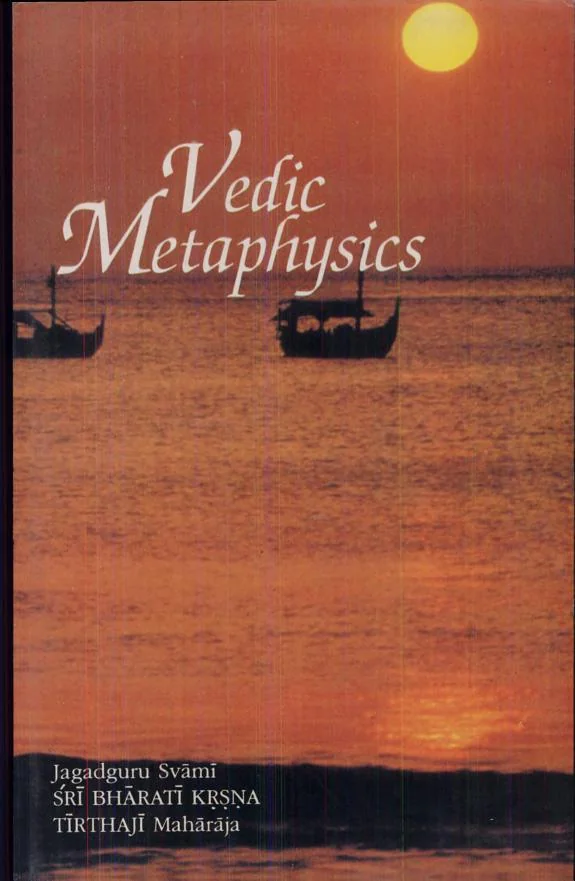
Vedic Metaphysics
 76
76

Vedic Metaphysics
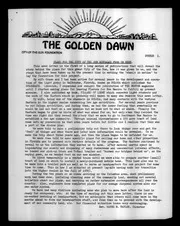
Swami Bharati Krishna Tirtha’s 1958 American discourses, captured in *Vedic Metaphysics*, offer a rare glimpse into the mind of a Sankaracarya engaging directly with a Western audience. The strength of this collection lies in Tirtha’s remarkable synthesis of profound Vedic concepts with the language of modern science, a bridge-building act that demystifies Vedanta for the uninitiated. His exposition on the unity of existence, for instance, often employs analogies that resonate with contemporary physics, a truly valuable approach. However, the structure, being a compilation of separate discourses, can feel somewhat disjointed, lacking the cohesive narrative flow of a single authored treatise. A particular passage that stands out is his explanation of consciousness as the substratum of all phenomena, a concept he renders with striking clarity. This book serves as an important historical document and a valuable introduction to core Vedantic thought from a respected authority.
📝 Description
76
Swami Bharati Krishna Tirtha delivered these Vedic metaphysics discourses in America in 1958.
This volume collects discourses given by Swami Bharati Krishna Tirtha during his 1958 tour of America. This visit was notable as the first time a Sankaracarya had traveled to the West. Invited by the Self Realization Fellowship in Los Angeles, the Swami shared core teachings of Vedanta. His talks drew on his deep knowledge of ancient Indian scriptures and modern science.
The discourses are aimed at serious students of Indian philosophy and comparative religion. They will appeal to those seeking to understand Vedanta from a figure within a direct lineage, especially one who could connect Eastern metaphysics with Western scientific thought. Readers interested in how Eastern ideas spread in the mid-20th century will find this valuable, as will scholars of religious studies focused on Vedanta.
The 1958 talks occurred during a period of growing interest in Eastern spirituality in the West. Swami Bharati Krishna Tirtha's visit, arranged by Paramahansa Yogananda's Self Realization Fellowship, represented a significant endorsement of Vedanta's potential appeal to Westerners. This era featured diverse interpretations of Indian philosophy, making Tirtha's authoritative presentation distinctive.
These discourses belong to the Advaita Vedanta tradition, a school of Hindu philosophy emphasizing the non-duality of the individual soul (Atman) and ultimate reality (Brahman). Swami Bharati Krishna Tirtha, as a Sankaracarya, represents a line of spiritual teachers tracing back to Adi Shankara. His approach here is to present these complex metaphysical doctrines in a manner accessible to a Western audience, using analogies drawn from modern science to illustrate concepts like consciousness, illusion, and liberation.
💡 Why Read This Book?
• Gain an understanding of Brahman and Atman directly from Swami Bharati Krishna Tirtha, a spiritual leader who visited America in 1958, offering a unique perspective on the Self's relation to the Absolute. • Explore the concept of Maya through the Swami's distinctive method of explaining ancient Indian scriptures with references to modern scientific principles, aiding comprehension. • Grasp the path to Moksha as articulated by a prominent Sankaracarya, providing practical metaphysical guidance rooted in the tradition of Puri, India.
⭐ Reader Reviews
Honest opinions from readers who have explored this book.
❓ Frequently Asked Questions
When was Swami Bharati Krishna Tirtha’s visit to America that inspired this book?
The discourses compiled in *Vedic Metaphysics* stem from Swami Bharati Krishna Tirtha's visit to America in 1958, a significant event where he represented the Sankaracarya lineage.
What is the primary philosophical tradition discussed in Vedic Metaphysics?
The book primarily discusses Vedanta, a major school of Hindu philosophy, presented through the lens of the Advaita Vedanta tradition as upheld by the Sankaracarya of Puri.
Who invited Swami Bharati Krishna Tirtha to the United States in 1958?
Swami Bharati Krishna Tirtha was invited to the United States by the Self Realization Fellowship, an organization based in Los Angeles, to spread the message of Vedanta.
How does this book differ from other introductions to Vedanta?
This book offers insights from a direct spiritual authority who was also conversant with modern sciences, allowing for a unique synthesis and explanation of Vedic concepts.
What does the book say about the relationship between science and spirituality?
The discourses frequently use analogies from modern sciences to explain intricate metaphysical concepts of Vedanta, demonstrating the author's view on their potential compatibility.
Is Vedic Metaphysics suitable for beginners in philosophy?
Yes, while it contains profound metaphysical concepts, the author's approach of integrating modern scientific understanding makes it accessible to those new to Vedanta.
🔮 Key Themes & Symbolism
The Unity of Existence
The work emphasizes the Vedantic principle of non-duality, positing that the individual soul (Atman) is identical with the ultimate reality (Brahman). Swami Tirtha illustrates this unity by drawing parallels between metaphysical truths and the interconnectedness observed in modern physics, suggesting that the perceived separation of phenomena is an illusion (Maya) rooted in limited perception.
Consciousness as the Ground of Being
A central theme is the primacy of consciousness. The discourses explore consciousness not merely as a product of the brain but as the fundamental substratum of all existence. This concept is presented as the unifying principle that underlies the material world and the subjective experience, offering a spiritual framework for understanding reality.
Bridging East and West
The book is a product of Swami Bharati Krishna Tirtha's 1958 visit to America, a deliberate effort to communicate the essence of Vedanta to a Western audience. His adeptness at using scientific analogies demonstrates a conscious attempt to make ancient Indian philosophy relevant and comprehensible within a contemporary, Western intellectual context.
The Path to Liberation
Discourses address the concept of Moksha, or liberation from the cycle of birth and death. This is presented not as a distant goal but as an realization of one's true nature, attainable through knowledge, right understanding, and the dissolution of ignorance. The path involves recognizing the illusory nature of the phenomenal world and the eternal Self.
💬 Memorable Quotes
Direct passages from the work, attributed to the author.
“The world is not a collection of separate things, but one indivisible whole.”
— This interpretation highlights the core Vedantic concept of non-duality, suggesting that the apparent multiplicity of the universe is an illusion and that true reality is a singular, unified existence.
“Science describes the 'how,' but Vedanta explains the 'why' and the 'what.'”
— This frames the distinct roles of scientific inquiry and metaphysical philosophy. It suggests that while science details the mechanisms of the universe, Vedanta probes its fundamental nature, purpose, and ultimate truth.
“Maya is not non-existence, but a misapprehension of reality.”
— This clarifies the nature of illusion in Vedanta. Maya is presented not as something that doesn't exist, but as a distortion or misunderstanding of what truly is, akin to seeing a rope as a snake.
“The Atman is the eternal witness, unaffected by the changes of the physical world.”
— This points to the unchanging nature of the Self (Atman) in contrast to the transient physical body and world. It emphasizes the Self as a pure, detached observer of all experiences.
💡 Key Ideas
Editorial paraphrase of the work's core concepts — not direct quotes.
True knowledge leads to freedom from suffering.
This paraphrased concept links spiritual wisdom directly to the cessation of suffering. It implies that understanding one's true nature and the reality of existence is the key to overcoming existential distress.
🌙 Esoteric Significance
Tradition
This work belongs to the Advaita Vedanta tradition, a prominent school of Hindu philosophy emphasizing non-duality. Swami Bharati Krishna Tirtha, as Sankaracarya of Puri, represents a direct lineage holder of Adi Shankaracharya's teachings. While rooted in this ancient Indian esoteric lineage, the work distinguishes itself through its deliberate engagement with Western scientific discourse, seeking to present Advaita's core tenets in a manner accessible to a modern, scientifically-oriented audience.
Symbolism
The concept of Maya, often translated as illusion, is central. It symbolizes the veil of ignorance that obscures the true nature of reality (Brahman) and the Self (Atman). Another key symbolic representation is Brahman itself, signifying the ultimate, undifferentiated reality that underlies all existence, often described as Sat-Chit-Ananda (Being-Consciousness-Bliss). The Swami's use of scientific concepts, like the unity of energy, can be seen as modern symbolic parallels to these ancient Vedantic truths.
Modern Relevance
Contemporary thinkers exploring consciousness studies, non-dual philosophies, and the intersection of spirituality and quantum physics often find resonance with Tirtha's synthesis. His ability to articulate Vedantic principles using scientific language makes his work a valuable resource for those seeking to reconcile spiritual traditions with modern scientific paradigms. Schools of thought that emphasize integrated consciousness and the unity of all existence draw inspiration from his approach.
👥 Who Should Read This Book
• Students of comparative religion and philosophy seeking authoritative interpretations of Vedanta from a recognized spiritual leader. • Individuals interested in the history of Eastern spiritual movements in the West, particularly the mid-20th century dissemination of Indian thought. • Scholars and practitioners of Advaita Vedanta looking for accessible explanations of core concepts, especially those who appreciate the integration of scientific perspectives.
📜 Historical Context
The discourses in *Vedic Metaphysics* were delivered in 1958, an important moment in the global dissemination of Indian spiritual thought. This era saw a burgeoning interest in Eastern philosophies in the West, partly influenced by figures like Aldous Huxley and the growing presence of organizations such as the Theosophical Society and Paramahansa Yogananda's Self Realization Fellowship. Swami Bharati Krishna Tirtha's visit, specifically his invitation by the Self Realization Fellowship, marked a significant moment, bringing a high-ranking Sankaracarya directly to American shores. This contrasted with earlier, often more academic or fragmented, introductions to Indian thought. While figures like Swami Vivekananda had made earlier impactful appearances, Tirtha’s engagement represented a more sustained effort by a prominent lineage holder to communicate Vedanta's essence. His ability to articulate complex ideas using contemporary scientific references aimed to bridge the perceived gap between ancient wisdom and modern understanding, a notable approach in a landscape that also included the more philosophical inquiries of figures like Jiddu Krishnamurti.
📔 Journal Prompts
The concept of Maya as a misapprehension of reality.
Brahman as the indivisible whole underlying existence.
The Atman as the eternal witness.
The integration of Vedic principles with modern scientific understanding.
The role of consciousness in the Vedantic worldview.
🗂️ Glossary
Vedanta
A school of Hindu philosophy based on the Upanishads, often translated as 'end of the Vedas.' It explores the nature of reality, the self, and the relationship between the individual and the absolute.
Brahman
The ultimate reality in Hinduism; the supreme cosmic spirit or consciousness that is the source and sustainer of all existence. In Advaita Vedanta, Brahman is considered identical with Atman.
Atman
The individual soul or self in Hindu philosophy. In Advaita Vedanta, the Atman is understood to be identical with Brahman, the universal consciousness.
Maya
A key concept in Vedanta, often translated as 'illusion.' It refers to the power or principle that conceals the true nature of reality (Brahman) and creates the appearance of a diverse, material world.
Sankaracarya
A revered philosopher and theologian who consolidated the doctrine of Advaita Vedanta. The title is held by the heads of the monastic institutions (mathas) founded by Adi Shankaracharya, such as the Sankaracarya of Puri.
Moksha
Liberation or release from the cycle of birth, death, and rebirth (samsara). It is considered the ultimate goal in Hinduism, achieved through spiritual knowledge and realization.
Upanishads
A collection of philosophical texts that form the theoretical basis of Hinduism. They are the concluding part of the Vedas, containing metaphysical speculations and insights into the nature of reality and the self.
This book appears in 1 collection
🔮 Readers Also Liked
Browse all →







From the “Vedanta” Collection
View all →








More Free Sacred Texts & Gnosticism Books
View all →