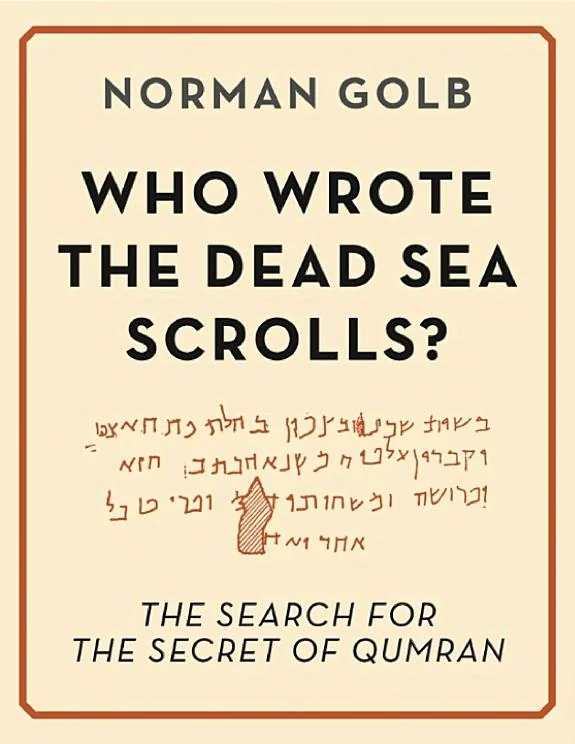
Who Wrote the Dead Sea Scrolls?
 75
75

Who Wrote the Dead Sea Scrolls?
Norman Golb’s analysis of the Dead Sea Scrolls, originally published in 2013, remains a potent challenge to prevailing orthodoxies. He methodically dismantles the notion of a singular sectarian origin for the scrolls, presenting a compelling case for their provenance as dispersed library collections from various Jewish groups, particularly those centered in Jerusalem. Golb’s strength lies in his rigorous textual analysis and his willingness to question established paradigms, drawing heavily on his extensive knowledge of ancient Jewish literature and history. A notable limitation, however, is the book's dense academic prose, which may present a barrier to readers unfamiliar with paleography and critical textual studies. The discussion concerning the potential hiding places and transfer routes of these manuscripts from Jerusalem's libraries before the Roman siege of 70 CE is particularly insightful. Ultimately, Golb’s work is a vital corrective, urging a more nuanced and evidence-based approach to understanding these crucial ancient documents.
📝 Description
75
Dr. Norman Golb's 2013 book challenges the Qumran-centric origin of the Dead Sea Scrolls.
First published in 2013, Dr. Norman Golb's "Who Wrote the Dead Sea Scrolls?" questions the prevailing scholarly view that the scrolls originated solely from an ascetic sect at Qumran. Golb argues instead that the collection represents a compilation of diverse library materials from various Jewish communities across ancient Judea. He supports this thesis through a detailed examination of the textual evidence, historical circumstances, and archaeological data associated with the scrolls.
This work is aimed at academics and serious students of ancient history, religious studies, and textual criticism. It is particularly useful for those interested in early Judaism and the beginnings of Christianity, offering a critical perspective on established historical interpretations. Readers will benefit from Golb's methodical approach to analyzing texts and historical evidence, especially those who question traditional dogma and seek to understand the methodologies of historical inquiry.
This book engages with the scholarly tradition surrounding the Dead Sea Scrolls, a field often touching upon esoteric and Gnostic studies due to the nature of some discovered texts. While Golb's work is primarily historical and textual, it addresses the interpretation of documents that have fueled much speculation about early religious thought and hidden traditions. His challenge to the monolithic Qumran origin narrative opens avenues for considering a broader spectrum of Jewish intellectual life, potentially including groups whose traditions might be considered more esoteric or less mainstream.
💡 Why Read This Book?
• Understand the scholarly debate beyond the Qumran sect: Learn why Dr. Norman Golb argued in his 2013 publication that the Dead Sea Scrolls likely originated from multiple Jewish libraries, not just a single desert community. • Grasp the implications of Jerusalem's role: Discover how Golb's research connects the scrolls to the intellectual centers of ancient Judea, suggesting texts were hidden during Roman conflict. • Develop critical analysis skills for ancient texts: Gain insight into the methodologies Golb employs to scrutinize textual evidence and archaeological findings, fostering a deeper appreciation for scholarly interpretation.
⭐ Reader Reviews
Honest opinions from readers who have explored this book.
❓ Frequently Asked Questions
What is Dr. Norman Golb's main argument about the Dead Sea Scrolls?
Dr. Norman Golb's central thesis, presented in his 2013 work, is that the Dead Sea Scrolls are not the product of a single ascetic sect at Qumran, but rather represent dispersed library collections from various Jewish groups, likely originating from Jerusalem.
When was Dr. Norman Golb's book on the Dead Sea Scrolls first published?
Dr. Norman Golb's influential study, 'Who Wrote the Dead Sea Scrolls?', was first published in February 2013, making its arguments available to a contemporary audience interested in the scrolls' origins.
What evidence does Golb present against the Essene theory?
Golb points to the diversity of scribal hands, languages, and subject matter within the scrolls as evidence that they could not have all originated from a single, isolated sect like the Essenes.
How does Golb explain the presence of the scrolls near Qumran if not from a local sect?
Golb proposes that the scrolls were likely transported from libraries in Judea, particularly Jerusalem, and hidden in caves around Qumran to safeguard them from the Roman invasion of 70 CE.
Is this book suitable for beginners interested in the Dead Sea Scrolls?
While Golb's work is a crucial academic text, its detailed textual analysis might be more challenging for absolute beginners. However, it offers a vital, non-traditional perspective for those willing to engage with scholarly arguments.
What is the significance of the 1947 discovery in relation to Golb's work?
The 1947 discovery marked the beginning of the Dead Sea Scrolls saga and the intense scholarly debate that Golb's 2013 book directly addresses, offering a significant alternative to the theories that arose in the wake of that initial find.
🔮 Key Themes & Symbolism
Library Origins Theory
Golb's central thesis posits that the Dead Sea Scrolls are not the unified product of a single ascetic sect but rather represent scattered library collections from various Jewish communities. This challenges the prevailing view that the scrolls exclusively belonged to the Qumran Essenes. He argues that texts were amassed from different sources, particularly from Jerusalem, and subsequently hidden for safekeeping. The diversity in scripts, languages, and content found among the scrolls serves as key evidence for this multi-origin hypothesis, suggesting a broader intellectual landscape than previously assumed.
Critique of Qumran Sectarianism
This work directly confronts the long-standing scholarly consensus attributing the scrolls primarily to the Essenes of Qumran. Golb meticulously examines the archaeological evidence at Qumran and finds it insufficient to support the exclusive claim of a single sect. He questions the assumption that the settlement's ruins and the scrolls found in nearby caves must be intrinsically linked to one group, advocating for a more critical evaluation of the site's role and the scrolls' wider provenance.
Jerusalem as a Textual Hub
A significant aspect of Golb's argument is the emphasis on Jerusalem as a vital center for Jewish literary activity and manuscript preservation before its destruction in 70 CE. He suggests that many scrolls originated in the libraries and scriptoria of the capital city. The hypothesis is that these precious texts were transported to more secure, peripheral locations like the Judean Desert caves to escape the impending Roman military campaigns.
Textual Diversity and Provenance
Golb leverages the internal diversity of the Dead Sea Scrolls—including variations in scribal practices, linguistic features, and thematic content—as compelling evidence against a single authorship. He interprets this heterogeneity not as internal sectarian development but as a reflection of multiple scribal traditions and intellectual currents from across ancient Judea. This points towards a complex history of manuscript collection, copying, and transmission across different Jewish communities.
💬 Memorable Quotes
Direct passages from the work, attributed to the author.
“The scrolls cannot be the work of a small, desert-dwelling fringe sect.”
— This statement expresses Golb's core argument, directly challenging the dominant theory. It suggests that the sheer volume and variety of texts point to broader origins, likely from more established intellectual centers rather than an isolated community.
“The scrolls are in all likelihood the remains of libraries of various Jewish groups.”
— This interpretation highlights Golb's alternative hypothesis. He envisions the scrolls as a composite collection, salvaged from multiple sources, emphasizing the pluralistic nature of ancient Judean society and its literary output.
“The scrolls were smuggled out of Jerusalem.”
— This interpretation suggests a deliberate act of preservation. Golb proposes that texts from Jerusalem's libraries were intentionally moved and hidden to protect them from destruction during the Roman wars, implying a planned dispersal rather than organic growth at Qumran.
“Challenging traditional dogma concerning the scrolls' origin.”
— This phrase indicates Golb's confrontational approach to established scholarly views. He aims to move beyond accepted narratives, encouraging a re-evaluation based on new interpretations of existing evidence and historical context.
💡 Key Ideas
Editorial paraphrase of the work's core concepts — not direct quotes.
Golb questions the archaeological evidence at Qumran.
This paraphrased concept refers to Golb's skepticism regarding the interpretation of the Qumran settlement's ruins and artifacts. He argues that the site does not exclusively or definitively support the claim that it was the sole repository or origin point for all the discovered scrolls.
🌙 Esoteric Significance
Tradition
While not explicitly aligning with a single esoteric lineage like Kabbalah or Hermeticism, Golb's work engages with the historical and textual underpinnings that later informed many esoteric traditions. By focusing on the diversity of Jewish thought and practice in the Second Temple period, his research indirectly touches upon the foundational texts and ideas that would be reinterpreted and integrated into later mystical and occult systems. His challenge to singular, dogmatic interpretations encourages a more fluid and multi-faceted understanding of ancient religious texts, a characteristic often found in esoteric scholarship.
Symbolism
The Dead Sea Scrolls themselves, as a collection, carry immense symbolic weight within esoteric thought, representing hidden knowledge and ancient wisdom. Golb's analysis, by emphasizing their diverse origins, subtly shifts the symbolism from a singular, sectarian revelation to a broader representation of Jewish intellectual heritage. The concept of 'libraries' being hidden and preserved during times of crisis can symbolize the safeguarding of esoteric knowledge against external persecution or internal decay, a common theme in esoteric traditions seeking continuity.
Modern Relevance
Contemporary scholars and practitioners interested in the historical roots of Western esotericism, particularly those exploring the Jewish mystical traditions that predate or influenced Kabbalah, find Golb's work valuable. His arguments for a pluralistic Second Temple Judaism provide a richer context for understanding the diverse streams of thought that contributed to later esoteric developments. Thinkers who seek to deconstruct monolithic interpretations of religious history and explore the 'hidden' or suppressed narratives within textual traditions may draw inspiration from Golb's critical approach.
👥 Who Should Read This Book
• Comparative Religion Scholars: Researchers examining the diversity of Jewish thought and practice during the Second Temple period will find Golb's thesis crucial for understanding manuscript origins and transmission. • Textual Critics and Paleographers: Professionals and advanced students of ancient texts will benefit from Golb's detailed analysis of scribal practices and textual evidence, offering a counterpoint to established attribution theories. • Seekers of Alternative Historical Narratives: Individuals interested in challenging mainstream historical accounts and exploring less conventional interpretations of major historical discoveries will appreciate Golb's critical re-evaluation of the Dead Sea Scrolls' authorship.
📜 Historical Context
Dr. Norman Golb's study emerged in the intellectual milieu following the Dead Sea Scrolls' initial discovery starting in 1947. For decades, the dominant scholarly narrative, championed by figures like Roland de Vaux, attributed the scrolls primarily to the Essenes, an ascetic sect residing at Qumran. This interpretation faced challenges from scholars who noted the scrolls' diverse contents and textual traditions, suggesting a broader provenance. Golb’s work, first published in 2013, significantly amplified this dissenting voice. It directly contested the prevailing 'Qumran-Essene hypothesis' by proposing an alternative explanation: the scrolls as salvaged library collections from various Jewish groups, particularly from Jerusalem. This placed his work in dialogue with ongoing debates about the scrolls' origins, the nature of Second Temple Judaism, and the impact of the First Jewish-Roman War (66-73 CE). While not universally adopted, Golb's arguments contributed to a more critical examination of the evidence and spurred further research into the complex textual history of the period.
📔 Journal Prompts
The scrolls as scattered library collections: How does this perspective alter your understanding of ancient Jewish intellectual life?
Critique of the Qumran-Essene hypothesis: What assumptions underpin this traditional view, and how does Golb challenge them?
Jerusalem's role as a textual hub: Reflect on the implications of texts being moved and hidden during periods of conflict.
Textual diversity as evidence: Consider how variations in script and content might indicate multiple origins rather than one.
The impact of challenging dogma: How does Golb's approach encourage a re-examination of other historical or religious texts?
🗂️ Glossary
Dead Sea Scrolls
A collection of ancient Jewish manuscripts discovered in caves near the Dead Sea between 1947 and 1956. They include the oldest known surviving copies of biblical and extra-biblical documents, dating primarily from the 3rd century BCE to the 1st century CE.
Qumran
An archaeological site near the Dead Sea, widely believed to have been inhabited by a Jewish sect (often identified as the Essenes) during the Second Temple period. Many scrolls were found in caves near this settlement.
Essenes
An ascetic Jewish sect that flourished in Judea during the Second Temple period. They are often associated with the Qumran settlement and the Dead Sea Scrolls, though this attribution is debated.
Second Temple Period
The era of Jewish history from the rebuilding of the Second Temple in Jerusalem (c. 516 BCE) until its destruction by the Romans in 70 CE. This was a period of significant religious and intellectual development in Judaism.
Paleography
The study of ancient handwriting. In the context of the Dead Sea Scrolls, paleography is used to date manuscripts and analyze scribal practices, providing clues about authorship and origin.
Sectarian Hypothesis
The scholarly theory that the Dead Sea Scrolls were the exclusive product of a single religious sect, most commonly the Essenes of Qumran, who lived at or near the settlement.
Manuscript Transmission
The process by which ancient texts were copied, preserved, and passed down through generations. Understanding transmission helps in tracing the origins and evolution of textual traditions.
This book appears in 1 collection
🔮 Readers Also Liked
Browse all →








From the “Dead Sea Scrolls” Collection
View all →



More Free Esoteric History & Biography Books
View all →