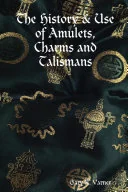
The History & Use of Amulets, Charms and Talismans
 81
81

The History & Use of Amulets, Charms and Talismans
Varner's meticulous cataloging of amulets, charms, and talismans offers a broad survey, spanning from early hominid use to their persistence in modern folklore. The strength lies in its encyclopedic scope, presenting a wide array of materials and cultural applications without excessive jargon. However, the sheer breadth occasionally sacrifices depth; for instance, while the book touches upon the use of inscribed words, a more detailed analysis of specific runic or sigilistic traditions might have been beneficial. The section detailing the use of carved bone and animal teeth for protection, drawing from pre-historic archaeological findings, is particularly compelling for its direct link to ancient human anxieties. This work serves as a solid reference, though it might leave seasoned practitioners seeking more nuanced magical theory. It is a valuable compendium for understanding the ubiquitous nature of protective and empowering objects throughout human history.
📝 Description
81
Gary R. Varner's 2017 book details the history and use of magical objects across cultures.
Gary R. Varner's "The History & Use of Amulets, Charms and Talismans" examines objects believed to possess magical properties for protection and harm. The work traces their use from ancient times to the present, detailing their creation from various materials like stone, clay, metal, plants, and animal parts, as well as their activation through spoken words. It discusses their role in both invoking and repelling witchcraft and sorcery.
The book is a valuable resource for students of comparative religion, cultural anthropology, and the history of magic. It is also for practitioners of folk magic, occultists, and anyone interested in the human desire for protection, influence, or power through tangible and symbolic items. Readers curious about the evolution of belief systems and the material culture of spirituality will find significant value. Varner situates these practices within a broad historical context, highlighting their presence in pagan, Christian, and Jewish traditions. The narrative stresses that these objects were not simply relics of early belief but have continued through intellectual and societal changes.
This book addresses the long-standing human practice of employing objects imbued with perceived supernatural power. It situates talismans and amulets within a lineage of ritualistic practices that seek to influence the material world through symbolic means. Varner's work connects these specific objects to broader patterns of belief in sympathetic magic, where the form, material, and inscription are all understood to contribute to an object's ability to channel or manifest power. The book acknowledges their persistence across diverse religious and cultural systems, demonstrating their role in both personal and communal spiritual traditions.
💡 Why Read This Book?
• Understand the deep historical roots of protective objects, learning how early humans utilized carved stones and plant materials, as detailed in the book's exploration of prehistoric practices. • Gain insight into the cross-cultural adoption of charms, recognizing their presence in pagan, Christian, and Jewish traditions, demonstrating a shared human need for symbolic protection. • Discover the varied materials and forms of talismans, such as those made of clay or metal, and the believed efficacy derived from their specific construction and inscription.
⭐ Reader Reviews
Honest opinions from readers who have explored this book.
❓ Frequently Asked Questions
When was 'The History & Use of Amulets, Charms and Talismans' first published?
The book by Gary R. Varner was first published on January 27, 2008, making it a relatively recent academic survey of ancient practices.
What kind of materials are discussed for making amulets?
The work covers a wide range of materials, including wood, stone, clay, metal, plants, and even parts of dead animals, highlighting the diverse resources humanity has employed.
Does the book focus on a specific cultural or religious tradition?
No, it examines the use of amulets and charms across various traditions, including pagan, Christian, and Jewish practices, illustrating their widespread application.
What is the believed purpose of these objects?
Their purposes are varied, encompassing protection, causing harm, and involvement in the practice or avoidance of witchcraft and sorcery, as explored in the book.
Are only physical objects discussed, or do words play a role?
The book explicitly mentions that amulets and talismans can be composed entirely of words, believed to possess significant magical power and properties.
Who is the author of this comprehensive study?
The author is Gary R. Varner, who compiled this extensive history of amulets, charms, and talismans.
🔮 Key Themes & Symbolism
Materiality of Magic
This theme examines how the physical substance of amulets and charms is intrinsically linked to their perceived power. Varner details the use of natural elements like wood, stone, and plants, alongside crafted materials such as clay and metal. The book emphasizes that the origin and form of these objects, whether crude carvings or exquisite designs, were believed to channel specific energies or offer particular protections, reflecting an ancient understanding of the world where matter itself held potent, often occult, properties.
Duality of Intent
A crucial aspect explored is the dual nature of amulets and charms – their capacity for both benevolent and malevolent applications. The work illustrates how similar objects or practices could be used for healing and safeguarding, or conversely, for cursing and inflicting harm. This duality highlights the user's intent as a primary factor in the object's magical effect, and how these items were integrated into societal practices for both protection and coercion, including the complex relationship with witchcraft and sorcery.
Cross-Cultural Persistence
Varner underscores the remarkable endurance and widespread adoption of amulets, charms, and talismans across diverse cultures and historical epochs. The book demonstrates their presence in ancient pagan societies, their integration into Judeo-Christian frameworks, and their continued relevance in folk traditions. This theme emphasizes that the impulse to create and utilize such objects is a fundamental human characteristic, transcending specific religious doctrines or geographical boundaries throughout millennia.
The Power of the Word
Beyond physical objects, the book highlights the potent magical significance attributed to spoken and written words. It explores how inscriptions, sigils, prayers, and incantations embedded within or associated with amulets and talismans were believed to imbue them with formidable power. This concept acknowledges that abstract symbolic representations and vocalizations could be as effective, if not more so, than tangible materials in influencing supernatural forces or achieving desired magical outcomes.
💬 Memorable Quotes
Direct passages from the work, attributed to the author.
“Amulets and charms have been used since mankind evolved from its distant origins millions of years ago.”
— This opening statement establishes the profound antiquity of protective and potent objects, grounding their practice in the very foundation of human history and instinct.
“They have been used to protect and to harm, and in both the practice and avoidance of witchcraft and sorcery.”
— This highlights the inherent duality of magical objects and practices, showing their application for both constructive and destructive purposes, and their complex role in relation to occult arts.
“They are made of wood and stone, clay, metal, plants and dead animals.”
— This enumerates the diverse, often natural, materials employed in crafting these objects, suggesting a deep connection to the earth and its resources in the creation of magical artifacts.
“They are carved into crude shapes and in the most exquisite forms.”
— This points to the wide spectrum of artistry and intention behind these objects, from simple, functional designs to elaborate creations, reflecting varying cultural aesthetics and perceived needs.
“They may also be composed entirely of words, which are believed to have great power and magical properties.”
— This emphasizes the potent role of language and inscription in sympathetic magic, suggesting that written or spoken spells can be as powerful as any physical amulet.
🌙 Esoteric Significance
Tradition
While not strictly adhering to a single esoteric lineage, Varner's work profoundly engages with the foundational principles underlying many Western esoteric traditions, particularly those rooted in folk magic and ancient shamanistic practices. It provides a historical and materialist counterpoint to more purely philosophical or theological approaches to magic. The book implicitly supports the idea that magic is an innate human faculty expressed through tangible objects and symbolic actions, a concept resonant with many animistic and pre-Gnostic worldviews.
Symbolism
Key symbols explored include the inherent power of natural materials such as stones (often imbued with planetary or elemental correspondences) and plants (used for their specific virtues). The act of carving or inscribing these materials, transforming them into specific forms, represents the imposition of human will and intent upon raw potentiality. Furthermore, the book touches upon the symbolic power of words and written characters, such as sigils or divine names, as potent carriers of magical energy, functioning as focal points for spiritual or occult forces.
Modern Relevance
Varner's work remains highly relevant for contemporary practitioners of modern witchcraft, neo-paganism, and eclectic magical paths. It provides a crucial historical and anthropological framework for understanding the origins and evolution of objects they may use today. Thinkers and practitioners in fields like material culture studies within occultism, or those researching the psychological underpinnings of belief in protective charms, often reference such comprehensive historical surveys to ground their modern interpretations and practices in a deep historical continuum.
👥 Who Should Read This Book
• Aspiring practitioners of folk magic and ritualists seeking to understand the historical context and material basis of protective and empowering objects. • Students of comparative religion and anthropology interested in the cross-cultural manifestations of belief in magical artifacts across millennia. • Collectors and historians of occult ephemera looking for a detailed survey of the diverse forms and functions of amulets, charms, and talismans throughout history.
📜 Historical Context
Gary R. Varner's "The History & Use of Amulets, Charms and Talismans" emerged in 2008, a period when interest in esoteric traditions and historical occult practices was experiencing a resurgence, partly fueled by internet scholarship and a renewed appreciation for folklore. While Varner draws from a vast historical wellspring, his work situates itself against a backdrop of academic disciplines like anthropology and religious studies that increasingly acknowledged the significance of magical beliefs. Unlike purely theoretical works on magic, Varner's approach is grounded in the material culture and practical application of these objects. Contemporary scholars like Owen Davies were also exploring similar themes in British folk magic, providing a parallel academic discourse. Varner's book, by synthesizing a broad range of evidence without explicitly aligning with a specific esoteric lineage like Hermeticism or Kabbalah, offers a more universal historical perspective on the enduring human need for enchanted objects.
📔 Journal Prompts
The diverse materials used for amulets, such as stone and plants, and their potential symbolic meanings.
The dual function of charms for protection and harm across different historical periods.
The role of carved shapes versus inscribed words in ancient magical practices.
How the concept of witchcraft and sorcery intersects with the use of protective talismans.
Reflecting on the persistent human need for objects believed to hold power.
🗂️ Glossary
Amulet
An object believed to possess the power to protect its wearer from harm, danger, or evil influences, often worn on the body.
Charm
A smaller object or concoction believed to bring good luck, ward off evil, or possess magical properties, often used in folk magic.
Talisman
An object inscribed with symbols or words, consecrated for a specific magical purpose, believed to attract certain influences or bestow specific powers.
Sympathetic Magic
A form of magic based on the principle that like produces like, or that a person or thing can be affected by direct communication with another person or thing, regardless of distance.
Witchcraft
The practice of magic or sorcery, often associated in historical contexts with malevolent intent or pacts with supernatural entities.
Sorcery
The use of magic, particularly black magic or the casting of spells, often with the aim of causing harm or exerting control.
Pagan
A broad term referring to adherents of polytheistic religions, particularly those of ancient Rome and Greece, and by extension, followers of non-Abrahamic religions.
This book appears in 1 collection
🔮 Readers Also Liked
Browse all →









From the “Talismans” Collection
View all →

More Free Esoteric History & Biography Books
View all →