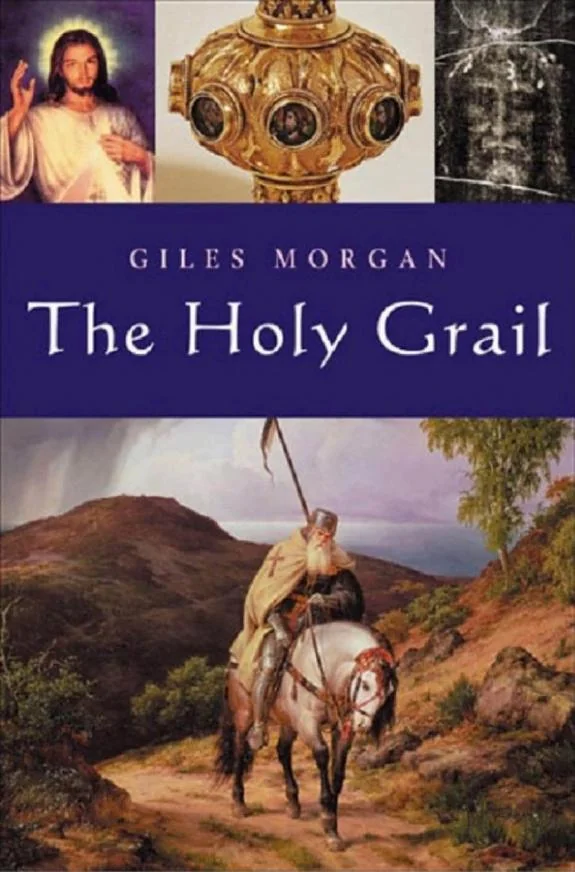
The Holy Grail
 71
71

The Holy Grail
Giles Morgan's exploration of The Holy Grail offers a commendably broad survey, moving beyond simplistic interpretations to engage with the symbol's deep historical and mythological roots. The book's strength lies in its detailed tracing of the Grail's lineage, from its potential Celtic origins to its medieval literary flowering. Morgan effectively demonstrates how the symbol's fluidity allowed it to be adapted across different belief systems, a point particularly well-articulated when discussing its Christian recontextualization. However, the work occasionally feels encyclopedic, prioritizing breadth over deep analytical dives into specific interpretations. For instance, the discussion of the Grail's connection to historical Arthurian figures, while present, could benefit from more critical engagement with the scholarly debates surrounding their historicity. Morgan's treatment of the Grail as a symbol of spiritual quest is compelling, yet the text sometimes lacks a singular, guiding voice to synthesize these disparate threads into a more cohesive argument. Despite these limitations, Morgan provides a valuable resource for understanding the multifaceted nature of this enduring myth.
📝 Description
71
Giles Morgan's 2001 book traces the Holy Grail from Celtic lore to Christian iconography.
Giles Morgan's work examines the Holy Grail, a symbol that has evolved from medieval legends into modern cultural touchstones. The book follows its transformations, beginning with its roots in mystical cauldrons and cornucopias, moving through its integration into Christian imagery as a sacred chalice. Morgan details how these varied forms, often with historical connections, have consistently captured people's imaginations and inspired art and literature across the West.
The book argues that the Grail's lasting appeal rests on its connection to real events and belief systems, not just fantasy. It charts the development of Grail stories, recognizing their origins in pre-Christian myths before their adaptation within Christianity. This analysis shows the Grail as a symbol that can change to reflect the spiritual concerns and hopes of different times.
Morgan's study highlights the Grail's considerable impact, from Arthurian tales to present-day films. It shows how the search for this object has become a metaphor for humanity's quest for meaning and truth. The book stresses the Grail's ongoing presence in our collective awareness, reflecting deep human desires.
This book situates the Holy Grail within a tradition of esoteric studies that looks beyond surface appearances to uncover deeper symbolic meanings. It connects the Grail to ancient mythologies, Gnostic ideas, and alchemical symbolism, suggesting that its various forms represent spiritual quests and hidden knowledge. By examining the Grail's transformation across cultures and eras, Morgan engages with the idea that potent symbols can embody enduring human spiritual aspirations and the search for transcendence.
💡 Why Read This Book?
• Gain a comprehensive understanding of the Holy Grail's symbolic evolution, from its potential pre-Christian origins to its medieval literary interpretations, allowing you to contextualize its appearances in art and culture. • Explore the historical underpinnings of Grail legends, learning how figures and events from antiquity and the medieval period, such as the Arthurian cycle, shaped the myth's development. • Uncover the diverse symbolic meanings of the Grail, including its representations as a chalice, cauldron, and cornucopia, to better appreciate its persistent resonance in Western mythology and esoteric thought.
⭐ Reader Reviews
Honest opinions from readers who have explored this book.
❓ Frequently Asked Questions
What are the earliest known origins of the Holy Grail myth?
The work explores potential roots in Celtic mythology, particularly referencing the magical cauldrons of figures like Bran the Blessed, suggesting a pre-Christian lineage for some Grail motifs before their integration into medieval Christian narratives.
How did the Grail legend evolve during the Middle Ages?
During the medieval period, the Grail transitioned from earlier mythological concepts into Christian narratives. Works like those by Chrétien de Troyes and Wolfram von Eschenbach in the late 12th and early 13th centuries were pivotal in shaping its iconography and quest narratives.
What is the connection between the Holy Grail and Arthurian legend?
The Grail is intrinsically linked to Arthurian legend, most famously through the quest undertaken by the Knights of the Round Table, such as Sir Galahad, Sir Percival, and Sir Bors, in their pursuit of the sacred vessel.
Does the book discuss historical evidence for the Grail?
Giles Morgan's work acknowledges that the Grail myth likely has roots in historical facts and events, but primarily focuses on its mythological and symbolic development rather than presenting definitive historical proof of a literal object.
In what ways has the Grail influenced art and literature?
The book details the Grail's significant impact as a catalyst for Western art and literature, inspiring countless poems, novels, paintings, and musical compositions from antiquity to the present day through its potent symbolism.
What symbolic forms does the Holy Grail take in different traditions?
The Grail appears in various guises, including a magic cauldron, a cornucopia, a horn of plenty, and a chalice cup, each form carrying distinct symbolic weight related to abundance, sustenance, and spiritual fulfillment.
🔮 Key Themes & Symbolism
Celtic Mythology Roots
Morgan meticulously traces the Grail's lineage, positing compelling connections to ancient Celtic myths. The concept of the magic cauldron, a recurring motif in Irish sagas symbolizing abundance and regeneration, is presented as a foundational element. This exploration suggests that the Christianized Grail narrative did not emerge in a vacuum but absorbed and reinterpreted powerful pre-existing archetypes, highlighting the enduring power of ancient symbolism in shaping later religious and cultural expressions.
Medieval Literary Flourishing
The work examines the central role of medieval literature, particularly the Arthurian romances of the late 12th and early 13th centuries, in solidifying the Grail legend. Authors like Chrétien de Troyes and Wolfram von Eschenbach are central figures in this section, as their tales introduced key elements such as the quest, the wounded king, and the sacred vessel. Morgan illustrates how these literary innovations transformed the Grail from a nebulous concept into a central narrative device, profoundly influencing Western literary traditions.
Symbol of the Quest
Beyond its literal or religious interpretations, the Grail functions as a potent metaphor for the human spiritual journey. The book analyzes the 'quest' itself—the arduous search for this elusive object—as symbolic of humanity's innate drive for meaning, enlightenment, and ultimate truth. This archetypal quest narrative, spanning from ancient myths to modern narratives, underscores the Grail's enduring power to represent the pursuit of the ineffable and the transformative potential of seeking the sacred.
Cross-Cultural Adaptations
A significant theme is the Grail's remarkable adaptability across different cultural and religious contexts. Morgan details how the symbol was reinterpreted, moving from pagan associations with abundance and the underworld to becoming a central artifact in Christian theology, representing Christ's blood. This capacity to be infused with new meanings demonstrates the symbol's inherent power and its ability to resonate with the spiritual needs and symbolic language of diverse eras and peoples.
💬 Memorable Quotes
Direct passages from the work, attributed to the author.
“The Grail has been a major inspiration and catalyst for literature and the arts in Western Culture.”
— This statement underscores the book's central argument regarding the Grail's profound and widespread influence. It suggests that the legend is not merely a historical curiosity but a dynamic force that has actively shaped artistic and literary output across centuries.
“Through its various guises as magic cauldron, cornucopia, horn of plenty and chalice cup it has remained at the centre of popular culture from antiquity right up to the present day.”
— This highlights the complex nature of the Grail symbol. Its ability to manifest in diverse forms—from pagan fertility symbols to Christian relics—explains its persistent relevance and enduring presence across vastly different historical periods and cultural landscapes.
“The Grail inhabits a place in mythology that has its roots in historical facts.”
— This points to Morgan's approach of grounding the myth in potential historical realities, suggesting that while the Grail is largely legendary, its origins may be intertwined with actual events, people, or cultural practices from antiquity.
“An object of marvel and mystery.”
— This concise phrase captures the enduring allure of the Grail. Its elusive nature and the sense of wonder it inspires are key reasons for its continuous fascination and its prominent place in human imagination and storytelling.
“The flowering of the medieval [romance]”
— This phrase directly references the period when Grail narratives achieved significant literary prominence. It signals the book's focus on how medieval authors developed and popularized the legends, cementing the Grail's place in the Western literary canon.
🌙 Esoteric Significance
Tradition
The work engages with the Grail legend primarily through the lens of Western Esotericism, particularly its Hermetic and Gnostic underpinnings, while also acknowledging its deep roots in Celtic mythology and its later Christian overlay. It positions the Grail not merely as a religious relic but as a potent symbol of spiritual attainment and hidden knowledge, a concept central to many esoteric traditions. Morgan’s analysis departs from purely historical or theological interpretations by emphasizing the Grail's function as an object of inner transformation and a vehicle for accessing higher consciousness.
Symbolism
Central symbols explored include the Chalice, representing the receptive feminine principle, the vessel of divine grace, and the container of esoteric wisdom (akin to the Gnostic Sophia or the Hermetic vessel). The Cauldron, drawn from Celtic myth, symbolizes regeneration, abundance, and the transformative power of initiation. The Quest itself symbolizes the arduous path of spiritual development, the journey of the soul towards illumination, often fraught with trials and requiring purification of the seeker.
Modern Relevance
Contemporary thinkers and practitioners within fields like Jungian psychology (archetypal symbolism), comparative mythology, and various modern Pagan and Neo-Arthurian movements draw upon the Grail's rich symbolic language. Its themes of seeking, transformation, and the pursuit of an ultimate ideal continue to resonate in contemporary spiritual quests, personal development literature, and modern interpretations of chivalric and esoteric ideals.
👥 Who Should Read This Book
• Students of comparative mythology: Those seeking to understand how ancient myths evolve and are reinterpreted across cultures and religions, particularly concerning symbols of abundance and spiritual attainment. • Enthusiasts of Arthurian legend: Readers fascinated by the Knights of the Round Table and the quest for the Grail will find a comprehensive overview of the legend's development and symbolic significance. • Explorers of Western Esotericism: Individuals interested in the symbolic and allegorical dimensions of religious and mythological traditions will appreciate the book's examination of the Grail as a symbol of spiritual quest and hidden knowledge.
📜 Historical Context
Giles Morgan's 'The Holy Grail' was first published in 2015, a period marked by a resurgence of interest in esoteric studies and historical mythologies, often facilitated by digital accessibility. The work engages with a long tradition of Grail scholarship that stretches back to the late 19th century, influenced by figures like Jessie Weston, who explored its pagan roots. Morgan's text situates itself within this ongoing academic and popular discourse, seeking to synthesize various interpretations. It acknowledges the competing schools of thought regarding the Grail's origins—whether primarily historical, mythological, or allegorical. The book's reception, while not marked by specific public events like censorship or major prizes, contributes to the continuous academic and popular dialogue surrounding Arthurian legends and Christian symbolism, engaging with scholars whose work often appears in journals dedicated to medieval studies and folklore.
📔 Journal Prompts
The transformation of the Grail symbol from magic cauldron to sacred chalice.
The archetypal journey inherent in the Grail quest narratives.
Interpreting the symbolism of the chalice in personal spiritual development.
The influence of Celtic mythology on the Grail legend.
Reflecting on the Grail's representation as an object of mystery.
🗂️ Glossary
Cornucopia
A symbol of abundance, often depicted as a horn overflowing with fruits, flowers, and grain. In the context of the Grail, it represents plentiful sustenance and prosperity, linking it to fertility myths.
Chalice
A cup or goblet, particularly one used for drinking wine in religious ceremonies. In Grail lore, it often symbolizes the vessel of Christ's blood or a conduit for divine grace and spiritual nourishment.
Celtic Mythology
The body of myths and legends originating from the ancient Celtic peoples of Ireland, Britain, and Gaul. Key elements include magic cauldrons, heroic figures, and otherworldly realms.
Arthurian Romance
A genre of medieval literature featuring King Arthur and his Knights of the Round Table. These narratives often involve chivalry, adventure, courtly love, and supernatural elements, with the Grail quest being a prominent theme.
Myth of Antiquity
Stories and legends originating from ancient civilizations, such as Greek, Roman, and Celtic cultures. These myths often explain natural phenomena, human origins, and provide moral or spiritual teachings.
Horn of Plenty
Similar to the cornucopia, this symbol represents abundance and nourishment. Its inclusion in Grail symbolism suggests themes of overflowing blessings and inexhaustible spiritual or material resources.
Medieval Period
The historical era in Europe roughly spanning from the 5th to the 15th century. This period saw the development of feudalism, the rise of Christianity as a dominant force, and significant literary and artistic output, including the codification of Grail legends.
This book appears in 1 collection
🔮 Readers Also Liked
Browse all →






From the “Holy Grail” Collection
View all →









More Free Esoteric History & Biography Books
View all →