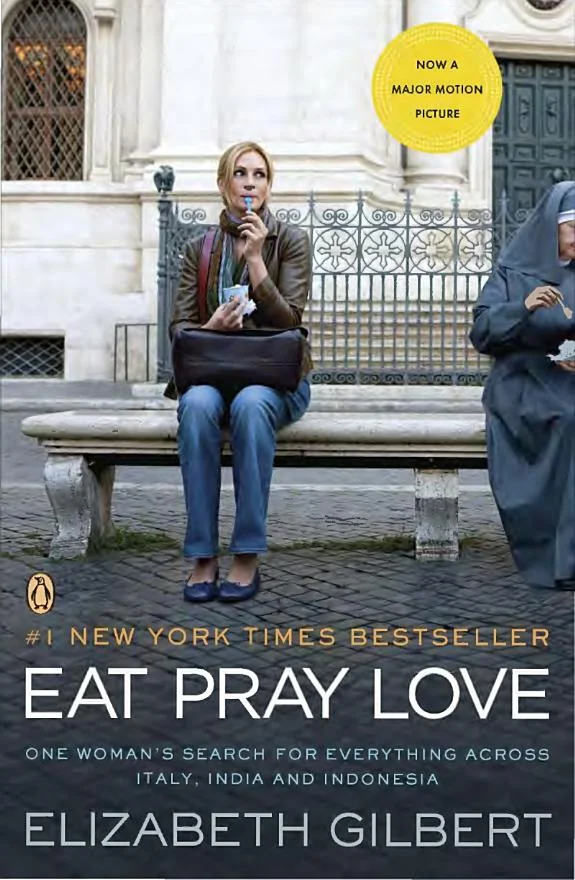
Eat Pray Love
 82
82

Eat Pray Love
Gilbert's "Eat Pray Love" offers a candid, if occasionally self-indulgent, account of a woman's deliberate reconstruction of her life after the wreckage of divorce. The strength of the work lies in its unvarnished honesty about vulnerability and the arduous process of self-reclamation. Gilbert’s descriptions of Italian cuisine and her struggles with early meditation in India are particularly vivid. However, the narrative sometimes falters under the weight of its own earnestness, and the privileged perspective from which her quest is undertaken can feel detached from more common struggles. A passage detailing her initial attempts at yoga in the ashram, where she grapples with both physical and mental discomfort, highlights the book’s central theme: the difficult, often ungraceful, work of finding one's center. Ultimately, it is a memoir that speaks powerfully to a specific moment of existential crisis and the universal yearning for meaning.
📝 Description
82
Elizabeth Gilbert's 2006 memoir follows a year of travel and self-discovery.
Published in 2006, Elizabeth Gilbert's memoir recounts a year spent in Italy, India, and Indonesia after a difficult divorce. In Italy, she focused on pleasure and food, seeking to rediscover joy. Her time in India involved spiritual discipline, particularly through meditation and yoga, as she worked to reconnect with her inner self. The final leg of her journey took her to Indonesia, where she pursued balance and a sense of wholeness.
The book details her experiences with different cultures and practices, aiming for personal fulfillment and emotional recovery. It resonates with readers navigating significant life changes, those interested in self-care outside conventional religious paths, and individuals drawn to introspective narratives.
While not strictly an esoteric text, 'Eat Pray Love' touches on themes common in spiritual development literature. Gilbert's description of 'divine dissociation' and her subsequent journey to reconnect with her spiritual self through meditation and yoga aligns with concepts of inner work found in various traditions. Her structured approach to emotional and spiritual recovery, moving through distinct phases of pleasure, discipline, and balance, mirrors frameworks for personal transformation found in both Western and Eastern spiritual practices.
💡 Why Read This Book?
• Gain practical strategies for self-reconnection by examining Gilbert's deliberate immersion in Italian culture to rediscover pleasure, a concept she explores through sensory experiences. • Understand the disciplined approach to spiritual practice through her experiences at an ashram in India, learning about the challenges and rewards of sustained meditation. • Explore the concept of finding life balance by observing her integration of different life philosophies in Bali, Indonesia, and the specific guidance she receives from Ketut Liyer.
⭐ Reader Reviews
Honest opinions from readers who have explored this book.
❓ Frequently Asked Questions
When was Elizabeth Gilbert's 'Eat Pray Love' first published?
'Eat Pray Love' by Elizabeth Gilbert was first published on June 29, 2010, making it a relatively recent addition to the memoir genre.
What are the three main locations visited in 'Eat Pray Love'?
The memoir details Gilbert's journey through Italy, India, and Indonesia, with each country representing a distinct phase of her spiritual and emotional exploration.
What is the primary goal of Elizabeth Gilbert's journey in 'Eat Pray Love'?
Her primary goal is to rediscover herself and find a renewed sense of purpose and happiness after a painful divorce and personal crisis.
Who is the spiritual guide Elizabeth Gilbert meets in Bali?
In Bali, Indonesia, she finds guidance from a medicine man named Ketut Liyer, who helps her understand balance and her life's path.
What role does food play in the 'Eat' section of the book?
In Italy, food becomes a central theme, representing the pursuit of pleasure and the joy of sensory experience, a key element in her healing process.
What spiritual practice is central to the 'Pray' section in India?
The 'Pray' section focuses heavily on meditation, particularly her experiences at an ashram in India, as she seeks inner peace and spiritual connection.
🔮 Key Themes & Symbolism
The Art of Pleasure
The initial phase of Gilbert's journey in Italy is dedicated to the pursuit of pleasure, specifically through food and sensory appreciation. This is not mere indulgence but a conscious act of reclaiming joy and presence after a period of emotional desolation. The work explores how embracing simple, bodily satisfactions can be a vital step in healing, challenging the notion that spirituality requires asceticism. It suggests that a balanced life incorporates the enjoyment of worldly delights as a form of self-affirmation and grounding.
Spiritual Discipline
In India, Gilbert immerses herself in the practice of meditation at an ashram. This section highlights the rigorous, often uncomfortable, nature of spiritual discipline. It moves beyond superficial notions of peace to explore the deeper work of confronting the ego, quieting the mind, and seeking a connection with the divine. The text illustrates how consistent effort, even amidst internal resistance, can lead to profound shifts in perception and a greater understanding of one's inner landscape.
The Pursuit of Balance
The final leg of her journey in Bali, Indonesia, focuses on finding equilibrium and integration. Here, Gilbert seeks wisdom from a local healer, Ketut Liyer, and learns to harmonize the lessons from her experiences in Italy and India. This theme underscores the importance of integrating pleasure with purpose, and inner peace with outward action, presenting a holistic approach to living a meaningful life. The work suggests balance is not static but an ongoing process of adjustment.
Reclaiming the Self
Underlying all three phases is the overarching theme of self-reclamation. Following a devastating divorce, Gilbert begins a deliberate quest to shed the remnants of a life that no longer serves her and to rebuild her identity from the ground up. This involves confronting painful truths, forgiving herself and others, and actively choosing a path toward self-love and authenticity. The memoir acts as a guide for anyone seeking to redefine themselves after significant loss or upheaval.
💬 Memorable Quotes
Direct passages from the work, attributed to the author.
“The word 'impossible' is not in my vocabulary. I think the word 'impossible' is a word that we use to give ourselves permission to not try.”
— This statement reflects Gilbert's determined mindset, framing challenges not as insurmountable obstacles but as opportunities for effort and growth. It suggests a proactive approach to life's difficulties, rejecting limitations imposed by self-doubt.
“I've come to believe that in this life, we're all just searching for a spiritual home.”
— This interpretation speaks to the universal human longing for belonging and meaning. It suggests that the physical and spiritual journeys undertaken are often driven by a deep-seated need to find a place, both internally and externally, where one feels truly at peace.
“The only way to learn to be a great person is to consciously decide to be one.”
— This concept highlights the power of intention and conscious choice in personal development. It posits that becoming a better version of oneself is an active decision, not a passive outcome of external events.
“It is easy to believe that you are a hero in your own story. It is difficult to believe that you are a villain.”
— This insightful observation points to the human tendency towards self-deception and the challenge of recognizing one's own flaws. It suggests that embracing one's darker aspects is crucial for genuine self-awareness and transformation.
💡 Key Ideas
Editorial paraphrase of the work's core concepts — not direct quotes.
You can't make yourself a victim of your circumstances. You have to be the hero of your own story.
This paraphrase emphasizes personal agency and empowerment. It argues against passive acceptance of misfortune, advocating instead for an active role in shaping one's destiny and overcoming adversity through inner strength.
🌙 Esoteric Significance
Tradition
While not strictly adhering to a single esoteric lineage, "Eat Pray Love" draws heavily from modern interpretations of Eastern spiritual practices, particularly Hinduism and Buddhism, as filtered through a Western lens. Its emphasis on meditation, self-awareness, and the pursuit of inner peace aligns with broader New Age and New Thought movements that emerged in the 20th century, seeking to synthesize Eastern philosophies with Western psychological and spiritual needs.
Symbolism
The act of eating in Italy symbolizes the embrace of earthly pleasures and the body, a departure from ascetic traditions that might devalue the physical. The mantra, a key concept in the 'Pray' section, functions as a spiritual anchor, a tool for mental discipline and connection to the divine. The concept of 'balance,' sought in Bali, serves as a symbolic integration of the spiritual and material, the inner and outer worlds, representing a holistic approach to well-being.
Modern Relevance
This work continues to influence contemporary discussions on mental health, self-care, and personal growth. Its narrative provides a relatable framework for individuals seeking to navigate life transitions and explore spiritual alternatives to traditional religion. Thinkers and practitioners in mindfulness, positive psychology, and secular spirituality often reference its themes of intentional living and the pursuit of happiness.
👥 Who Should Read This Book
• Individuals experiencing significant life changes, such as divorce or career shifts, who are seeking inspiration for personal reinvention and emotional healing. • Readers interested in exploring different cultural approaches to spirituality and well-being, particularly those curious about meditation practices in India and the philosophy of pleasure in Italy. • Those who appreciate introspective memoirs and are looking for a narrative that combines personal reflection with practical insights into self-discovery and finding life's purpose.
📜 Historical Context
Published in 2006, "Eat Pray Love" arrived at a cultural moment ripe for introspective memoir and the burgeoning wellness industry. The early 2000s saw a growing public fascination with self-discovery, often framed through travel and spiritual exploration. Gilbert's narrative tapped into a collective desire for meaning beyond material success, resonating with readers seeking personal transformation. While not directly aligned with any single esoteric movement, its themes of meditation and self-actualization echoed broader New Age sensibilities. Its considerable commercial success, however, also drew criticism, with some dismissing it as privileged escapism. For instance, the book's popularity contrasted with the more academically rigorous explorations of Eastern spirituality by figures like Huston Smith, whose works offered historical and philosophical depth to similar topics, presenting a different facet of engagement with these traditions.
📔 Journal Prompts
The pursuit of pleasure in Italy and its role in healing.
Your personal definition of spiritual home and how you might find it.
Challenges encountered during the practice of meditation and strategies to overcome them.
Ketut Liyer's concept of balance and its application in your life.
The narrative arc of reclaiming oneself after a significant loss.
🗂️ Glossary
Ashram
A spiritual retreat or monastery, often associated with Hindu traditions, where practitioners live a communal life focused on spiritual discipline and study.
Mantra
A sacred utterance, sound, or phrase, often repeated during meditation, believed to have spiritual or psychological effects.
Savasana
A resting pose in yoga, often performed at the end of a practice, translated as 'corpse pose,' intended to facilitate relaxation and integration.
Divine Dissociation
A term used by Gilbert to describe her feeling of being disconnected from her spiritual self, a state she sought to remedy through her journey.
Yogi
A practitioner of yoga, typically one who has achieved a high level of physical and spiritual development.
Karma
In Hindu and Buddhist traditions, the principle of cause and effect, where actions influence future consequences.
Enlightenment
A state of profound spiritual understanding and liberation, often sought through various spiritual practices.
This book appears in 1 collection
🔮 Readers Also Liked
Browse all →







From the “Self-Realization” Collection
View all →



![ERIC ED085284: World History. Volumes I and II. [Sahuarita High School Career Curriculum Project].](/img/thumb/eric-ed085284-world-history-volumes-i-and-ii-sahuarita-high-school-career-curriculum-project-eric.webp)





More Free Esoteric History & Biography Books
View all →