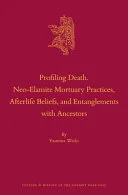
Profiling Death
 74
74

Profiling Death
Yasmina Wicks’s 'Profiling Death' offers a meticulously researched examination of Neo-Elamite funerary customs, moving beyond simple descriptions of tombs and artifacts. The strength lies in its analytical rigor, linking burial evidence from the period 900-600 BCE to broader societal and cosmological frameworks. Wicks compellingly argues that understanding death rituals is key to unlocking the socio-political dynamics of the era, particularly its role in the incubation of the Persian Empire. A notable strength is the detailed treatment of grave assemblages, which are presented not merely as possessions, but as active participants in the deceased's journey and the community’s ongoing relationship with ancestors. A limitation, inherent in the subject matter, is the reliance on fragmented archaeological data, which occasionally necessitates careful inference rather than definitive statement. The section discussing the varying depositional practices between elite and common burials provides a particularly vivid illustration of social stratification. This study is a vital contribution for specialists, offering a granular view of a pivotal, yet often overlooked, historical epoch.
📝 Description
74
Yasmina Wicks's 2014 book analyzes Neo-Elamite mortuary practices from the first half of the first millennium BCE.
Profiling Death examines the mortuary record of southwest Iran during the Neo-Elamite period, roughly 900 to 600 BCE. Yasmina Wicks moves beyond standard historical accounts to investigate societal structures, spiritual beliefs, and changing cosmologies. The book argues that this era was crucial in shaping subsequent empires, particularly the Persian.
Wicks interprets limited but important archaeological evidence from sites such as Susa. Burial practices are understood as indicators of social hierarchy and evolving ideas about the deceased's place in the community. The analysis centers on mortuary practice as a social marker, the range of afterlife beliefs shown by grave goods and tomb construction, and the interaction between the living and their ancestors.
While not overtly mystical, this work engages with how ancient societies conceptualized death, the afterlife, and the continuous relationship between the living and the departed. It reconstructs belief systems from material culture, touching on the perennial human concern with mortality and what lies beyond. The study illuminates how these ancient understandings of death and ancestry formed part of a larger cultural framework that influenced later imperial ideologies.
💡 Why Read This Book?
• Gain specialized knowledge of Neo-Elamite mortuary practices between 900-600 BCE, understanding how tomb construction and grave goods reveal societal structures and beliefs about the afterlife, offering insights unavailable in broader historical surveys. • Explore the concept of ancestor entanglement as detailed in Wicks's analysis, learning how the living maintained relationships with the deceased through ritual and material culture, a crucial element for understanding pre-Persian Iranian societies. • Appreciate the archaeological interpretation of evidence from key sites like Susa, enabling a deeper understanding of how funerary data informs discussions on the origins of the Persian Empire, moving beyond textual sources alone.
⭐ Reader Reviews
Honest opinions from readers who have explored this book.
❓ Frequently Asked Questions
What specific time period does 'Profiling Death' focus on?
The book concentrates on the Neo-Elamite period, specifically the first half of the first millennium BCE, roughly spanning from 900 to 600 BCE. This era is critical for understanding the transition leading to the rise of the Persian Empire.
What kind of evidence does Yasmina Wicks use to analyze Neo-Elamite society?
Wicks primarily utilizes the mortuary record, interpreting burial practices, tomb architecture, and grave goods found at sites such as Susa. This archaeological evidence is analyzed to infer social hierarchies and afterlife beliefs.
How does 'Profiling Death' relate to the Persian Empire?
The book posits the Neo-Elamite period as a crucial 'incubation ground' for the Persian Empire. It examines how societal structures and belief systems, evidenced in mortuary practices, contributed to the cultural and political foundations that enabled the empire's later emergence.
What are 'entanglements with ancestors' in the context of this book?
This refers to the dynamic, ongoing relationships between the living and the deceased in Neo-Elamite society. The book explores how ancestor veneration and the material culture associated with burials reflect and reinforce these connections.
Is this book accessible to readers without a background in archaeology?
While the book is scholarly, its clear explanations of concepts like mortuary practices and afterlife beliefs make it accessible to serious students of history and religion. Prior knowledge of ancient Near Eastern studies would be beneficial but not strictly required.
What does the title 'Profiling Death' refer to?
The title signifies the book's method of 'profiling' Neo-Elamite society and its beliefs by closely examining its death rituals and funerary evidence. It suggests a diagnostic approach to understanding the culture through its treatment of the deceased.
🔮 Key Themes & Symbolism
Mortuary Practices as Social Mirrors
The work meticulously dissects how variations in tomb construction, burial orientation, and the quantity and type of grave goods directly reflect the social stratification of Neo-Elamite society. Wicks argues that these funerary expressions were not merely post-mortem rituals but active statements of status and identity that persisted into the afterlife, shaping the community's perception of both the deceased and the living. The analysis moves beyond simple categorization to explore the nuanced ways these practices reinforced or challenged existing social hierarchies during the period 900-600 BCE.
Beliefs in the Afterlife Spectrum
Yasmina Wicks investigates the evolving conceptual field of the afterlife within Neo-Elamite culture. Through the careful study of grave assemblages—ranging from simple pottery to more elaborate offerings—the book reconstructs a spectrum of beliefs concerning the deceased's journey and potential influence on the living world. This includes exploring ideas about sustenance in the afterlife and the role of ancestors as potential intermediaries or protectors, offering a counterpoint to the more rigid theological frameworks often assumed for the period.
Ancestral Entanglements and Continuity
A central theme is the concept of 'entanglements with ancestors,' detailing how the living maintained active relationships with their deceased kin. This is explored through rituals, commemorative practices, and the very placement of burials within or near settlements. Wicks posits that these persistent connections fostered cultural continuity and provided a stable foundation, especially crucial during the politically dynamic centuries preceding the rise of the Achaemenid Empire, influencing communal identity and legitimizing power structures.
The Neo-Elamite Foundation for Empire
The book critically examines the Neo-Elamite period not as a prelude, but as a formative crucible for subsequent empires, particularly the Persian. By analyzing the mortuary record, Wicks identifies key societal structures, religious concepts, and modes of governance that were either inherited or adapted by later rulers. The funerary evidence provides tangible links to the cultural substrate upon which the Achaemenid Empire was built, suggesting that understanding death provides useful insights into the origins of statecraft and imperial ideology.
💬 Memorable Quotes
Direct passages from the work, attributed to the author.
“The mortuary record is not a passive archive but an active participant in the perpetuation of social orders.”
— This statement underscores Wicks's analytical approach, viewing burial practices and grave goods as dynamic expressions of societal values and power structures, rather than mere remnants of past lives.
“Ancestor veneration functioned as a critical mechanism for mediating social anxieties and ensuring communal cohesion.”
— This interpretation highlights the functional role of ancestral cults in Neo-Elamite society, suggesting they provided psychological stability and reinforced group identity during times of change.
“Grave assemblages reveal a complex negotiation between the deceased's perceived needs and the living's performative displays of piety or status.”
— This suggests that the items interred with the dead were a product of both the deceased's purported post-mortem requirements and the living's desire to demonstrate their own social standing or religious devotion.
“The spatial relationships between elite burials and communal areas offer clues to evolving cosmologies of power and place.”
— This points to the significance of archaeological site layout, specifically how the positioning of prominent tombs in relation to other structures can illuminate ancient beliefs about hierarchy, territory, and the sacred.
“Understanding deathways provides a unique lens through which to view the genesis of imperial frameworks.”
— This captures the book's core thesis: that the study of funerary rituals and beliefs offers outstanding insights into the foundational elements of state formation and imperial ideology in ancient societies.
🌙 Esoteric Significance
Tradition
While not explicitly aligned with a single esoteric tradition like Hermeticism or Gnosticism, 'Profiling Death' engages with themes relevant to esoteric studies through its exploration of ancestor veneration and afterlife beliefs. It approaches these from an archaeological and historical perspective, offering a grounded, academic counterpoint to more mystical interpretations. The book's focus on the liminal space between life and death, and the perceived interactions with the deceased, touches upon universal human concerns about mortality and the continuation of consciousness that resonate within various esoteric lineages.
Symbolism
The book implicitly explores the symbolic weight of grave goods, such as pottery, weapons, and personal adornments, as representations of the deceased's earthly status and their perceived needs in the afterlife. Tomb architecture itself, from simple pits to more elaborate structures, functions symbolically, demarcating sacred space and reflecting cosmic views. The careful deposition of offerings can be interpreted as symbolic sustenance or protection for the soul's journey, reflecting a deep-seated need to provide for the departed.
Modern Relevance
Contemporary practitioners of ancestor veneration, shamanic traditions, and certain branches of modern paganism may find Wicks's meticulous reconstruction of ancient practices clear. The book provides a historical and anthropological perspective on the enduring human impulse to connect with and honor the deceased. Scholars and practitioners interested in the archetypal relationship between the living and the dead, and how this manifests in material culture, will find Wicks's work a valuable resource for understanding historical precedents to contemporary spiritual or ritualistic approaches.
👥 Who Should Read This Book
• Archaeologists and historians specializing in the ancient Near East seeking detailed analysis of Neo-Elamite funerary evidence and its socio-political implications. • Students of comparative religion and mythology interested in the evolution of afterlife beliefs and ancestor cults in pre-Persian Iran. • Researchers of imperial formation and statecraft who wish to understand the cultural underpinnings of early empires through their mortuary expressions.
📜 Historical Context
Yasmina Wicks's 'Profiling Death' emerged in 2019, a period of sustained academic interest in the Neo-Elamite period (c. 900-600 BCE). This era, situated between the decline of Assyrian dominance and the ascendance of the Achaemenid Persian Empire, has increasingly been recognized as a crucial phase of cultural and political synthesis. Wicks contributes to ongoing scholarship that challenges earlier views of Elam as merely a passive recipient of Mesopotamian or Persian influence. Her work engages with archaeological findings from key sites like Susa, offering interpretations that complement textual analyses of the period. Contemporary scholars such as Derrick Cunningham were also exploring related aspects of ancient Iranian religion and iconography, though Wicks focuses more specifically on the material culture of death. The reception of Neo-Elamite studies has been characterized by debates over chronology and cultural attribution, making Wicks's detailed analysis of mortuary practices a significant contribution to these ongoing scholarly conversations.
📔 Journal Prompts
The Neo-Elamite mortuary record as a reflection of social hierarchy.
Examining the 'entanglements with ancestors' in ancient funerary contexts.
Interpreting grave goods as indicators of afterlife beliefs.
The significance of tomb construction in Neo-Elamite ritual practice.
How the Neo-Elamite period's deathways foreshadowed later imperial structures.
🗂️ Glossary
Neo-Elamite Period
The historical era in southwest Iran following the collapse of the Middle Elamite kingdom and preceding the rise of the Achaemenid Persian Empire, generally dated from c. 900 to 600 BCE.
Mortuary Record
The collective archaeological evidence related to death and burial, including tombs, skeletal remains, grave goods, and associated rituals, used to reconstruct past funerary practices and societal beliefs.
Grave Goods
Items intentionally buried with a deceased person, such as pottery, tools, jewelry, or weapons, believed to serve the needs of the deceased in the afterlife or signify their status.
Ancestor Entanglements
The concept, as used in the book, referring to the dynamic and reciprocal relationships maintained between the living and their deceased ancestors through ritual, memory, and material culture.
Afterlife Beliefs
The conceptual frameworks and expectations held by a society regarding existence after death, including the nature of the soul, the journey of the deceased, and potential continued interaction with the living.
Susa
An ancient city in southwestern Iran, serving as a major archaeological site that has yielded significant evidence for Elamite and Neo-Elamite cultures.
Social Stratification
The division of society into hierarchical layers or strata based on factors such as wealth, status, power, or occupation, often reflected in differential burial practices.