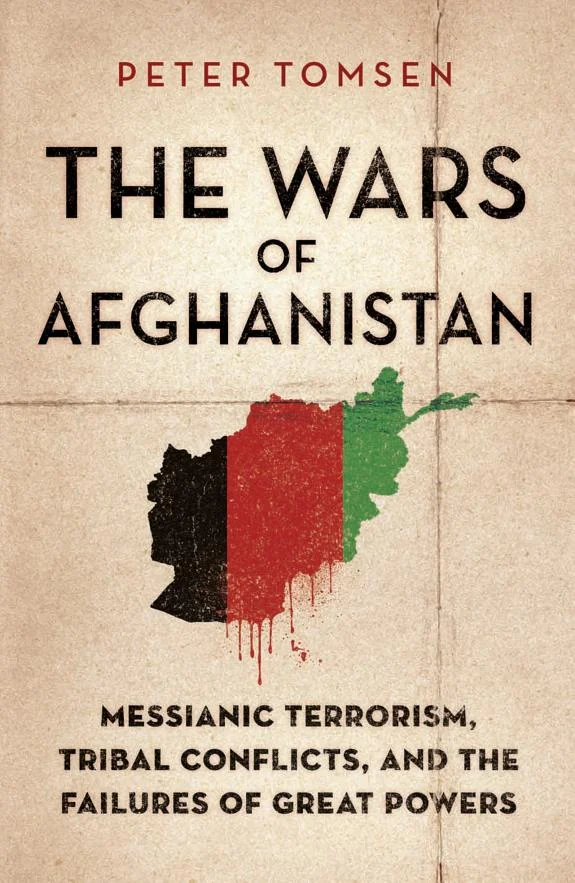
The Wars of Afghanistan
 72
72

The Wars of Afghanistan
Peter Tomsen's 'The Wars of Afghanistan' provides a stark, unsentimental look at how Western policy has shaped the very extremism it sought to combat. Unlike more generalized histories, Tomsen’s insider perspective offers granular detail on specific operations and decisions, particularly concerning the CIA's role in arming mujahideen factions. A particular strength is his unflinching critique of the Pentagon's strategic assumptions, which he argues consistently underestimated the indigenous forces at play. However, the book occasionally suffers from a dense prose style, making some of the intricate geopolitical maneuvers difficult to follow without prior knowledge. The section detailing the arms flow post-Soviet withdrawal, for instance, is crucial but demands close attention. It serves as a potent reminder that the roots of current conflicts are often sown by past, seemingly decisive, actions.
📝 Description
72
Peter Tomsen's 2011 book connects CIA operations and Pentagon strategies to the rise of Afghan extremism.
Peter Tomsen's account, published in 2011, scrutinizes Afghanistan's history from the 1970s onwards. He details how external interventions, including covert CIA actions and Pentagon military plans, unintentionally strengthened extremist groups within the country. Drawing on extensive personal experience, Tomsen offers an insider's look at the complex geopolitical forces involved.
This work is particularly relevant for students of geopolitics, international relations, and modern history, especially those focused on the long conflicts in South and Central Asia. It appeals to researchers of covert operations, military strategy, and the unforeseen results of foreign policy. Readers looking for an understanding that moves beyond mainstream interpretations of the Afghan wars will find substantial worth here.
The book addresses the post-Soviet era, the emergence of the Taliban, and subsequent international involvement. It examines decisions made during the Reagan administration and later presidencies, pointing to a consistent pattern of strategic errors that amplified radical ideologies.
This book fits into a tradition of critical analysis concerning statecraft and its unintended consequences, particularly in regions perceived as geopolitical battlegrounds. It examines how interventions, often framed by dominant strategic paradigms, can paradoxically create the very conditions they aim to prevent. The focus on the hidden mechanisms of covert operations and the amplification of local radicalism through external manipulation places it within a discourse that questions official narratives and looks for deeper, often obscured, causal links in international affairs.
💡 Why Read This Book?
• Learn how specific CIA covert operations in the 1980s, aimed at countering Soviet influence, inadvertently laid groundwork for later extremist movements, offering a concrete historical lesson on unintended consequences. • Understand the Pentagon's strategic miscalculations regarding Afghan tribal structures and political dynamics, as detailed through the author's firsthand observations from the ground. • Gain insight into the cyclical nature of conflict in Afghanistan, particularly how external military strategies from the late 20th century directly contributed to the rise of specific factions discussed in the book.
⭐ Reader Reviews
Honest opinions from readers who have explored this book.
❓ Frequently Asked Questions
What period does Peter Tomsen's 'The Wars of Afghanistan' primarily cover?
The book focuses extensively on Afghanistan's history from the 1970s through to the early 2010s, detailing key political events and military interventions during this crucial era.
How does the book link CIA operations to extremism?
Tomsen argues that covert operations, particularly during the Soviet-Afghan War, empowered and armed groups that later evolved into extremist organizations, providing a critical analysis of this unintended consequence.
What is the author's perspective on the Pentagon's military strategy?
The author provides an insider's critique, suggesting that Pentagon strategies often failed to grasp the complex local realities, thereby strengthening extremist elements instead of weakening them.
Is 'The Wars of Afghanistan' a purely military history?
No, it is a geopolitical analysis that intertwines military strategy, covert operations, political maneuvering, and the socio-cultural dynamics of Afghanistan, offering a multi-faceted view.
What makes this account an 'insider's' perspective?
Peter Tomsen served as a diplomat and advisor, giving him direct access and firsthand experience with many of the individuals and decisions he analyzes, offering a unique vantage point.
When was 'The Wars of Afghanistan' first published?
The book was first published on July 12, 2011, providing a contemporary analysis of events leading up to that period.
🔮 Key Themes & Symbolism
Unintended Consequences of Intervention
A central theme is how well-intentioned or strategically motivated foreign interventions in Afghanistan have consistently produced outcomes contrary to their aims. Tomsen meticulously details how the arming of mujahideen groups by the CIA during the 1980s, while effective against the Soviets, created a potent force that later destabilized the region and contributed to the rise of groups like Al-Qaeda and the Taliban. This exploration highlights a recurring pattern where external actors, lacking a deep understanding of local dynamics, empower forces that ultimately become uncontrollable and detrimental to regional stability.
The Amplification of Extremism
The book argues that both covert operations and overt military strategies employed by the United States and its allies have, paradoxically, strengthened extremist elements. By focusing on military solutions and proxy support without adequate attention to political and social contexts, these actions inadvertently provided resources, legitimacy, and a rallying point for radical factions. Tomsen examines how the perception of foreign occupation or interference became a powerful recruitment tool for extremist recruiters, creating a self-perpetuating cycle of conflict.
Geopolitical Blind Spots
Tomsen's insider account exposes significant blind spots in the geopolitical decision-making processes concerning Afghanistan. He criticizes the tendency of policymakers and military strategists to rely on simplistic analyses, often overlooking the complexities of Afghan tribal structures, regional rivalries, and the deep-seated historical grievances. This lack of nuanced understanding, the book contends, has led to repeated strategic failures and a perpetuation of conflict, demonstrating how a failure to comprehend the local 'rules of the game' can undermine even the most powerful external forces.
The Cycle of Proxy Warfare
The work dissects Afghanistan's long history as a battleground for external powers, emphasizing the destructive nature of proxy warfare. Tomsen illustrates how various international actors have utilized Afghan factions to pursue their own agendas, turning the country into a chessboard where local populations bear the brunt of the conflict. This theme underscores the dangers of foreign powers manipulating internal divisions for strategic gain, often leading to prolonged instability and the entrenchment of militarized, extremist ideologies.
💬 Memorable Quotes
Direct passages from the work, attributed to the author.
“The CIA's covert operations and the Pentagon's military strategy have strengthened extremism in the country.”
— This core assertion posits that the very actions taken to combat perceived threats in Afghanistan have, through miscalculation or unforeseen consequences, actively contributed to the growth and entrenchment of extremist ideologies and groups.
“An insider's account of Afghanistan's history since the 1970s.”
— This highlights the book's value as a firsthand narrative, offering perspectives and details potentially unavailable in purely academic or journalistic histories, grounded in direct experience.
“The book details how external interventions inadvertently fueled the rise of extremist factions.”
— This interpretation focuses on the unintended outcomes of foreign involvement, suggesting a lack of foresight or understanding regarding the complex socio-political range of Afghanistan by external powers.
“The narrative questions the efficacy of military solutions in complex cultural and political landscapes.”
— This suggests the author critically examines the limitations of purely military approaches, implying that sustainable peace requires deeper engagement with the cultural and political specificities of the region.
💡 Key Ideas
Editorial paraphrase of the work's core concepts — not direct quotes.
Tomsen critiques the tendency to rely on simplistic analyses of Afghan dynamics.
This paraphrase points to the author's criticism of oversimplified strategic thinking, emphasizing his belief that a more nuanced understanding of Afghanistan's internal structures is essential for effective policy.
🌙 Esoteric Significance
Tradition
While 'The Wars of Afghanistan' is primarily a geopolitical analysis, its focus on the cyclical nature of conflict, the influence of hidden forces (covert operations), and the unintended amplification of negative energies can be seen through an esoteric lens. It aligns with certain Hermetic principles concerning cause and effect, and the idea that actions, especially those shrouded in secrecy, can generate unforeseen repercussions. The book implicitly explores how the manipulation of spiritual or ideological fervor by external powers can unleash chaotic forces, a theme found in various occult traditions that warn against tampering with fundamental energies without full comprehension.
Symbolism
The book implicitly engages with symbols of external imposition versus internal resilience. The 'war machine' or 'covert operation' can be seen as a symbol of external will attempting to impose order or achieve objectives without understanding the underlying 'sacred geography' or spirit of the land. Afghanistan itself, often depicted as an unconquerable territory, functions as a symbol of indigenous spirit resisting foreign domination. The rise of extremism, in this reading, symbolizes a perversion of authentic spiritual or nationalist fervor, twisted into a destructive force by external manipulation and internal desperation.
Modern Relevance
Contemporary thinkers examining the failures of nation-building and interventionist foreign policy often reference the dynamics detailed by Tomsen. His work provides a historical case study for those exploring the intersection of geopolitics and the psychology of conflict, particularly relevant in discussions surrounding the resurgence of populist movements and the manipulation of information. Practitioners of conflict resolution and peace studies might draw upon his analysis of how external strategies can exacerbate internal divisions, informing modern approaches that prioritize cultural understanding and de-escalation over military solutions.
👥 Who Should Read This Book
• Students of international relations and geopolitical history: Gain a critical, insider perspective on the long-term consequences of US foreign policy and military interventions in Afghanistan, moving beyond standard historical accounts. • Researchers of covert operations and intelligence agencies: Understand the documented impact of CIA actions and Pentagon strategies on regional stability and the rise of non-state actors. • Those interested in the roots of modern extremism: Explore how historical decisions and external manipulations contributed to the entrenchment of radical ideologies in a complex cultural landscape.
📜 Historical Context
Peter Tomsen's 'The Wars of Afghanistan,' published in 2011, emerged during a period of intense international engagement and debate surrounding the ongoing conflict. Its release coincided with the Obama administration's surge strategy and a growing public questioning of the war's efficacy. The book directly engages with the historical roots of this protracted conflict, tracing its trajectory from the Soviet invasion in 1979 and the subsequent US-backed mujahideen resistance. Tomsen’s perspective is informed by his diplomatic career, including his tenure as U.S. Ambassador to Denmark during the Reagan administration, offering a view from within the policy-making apparatus. His work implicitly challenges the dominant realist foreign policy narratives of the time, arguing that a failure to comprehend indigenous Afghan dynamics, particularly tribal structures and historical grievances, doomed many strategic initiatives. While not directly engaging with a specific academic school of thought in its prose, it provides substantial evidence against the efficacy of purely military-centric approaches favored by some geopolitical thinkers, offering a counterpoint to the strategic analyses prevalent in the post-9/11 era.
📔 Journal Prompts
The cycle of proxy warfare and its impact on Afghan society.
Critique of Pentagon military strategy versus indigenous dynamics.
Unintended consequences of CIA covert operations.
The role of external actors in strengthening extremism.
Afghanistan as a symbol of resistance to foreign imposition.
🗂️ Glossary
Mujahideen
Islamic guerrilla fighters, particularly those who fought against the Soviet Union in Afghanistan during the 1980s, often supported by external powers including the United States.
Covert Operations
Secret activities undertaken by governments or their agencies, typically involving intelligence gathering or political/military action, often without public knowledge or acknowledgment.
Pentagon
The headquarters of the United States Department of Defense, often used metonymically to refer to the US military establishment and its strategic planning.
Extremism
Beliefs or actions far outside the political or social norm, often characterized by intolerance, radicalism, and a willingness to use extreme measures to achieve goals.
Proxy Warfare
A conflict where states or groups engage in combat through surrogate forces rather than direct military confrontation, often supporting opposing sides in a third party's conflict.
Geopolitics
The study of the influence of geography and economics on the politics, statecraft, and international relations of nations.
Taliban
An Islamic fundamentalist political movement that ruled most of Afghanistan from 1996 to 2001 and has since been engaged in insurgency against the Afghan government and international forces.
This book appears in 1 collection
🔮 Readers Also Liked
Browse all →







From the “Messianism” Collection
View all →





More Free Esoteric History & Biography Books
View all →