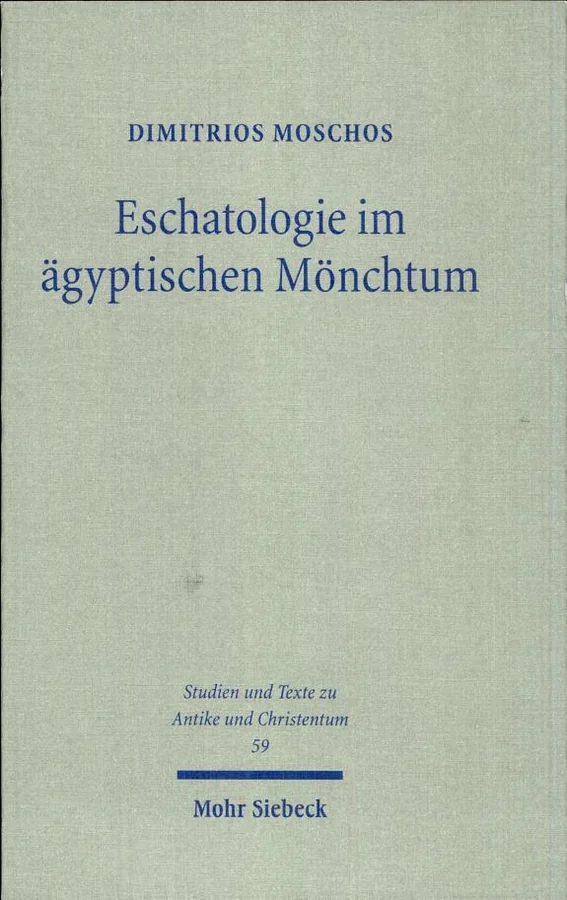
Eschatologie im ägyptischen Mönchtum
 76
76

Eschatologie im ägyptischen Mönchtum
Dēmētrios Moschos's exploration of eschatology within Egyptian monasticism offers a commendably granular historical perspective. The author's strength lies in his meticulous examination of varied source materials, resisting easy generalizations about the monolithic nature of early monasticism. A particularly compelling aspect is the detailed analysis of how the anticipation of the *parousia* manifested in the concrete organizational structures and daily practices of desert ascetics. However, the work's intense focus on historical method, while valuable, occasionally overshadows a more direct engagement with the lived spiritual experience that such eschatological frameworks aimed to cultivate. For instance, the discussion on the social functions of monastic communities, while historically grounded, could benefit from further interpretive depth regarding the internal spiritual dynamics. Nevertheless, for scholars seeking a historically precise account of eschatological thought's impact on early monasticism, this book provides essential groundwork.
📝 Description
76
Dēmētrios Moschos' 2010 study examines eschatology in early Egyptian monasticism.
This book analyzes the eschatological beliefs and practices of early Egyptian Christian monks. Moschos investigates how the anticipation of Christ's second coming, the *parousia*, influenced the daily routines, communal organization, and spiritual outlook of these ascetics. The study draws on a range of primary sources to understand the theological underpinnings and practical realities of monastic life in the Egyptian desert during the 3rd and 4th centuries CE.
The author questions whether the diverse forms of Egyptian monasticism, from solitary hermits to communal settlements, arose more from social necessities or from the internal development of Christian end times theology. Moschos considers the tension between the monks' pursuit of a spiritual, heavenly existence and their involvement in the social structures of the time. The work delves into how the expectation of the final judgment shaped their withdrawal from secular society and their communal rules.
The book situates Egyptian monasticism within a broader tradition of seeking divine realities through disciplined withdrawal and contemplation. Early Christian ascetics in Egypt, as detailed by Moschos, engaged with concepts of the afterlife and divine judgment as central to their earthly practice. This pursuit of ultimate spiritual truth, informed by scripture and theological reflection, aligns with esoteric traditions that emphasize inner transformation and the anticipation of a transformed existence beyond the material world.
💡 Why Read This Book?
• Gain a precise historical understanding of how the anticipation of Christ's *parousia* shaped the organizational forms and daily practices of early Egyptian monastic communities, as detailed in the analysis of sources from the 3rd and 4th centuries CE. • Uncover the specific tension between the monastic desire for a transformed, heavenly existence and their engagement with the social realities of their time, a key theme explored through historical examination. • Appreciate the nuanced historical debate regarding whether the diverse organizational structures of Egyptian monasticism arose from social needs or theological imperatives, a central question addressed by Moschos.
⭐ Reader Reviews
Honest opinions from readers who have explored this book.
❓ Frequently Asked Questions
What is the primary focus of Eschatologie im ägyptischen Mönchtum?
The book focuses on the historical examination of early Egyptian monasticism, specifically analyzing how Christian eschatological ideas, particularly the anticipation of the *parousia*, influenced its organizational forms, theology, and social functions.
Who was Dēmētrios Moschos and when was this book first published?
Dēmētrios Moschos is the author of Eschatologie im ägyptischen Mönchtum, which was first published in 2010. His work contributes to the scholarly understanding of early Christian ascetic movements.
What historical period does the book cover regarding Egyptian monasticism?
The book primarily examines the emergence and development of early monasticism in Egypt, a period largely spanning the 3rd and 4th centuries CE, when foundational figures and structures were established.
What does the book explore regarding the variety of monastic forms in Egypt?
It investigates whether the observed variety in organizational forms, theology, and social functions of Egyptian monasticism was a response to social needs or a natural development of theological ideas, particularly eschatology.
Does the book discuss specific influential figures in early Egyptian monasticism?
While focusing on broader historical trends and concepts, the work implicitly engages with the context shaped by influential figures like Antony the Great and Pachomius, whose movements represent key aspects of early monasticism.
What is the significance of the 'paradoxical idea' mentioned in the blurb?
The 'paradoxical idea' refers to the inherent tension within Christian thinking of the time: the anticipation of a transcendent, future heavenly kingdom (*parousia*) while simultaneously existing and organizing within the present earthly world.
🔮 Key Themes & Symbolism
Eschatological Frameworks
The central theme is how the Christian doctrine of the end times, especially the belief in Christ's second coming (*parousia*), provided a foundational lens through which early Egyptian monks understood their existence and purpose. This anticipation of a future, transformed reality profoundly influenced their ascetic practices, communal rules, and withdrawal from worldly concerns. The work dissects how this eschatological orientation was not merely a passive belief but an active force shaping the very structure and ethos of monastic life in the Egyptian desert from the 3rd century CE onwards.
Organizational Variety
Moschos addresses the notable diversity in the organizational forms that emerged within early Egyptian monasticism. Rather than presenting a uniform model, the book examines the spectrum from solitary hermits to more structured cenobitic communities. It critically assesses whether this variety stemmed from adaptive responses to the social and economic conditions of late antiquity or from differing interpretations and applications of core theological concepts, particularly eschatology.
Theology and Social Function
This theme explores the intricate relationship between the theological underpinnings of monasticism, especially its eschatological focus, and its perceived social functions. The book questions whether the monastic movement's appeal and structure were primarily driven by the desire for spiritual perfection in light of the approaching end times, or if they also served practical social roles within the broader context of late Roman Egypt. It probes how these two dimensions intersected and informed each other.
Source Material Analysis
A significant aspect of the book involves a detailed historical examination of various primary sources related to early Egyptian monasticism. Moschos employs critical methods to interpret these texts, which range from hagiographies to monastic rules and theological treatises. The focus is on extracting historically verifiable information about the monks' beliefs and practices concerning the end times, ensuring a grounded approach to understanding this complex spiritual phenomenon.
💬 Memorable Quotes
Direct passages from the work, attributed to the author.
“The anticipation of the *parousia* was not merely a speculative doctrine but a lived reality shaping monastic praxis.”
— This concept highlights how the belief in the imminent second coming of Christ was not just an abstract theological point for early monks, but a dynamic force that actively informed their daily routines, spiritual discipline, and communal organization.
“Was the variety of monastic forms a product of social needs or theological development?”
— This question frames the central analytical challenge of the work: to discern the primary drivers behind the diverse expressions of early Egyptian monasticism—whether practical societal demands or the internal logic of Christian doctrine.
“Egyptian monasticism offered distinct models of existence oriented towards the eschaton.”
— This interpretation suggests that the communities studied provided concrete, varied blueprints for how to live in anticipation of the end times, demonstrating a practical application of eschatological beliefs in daily life.
“The historical examination of sources reveals the complex interplay between ascetic ideals and community structure.”
— This points to the methodological approach of the book, emphasizing that understanding the spiritual aspirations of early monks requires a careful, factual study of the documents they left behind and how these shaped their communal life.
“The paradox of Christian thought: expecting the end while building the present.”
— This highlights a core tension explored in the book: how individuals and communities could simultaneously hold a belief in the imminent dissolution of the current world and yet establish enduring structures and practices within it.
🌙 Esoteric Significance
Tradition
While not strictly within a single esoteric lineage like Hermeticism or Kabbalah, this work touches upon themes central to Christian esotericism and early mystical traditions. It explores the practical application of profound theological concepts—eschatology—within a disciplined spiritual community, a hallmark of many esoteric paths. The focus on the inner life, transformative practices, and the pursuit of a higher reality aligns with the broader esoteric quest for spiritual liberation and union, albeit through a historically grounded Christian lens.
Symbolism
The desert itself serves as a potent symbol, representing both isolation from worldly distractions and a space for intense spiritual purification and encounter with the divine. The concept of the *parousia* functions symbolically, representing the ultimate goal and transformative event that reorients the monk's present existence. Furthermore, the organizational structures, whether solitary cells or communal dwellings, symbolize different stages or approaches to spiritual discipline and the collective anticipation of the Kingdom.
Modern Relevance
Contemporary movements focusing on Christian mysticism, contemplative prayer, and intentional communities often draw inspiration from the historical models of early monasticism. Thinkers and practitioners interested in radical discipleship, detachment from materialism, and the integration of spiritual belief into practical living find resonance in the historical accounts of Egyptian monks. The work's examination of how eschatological hope informed daily life offers a model for contemporary spiritual seekers grappling with existential questions and seeking purpose in a complex world.
👥 Who Should Read This Book
• Scholars of early Christianity and late antiquity seeking a detailed historical analysis of monastic origins and their theological underpinnings. • Students of comparative religion interested in the development of asceticism and its diverse manifestations across different historical contexts. • Advanced practitioners of contemplative spirituality aiming to understand the historical roots of structured spiritual discipline and eschatological focus in Christian tradition.
📜 Historical Context
Eschatologie im ägyptischen Mönchtum engages with the important period of late antiquity, specifically the 3rd and 4th centuries CE, when Christian monasticism first flourished in Egypt. This era was characterized by intense theological debate, the consolidation of Church structures, and the profound influence of ascetic movements. Figures like Antony the Great, often considered the father of Christian monasticism, and Pachomius, who organized the first cenobia, were active during this time. Moschos's work interrogates the intellectual currents that shaped these developments, particularly the pervasive expectation of the *parousia*. He situates his analysis against the backdrop of diverse theological interpretations, including nascent forms of Gnosticism and various Christological debates, while focusing specifically on how eschatological fervor informed the unique organizational and spiritual trajectories of Egyptian monks. The book implicitly addresses a scholarly conversation about the origins of monasticism, weighing the impact of social pressures against the internal dynamism of religious belief.
📔 Journal Prompts
The monastic tension between anticipating the *parousia* and organizing present life.
The symbolic significance of the desert landscape in shaping monastic eschatology.
How did the varied organizational forms reflect differing theological emphases?
Reflect on the source material analysis concerning the historical reality of monastic praxis.
The concept of eschatological hope as a driver for spiritual transformation.
🗂️ Glossary
Eschatology
The branch of theology concerned with the final events of history, or the ultimate destiny of humanity and the world. In Christianity, it primarily concerns beliefs about the end times, the Second Coming of Christ, and the final judgment.
Monasticism
A religious way of life characterized by the renunciation of worldly pursuits and the dedication to spiritual pursuits, often involving vows of poverty, chastity, and obedience within a communal or solitary setting.
*Parousia*
A Greek term meaning 'presence' or 'arrival,' specifically used in Christian theology to refer to the second coming of Jesus Christ at the end of time.
Eremitic
Relating to or characteristic of a hermit; a solitary form of monasticism where individuals live in seclusion, often in the wilderness.
Cenobitic
Relating to or characteristic of a community of monks living together under a common rule and leadership, as opposed to eremitic (solitary) monasticism.
Asceticism
The practice of severe self-discipline and abstention from all forms of indulgence, typically for religious or spiritual reasons. Early monasticism is a prominent form of ascetic practice.
Theology
The study of the nature of God and religious belief. In this context, it refers to the systematic exploration of Christian doctrines and their application to monastic life.
This book appears in 1 collection
🔮 Readers Also Liked
Browse all →









From the “Desert Fathers” Collection
View all →







More Free Esoteric History & Biography Books
View all →