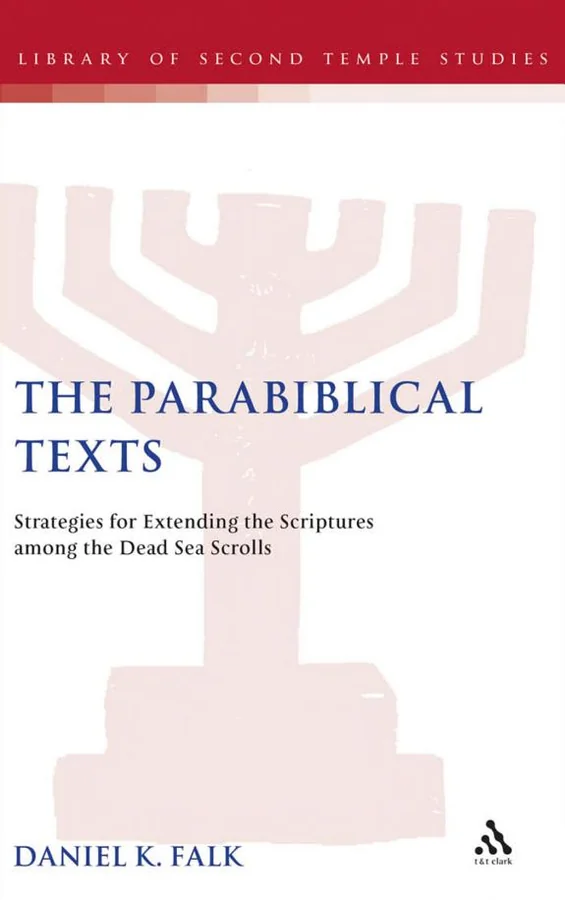
The Parabiblical Texts
 74
74

The Parabiblical Texts
Daniel K. Falk’s *The Parabiblical Texts* is a crucial academic primer for anyone seeking to understand a specific, yet profoundly influential, stratum of Dead Sea Scroll literature. Its strength lies in its clear taxonomy of the Rewritten Bible genre, meticulously distinguishing these works from simple pseudepigrapha or commentaries. Falk’s analysis of how these texts engage with canonical narratives, such as the Book of Genesis, revealing shifts in theological emphasis and narrative focus, is particularly illuminating. For instance, his discussion of texts that expand upon patriarchal stories offers a window into the evolving concerns of Second Temple Judaism. However, the work’s academic rigor, while commendable, can make it dense for the uninitiated. A slightly more accessible introduction to the Qumran context might have broadened its appeal. Nevertheless, it remains an indispensable resource for scholars and serious students of ancient religious texts. Falk provides a necessary framework for interpreting these complex compositions.
📝 Description
74
Daniel K. Falk's 2007 book examines 'Rewritten Bible' texts from the Dead Sea Scrolls.
The Parabiblical Texts investigates a specific class of ancient Jewish literature found among the Dead Sea Scrolls. These texts, often called "Rewritten Bible," are not mere commentaries but original compositions that retell biblical narratives and laws. Authors expanded upon existing scriptures, adding new details, dialogues, and theological ideas. Falk’s work details the characteristics of this genre and its significance within Second Temple Judaism.
This volume is aimed at scholars, advanced students, and dedicated enthusiasts of Second Temple Judaism, early biblical interpretation, and the Dead Sea Scrolls. It presumes some knowledge of textual criticism and the historical background of ancient Israel. Readers interested in how religious ideas developed, how textual traditions changed, and how ancient literary works are reconstructed will find this study particularly useful. Falk's research emerges from the period following the Qumran discoveries, focusing on the "Rewritten Bible" texts that were composed during the Second Temple era, a time of significant religious innovation.
These "parabiblical" texts represent an early phase of esoteric development within Judaism, distinct from the canonical scriptures. They show a tradition of textual creativity and theological speculation that sought to deepen or alter the understanding of divine law and history. By reinterpreting and expanding biblical accounts, authors engaged in a form of mystical or revelatory exegesis, seeking hidden meanings and new divine insights. This practice reflects a broader ancient Near Eastern tendency to produce authoritative texts that supplemented or corrected existing traditions, often with implications for ritual, cosmology, and future expectations.
💡 Why Read This Book?
• Gain specific insights into the Rewritten Bible genre, understanding how ancient authors creatively reinterpreted foundational narratives, a concept explored through texts like those found at Qumran. • Learn about the historical context of Second Temple Judaism, specifically how diverse interpretive practices led to the creation of texts that engaged with scripture beyond simple commentary. • Develop a critical vocabulary for analyzing ancient texts by encountering terms and concepts central to the study of the Dead Sea Scrolls, as presented by Falk.
⭐ Reader Reviews
Honest opinions from readers who have explored this book.
❓ Frequently Asked Questions
What distinguishes 'Rewritten Bible' texts from other ancient Jewish literature?
Rewritten Bible texts, as explored in Falk's work, are characterized by their creative retelling and expansion of existing biblical narratives and laws. They are not mere commentaries or pseudepigrapha but original literary compositions that build upon scripture, often adding new material or theological interpretations.
When were the Parabiblical Texts composed?
The Parabiblical Texts, belonging to the Rewritten Bible genre, were primarily composed during the Second Temple period of Judaism, roughly spanning from 516 BCE to 70 CE. This era was a fertile ground for diverse religious and literary expression.
What is the significance of the Dead Sea Scrolls for understanding these texts?
The Dead Sea Scrolls, discovered starting in 1947, provided the bulk of the surviving Rewritten Bible literature. Their discovery fundamentally altered scholarly understanding of ancient Jewish textual traditions and interpretive methods prevalent before 70 CE.
Does 'The Parabiblical Texts' discuss specific examples?
Yes, the work examines various examples of Rewritten Bible texts, analyzing how they engage with and reinterpret biblical accounts, particularly focusing on narratives found in books like Genesis and Exodus.
Who is Daniel K. Falk?
Daniel K. Falk is a scholar specializing in Second Temple Judaism and the Dead Sea Scrolls. His first publication on this topic appeared in 2007, establishing him as a key voice in the study of these ancient texts and their literary genres.
Is this book suitable for beginners in religious studies?
While comprehensive, the book is written with an academic audience in mind. Beginners might find it beneficial to have some prior familiarity with the historical period and basic textual criticism before engaging deeply with Falk's analysis.
🔮 Key Themes & Symbolism
Rewritten Bible Genre
This genre, central to Falk's study, represents ancient Jewish authors actively engaging with and reshaping biblical narratives and laws. Unlike simple commentaries, these texts present new literary compositions that expand upon scripture, often to address contemporary theological concerns or to present a particular community's interpretation. Examples include expansions of Genesis or reinterpretations of Levitical laws, demonstrating a dynamic relationship with the established text during the Second Temple period.
Textual Fluidity and Interpretation
The Parabiblical Texts highlight the fluidity of scripture and interpretive practices in ancient Judaism. Before the standardization of the biblical canon, authors felt at liberty to rework existing narratives, adding dialogue, characters, or theological frameworks. This demonstrates that 'scripture' was not a static entity but a living tradition open to creative reinterpretation, a key aspect of the period leading up to 70 CE.
Theological Development
By analyzing how biblical stories are retold, Falk reveals evolving theological perspectives within Second Temple Jewish communities. Authors might emphasize different aspects of God's character, introduce new ideas about covenant, or adapt ancient laws to current needs. These reinterpretations offer invaluable insights into the diverse spiritual and intellectual field of the time.
Dead Sea Scrolls Context
The study of Rewritten Bible texts is inextricably linked to the Dead Sea Scrolls, discovered near Qumran. These scrolls provide the primary corpus of evidence for this genre, offering a unique window into sectarian and non-sectarian Jewish thought from roughly the 3rd century BCE to the 1st century CE. Falk anchors his analysis within this archaeological and textual context.
💬 Memorable Quotes
Direct passages from the work, attributed to the author.
“Rewritten Bible texts are not simply commentaries.”
— This statement emphasizes the distinct nature of the genre, distinguishing it from works that merely explain existing scripture. It highlights that these texts are original literary creations that build upon biblical foundations in novel ways.
“The genre flourished during the Second Temple period.”
— This highlights the specific historical window, approximately 516 BCE to 70 CE, during which these creative scriptural re-elaborations were most prevalent, before the consolidation of the canon and subsequent textual traditions.
“These texts reveal evolving theological ideas.”
— An interpretation of Falk's findings, this points to how the reinterpretation of biblical stories served as a vehicle for developing and expressing new theological concepts and perspectives within ancient Jewish communities.
“The Dead Sea Scrolls are a primary source for this literature.”
— This emphasizes the critical importance of the Qumran discoveries for the existence and study of Rewritten Bible texts, underscoring their role as the main repository of evidence for this unique genre.
💡 Key Ideas
Editorial paraphrase of the work's core concepts — not direct quotes.
Authors expanded biblical narratives with new dialogue and events.
This paraphrased concept illustrates a core method of Rewritten Bible composition: authors actively interpolated new content into established stories, demonstrating a creative freedom in their engagement with scripture during the Second Temple period.
🌙 Esoteric Significance
Tradition
While not explicitly an esoteric text in the Hermetic or Kabbalistic sense, *The Parabiblical Texts* interfaces with traditions of mystical and allegorical interpretation that underpin many esoteric lineages. The Rewritten Bible genre itself reflects an ancient impulse to uncover deeper, hidden meanings within scripture, a practice common in esoteric thought seeking gnosis or divine knowledge beyond the literal. It represents a precursor to later methods of scriptural exegesis found in mystical traditions.
Symbolism
The symbolism in Rewritten Bible texts often lies in the amplification of existing biblical motifs. For instance, narratives concerning creation or divine covenants are frequently expanded, imbuing figures like Abraham or Moses with heightened symbolic significance as archetypes of faith, obedience, or divine election. The very act of rewriting scripture can symbolize a community's attempt to re-establish or redefine its relationship with the divine and its foundational myths.
Modern Relevance
Contemporary scholars of religion, comparative literature, and textual studies continue to draw on Falk's foundational work. The study of Rewritten Bible texts informs modern understandings of scriptural authority, the nature of religious innovation, and the historical development of textual canons. Thinkers interested in the evolution of narrative and theology in ancient Near Eastern contexts find this genre essential for a comprehensive view of early Judaism.
👥 Who Should Read This Book
• Students of the Dead Sea Scrolls: Gain a structured understanding of the Rewritten Bible genre, a significant category of texts discovered at Qumran. • Scholars of Second Temple Judaism: Deepen your knowledge of interpretive practices and literary innovation during an important era in Jewish history. • Comparative Religion Researchers: Explore how ancient cultures engaged with their foundational narratives, providing context for scriptural development across traditions.
📜 Historical Context
Daniel K. Falk's *The Parabiblical Texts* emerges from the revolution in biblical scholarship initiated by the Dead Sea Scrolls discoveries, beginning in 1947. This body of literature, particularly flourishing during the Second Temple period (c. 516 BCE–70 CE), represents a vibrant era of Jewish intellectual and religious creativity. Competing with, and influencing, the development of the Pharisaic and Rabbinic traditions, these texts demonstrate a remarkable freedom in interpreting and re-presenting scripture. Falk's work situates the Rewritten Bible genre within this dynamic milieu, a period where the boundaries of scripture were still being negotiated. Key contemporaries whose interpretive methods or textual traditions were developing concurrently include Philo of Alexandria and the Qumran community itself, whose sectarian texts offer further evidence of diverse scriptural engagement. The reception of these texts has been largely academic, with scholars like Geza Vermes and Emanuel Tov significantly contributing to their classification and understanding.
📔 Journal Prompts
The concept of 'Rewritten Bible' and its implications for textual authority.
Analyzing expansions of Genesis narratives: what theological shifts are evident?
The historical context of Second Temple Judaism and its literary output.
How do authors of Rewritten Bible texts approach the concept of covenant?
Comparing Falk's analysis of Qumran texts with other ancient Jewish literature.
🗂️ Glossary
Rewritten Bible
A genre of ancient Jewish literature found among the Dead Sea Scrolls that retells biblical narratives and laws with significant expansions, reinterpretations, and theological developments, presenting original literary compositions.
Second Temple Period
The era in Jewish history spanning from the rebuilding of the Second Temple in Jerusalem (c. 516 BCE) until its destruction by the Romans in 70 CE. It was a period of diverse religious and intellectual activity.
Dead Sea Scrolls
Ancient Jewish manuscripts discovered in caves near the Dead Sea, primarily between 1947 and 1956, dating from the 3rd century BCE to the 1st century CE. They include biblical texts, sectarian documents, and other writings.
Pseudepigrapha
A category of ancient Jewish and Christian writings, purporting to be by biblical figures but not accepted as canonical. Distinct from Rewritten Bible, which builds directly on existing narratives.
Textual Criticism
The scholarly analysis of ancient texts to determine the original wording and identify variations or corruptions that may have occurred during transmission.
Qumran
An archaeological site near the Dead Sea where the Dead Sea Scrolls were discovered. Associated with a Jewish sect, likely the Essenes, during the Second Temple period.
Canon
The official list of books considered to be authoritative scripture within a religious tradition. The formation of the biblical canon was a complex process during and after the Second Temple period.
This book appears in 1 collection
🔮 Readers Also Liked
Browse all →





From the “Dead Sea Scrolls” Collection
View all →






More Free Sacred Texts & Gnosticism Books
View all →