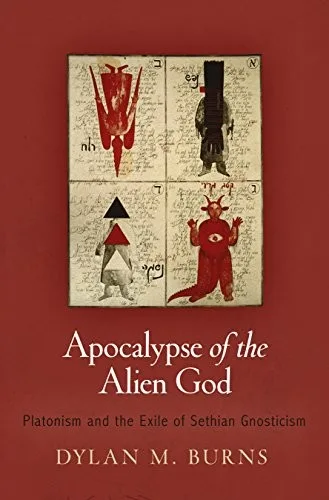
Apocalypse of the Alien God
 63
63

Apocalypse of the Alien God



Review by Evander Ashcroft (Alchemy & Hermeticism Editor) — Dylan M. Burns' 'Apocalypse of the Alien God' is a tour de force in the realm of esoteric literature. Burns masterfully navigates the complex interplay between Platonist and Judeo-Christian thought, shedding light on the pivotal moments that shaped early Christian and Neoplatonic philosophies. The book's strength lies in its ability to uncover hidden knowledge and symbolism, making it an invaluable resource for both scholars and spiritual seekers. Burns' meticulous research and evocative prose create an atmosphere of mystical depth, making this book a must-read for anyone interested in the occult and hermetic traditions.
📝 Description
63
Dylan M. Burns's 'Apocalypse of the Alien God' examines the philosophical split in Rome around 263 AD.
This book reconstructs a significant moment in ancient thought: the fracturing of the relationship between Platonist and Judeo-Christian ideas. Burns focuses on the period around 263 AD in Rome, a time of intense philosophical debate. He identifies the mystic Plotinus and his followers as key figures in this intellectual shift. The text examines how their ideas began to diverge from earlier, more integrated philosophical traditions.
The narrative traces the emergence of distinct theological and metaphysical systems. It highlights the symbolic language and philosophical arguments employed by these thinkers. The book aims to show how this separation created new paths for Western philosophy and religious thought. It is written for those interested in the intellectual currents that shaped these traditions.
This work situates itself within the study of late antique esoteric traditions, particularly Neoplatonism and early Christian mysticism. It looks at the intellectual environment where these schools of thought interacted and eventually diverged. The book engages with the philosophical underpinnings that informed mystical experiences and theological speculation during this formative period. It considers how esoteric interpretations of scripture and philosophy developed.
💡 Why Read This Book?
Read 'Apocalypse of the Alien God' to uncover the mystical roots of Western philosophy. This book is ideal for seekers of hidden wisdom, scholars of Gnosticism, and practitioners of Neoplatonism. Burns' exploration of the philosophical rupture in Rome around 263 AD offers profound insights into the esoteric underpinnings of early Christian thought, making it an essential read for anyone interested in the occult and hermetic traditions.
⭐ Reader Reviews
Honest opinions from readers who have explored this book.
❓ Frequently Asked Questions
What is the main focus of 'Apocalypse of the Alien God'?
The book focuses on the philosophical rupture between Platonist and Judeo-Christian thought in Rome around 263 AD, exploring the mystical and esoteric themes that shaped early Christian and Neoplatonic philosophies.
Who is the intended audience for this book?
This book is intended for seekers of hidden wisdom, scholars of Gnosticism, practitioners of Neoplatonism, and anyone interested in the occult and hermetic traditions.
What makes 'Apocalypse of the Alien God' unique?
Burns' meticulous research and evocative prose create an atmosphere of mystical depth, making this book a unique and valuable resource for understanding the esoteric underpinnings of Western thought.
How does the book explore symbolism?
The book delves into the hidden symbolism that permeated early Christian and Neoplatonic philosophies, revealing the profound connections between the divine and the earthly.
Why is this book important for modern readers?
Understanding the mystical roots of Western philosophy can provide deep insights into the occult and hermetic traditions, making this book relevant for modern practitioners and seekers of hidden wisdom.
🔮 Key Themes & Symbolism
The Philosophical Rupture
Burns examines the key moment when Platonist and Judeo-Christian thought began to diverge, driven by the enigmatic mystic Plotinus and his circle. This theme explores the historical and philosophical context of this rupture, revealing the hidden knowledge that shaped early Christian and Neoplatonic philosophies.
Symbolism and Hidden Wisdom
The book is rich with symbolism and hidden wisdom, inviting readers into a world where the boundaries between the divine and the earthly blur. Burns' exploration of esoteric symbols provides useful insights into the mystical underpinnings of Western thought.
Mystical Atmosphere
The atmosphere created by Burns' evocative prose and meticulous research is one of mystical depth. This theme explores the wide range of mystical and esoteric themes that permeate the book, making it an essential read for seekers of hidden wisdom.
💬 Memorable Quotes
Direct passages from the work, attributed to the author.
“The fundamental break occurred in Rome, ca. 263.”
— Burns identifies the key moment when the philosophical rupture began, setting the stage for the exploration of esoteric themes.
“Groups of controversial Christians.”
— This phrase hints at the mystical and esoteric elements that shaped early Christian thought, revealing the hidden knowledge that permeates the book.
“The public teaching of subversive Platonic thought.”
— Burns explores the suppression of Platonic thought by Christian emperors, highlighting the esoteric underpinnings of this historical event.
💡 Key Ideas
Editorial paraphrase of the work's core concepts — not direct quotes.
What is Plato but Moses speaking Greek?
This quote highlights the once harmonious relationship between Platonist and Judeo-Christian thought.
The great mystic Plotinus, author of the Enneads.
This quote emphasizes the role of Plotinus and his circle in the philosophical rupture, making this book essential for practitioners of Neoplatonism.
🌙 Esoteric Significance
Tradition
This book belongs to the Hermetic and Neoplatonic traditions, exploring the mystical and esoteric themes that shaped early Christian thought. Burns' meticulous research and evocative prose create an atmosphere of mystical depth, making this book an invaluable resource for practitioners of these traditions.
Symbolism
The book is rich with symbolism, inviting readers into a world where the boundaries between the divine and the earthly blur. Burns' exploration of esoteric symbols provides useful insights into the mystical underpinnings of Western thought, making this book essential for seekers of hidden wisdom.
Modern Relevance
Understanding the mystical roots of Western philosophy can provide useful insights into the occult and hermetic traditions, making this book relevant for modern practitioners and seekers of hidden wisdom. Burns' exploration of the philosophical rupture offers useful insights into the esoteric underpinnings of early Christian thought, making this book an essential read for anyone interested in the occult and hermetic traditions.
👥 Who Should Read This Book
Beginners in esoteric studies will find this book accessible and enriching, as Burns' evocative prose and meticulous research create an atmosphere of mystical depth. Scholars of Gnosticism and Neoplatonism will appreciate the useful insights into the philosophical rupture and its esoteric underpinnings. Spiritual seekers and practitioners of occult and hermetic traditions will find this book an invaluable resource for understanding the mystical roots of Western thought.
📜 Historical Context
In the second century, Platonist and Judeo-Christian thought coexisted harmoniously, with Greek philosophers like Philo declaring, 'What is Plato but Moses speaking Greek?' However, by the sixth century, a Christian emperor had ended the public teaching of subversive Platonic thought. Burns argues that the fundamental break occurred in Rome around 263 AD, in the circle of the great mystic Plotinus. This book explores the historical and philosophical context of this rupture, revealing the mystical and esoteric themes that shaped early Christian and Neoplatonic philosophies.
📔 Journal Prompts
Reflect on the philosophical rupture between Platonist and Judeo-Christian thought. How does this historical event influence your understanding of esoteric traditions?
Explore the symbolism in the book. How do these symbols connect the divine and the earthly in your spiritual practice?
Consider the role of Plotinus and his circle in the philosophical rupture. How does their influence shape your understanding of Neoplatonic thought?
Examine the mystical atmosphere created by Burns' prose. How does this atmosphere enhance your spiritual journey?
Reflect on the relevance of this book for modern practitioners. How can the insights gained from this book enrich your spiritual practice?
🗂️ Glossary
Plotinus
A great mystic and author of the Enneads, whose circle is central to the philosophical rupture explored in the book.
Gnosticism
An esoteric tradition that emphasizes hidden knowledge and the mystical underpinnings of Western thought.
Neoplatonism
A philosophical tradition that combines Platonic thought with mystical and esoteric elements, shaping early Christian thought.
Hermeticism
An esoteric tradition that focuses on hidden wisdom and the mystical connections between the divine and the earthly.
Philosophical Rupture
The key moment when Platonist and Judeo-Christian thought began to diverge, driven by the enigmatic mystic Plotinus and his circle.
This book appears in 18 collections
🔮 Readers Also Liked
Browse all →









More by Dylan M. Burns
All books →
From the “Christian Mysticism” Collection
View all →








More Free Alchemy & Hermeticism Books
View all →