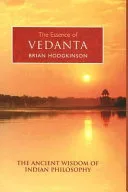
Essence Of Vedanta
 78
78

Essence Of Vedanta
Packages' "Essence of Vedanta" presents a clear, if somewhat dry, exposition of this ancient Indian philosophical system. The author’s strength lies in their methodical breakdown of complex concepts like Brahman and Atman, making them accessible without oversimplification. A notable limitation, however, is the lack of engagement with the practical, meditative aspects often interwoven with Vedantic study; the focus remains squarely on the philosophical architecture. The section detailing Maya, explaining the illusory nature of the perceived world, is particularly well-articulated, serving as a lucid entry point for newcomers. The work provides a solid intellectual foundation but may leave practitioners yearning for a more embodied or experiential dimension.
Ultimately, Essence of Vedanta serves as a valuable, albeit purely intellectual, primer on Vedantic thought.
📝 Description
78
Published in 2000, Essence of Vedanta offers a structured introduction to a key Indian philosophical tradition.
This book explains Vedanta, a philosophical and spiritual tradition that comes from the Upanishads, the final parts of the Vedas. Vedanta offers a way to understand reality, consciousness, and the self. The author presents these ideas for people interested in spiritual knowledge, philosophy, or Eastern thought. It is suited for those who like to use clear thinking to explore big questions about existence. The book examines core Vedanta ideas like Brahman, the ultimate reality, and Atman, the individual self. It also discusses Maya, the concept of illusion, and Moksha, the goal of liberation. A central theme is the non-dualistic view that the self is the same as universal consciousness, which differs from other ways of understanding the world.
Vedanta's roots go back thousands of years. Key texts like the Upanishads were written between 800 and 200 BCE. The book's 2000 publication date places it in a time when Indian philosophy was becoming more known internationally. It was often studied alongside Western philosophy and modern psychology. The author's goal is to make these complex concepts accessible to a modern audience.
Vedanta represents the culmination of Vedic thought, focusing on the knowledge of the Self and its identity with the Absolute. Emerging from the Upanishads, it forms one of the six orthodox schools of Indian philosophy. Its esoteric dimension lies in its contemplative and meditative practices aimed at direct realization of Brahman, transcending ordinary perception and conceptualization. This tradition seeks to uncover the fundamental unity underlying all existence, a pursuit often described as the ultimate spiritual goal.
💡 Why Read This Book?
• You will gain a foundational understanding of Brahman, the ultimate reality described in the Upanishads, and how its nature is explored through rational inquiry. • You will learn about the concept of Atman, the true self, and its relationship to Brahman, as presented in the scriptural basis of Vedanta. • You will grasp the philosophical role of Maya, the concept of cosmic illusion, and how it explains the perceived multiplicity of the world, a key element in Vedantic thought since its early formulations.
⭐ Reader Reviews
Honest opinions from readers who have explored this book.
❓ Frequently Asked Questions
What are the primary scriptures that Vedanta draws from?
Vedanta is primarily drawn from the Upanishads, which are considered the concluding portions of the Vedas. These ancient Sanskrit texts, composed over centuries, form the philosophical bedrock of the Vedantic tradition.
Is Vedanta only for Hindus?
Although Vedanta forms the philosophical basis for Hinduism, its teachings are presented as rational and universal. The book explores these principles, making them accessible to anyone interested in comparative philosophy and metaphysics, regardless of religious affiliation.
What is the central concept of Brahman in Vedanta?
Brahman is the supreme, unchanging, infinite reality that is the ground of all existence. Essence of Vedanta explains Brahman as the ultimate cosmic principle, the source and substance of the universe, often described as pure consciousness.
How does Vedanta explain the individual self?
Vedanta posits the existence of Atman, the individual soul or self. A core teaching explored in the book is the identity of Atman with Brahman, suggesting that the deepest essence of the individual is identical with the ultimate reality.
What does the term 'Maya' signify in Vedanta?
Maya refers to the cosmic illusion or the power that conceals the true nature of reality and projects the phenomenal world. Essence of Vedanta explains Maya as the reason for our perception of a diverse and separate existence.
When was 'Essence of Vedanta' first published?
The book 'Essence of Vedanta' by Packages was first published on May 24, 2000. This publication date places it within a period of increased global interest in Eastern philosophies.
🔮 Key Themes & Symbolism
The Nature of Brahman
The work meticulously details Brahman as the singular, ultimate reality underlying all existence. It emphasizes Brahman's attributeless (nirguna) and with-attributes (saguna) aspects, presenting it not as a personal god but as the impersonal, all-pervading consciousness. The text explores how the Vedantic tradition seeks to understand this ultimate principle through philosophical reasoning and scriptural interpretation, moving beyond mere theological dogma to a metaphysical comprehension of the cosmos's fundamental substance.
The Concept of Atman
Central to Essence of Vedanta is the exploration of Atman, the true self or soul. The book elucidates the profound Vedantic assertion that Atman is not separate from Brahman. This non-dualistic perspective posits that the individual consciousness, when stripped of ego and worldly identifications, is identical to the universal consciousness. The text guides readers through understanding this identification as the ultimate spiritual realization, distinct from the transient personality or physical body.
Understanding Maya
Essence of Vedanta offers a thorough examination of Maya, often translated as illusion. It explains Maya not as a denial of the world's existence, but as a misunderstanding of its ultimate nature. The book illustrates how Maya creates the appearance of multiplicity and separation from Brahman, veiling the underlying unity. This concept is presented as the primary obstacle to spiritual liberation, responsible for binding individuals to the cycle of birth and death.
Paths to Liberation (Moksha)
The book touches upon the Vedantic goal of Moksha, or liberation from suffering and the cycle of rebirth. While focusing on philosophical exposition, it implicitly points towards the understanding of non-duality (Advaita Vedanta) as the means to achieve this state. The text suggests that true freedom comes from the direct realization of the identity between Atman and Brahman, transcending ignorance and illusion through wisdom and self-knowledge.
💬 Memorable Quotes
Direct passages from the work, attributed to the author.
“Vedanta is a system of philosophy drawn from the Indian scriptures known as the Veda.”
— This statement grounds Vedanta firmly within its scriptural origins, highlighting the Vedas as the foundational texts from which its philosophical tenets are derived, emphasizing its ancient and authoritative lineage.
“Its teachings are essentially rational and universal.”
— This highlights the book's emphasis on Vedanta not being confined to dogma or ritual, but offering a logical framework for understanding existence that transcends cultural and religious boundaries, appealing to universal reason.
“The perceived world is a manifestation of Maya, or cosmic illusion.”
— This interpretation of Maya underscores the Vedantic view that the phenomenal world, with its apparent diversity and separateness, is not the ultimate reality but a superimposed appearance obscuring the underlying unity.
💡 Key Ideas
Editorial paraphrase of the work's core concepts — not direct quotes.
The individual self is ultimately identical with the universal consciousness.
This paraphrased core concept captures the essence of Advaita Vedanta, positing that the deepest reality of the individual (Atman) is one with the ultimate reality (Brahman), a profound statement about unity.
Understanding the true nature of Atman is key to liberation.
This paraphrased statement emphasizes the significance of self-knowledge within Vedanta, suggesting that realizing the authentic self (Atman) is the direct path to freedom from ignorance and suffering.
🌙 Esoteric Significance
Tradition
While Vedanta is primarily a philosophical and spiritual tradition within Hinduism, its non-dualistic teachings on consciousness and reality have significant resonance within esoteric circles globally. It shares common ground with mystical traditions that posit an underlying unity of all existence, such as certain interpretations of Hermeticism or Gnosticism, albeit with distinct terminology and scriptural bases. The emphasis on direct realization of truth aligns with esoteric paths seeking inner transformation beyond exoteric religious forms.
Symbolism
Key symbols within Vedanta, though not always visually represented in a text-focused book, include the Om (Aum) mantra, representing the primordial sound and the totality of consciousness, and the lotus, symbolizing purity, spiritual awakening, and the unfolding of consciousness from the material world. The concept of Brahman itself can be seen as a symbolic representation of the unmanifest source from which all manifest reality arises.
Modern Relevance
Contemporary thinkers and practitioners in fields ranging from consciousness studies to transpersonal psychology often draw upon Vedantic concepts. Schools of thought like Advaita Vedanta continue to influence meditation practices and philosophical discourse worldwide. Modern gurus and spiritual teachers frequently reference Vedantic principles to guide seekers toward self-realization and understanding the nature of existence in a rapidly changing world.
👥 Who Should Read This Book
• Students of comparative philosophy: Those seeking to understand the foundational concepts of major world philosophies will find a clear exposition of Vedanta's rational framework. • Spiritual seekers interested in Eastern traditions: Individuals exploring paths beyond Western religious frameworks will gain insight into a profound system of metaphysical thought. • Philosophers of mind and consciousness: Readers interested in non-dualistic perspectives on consciousness and the nature of reality will find valuable material for contemplation.
📜 Historical Context
The philosophical traditions explored in Essence of Vedanta have roots stretching back to the Vedic period of ancient India, with the Upanishads, its primary source material, being composed roughly between 800 and 200 BCE. The book's own publication in 2000 places it in a contemporary landscape where Eastern philosophies are increasingly studied globally. During the 20th century, scholars like Sarvepalli Radhakrishnan played a central role in introducing Indian philosophy, including Vedanta, to Western audiences, often engaging in dialogue with Western philosophical movements. While Vedanta has faced differing interpretations and critiques, including those from Buddhist schools emphasizing impermanence and non-self (Anatta) in contrast to Vedanta's eternal Atman, its influence has remained pervasive. The book arrives in an era where comparative religion and philosophy are academic staples, and spiritual seekers often look to such texts for systematic explanations.
📔 Journal Prompts
The concept of Brahman as ultimate reality: How does this differ from Western notions of God?
Atman's identity with Brahman: Explore the implications of this non-dualistic assertion for personal identity.
The role of Maya: Reflect on instances where the perceived world may obscure a deeper truth.
Rational inquiry into metaphysical truths: Consider the limits and strengths of logic in understanding existence.
The goal of Moksha: Contemplate the meaning of liberation from suffering.
🗂️ Glossary
Vedas
The oldest scriptures of Hinduism, considered by adherents to be divinely revealed. Vedanta draws its philosophical content primarily from the Upanishads, which are the concluding parts of the Vedas.
Upanishads
Philosophical texts within the Vedas, forming the basis of Vedanta. They explore profound questions about reality, consciousness, and the self, often through dialogues and metaphysical discourse.
Brahman
The supreme, unchanging, infinite, and all-pervading reality that is the ground of all existence. It is the ultimate cosmic principle, often described as pure consciousness.
Atman
The individual soul or true self. In many Vedantic schools, Atman is considered identical to Brahman, representing the eternal and unchanging essence of a being.
Maya
Cosmic illusion or the power that conceals the true nature of reality. It is responsible for the appearance of multiplicity and separateness in the phenomenal world.
Moksha
Liberation or release from the cycle of birth, death, and rebirth (samsara). It is the ultimate spiritual goal in Vedanta, achieved through self-knowledge and realization.
Advaita Vedanta
A prominent school of Vedanta, meaning 'non-dualism'. It emphasizes the oneness of Atman and Brahman, asserting that there is no fundamental difference between the individual self and the ultimate reality.