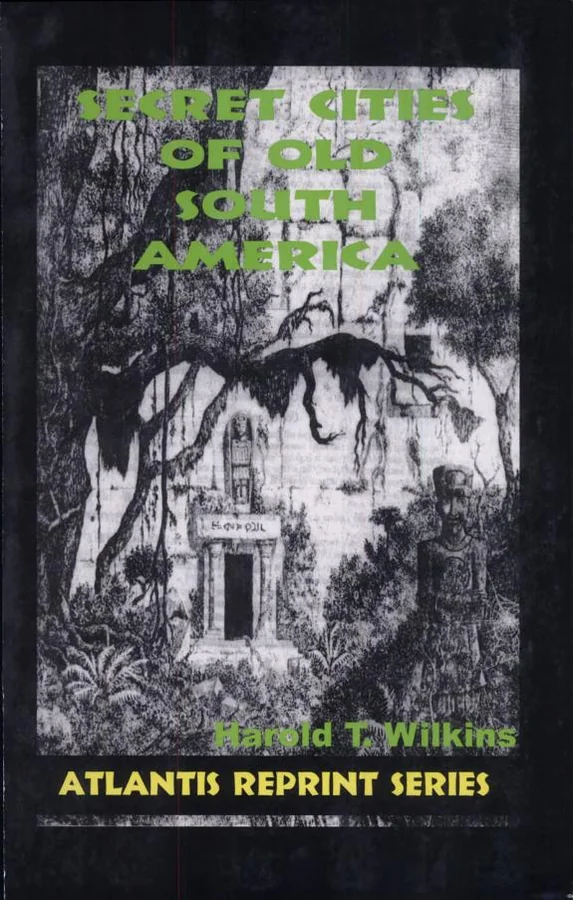
Secret Cities of Old South America
 73
73

Secret Cities of Old South America
Harold T. Wilkins’s Secret Cities of Old South America presents a compelling, if speculative, survey of purported forgotten metropolises in South America. Wilkins’s strength lies in his diligent collation of obscure accounts and explorer diaries, painting a picture of a continent teeming with civilizations far more advanced than commonly believed. His examination of astronomical alignments, particularly concerning sites that hint at sophisticated planning, is a notable feature. However, the work’s primary limitation is its uncritical acceptance of anecdotal evidence and legend as historical fact. For instance, the extensive discussion around Paititi, the legendary lost city of gold, while fascinating, often relies on hearsay and folklore rather than archaeological substantiation. Wilkins presents these theories with conviction, but a modern reader will require a robust skepticism to sift through the speculative claims. The book serves as an engaging primer on fringe theories about ancient South America, but should be read as a collection of possibilities rather than established history.
📝 Description
73
Harold T. Wilkins published 'Secret Cities of Old South America' in 1952, detailing lost civilizations.
Harold T. Wilkins's 1952 book, 'Secret Cities of Old South America,' investigates theories of advanced, hidden civilizations on the continent that existed before known empires. Wilkins gathered accounts and speculative evidence concerning mysterious ruins, sophisticated cultures, and unusual astronomical alignments. He looked into claims of cities undiscovered by conventional archaeology, drawing on myths and explorer stories from the pre-Columbian era. The book questions mainstream historical views by examining evidence for these forgotten peoples and their potential technologies.
This work is for readers interested in alternative historical accounts of South America, particularly those looking beyond the Inca, Maya, and Aztec narratives. It appeals to individuals who question standard archaeological interpretations and want to learn about speculative ideas regarding ancient technologies and lost societies. Wilkins's research emerged during the mid-20th century, a time when interest in ancient mysteries and potential extraterrestrial influences was growing. It was published by Library Publishers in New York, fitting into a trend of speculative works that challenged established historical and anthropological models.
Published in 1952, 'Secret Cities of Old South America' fits within the mid-20th century's fascination with ancient mysteries and alternative historical narratives. This period saw a rise in literature exploring lost continents, hidden knowledge, and the possibility of advanced ancient societies predating recorded history. Wilkins's work aligns with a broader esoteric tradition that seeks to uncover forgotten pasts and challenge conventional understandings of human development, often connecting ancient myths with speculation about advanced civilizations and their possible origins.
💡 Why Read This Book?
• Understand the speculative theories surrounding the lost city of Paititi, a legendary Inca stronghold, and its potential significance as a hidden repository of ancient knowledge. • Explore Wilkins’s synthesis of explorer accounts and myths, such as those referencing Orellana’s Amazonian expeditions, to reconstruct alternative narratives of South America's pre-Columbian past. • Examine the concept of advanced astronomical knowledge possessed by pre-Inca civilizations, as suggested by the alignment of certain mysterious ruins discussed in the text.
⭐ Reader Reviews
Honest opinions from readers who have explored this book.
❓ Frequently Asked Questions
What specific ancient South American civilizations does Harold T. Wilkins discuss beyond the Incas?
Wilkins focuses on purported pre-Inca civilizations and legendary cities like Paititi. He synthesizes accounts of advanced societies and extensive ruins that predate the Inca Empire, suggesting a far older and more complex history for the continent.
When was 'Secret Cities of Old South America' first published?
The book was first published in 1952 by Library Publishers in New York.
What kind of evidence does Wilkins use to support his theories?
Wilkins relies on a combination of explorer diaries, indigenous legends, mythological accounts, and interpretations of ancient ruins and astronomical alignments. He often prioritizes these sources over conventional archaeological findings.
Does the book offer concrete archaeological proof of these secret cities?
No, the book is primarily speculative, drawing on folklore, eyewitness accounts, and theoretical interpretations rather than providing verifiable archaeological proof of the 'secret cities' themselves.
Who might find 'Secret Cities of Old South America' most interesting?
Readers interested in alternative history, fringe archaeology, archaeoastronomy, and mysteries surrounding lost civilizations of South America, particularly those who question mainstream historical narratives, will find this book engaging.
What is Paititi, as discussed in the book?
Paititi is presented as a legendary lost city of gold, supposedly a hidden Inca refuge. Wilkins compiles accounts suggesting its existence deep within the Amazonian rainforest, a repository of immense wealth and ancient wisdom.
🔮 Key Themes & Symbolism
Legendary Lost Cities
The central theme is the existence of vast, undiscovered cities in South America, most notably Paititi, the legendary Inca city of gold. Wilkins compiles narratives from explorers and indigenous lore, suggesting these sites hold immense historical and material wealth, hidden from modern discovery. This theme challenges conventional historical understanding by positing advanced civilizations predating known empires, whose legacies were deliberately obscured or lost to time.
Advanced Ancient Knowledge
Wilkins explores the idea that these lost civilizations possessed sophisticated knowledge, particularly in astronomy and engineering. The text examines alleged astronomical alignments in ancient ruins and suggests a deep understanding of celestial cycles far beyond what is attributed to known ancient peoples. This points to a sophisticated, perhaps even alien-influenced, technological and intellectual heritage that has been forgotten.
The Amazonian Mystery
A significant portion of the book is dedicated to the Amazon rainforest as a potential hiding place for these secret cities. Wilkins recounts tales of explorers who ventured into the dense jungle seeking these lost metropolises, often facing peril and disappearing. This highlights the Amazon not merely as a geographical region, but as a symbolic frontier of the unknown, concealing profound historical secrets.
Challenging Mainstream History
The work actively questions established archaeological and historical timelines. By presenting alternative theories based on folklore and speculative interpretations of evidence, Wilkins invites readers to reconsider the accepted narrative of South American history. The book positions itself against conventional scholarship, advocating for a re-evaluation of the continent's past to include lost, advanced cultures.
💬 Memorable Quotes
Direct passages from the work, attributed to the author.
“The Amazon is not merely a geographical area, but a vast repository of forgotten history.”
— This statement expresses Wilkins's view of the rainforest as a place where lost civilizations and their secrets are preserved, shielded from the outside world and conventional historical inquiry.
“Legends speak of Paititi, a city of gold hidden from the Spanish conquistadors.”
— This highlights the enduring myth of Paititi, a central focus for Wilkins, representing a potent symbol of lost wealth and advanced Inca civilization that supposedly evaded discovery.
“Ancient ruins often display astronomical alignments that suggest a sophisticated understanding of the cosmos.”
— This points to Wilkins's interpretation of megalithic structures and their orientation, suggesting that ancient South Americans possessed advanced astronomical knowledge, possibly exceeding that of later civilizations.
“Many explorers vanished seeking these hidden cities, their tales adding to the mystery.”
— This emphasizes the perilous nature of the quest for lost civilizations and how the disappearances of adventurers contribute to the mystique and speculative allure of undiscovered ancient sites.
“The true history of South America may lie buried beneath jungle and legend.”
— This serves as a call to look beyond established records, suggesting that a more profound and astonishing past awaits discovery in the unexplored regions and forgotten stories of the continent.
🌙 Esoteric Significance
Tradition
While not strictly tied to a single esoteric lineage like Hermeticism or Kabbalah, Wilkins's work shares thematic elements with Theosophy and esoteric interpretations of ancient history. It aligns with the Theosophical concept of ancient, highly advanced root races and lost continents (like Lemuria or Atlantis) whose knowledge and remnants might still exist. The book seeks hidden spiritual and technological wisdom from a forgotten past, a common pursuit in esoteric thought, suggesting a cyclical view of history where advanced civilizations rise and fall.
Symbolism
The 'Secret Cities' themselves function as potent symbols of lost paradises, ancient wisdom, and hidden potential. Paititi, the city of gold, symbolizes material and spiritual abundance, a utopian ideal hidden from the corrupting influences of the modern world. Astronomical alignments within ruins symbolize a connection to cosmic order and advanced scientific understanding, hinting at a pre-diluvian or highly advanced culture that lived in harmony with celestial cycles.
Modern Relevance
Contemporary interest in archaeoastronomy, alternative archaeology, and ancient astronaut theories often draws upon the foundational ideas presented in works like Wilkins's. Thinkers exploring ancient advanced technologies, hidden histories, and the possibility of non-mainstream origins for megalithic sites can find Wilkins's compilation of lore and speculation a relevant starting point, even if critically examined. His work fuels ongoing debates about what mainstream archaeology might be overlooking.
👥 Who Should Read This Book
• Students of fringe archaeology and alternative histories, seeking to understand the origins of theories about lost South American civilizations and their supposed advanced capabilities. • Enthusiasts of esoteric geography and exploration narratives, who are drawn to tales of hidden places, lost explorers, and the mysteries concealed within dense jungles like the Amazon. • Comparative mythology researchers, interested in how legends of golden cities, ancient wisdom keepers, and forgotten empires inform our understanding of collective human imagination.
📜 Historical Context
Published in 1952, Harold T. Wilkins's Secret Cities of Old South America emerged during a post-war era characterized by a burgeoning interest in speculative history, ancient mysteries, and the possibility of advanced lost civilizations. This intellectual climate was influenced by the growing popularity of Theosophy and similar esoteric movements, which posited ancient global cultures possessing advanced knowledge. Wilkins's work stood in contrast to the more conservative, archaeological-driven narratives of the time. While scholars like J. Eric S. Thompson focused on establishing timelines for Maya civilization through rigorous fieldwork, Wilkins and his contemporaries explored more sensational theories. The book likely found an audience among readers captivated by Erich von Däniken's later theories and earlier works exploring Atlantis and Lemuria, reflecting a desire to uncover hidden chapters of human history that challenged mainstream academic consensus.
📔 Journal Prompts
The legend of Paititi: What does this 'city of gold' represent to you?
Reflect on the role of explorer accounts versus archaeological evidence in constructing historical narratives.
Consider the significance of astronomical alignments in ancient sites discussed by Wilkins.
Analyze the allure of 'lost civilizations' in the context of modern societal anxieties.
How might the dense Amazonian jungle act as a metaphor for hidden knowledge?
🗂️ Glossary
Paititi
A legendary lost city of gold, supposedly a hidden Inca stronghold, believed by some to exist deep within the Amazon rainforest. It is often depicted as a repository of immense wealth and ancient wisdom.
Conquistadors
The Spanish conquerors and explorers who, from the late 15th century, invaded and colonized large areas of the Americas, often in search of gold and other riches.
Archaeoastronomy
The interdisciplinary study of how people in the past understood and used astronomical phenomena, often examining the alignment of ancient structures with celestial events.
Pre-Columbian
Refers to the period of the Americas before the arrival of Christopher Columbus in 1492 and the subsequent European colonization.
Orellana
Francisco de Orellana, a Spanish explorer who led the first known European voyage down the entire length of the Amazon River from 1541 to 1542.
Megalithic
Relating to or constructed with large stones, often referring to prehistoric monuments such as Stonehenge or ancient South American ruins exhibiting massive stonework.
Esoteric
Intended for or likely to be understood by only a small number of people with a specialized knowledge or interest; relating to the occult or mystical.
This book appears in 1 collection
🔮 Readers Also Liked
Browse all →







From the “Atlantis” Collection
View all →






More Free Esoteric History & Biography Books
View all →